


Introduction To Gartner Digital Transformation Framework Training Ppt




Try Before you Buy Download Free Sample Product
 Impress Your
 Audience
 100%
100% Editable
 Save Hours
 of Time


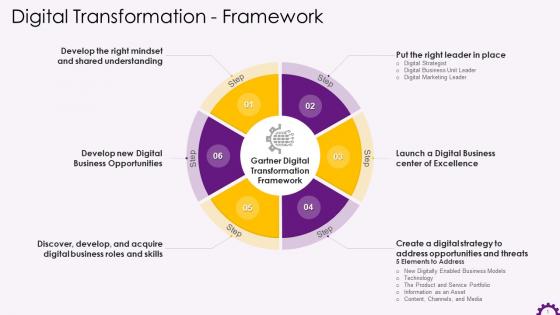
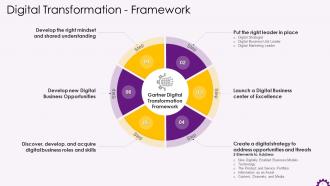
This slide illustrates the Gartner Digital Transformation Framework. The frameworks steps are developing the right mindset and shared understanding. It also means having the right leaders in place, launching a digital business center of excellence, creating a digital strategy to address opportunities and threats, etc.
People who downloaded this PowerPoint presentation also viewed the following :
Introduction To Gartner Digital Transformation Framework Training Ppt with all 16 slides:
Use our Introduction To Gartner Digital Transformation Framework Training Ppt to effectively help you save your valuable time. They are readymade to fit into any presentation structure.







FAQs for Introduction To Gartner Digital Transformation
So Gartner breaks it down into four parts: Business Moments, Culture & Leadership, Information, and Technology. Business Moments are those make-or-break customer touchpoints where digital really matters. Culture's where companies usually mess up - leadership just isn't committed enough, you know? Information is about collecting data and actually using it to make smart calls. Technology ties everything together. Oh, and here's the thing - you can't do these one at a time. They've gotta happen together or your whole transformation will just fall apart later.
So Gartner actually makes culture a huge deal - like, equal to the tech stuff. They're pretty adamant that transformations crash and burn without fixing the people side first. You've got to map out where your culture stands before buying any fancy software (learned that one the hard way at my last job). Their whole thing is about shifting how teams approach risk and innovation, not just training them on new tools. Leadership behavior changes are massive too. Honestly, the mindset piece is way harder than the technology part, but you can't skip it.
So Gartner has this Digital Business Maturity Model that's actually pretty useful. It looks at five areas - customer experience, operations, business models, workplace culture, and tech capabilities. Takes you from "initial" to "optimized" levels, which sounds fancy but makes sense when you dig in. There's also their Digital Dexterity Framework that focuses on how well your team adapts to new digital stuff. Honestly, the best part is you get real benchmarks against other companies in your space. Oh, and they have a free online assessment - I'd definitely start there before spending any money on the deeper analysis.
So basically, this framework lets you map out your projects against what actually matters for your business and where you're at digitally. You score each one on impact, how doable it is, and what resources you'll need - stops you from chasing every cool new tech trend that pops up. Dependencies are huge here too. Like, don't try building some fancy AI system when your basic data setup is still garbage. Honestly, I've seen so many companies make that mistake. The scoring matrix gives you a clear roadmap where foundational stuff comes first, then you can tackle the bigger transformation projects later.
So basically it makes you connect your tech stuff directly to what actually matters for business results instead of just geeky IT numbers. You know how IT and business people never seem to understand each other? This gives everyone the same language to work with. Pretty smart actually. Use their matrix thing to rank projects by real business value rather than what's easiest to build. I'd start by running your current projects through their alignment tool - you'll probably find some surprising gaps. It kills those annoying department silos too.
Yeah, totally works for SMEs! Honestly, it might work better than for huge companies. The framework focuses on business outcomes, tech enablement, and culture shifts - all stuff that's way easier when you're smaller and can actually move fast. Sure, you'll need to tone down some of the enterprise-heavy parts, but who cares? The main ideas around customer experience and operational improvements are spot-on for smaller businesses. I'd just pick whichever pillar matches your biggest headache right now and start there. Way less bureaucracy to deal with.
Yeah so Gartner treats customer experience as one of their four main pillars - super important stuff. You're basically supposed to start there when mapping out digital changes, not just throw tech at problems randomly. I mean, makes sense right? Focus on where customers are having issues first, then figure out what omnichannel features or personalization you need. The whole point isn't digitizing just because everyone else is doing it. CX gaps should drive your tech investments and process changes. Way better approach than treating customer experience like some bonus feature you add later.
So basically, don't chase the flashy new tech just because everyone's talking about it. Start with what you actually want to achieve business-wise, then figure out if AI or blockchain or whatever makes sense for those goals. I've seen way too many companies blow their budget on cool tech that doesn't solve real problems. The smart approach? Test each technology on three things: will it create real value, can we actually pull it off, and is our team ready for it. Always pilot first in a small way before going big. Honestly, most "digital transformations" fail because people get excited about the tech instead of focusing on outcomes.
Honestly, most companies bite off way more than they can chew - they want to digitize everything overnight instead of picking what actually matters to the bottom line. Leadership buy-in is huge too, and I'm talking real commitment, not just executives nodding along in meetings. Oh, and people get so caught up in cool new tech that they completely ignore whether their teams will actually use it. Cultural stuff matters more than most realize. Start small though - pick one specific business goal you want to hit and figure out what you need to get there. Way less overwhelming that way.
So Gartner's whole thing is making data a foundation for digital transformation - not just hoarding info but actually using it for better decisions. Build governance and analytics tools so teams can grab insights themselves without constantly hitting up IT. Pretty smart approach, honestly. First step? Figure out what data you have vs what decisions you're trying to make. That gap shows you where to spend money first. Focus on connecting the data sources that actually move the needle for your business - there's always way more available than you need.
Look, you'll want to track two main buckets - business results and how the actual transformation is going. Revenue from digital channels, customer satisfaction, efficiency gains - that's your business side. Then track tech adoption rates, how fast people are picking up digital skills, and speed of launching new services. Honestly, the hardest part is that some benefits won't show up for years. I'd focus on leading indicators like user engagement and automation percentages instead of just waiting around for revenue to spike. Pick 3-5 metrics that actually match what you're trying to achieve - don't go overboard.
So basically, take Gartner's framework and map out where your teams can actually experiment without red tape strangling everything. Their "composable business" thing is pretty solid - it breaks down those annoying departmental walls so people can test stuff quickly. What I'd do is grab one business capability from their model and tell your team to go nuts reimagining it. Oh, and definitely set aside real budget for "fail fast" projects - I've watched too many innovation initiatives die because nobody allocated actual money. The framework's also great for figuring out which tech actually drives new ideas versus just keeping the lights on. Start small with one area first.
Yeah, Gartner's super secretive about this stuff - they don't really put out case studies with actual company names. Client confidentiality and all that. You'll mostly find vague examples like "a major retailer" or "global manufacturing company" in their research reports. Kinda annoying when you want real proof, right? They do share more at conferences sometimes. Your best shot is probably digging through their Magic Quadrant reports or just calling one of their analysts directly. They might give you better examples if it's for your specific industry.
So basically, Gartner's whole thing is about staying flexible instead of those massive, slow transformation projects that drag on forever. You build "sensing and responding" capabilities - sounds fancy but it just means you can actually notice when things change and pivot fast. It's more like developing skills your org can use over and over, not just checking boxes on some project plan. Honestly, the iterative approach makes way more sense than waterfall stuff. Start by figuring out where you're being too rigid right now, then create feedback loops so you can adjust quickly when something isn't working.
So Gartner's got some solid stuff for their digital transformation framework. Their maturity assessments are pretty good for figuring out where you actually stand right now. Plus they have roadmaps and case studies - the case studies are clutch for convincing your boss, trust me. There's templates for governance and measurement too, which saves time. Honestly, I'd just start with their self-assessment thing first. It'll show you the biggest gaps, then you can dig into whatever roadmap fits your industry. Way easier than trying to tackle everything at once.
-
What a stunning collection of customizable templates! Really a time-saver..
-
I've been looking for a good template source for some time. I'm happy that I discovered SlideTeam. Excellent presentations must try!