

Issue and escalation process flow chart escalation project management ppt demonstration




Try Before you Buy Download Free Sample Product
 Impress Your
 Audience
 100%
100% Editable
 Save Hours
 of Time


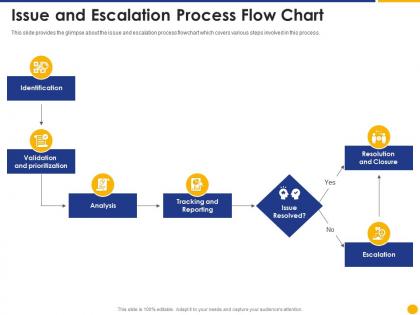
This slide provides the glimpse about the issue and escalation process flowchart which covers various steps involved in this process.
People who downloaded this PowerPoint presentation also viewed the following :
Issue and escalation process flow chart escalation project management ppt demonstration with all 2 slides:
Use our Issue And Escalation Process Flow Chart Escalation Project Management Ppt Demonstration to effectively help you save your valuable time. They are readymade to fit into any presentation structure.

FAQs for Issue and escalation process flow chart escalation project
Okay so basically you start by writing down what's actually wrong - don't just wing it. Try fixing it yourself first, obviously. Can't solve it? That's when you loop in your boss or whoever's running the project. Give them the full story though, not just "hey this is broken." Sometimes it'll keep moving up the ladder if it's a big mess - department head, then the fancy executives. Honestly, the hardest part is figuring out when to escalate versus when you're just being dramatic about a minor thing. Always come with ideas for fixing it, not just complaints. Oh, and set deadlines for each step or else people will just ignore it forever.
Honestly, you've gotta build this stuff in from day one or people will just wing it forever. Set hard rules - like if something's not fixed in X hours, or if it hits certain severity levels, boom, escalate immediately. Most teams wait way too long because everyone thinks they're the hero who can solve it solo (spoiler: they usually can't). Train people to spot the red flags early. Maybe create some kind of simple checklist they can actually use when they're panicking at 2am. Remove the guesswork completely. Trust me, it's way better to escalate too early than watch everything burn down because someone was too proud to ask for help.
Communication is everything when you're escalating stuff. Document what's broken, who's involved, and what you've already tried - seriously, I've watched so many escalations crash because someone just goes "help, it's broken!" Your manager needs context to actually do something. Give them timelines, what the impact is, what you want to happen. Then keep everyone in the loop as things move forward. People hate being left in the dark. Way better to over-communicate than have everyone wondering what's going on. Trust me on this one.
Honestly, having a solid escalation policy is a game-changer because it kills all that "should I bother my manager with this?" anxiety. Your team just follows the steps instead of second-guessing themselves. Catches problems way earlier too, before they blow up into major headaches. The trick is being super specific with your triggers - like "escalate after 2 hours" instead of something vague like "when it gets messy." I learned this the hard way at my last job. Nobody wants to feel stupid for asking for help, but they also don't want to sit on something too long. Clear rules fix both problems.
Escalate when it's hitting business ops, security stuff, or you can't fix it in your usual timeframe. Multiple customers affected? Definitely escalate. Same if you need permissions you don't have. Honestly, I've learned the hard way - better to escalate early than watch everything blow up later. Nobody gets pissed at you for being proactive, trust me. Look at how bad it is, how many people it affects, and whether you can actually handle it. If you're even wondering whether to escalate, that's probably your answer right there. Oh, and set clear rules with your team beforehand so you're not overthinking it every single time.
Look, escalation is honestly just covering your ass before things blow up. You set clear triggers so your team knows exactly when to sound the alarm - maybe it's budget overruns or missed deadlines. The whole point? Getting problems to people who can actually do something about it. I've seen too many projects crash because someone thought a vendor delay would magically fix itself. It won't. When you escalate fast, leadership can pivot or find workarounds. Without it, you're basically crossing your fingers and hoping for the best.
Honestly, just use a presentation template to map out your escalation process visually. Flowcharts with shapes and arrows work great - shows exactly who to contact when things go sideways. I've watched so many teams totally blow it because their process was stuck in someone's brain or buried in some 20-page document nobody reads. Templates make it actually usable. Include trigger points, decision spots, and contact info for each level. Trust me, you don't want your team panicking in Slack asking "who handles this??" when something breaks on Friday afternoon. Way better to have it all laid out clearly.
Honestly, the worst thing you can do is wait until everything's completely falling apart before you say something. But don't be that person who escalates every little hiccup either - nobody likes working with someone like that. Document what you've already tried first. Shows you actually put in effort, you know? Follow the chain of command unless it's genuinely urgent. Oh, and here's the big one - bring solutions with your problems. Like, at least have some ideas ready. Makes you look way more professional than just dumping issues on your boss's desk.
Honestly, role-playing is where it's at - have them practice fake escalation scenarios. I know it sounds cheesy but it actually works. Give everyone flowcharts showing exactly when to escalate and to whom. Those specific triggers matter way more than you'd think. Shadow some real escalations if you can swing it, that's gold. Oh and definitely do refresher sessions because people forget this stuff constantly. The whole point is making it automatic when shit actually hits the fan - you don't want anyone freezing up trying to remember the process.
Honestly, get yourself a proper ticketing system - Jira's solid, ServiceNow if you're fancy, or Zendesk works too. They'll auto-route stuff to the right people based on whatever rules you set up. For the urgent fires, Slack or Teams are your best friend (seriously, nothing gets attention like a good old ping). Oh, and if you deal with critical incidents, PagerDuty's pretty clutch since it can spam alerts everywhere. Just pick something that plays nice with what you're already using - doesn't matter how amazing a tool is if your team won't touch it.
So it's all about how urgent things get and what rules you gotta follow. Healthcare? Life or death stuff means they escalate RIGHT away with super strict protocols. Financial companies are just as fast but they're obsessed with compliance and not losing money. Tech is way more loose - honestly sometimes feels like total chaos compared to the others! Retail and hospitality will do whatever keeps customers happy, so their escalation is usually quick and customer-focused. I'd say figure out what standards your industry actually requires first, then build around that.
Honestly, start with resolution time and customer satisfaction scores - those are your bread and butter. How often do issues get fixed on first contact? That's huge. Also track how many times stuff gets escalated and what types of problems keep bouncing around. Your team's happiness matters too because miserable employees = broken processes, trust me. Cost per escalation is worth watching since it gets expensive quick. Oh, and definitely look for bottlenecks in your workflow. Pick maybe 2-3 metrics that actually matter to you guys and check them monthly. You'll start seeing patterns pretty fast.
Honestly, escalated issues are like roadmaps showing you exactly where your processes are falling apart. I'd start keeping a simple log of why things get escalated - you'll notice patterns pretty quick. Maybe approval requests always get stuck at the same step, or your team's missing the same info over and over. That's gold right there. Review it monthly and the gaps become super obvious. Way better than just putting out fires constantly. Actually had a friend do this at her company and she was shocked how many issues traced back to just two bottlenecks they never noticed before.
Look, you skip the chain when someone could get hurt or there's a security issue - that stuff can't wait. Legal problems too. And obviously if you know the first person literally can't do anything, like when you need CEO approval or whatever. Time-sensitive things are where it gets messy though. Nobody wants to be the person always screaming "emergency!" Document why you went around the normal process. It'll save your ass later and honestly helps everyone figure out when the rules should actually be bent. Just make sure you can defend your choice.
Your leaders need to go first - they should actually use escalation themselves and talk about it openly. Most people think escalating makes them look bad, so flip that script. Share stories in meetings about times escalation saved the day. Celebrate people who raise issues early instead of letting them fester. The trick is explaining WHY something got escalated, not just what happened. Makes it feel like smart problem-solving rather than giving up. Oh, and have your leaders regularly ask "what aren't we escalating that we should be?" That question alone changes everything.
-
Nice and innovative design.