Customer Service Escalation Management Process Flow Chart
Try Before you Buy Download Free Sample Product
Audience
Editable
of Time
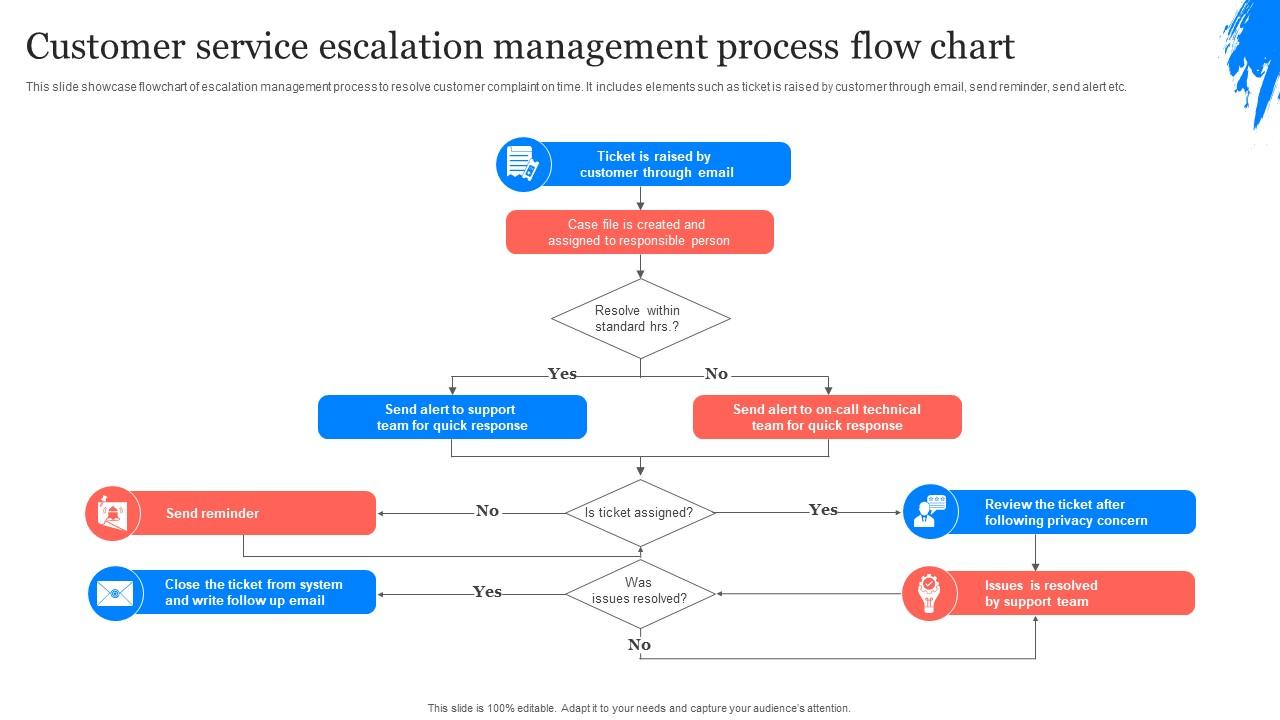
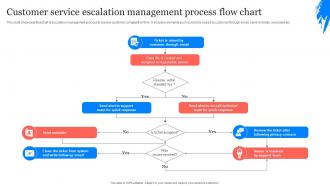
This slide showcase flowchart of escalation management process to resolve customer complaint on time. It includes elements such as ticket is raised by customer through email, send reminder, send alert etc.
People who downloaded this PowerPoint presentation also viewed the following :
Customer Service Escalation Management Process Flow Chart with all 6 slides:
Use our Customer Service Escalation Management Process Flow Chart to effectively help you save your valuable time. They are readymade to fit into any presentation structure.
FAQs for Customer Service Escalation Management
Three big things usually trigger escalation: missed deadlines, budget overruns, or roadblocks your team can't handle. Higher stakes = faster escalation up the chain. You'd be amazed how tiny communication gaps can derail entire projects! Scope creep kills too - clients love saying "just one more thing." Sometimes it's just personality clashes where stakeholders refuse to talk. The trick? Spot warning signs early and flag issues before they explode. Way better than scrambling to fix disasters later. Trust me on that one.
Honestly, good communication stops things from blowing up because you catch problems when they're still small. Like, if you're upfront about issues early and actually listen when people bring up concerns, you won't have those massive team meltdowns. I've watched entire projects crash just because someone felt ignored - it gets ugly fast. Create space where people can speak up without getting their heads bitten off. Do regular check-ins, be super clear about deadlines and who's doing what. Oh, and always acknowledge when someone raises a flag about something. Weekly pulse checks are clutch for spotting trouble before it explodes.
Honestly, emotional intelligence is like having superpowers in conversations. You start picking up on when someone's getting heated or shutting down - their body language shifts, voice gets tight, maybe they go quiet. That's your cue to switch gears before everything explodes. I've found that just calling it out helps tons: "hey, I can tell this is really frustrating you." Sounds simple but it actually works. Once you get good at reading those early warning signs, you'll know exactly when to back off or change your approach. Trust me, it's a total game-changer for avoiding unnecessary drama.
You should escalate when you've already tried talking directly but gotten nowhere. Like when they keep doing the same annoying stuff or just won't respond at all. Power imbalances are tricky too - sometimes you literally can't fix things at your level. If it's messing with the whole team's work, definitely time to involve someone higher up. Some people honestly just don't take you seriously until a manager steps in (which is frustrating but whatever). Just make sure you've actually tried solving it yourself first. When you do escalate, write down what you already attempted - makes you look way more professional than just complaining.
Look out for the obvious stuff first - people getting louder, talking over each other, or suddenly crossing their arms and shutting down. Honestly, the quiet ones worry me more than the loud ones sometimes. You'll also catch discussions that just keep looping back to the same arguments. Here's the thing though - it builds up slowly, so don't just listen to words. Feel the room's vibe. If your gut says something's off, it probably is. Jump in the second you feel that tension creeping up and call it out before everything goes sideways.
Okay so first thing - lower your voice and stay chill. Sets the whole vibe, you know? Actually listen to what they're saying instead of just waiting to jump in. I always try acknowledging their feelings first like "I get that you're pissed about this" before diving into solutions. Let them vent for a sec if they need to. Then ask stuff like "what would actually help here?" rather than getting all defensive. People just want to feel heard before you start trying to fix everything. Works way better than I expected honestly.
Here's the thing - escalation can totally backfire or actually make your relationships stronger, depending on how you handle it. Get ahead of problems and be transparent? People will respect that you trusted them with the real situation. Wait too long or start pointing fingers though, and you're basically torching trust. Nobody wants to be blindsided or made to look like the villain. I've seen this go sideways so many times. Your best bet is presenting it like "okay, here's our challenge and here's how we tackle it" instead of running around like everything's on fire. Give them context and solutions, not just a pile of problems to stress about.
Okay so basically constructive escalation is when you're actually trying to solve something - you bring the right people in, give them context, maybe suggest what could work. Destructive escalation? That's just venting upward or throwing someone under the bus because you're pissed. Think of it like "we need help figuring this out" versus "Sarah's being difficult and won't listen to me." One gets results. The other just creates drama. Always come with at least an idea of what might work, even if it's rough. People hate when you dump problems on them with zero thought behind it. Makes you look way more competent too.
Dude, build those escalation rules right into your project from the start. Like if budget goes 10% over or you're two weeks behind, boom - automatically escalate up the chain. Map out who does what (team lead, PM, sponsor, whatever) so everyone knows the drill. I swear, most projects crash because people think they can heroically fix everything themselves instead of speaking up sooner. Document when you escalate so there's a paper trail. The trick is making escalation feel totally normal - not like you screwed up, just basic project management that stops small problems from exploding later.
Honestly, I'd start with just 2-3 metrics that hit your biggest headaches. Escalation rate is obvious - what percentage of your cases get bumped up? Then check how long stuff sits before someone escalates it. Time-to-resolution after escalation matters too because dragging things out forever just pisses everyone off. Oh, and watch for repeat escalations - those usually mean something's screwed up earlier in the process. You can also track which teams or issue types escalate most often. Resolution rates at each level will tell you if your setup actually works. Track monthly and don't overcomplicate it at first.
Escalation theory is basically sunk cost fallacy but worse - you keep doubling down on bad decisions because you've already invested so much. Smart people do this ALL the time, it's honestly embarrassing how common it is. Watch for red flags like "we can't quit now after spending this much" or feeling pressured to justify past choices. Here's what actually works: set clear exit rules before you start anything. Check in regularly and evaluate based on what's happening now, not what you already spent. Yeah, changing course sucks but it beats bleeding money forever.
Dude, business disputes that get out of hand are honestly brutal. They'll wreck relationships and your reputation faster than you think. Legal fees alone will bleed you dry - not to mention all the time you're wasting that could go toward actually growing stuff. Companies get so obsessed with "winning" they forget what's good for business. It's like watching a car crash in slow motion sometimes. The mess spreads to your team, customers, everyone. My take? Set boundaries early on how far you'll let things go. Always leave room to work it out before everything goes nuclear.
Yeah, cultural stuff can totally mess up escalations if you don't think about it ahead of time. Some people will escalate literally everything, while others won't say anything because they think it's disrespectful or makes them look bad. Plus you've got different communication styles - some folks are super direct, others hint around problems. Time zones make it even weirder honestly. What works is setting clear rules about when to escalate and making sure everyone feels safe speaking up, no matter where they're from. Oh and definitely account for how comfortable people are with conflict - that varies a ton.
Honestly, role-playing is huge for this stuff. Gets people comfortable spotting red flags before things blow up. We pulled some of our own cases (names changed obviously) and that hit different than made-up examples. Also worth doing listening workshops - crazy how many people think they're hearing customers when they're really just waiting for their turn to talk. Some teams I know create those decision tree things mapping out when to loop in your manager vs. handling it solo. Just don't make it another boring slide deck, you know?
Think of escalation frameworks as your early warning system - they catch problems before they blow up. You'll want clear triggers that automatically flag issues to the right people when things hit certain severity levels. Way better than just hoping someone notices something's wrong, honestly. The frameworks also map out who does what when risks actually happen, so nothing gets stuck or forgotten at lower levels. I'd start by looking at your current escalation paths first. Figure out where the usual bottlenecks are - that's where you'll probably need to make changes.
-
Templates are beautiful and easy to use. An amateur can also create a presentation using these slides. It is amazing.
-
It makes easy work of my work presentations. I’ve never had to be nervous about my presentations for meetings.Â