


Escalation Matrix Powerpoint Presentation Slides






Try Before you Buy Download Free Sample Product
 Impress Your
 Audience
 100%
100% Editable
 Save Hours
 of Time


Enable jubilee celebrations with our Escalation Matrix Powerpoint Presentation Slides. Drive home the importance of the event.
People who downloaded this PowerPoint presentation also viewed the following :
Content of this Powerpoint Presentation
Slide 1: This slide introduces Escalation Matrix. State Your Company Name and get started.
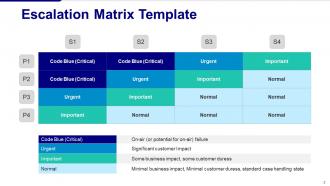
Slide 2: This slide presents Escalation Matrix Template. With this slide you can add the priority for the business project and use different color.
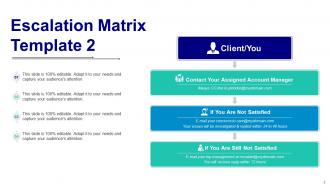
Slide 3: This slide showcases Escalation Matrix Template 2 with which you can use as to add the information about the client and some other related.
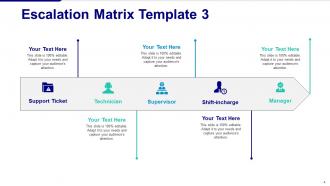
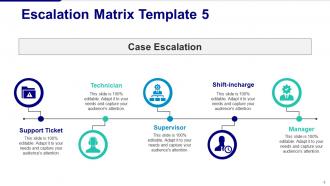
Slide 4: This slide shows Escalation Matrix Template 3 with these five parameters- Support Ticket, Technician, Supervisor, Shift-incharge, Manager.
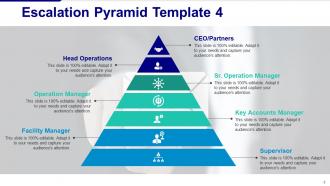
Slide 5: This slide presents Escalation Pyramid Template 4 with these seven mainly used - Head Operations, Operation Manager, Facility Manager , CEO/Partners, Sr. Operation Manager, Key Accounts Manager. Supervisor
Slide 6: This slide showcases Escalation Matrix Template 5 with these five level or stages- Case Escalation, Technician, Shift-incharge, Support Ticket, Supervisor, Manager,
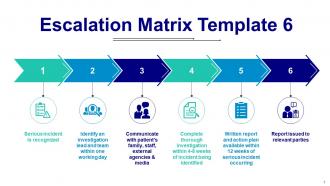
Slide 7: This slide shows Escalation Matrix Template 6 with these six steps.
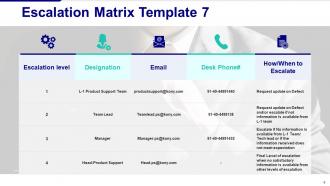
Slide 8: This slide Escalation Matrix Template 7. use this matrix table as per your need.
Slide 9: This slide shows Coffee Break image.
Slide 10: This slide shows Escalation Matrix. You can use it as per your requirement.
Slide 11: This slide displays the title Charts & Graphs.
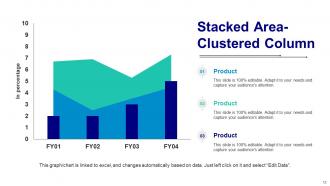
Slide 12: This slide shows a Stacked Line graph in terms of percentage and years for comparison of Product 01, Product 02, Product 03 etc.
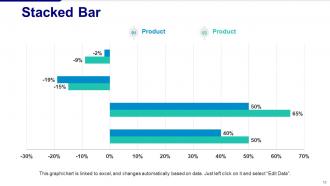
Slide 13: This is a Stacked Bar . With this you can compare the product.
Slide 14: This slide is titled Additional Slides.
Slide 15: This slide represents Our Mission. State your mission, goals etc.
Slide 16: This slide showcases Our Team with Name and Designation to fill.
Slide 17: This slide helps show- About Our Company. The sub headings include- Creative Design, Customer Care, Expand Company
Slide 18: This slide shows Our Goals for your company.
Slide 19: This slide showcases a Puzzle with imagery.
Slide 20: This idea shows an image of Bulb Or Idea to state your facts, notes etc.
Slide 21: This is a Thank You image slide with Address, Email and Contact number.
Escalation Matrix Powerpoint Presentation Slides with all 21 slides:
You will find our Escalation Matrix Powerpoint Presentation Slides extremely exotic. They can be downright fascinating.











FAQs for Escalation Matrix
An escalation matrix is just a chart showing who to bug when stuff hits the fan on your project. Start with your boss, then their boss, all the way up to the big shots. Here's why you actually need one - when problems pop up (and they will), you won't waste time playing phone tag trying to figure out who can actually fix things. Nobody wants to be that person sending urgent emails to someone who can't help anyway. Set it up before disaster strikes. Your future stressed-out self will thank you, trust me. Share it with everyone so they know the drill too.
So basically an escalation matrix is like having a roadmap for when shit hits the fan. You map out who handles what level of crisis - minor stuff goes to your direct manager, bigger issues to department heads, etc. No more of that awful group chat spam where everyone's @-ing random people. Trust me, senior leadership doesn't want to hear about every tiny bug report. The whole point is getting problems to the right person fast. Set it up with actual phone numbers and how quickly people should respond. Honestly wish we'd done this sooner at my last job.
Focus on three things: severity levels, timeframes, and who handles what. Define clear criteria for low/medium/high priority - saves you from those "is this urgent??" conversations later. Set realistic response times for each level, then map your escalation path from support team to management. Short sentences work best here. People need to follow this when they're stressed out of their minds. Also factor in your team's actual capacity - no point promising 2-hour responses if you're swamped. Test it with real scenarios first, maybe throw some curveballs at it. Simple systems survive; complicated ones fall apart when things get crazy.
So escalations usually kick in when you hit certain red flags or thresholds. Customer complaints not resolved within SLA timeframes are big ones. Budget overruns over 15-20%? That'll do it. Missed deadlines, safety incidents, tech outages lasting too long - honestly, the CEO learning about downtime from social media is nightmare fuel. Contract disputes trigger them too. So do HR issues like harassment claims or angry VIP clients. The trick is having clear criteria written down beforehand so you're not winging it when things go sideways.
So the big thing is how they define "urgent" and who gets called. IT escalations usually go help desk → system admin → CTO over a few hours for major outages. Healthcare is way more intense - patient safety stuff gets physicians and administrators involved in minutes. Time frames are completely different too. IT might give you 24-48 hours for non-critical problems, but healthcare needs same-shift fixes. Honestly, healthcare's regulatory stuff makes everything feel more high-stakes. IT cares about systems being down and user impact, while healthcare's all about preventing patient harm. You'll want to figure out your industry's risk tolerance first.
Look at who actually makes decisions, not just the org chart. Start with your frontline people for daily stuff, then figure out who has budget power or technical know-how for bigger problems. I'd stick to 3-4 levels tops - any more and people just call the CEO directly anyway. Map it by what they can actually fix: supervisors, managers, directors, then executives. Don't overthink the hierarchy thing though. Run through a couple real scenarios to see if it works. Oh, and make sure whoever you pick can respond fast when things hit the fan.
Honestly, PM software is a game changer for escalation matrices. Set up automated triggers once and you're golden - missed deadlines automatically ping the right people without you having to remember who to bug. Custom workflows match your actual escalation process instead of some generic template nonsense. The documentation happens by itself too, which saves your butt later when everyone's pointing fingers about what went wrong. Short sentences work. Human error basically disappears since you're not manually tracking everything. I probably sound like a broken record about automation, but it really does handle the grunt work so you don't have to.
Honestly, most problems come from people just ignoring the whole thing when they freak out. They'll skip right to texting the CEO at 2am instead of following steps - classic move. Outdated contact lists are a nightmare too, plus half the team doesn't know when they should actually escalate vs. just handle it themselves. Oh, and good luck getting anyone to respond fast enough when you need them. What works though? Update everything quarterly, train people properly on the triggers, and give them real examples so they're not guessing. Makes a huge difference.
Track resolution times and escalation frequency before/after you roll this out. Customer satisfaction scores matter too, obviously. See how fast issues move through each level - you don't want every tiny problem landing on the CEO's desk, right? Check if your team actually follows the paths you set up or just improvises when stuff hits the fan. The real win is when frontline people feel confident handling escalations without panicking. Also watch if the same problems keep popping up repeatedly. Monthly metric reviews help you adjust when things go sideways.
So first thing - make a dead simple flowchart showing who does what and when. Post that thing everywhere (Slack, wiki, whatever). We actually still print stuff out sometimes because people forget to check digital. Run through some real examples in meetings so your team can actually practice deciding when to escalate. Oh and definitely get everyone's input when you update the process - they'll buy in way more if they helped create it. Make sure ownership is super clear too. Short version: if people don't know exactly who handles what level, you'll have chaos.
Every 6 months works pretty well, or whenever you get new leadership or team changes. Most places totally forget about this stuff until everything falls apart and half the phone numbers are dead - super annoying when you're dealing with an actual crisis. Major incidents are perfect wake-up calls too since they usually show you exactly what's broken in your setup. Honestly just throw a calendar reminder on there so you don't space out on it. Oh and definitely make one specific person own it, not the whole team. That "everyone's responsible" thing never works.
Honestly, escalation matrices are lifesavers because they stop problems from just sitting there forever. Your team knows exactly who to ping and when - no more issues bouncing around departments like a pinball. Stakeholders get clear expectations upfront too, which cuts down on the whole panic thing. The best part? You don't have junior people wrestling with stuff way over their heads for weeks (been there, not fun). Just make sure people actually know the matrix exists and use it when things get messy.
Start with basic workflow training and document your escalation paths clearly. Role-playing is super awkward at first but honestly works great for pressure situations. Everyone needs to know the triggers and expected response times for each level. I'd do scenario workshops regularly - maybe monthly? Keep templates or decision trees somewhere easy to find. Better to escalate too early than watch things blow up, you know? Oh and definitely schedule a check-in next month to see how it's working out.
Oh man, cultural stuff makes this way trickier than you'd think. Some cultures are super direct about conflicts, others will do anything to avoid confrontation. Your escalation process needs to account for that or people just won't use it. Also - and this bit me before - hierarchy matters huge in certain regions. Team members might literally refuse to escalate over their manager's head even when they should. Time zones are the obvious pain, but language barriers slow everything down too. Honestly? Get regional leads who actually understand how people communicate locally. Test it with real scenarios first because what looks good on paper often falls apart.
Dude, you're gonna regret not having one when chaos hits. Trust me on this. Critical stuff will get dumped on someone who can't actually fix it, while your CEO gets bothered about password resets or whatever. I've watched entire teams just... spiral because nobody knew who to call. Response times go to hell, customers start complaining, and everyone's stressed trying to figure out the chain of command mid-crisis. Plus you waste so much time playing phone tag. Honestly, just spend an afternoon mapping out who handles what - future you will thank you when everything's on fire.
-
Easily Understandable slides.
-
Easy to edit slides with easy to understand instructions.