


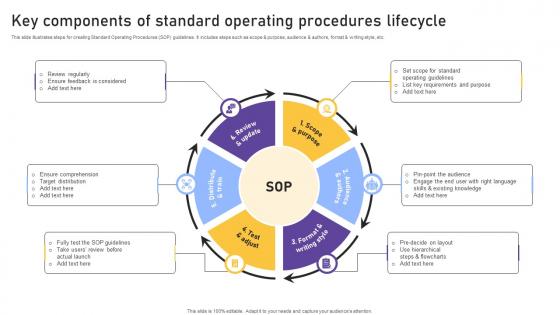
Key Components Of Standard Operating Procedures Lifecycle




Try Before you Buy Download Free Sample Product
 Impress Your
 Audience
 100%
100% Editable
 Save Hours
 of Time


This slide illustrates steps for creating Standard Operating Procedures SOP guidelines. It includes steps such as scope and purpose, audience and authors, format and writing style, etc.
People who downloaded this PowerPoint presentation also viewed the following :
Key Components Of Standard Operating Procedures Lifecycle with all 6 slides:
Use our Key Components Of Standard Operating Procedures Lifecycle to effectively help you save your valuable time. They are readymade to fit into any presentation structure.





FAQs for Key Components Of Standard
So there's basically five phases to the whole SOP thing: development, review/approval, implementation, monitoring, and revision. First you draft it, get stakeholders to review it, then management approves. After that you roll it out to your team. Here's where it gets fun - you'll spot problems almost immediately once people actually start using it. That's totally normal though. Then you revise based on what went wrong or what people complained about. Oh, and set up regular review dates because this stuff changes constantly. Trust me, your first version won't be your last.
Write an SOP whenever people keep asking "wait, how do we do this again?" or when you notice everyone's doing the same task totally differently. Calendar reminders are your friend here - I'd forget otherwise. Update them after any incidents or big process changes, plus at least once a year. Watch for workarounds too. If your team's consistently ignoring the written steps, that's basically screaming "this needs an update." Oh, and start with your most critical stuff first - no point perfecting the office coffee procedure while your main processes are a mess.
Dude, you absolutely need stakeholder input when writing SOPs - don't even think about doing it alone. Get your subject matter experts involved for the technical stuff, plus the actual end users who'll be following these steps day-to-day. Management should weigh in too so everything aligns with company goals. I've watched so many SOPs crash and burn because someone just wrote what they assumed the process should be (rookie mistake). Pull people in during the drafting phase, then again when you're reviewing. Honestly, the folks who'll actually use your SOP are gonna tell you real quick if it makes sense or not.
Honestly, you've gotta bake compliance into your SOPs from the start - don't even think about adding it later. Figure out what regs hit your industry first (OSHA, FDA, whatever). Map those rules to each process step. I learned this the hard way when we had to redo everything at my last job... total mess. Get someone who knows regulatory stuff to review drafts before you finalize them. Regular audits help catch things you missed. Oh, and make a simple checklist of requirements that people can actually use during reviews. Trust me, it'll save you tons of headaches down the road.
Honestly, I'd go with something like MasterControl or ProcessMAP for SOP stuff - they're built specifically for version control and approval workflows. SharePoint works if you're already using Microsoft everything, but it's kind of a pain for document management. Confluence is cheaper and pretty solid, though the approval process isn't as robust. Google Workspace is fine too but same issue there. The main thing is making sure whatever you pick actually enforces review cycles. I've seen too many teams where half the people are using v2.1 and half are on v3.0 and nobody knows which is current. Demo a couple options first - don't just pick based on price.
Honestly, automated workflows are your best friend here. Get a digital platform that routes docs to the right people automatically - no more endless email chains that drive everyone crazy. I'd start with your most-updated SOPs first for quick wins. Parallel reviews beat sequential ones every time, and you'll want standardized templates so reviewers aren't guessing what to look for. Set firm deadlines for each stage too. The approval chains should be mapped out upfront so there's no confusion about who's next. Trust me, this stuff makes a huge difference once you get it rolling.
Track how often people actually follow your procedures vs. skipping steps - that's huge. Also watch if incidents and errors drop after you roll it out. Training time matters too - new hires should get up to speed quicker with good SOPs. Honestly though? User feedback scores are clutch because if everyone thinks your process sucks, the other numbers don't really matter. Oh, and completion times - you'll want those trending down. Just throw together a monthly dashboard to watch these trends. If the data shows it's not working, don't be stubborn about changing it.
At minimum, do it yearly. But honestly? That's pretty bare bones. Your heavy-hitter SOPs probably need quarterly check-ins, especially if you're in something fast-moving or heavily regulated. I've watched teams get absolutely wrecked by SOPs that sat gathering dust for years – then boom, audit time hits and it's chaos. Critical ones should get flagged for more frequent reviews. Match your review schedule to how quickly your business actually moves. Oh, and whenever your real process changes, update the SOP right away. Don't let that gap grow.
Honestly, the version control thing will drive you crazy - everyone's got different docs and nobody knows what's current. People hate following new procedures too, especially the complicated ones that feel pointless. You'll either end up reviewing stuff constantly (which pisses everyone off) or never updating anything at all. Training is a nightmare since everyone learns differently and half the team forgets everything anyway. Oh, and teams will definitely push back if the SOPs don't match what they actually do day-to-day. Start with your most critical stuff first. Build in ways for people to tell you when things aren't working.
Don't make training an afterthought - build it right into your SOP rollout. Use the actual SOPs as training materials and get people practicing hands-on during pilot phase. Honestly, I've watched so many teams write amazing SOPs that nobody ever uses because the training sucked. Make quick reference guides. Run some practice scenarios. Record your training sessions too - you'll thank yourself when new people start. The whole point is making sure your team can actually DO the stuff, not just know it exists somewhere in a folder. Oh, and set up quarterly refreshers or people forget everything.
Honestly, skip the boring PowerPoint training - nobody pays attention anyway. Make your SOPs actually useful by writing them in normal English, not corporate jargon. Do hands-on demos instead. People learn better when they can see why procedures actually matter for their safety, not just because management says so. Peer mentoring works great too. Oh, and make sure they're easy to find! Nothing worse than hunting for procedures when you need them. Recognition helps when people follow protocols correctly. Clear consequences matter, but focus more on showing the "why" behind rules rather than just checking compliance boxes.
Honestly, you need some kind of shared digital spot where everyone can grab the latest SOPs - SharePoint works, or Google Drive, whatever your company already uses. Pick someone from each department to be the "SOP person" who gets pinged about updates. Trust me, half your team is probably still using that crusty printed version from last year! Set up automatic alerts when stuff changes and maybe make people confirm they actually saw the updates. Oh, and create folder names that actually make sense - none of that cryptic filing system nonsense. Everyone's gotta be working off the same info.
Think of SOPs as your big picture "what and why" docs - they cover the process overview and main objectives. Work instructions get into the nitty-gritty "how" with exact steps, tools, and measurements. Honestly, I always compare SOPs to a recipe summary while work instructions are like those super detailed cooking videos (yeah, weird comparison but whatever). One SOP usually references several work instructions. The SOP gives you context and flow, then work instructions make sure everyone does things the same way. I'd write your SOP first, then break down the tricky parts into detailed work instructions.
Honestly, going digital with your SOPs is a game changer. Automated workflows handle all the tedious stuff - tracking changes, sending review reminders, managing approvals. Your team can access everything from anywhere with cloud systems, which is clutch for remote work. The analytics are pretty cool too - you can see which procedures people actually use and where things get stuck. I'd say pick whatever's bugging you most about your current setup and tackle that first. Don't try to fix everything at once or you'll just overwhelm yourself.
Track every single change with a revision log - date, who changed what, and why. Archive the old versions instead of just deleting them (learned this the hard way once). Your change descriptions need enough detail so someone can figure out what happened months later. Document who approved each revision too. Honestly, SOPs become total disasters when people get lazy about this stuff. Create a paper trail that'll satisfy any auditor who comes sniffing around.
-
Excellent work done on template design and graphics.
-
Easy to edit slides with easy to understand instructions.