

Key Strategy Issues With Impact And Solutions




Try Before you Buy Download Free Sample Product
 Impress Your
 Audience
 100%
100% Editable
 Save Hours
 of Time


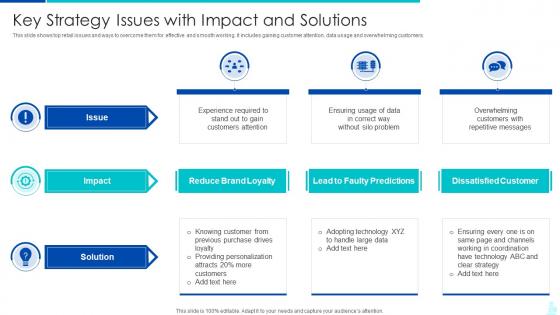
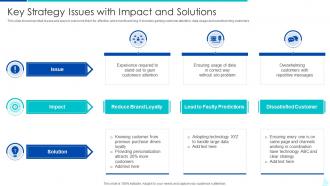
This slide shows top retail issues and ways to overcome them for effective and smooth working. It includes gaining customer attention, data usage and overwhelming customers.
People who downloaded this PowerPoint presentation also viewed the following :
Key Strategy Issues With Impact And Solutions with all 6 slides:
Use our Key Strategy Issues With Impact And Solutions to effectively help you save your valuable time. They are readymade to fit into any presentation structure.





FAQs for Key Strategy Issues With
You need four things for a solid strategic plan. Clear vision and goals that everyone gets. Brutal honesty about where you actually are right now - not where you wish you were. Then figure out the specific steps to close that gap. And definitely track your progress with real numbers, not just gut feelings. Here's what kills most plans though - nobody owns the damn thing. I've watched so many companies create these gorgeous documents that just sit there doing nothing. Make sure each piece has someone's name on it. Timeline should push people but not be completely insane. Keep it simple enough that your team can actually remember what you decided. Get your leadership on the same page first before you start getting fancy with details.
Start with a big environmental scan - check your internal stuff, what's happening in the market, competitors, stakeholder feedback. I always tell teams to brainstorm literally everything first (even weird small things) then sort through it later. For prioritizing, use those impact vs urgency grids or score things based on money, strategy fit, resources needed. The trick is getting different departments involved since they'll catch things you missed - honestly, some of the best insights come from random conversations with people outside your usual circle. Don't make it a top-down thing. Way better as a group effort.
Look, market research is basically your roadmap when everything feels confusing. You can't solve problems you don't actually understand - and honestly, most people are just guessing about what customers want. Research shows you what's really happening vs. what you think is happening. Where are competitors screwing up? What do people actually care about? The trick is figuring out your biggest blind spots first, then asking the right questions. Otherwise you'll end up with tons of useless data that doesn't help anything. It's like having GPS instead of wandering around lost.
Your company's strategic choices get shaped by both what's happening inside and outside your walls. Internally, you're dealing with your resources, capabilities, culture, and money situation - that's what tells you what you can actually pull off. Market trends, competitors, regulations, and customer demands are constantly shifting the game from the outside. Honestly, it feels like navigating when your GPS won't stop recalculating routes. Both environments change fast too. What made sense last quarter could be totally wrong now. Set up regular check-ins to review your internal strengths and external pressures - otherwise you'll end up making big decisions based on old info.
Honestly, most teams either stay way too vague or just copy whatever their competitors are doing. Big mistake on both fronts. Then there's the whole analysis paralysis thing - I've watched teams research themselves into a corner and never actually make decisions. Here's what works: get specific about everything. Instead of "better customer experience," spell out exactly what that means and who's doing what by when. Also, loop in the people who'll actually execute this stuff during planning. Otherwise you'll build some beautiful strategy that completely falls apart when it hits the real world.
Pick 3-5 metrics that actually connect to what you're trying to achieve and track them monthly - don't wait around for annual reviews. Revenue growth, customer acquisition costs, market share, whatever makes sense for your thing. Here's the annoying part though: some strategic stuff takes ages to show results, so you can't just stare at quarterly numbers. I'd throw in some progress milestones and maybe employee engagement scores too. Leading and lagging indicators both matter if you want the real picture. Monthly check-ins work way better than waiting forever to see if you're on track.
Keep an eye on what's happening in tech, but don't go crazy chasing every new thing that pops up. I've watched so many businesses blow their budget on fancy tools they never actually use. Pick digital upgrades that actually make sense for what you're already doing - stuff that speeds up your processes or makes customers happier. When big changes hit your industry, you'll want to move fast but not panic. Maybe set up monthly check-ins to figure out which tech trends are real vs just hype. The whole point is staying flexible without losing your head, you know?
Honestly, stakeholder analysis sounds boring but it's a game-changer. Map out everyone who could impact your strategy - executives, employees, customers, suppliers, even regulators. Yeah, it's tedious work but trust me on this one. Once you figure out what they want and how much clout they have, you can actually design strategies that don't get shot down immediately. I always start with my top 10 stakeholders and rate their power versus interest levels. Makes it way clearer who you need to win over first and where the resistance might come from.
Honestly, I'd go with the Strategic Options Matrix first - it's super straightforward for mapping your choices against things like feasibility and impact. Real Options Analysis is solid too if you're dealing with bigger decisions. Scenario planning is my personal favorite (maybe I'm obsessed with it lol) since it shows how your options hold up when things go sideways. Don't sleep on basic pros/cons lists either. Sometimes the simple stuff works better than fancy frameworks. Just pick whatever feels right for your situation first, then get fancy later if you need to.
Your company culture will make or break your strategy - I've seen this happen so many times. When your culture says "work together" but your plan needs teams competing against each other? That's a recipe for disaster. People always fall back on what feels normal when stress hits, which is basically every day during big changes. Think of culture like gravity - it's this invisible force pulling everything in a certain direction. You can't just ignore it and hope your strategy works anyway. Before you launch anything major, take a hard look at whether your culture actually supports what you're trying to do.
Honestly, start with your biggest bottlenecks first – that's where you'll see the most impact. Flatten out all those approval chains so teams can actually move without waiting around forever. Cross-functional teams are clutch here because they can pivot fast when things change. But here's the thing that really matters: get tight feedback loops with your customers. I can't tell you how many companies I've watched just... guess themselves into irrelevance. It's brutal to watch. Also worth doing some scenario planning to test your strategies before you actually need them. Sounds boring but it works.
Get everyone together - Zoom works fine - and just hash out where things are going sideways. Figure out if people aren't communicating well, have different priorities, or actually disagree on the direction. Honestly, these meetings can get pretty intense but sometimes that's what you need. After you know what's broken, write down your main priorities and how you'll make decisions going forward. Everyone needs to see the same playbook. Then do regular check-ins so you catch problems early instead of letting them explode later.
Honestly, scenario planning is like having a backup plan for your backup plan. You map out 3-4 realistic situations that could mess with your business in the next 18 months - maybe a competitor drops prices, supply chains get weird, whatever. The whole point is catching blind spots before they bite you. I wish I'd done this properly on a project last year instead of just winging it! You'll find weak spots in your current approach and actually have time to fix them. Plus you won't be that person frantically scrambling when something unexpected happens. It's way less stressful than reactive planning.
Stop treating strategy like something you set once and never touch again. Block out quarterly check-ins right now - seriously, do it before you forget. Those sessions will show you what's actually working versus what you thought would work. Don't just ask your executives either; get feedback from people doing the real work. Track stuff that predicts future problems, not just what already happened. Oh and create a culture where changing direction isn't seen as screwing up - it's being smart about new info. Your customers should be part of this feedback loop too.
Dude, globalization means you can't just think locally anymore - your customers are comparing you to global standards whether you like it or not. Competitors pop up from literally anywhere now. Supply chains? Totally interconnected. It's kinda nuts tbh. But here's what I've learned: you gotta blend global best practices with what actually works in your area. Silicon Valley strategies often crash and burn in smaller markets because of cultural stuff, crappy infrastructure, or different regulations. I'd start by figuring out which global trends actually matter for your specific situation. Don't try to copy everything blindly.
-
I was able to find the right choice of PPT template for my thesis with SlideTeam. Thank you for existing.
-
Content of slide is easy to understand and edit.