

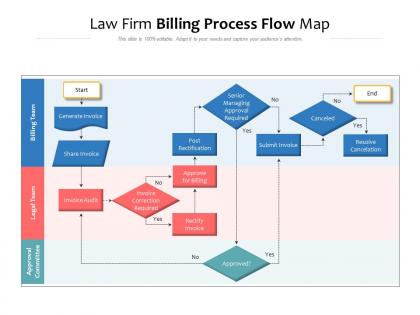
Law firm billing process flow map




Try Before you Buy Download Free Sample Product
 Impress Your
 Audience
 100%
100% Editable
 Save Hours
 of Time


Our Law Firm Billing Process Flow Map are topically designed to provide an attractive backdrop to any subject. Use them to look like a presentation pro.
People who downloaded this PowerPoint presentation also viewed the following :
Law firm billing process flow map with all 2 slides:
Use our Law Firm Billing Process Flow Map to effectively help you save your valuable time. They are readymade to fit into any presentation structure.

FAQs for Law firm billing
Honestly, start with daily time tracking - your team won't remember Tuesday's work by Friday, trust me on this one. Get detailed task codes set up and keep your rates consistent across different practice areas. Your billing software needs to talk to your case management system (saves so much headache later). Monthly realization reports will show you where money's slipping through cracks. Train everyone on billing policies upfront. Always review invoices before sending - catches weird stuff. Oh, and audit your current setup first to see where you're bleeding time or cash.
Dude, start with automating your time tracking and use the same rate codes everywhere. Templates for common stuff will save you tons of time. Get someone else to review entries before they go out - catches so many dumb mistakes. Month-end is always chaos, right? Try spreading that work out instead of cramming it all at once. Oh and grab billing preferences during client intake upfront. Trust me, it cuts down on all those annoying email chains later. Pick one thing first - you'll notice fewer disputes pretty quick.
Dude, law firm billing tech has gotten so much better lately. Automated time tracking runs while you work, so no more sitting there at 5pm trying to remember what you did all day. AI can actually check your entries and suggest codes now. Cloud platforms let you send invoices instantly and clients can pay online - finally, no more waiting for checks in the mail. The integration stuff is pretty sweet too since your billing software connects to case management. Honestly though, don't try to upgrade everything at once. Pick one thing first and go from there.
Honestly, you've got to audit your billing regularly and get everyone on the same page with written policies. Track your time as you go - that Friday afternoon scramble to remember your whole week is a disaster waiting to happen. Write detailed descriptions so clients actually know what they're paying for. Never double-bill for the same work or travel time, obviously. Have partners review bills monthly before they go out (I know, shocking concept). Train associates on reasonable fees too - some of them have zero clue what's appropriate. The key is building a solid paper trail that proves you're taking ethics seriously.
So most law firms bill three ways. Hourly is super common - you track time in 6-minute chunks and bill for what you actually worked. Fixed fees are when you quote one price upfront for the whole thing. Clients love this because no surprises, but honestly it's a pain to estimate right sometimes. Contingency is where you only get paid if they win, then you take a cut of whatever they get. Different types of cases work better with different methods - like you wouldn't do contingency on a simple contract review, you know?
Honestly, just be super transparent from day one about how you charge. Send them an engagement letter breaking down your hourly rates and what different tasks cost - nobody likes billing surprises later. Monthly updates work great too, showing time spent and budget left. I learned this the hard way, but billing fights will wreck relationships faster than anything. Oh, and tell clients to ask questions upfront if they're confused about pricing. Way better to have that awkward convo early than when they're staring at a huge invoice. Keep talking throughout the project, not just when it's time to pay.
Honestly, three things will save your sanity: bill immediately when you finish work (don't wait till month-end like I used to), send automated reminders at 30/60/90 days, and make your invoices super clear. Clients get pissy about vague "legal services" charges - break everything down. Payment plans help with bigger bills, and credit cards are a must these days. Some people literally just forget to pay, which is wild but whatever. The instant billing thing though? That's what actually moves the needle on cash flow.
Honestly? Deal with billing disputes fast and don't get all defensive about it. Yeah, I know it sucks when you did the work and they're questioning it, but just roll with it. Acknowledge their concern right away, then walk them through every charge with documentation. If there's genuine confusion about what was included, be willing to adjust things. Most clients aren't trying to screw you over - they just want to understand where their money went. Skip the email chain back and forth (takes forever) and just hop on a quick call instead. Shows you actually give a damn and usually sorts things out way faster.
Okay so retainer agreements are like your safety net for billing clients. They lay out your rates, payment terms, and what expenses get covered upfront. Honestly, this saves you from so many awkward money conversations later. When you're invoicing, you'll constantly check back to make sure you're charging right and not going over scope. Having everything in writing protects you too - clients can't really argue about payment when they already signed off on terms. Oh and definitely get billing software that tracks retainer balances automatically. Trust me, you don't want to be doing that math by hand every single time.
Honestly, start with your realization rates - that's the brutal truth of how much you actually collect vs what you bill. Days sales outstanding shows how fast cash flows in, which is clutch for planning. Track your average collection time too, plus what percentage needs follow-up (spoiler: it's always higher than you think). The gap between finishing work and sending invoices matters more than people realize - every extra day costs you. Oh, and don't overthink the dashboard thing. Just throw these numbers in a simple spreadsheet and check monthly. You'll spot patterns pretty quick.
Honestly, get your fee agreements locked down first - like, super detailed upfront. Bill monthly minimum because waiting longer is where firms totally screw themselves over. I've watched places bleed money just from being lazy about invoicing, it's painful to see. Have the awkward payment convos early and often. Set up auto-pay whenever clients will do it. New clients or sketchy ones? Definitely grab a retainer first. Oh and track your time religiously as you work - don't try reconstructing it later. Billing isn't some side thing you handle once a quarter, it's core business stuff.
Your billing data is actually amazing for spotting cash flow patterns - who pays fast, who drags it out, seasonal stuff. Pull reports on your top 10 clients first. Most firms have this goldmine sitting there but never dig into it, which is honestly crazy. Track things like average payment days by client type and how different practice areas perform. I'd also look at historical trends so you can see cash crunches coming. The payment behavior patterns will probably surprise you and help with way better budgeting.
Scoping work upfront is brutal - predicting how long something takes before you've even started the research? Nearly impossible. Clients do love knowing costs ahead of time though. Some cases just blow up in ways nobody sees coming. Your team will probably push back too since they're so used to billing hours, and suddenly that whole system feels weird. Cash flow gets messy because you're not getting paid bit by bit throughout. I'd start small with stuff you've done a million times - like basic contract reviews or whatever - where you actually know how long things take. Then move to the complicated stuff once you figure out pricing. Makes way more sense that way.
Dude, billing transparency is huge for keeping clients happy. Clear invoices showing exactly what they're paying for? Game changer. Break down your time entries and describe the actual work you did. Honestly, I've seen so many businesses lose clients over confusing bills - it's wild how much trust you lose when people can't figure out what they're being charged for. Nobody wants surprise fees popping up. Even when your rates are high, clients will stick around if they understand the value they're getting. Just make everything super obvious and you'll be golden.
Your clients are basically giving you a cheat sheet for better billing - they'll tell you exactly what's confusing them about your invoices. Ask them regularly about clarity, timing, all that stuff. What's obvious to you might be gibberish to them. I've seen lawyers write time entries like "research re: matter" and wonder why clients are annoyed. Their feedback reveals patterns too. Maybe your descriptions are too vague, or they actually want summary billing instead of every 6-minute detail. Quarterly check-ins work great. Even simple surveys help you figure this out consistently.
-
Awesome use of colors and designs in product templates.
-
Excellent template with unique design.
-
Great designs, Easily Editable.
-
Out of the box and creative design.