

Linkedin Lead Generation Marketing Plan




Try Before you Buy Download Free Sample Product
 Impress Your
 Audience
 100%
100% Editable
 Save Hours
 of Time


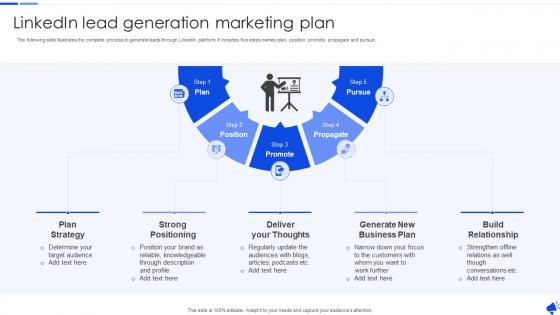
The following slide illustrates the complete process to generate leads through LinkedIn platform. It includes five steps namely plan, position, promote, propagate and pursue.
People who downloaded this PowerPoint presentation also viewed the following :
Linkedin Lead Generation Marketing Plan with all 6 slides:
Use our Linkedin Lead Generation Marketing Plan to effectively help you save your valuable time. They are readymade to fit into any presentation structure.





FAQs for Linkedin Lead
Your headline's gotta sell you, not just state your title. Skip "Marketing Manager" - go with something like "I help B2B companies increase qualified leads by 40%." Way more compelling. Get a decent headshot (no bathroom selfies please) and fix that messy LinkedIn URL. Your experience section? Write it like mini case studies with real numbers. People love metrics. Turn on Creator mode too - gives you extra features that are actually useful. Oh, and post regularly about industry stuff. Honestly, consistency matters more than being profound every time. Your network won't see you if you're invisible. The summary should hit their pain points hard while showing off your wins.
Find groups where your ideal clients actually hang out. Be helpful, not salesy - that's the key. Answer questions thoughtfully and engage with people's posts before you even think about pitching. Honestly, watching people spam groups with their services makes me cringe. Build relationships first by consistently adding value to conversations. Comment on stuff, start discussions, then move good connections to DMs naturally. The goal? Become the person everyone trusts in your niche, not the one they scroll past.
Focus on stuff that actually helps people solve problems. How-to posts work great. So do case studies and industry insights. Please don't be one of those people posting cheesy motivational quotes all day - it's painful to watch. Behind-the-scenes content from your projects does well too. Educational posts let you show off what you know without being pushy about sales. I'd go with 2-3 posts weekly and actually respond when people comment. Consistency matters more than being perfect. Your take on industry trends or lessons from recent work - that's the good stuff right there.
LinkedIn's advanced search is clutch for this. You can filter by company size, job title, industry, location - basically everything. Boolean search is where it gets really good though. Put exact phrases in quotes, use AND/OR for multiple things, parentheses to group stuff together. Definitely save your searches so you don't have to rebuild them constantly. Oh, and start with second/third-degree connections - way better response rates when you have mutual people. I usually go with my most specific search first, then broaden it if I'm not finding enough people.
Dude, always customize those connection requests. Find something from their profile or a recent post - shows you're not just spam-connecting everyone. Keep it brief and focus on common ground instead of immediately pitching whatever you're selling. Skip connecting with random people outside your field unless there's actually a reason. And please don't hit them with a sales pitch the moment they accept. That's basically proposing on date one, which is... awkward. Build the relationship first. Business stuff happens naturally after that. Works way better than being pushy.
So Sales Navigator is pretty solid for finding leads - you can filter by company size, industry, job title, all that stuff. Way better search than regular LinkedIn. I've been using the job change alerts which are clutch for timing your outreach. You also get more InMails to message people you're not connected to yet. The lead lists feature is handy too. Honestly, I'd start by setting up a saved search for your target customers first. Then turn on those alerts so good prospects basically find themselves. Takes like 5 minutes to set up but saves hours later.
Honestly, endorsements and recs are like having friends vouch for you before someone even hits you up. People are totally scanning your profile for proof you're legit - it's just human nature, right? The recommendations are clutch because they actually tell stories about specific wins you've had. I'd focus on getting them from clients in whatever industries you're targeting though. Random endorsements from your cousin's friend? Not gonna move the needle much. But a solid rec from someone in your niche? That's gold.
Check out the filters on your connections page - most people have no clue they even exist. Filter by industry, job title, company size, whatever makes sense for your targets. Export that connections list first though, then throw it into a spreadsheet so you can actually organize things. Look for decision-makers at companies you want to work with, or people who just switched jobs (they're usually more open to new stuff). Oh, and definitely pay attention to who's posting regularly - that activity usually means they're thinking about making moves. Start with your most promising leads and work from there.
Look, persistence beats pushiness every time. Follow up 3-5 times over a couple weeks, but actually bring value each time - share something relevant, drop a mutual connection's name, or reference their recent post. Nobody wants another "just checking in" message (seriously, it's so generic). Space things out every 4-7 days and mix up your approach. Maybe send a voice note for round two, or comment on their LinkedIn stuff. After 4-5 attempts with no response? Move on. You've got better things to do. Oh, and always end with a soft ask instead of going full sales mode on them.
Don't treat LinkedIn like it's this separate thing floating out there by itself. Connect it to your email campaigns, content schedule, all that stuff. So when someone likes your post, your CRM should catch that and trigger your email follow-ups. Same message across everything, just tweak the tone for LinkedIn's whole professional vibe - you know how it is over there. Here's what I learned the hard way though: LinkedIn connections need the same nurturing as other leads. Can't just connect and forget about them. Map them into your sales funnel stages or they'll disappear into the void.
Start with Sales Navigator - it's LinkedIn's own thing so you won't get in trouble. For automation, pick ONE tool like Dripify or We-Connect for connection requests. Don't go crazy with multiple tools or LinkedIn will flag you. Crystal does personality-based message customization which honestly feels stalky but actually works lol. LinkedIn Helper can automate profile visits too. I'd stick with Sales Navigator first though, see how that goes, then maybe add one automation tool later. Less is more with this stuff.
Dude, personal branding on LinkedIn is everything for lead gen. When someone checks your profile (which they always do), you've got like 5 seconds to prove you know your stuff. A solid brand makes people actually want to connect instead of feeling like you're some pushy salesperson. Think warm intro vs cold call vibes. Your profile needs to spell out what you do and who you help - honestly, most people mess this up by being too vague. Oh and definitely nail your headline and summary first. Those sections should hit your prospects' biggest problems right away.
Start with connection acceptance rates - shows if people actually want to hear from you. Response rates matter too, plus how many chats become real meetings. I used to get caught up in profile views and stuff, but honestly? That's just fluff. The conversion path is everything. If you're running ads, watch your cost per lead closely. UTM parameters are clutch for tracking the whole journey in your CRM. Oh, and track which LinkedIn leads actually pay you - that's the real test. Quality beats quantity every single time. Ten people who genuinely engage crush 100 randos who'll never respond.
Honestly, storytelling is where it's at for LinkedIn. Instead of boring sales-y posts, share real client stories or your own messy situations. People eat that stuff up. Pick a specific problem you solved - but here's the thing, don't skip the awkward middle part where everything went sideways. That's what makes it relatable. Use actual names if you can. Structure it simple: here's what happened, here's where we struggled, here's how we fixed it, here's the result. One story per week and you'll see way more comments rolling in. Trust me on this one.
Ugh, the worst thing people do is immediately pitch after connecting. So cringey! Instead, actually engage with their posts first - leave real comments, not just "great post!" Build some rapport before you even think about selling. Generic connection requests are another dead giveaway you're just mass-messaging everyone. Do like 30 seconds of research on their profile or recent content. Start conversations about industry stuff they care about, not your services. I know it takes longer but trust me, relationships first = way better results. The sales part happens naturally once they actually know you.
-
Incredibly beautiful designs that will help you get noticed! These eye-catching templates are perfect for corporate presentations that can be altered to fit any occasion or taste.
-
Good research work and creative work done on every template.