


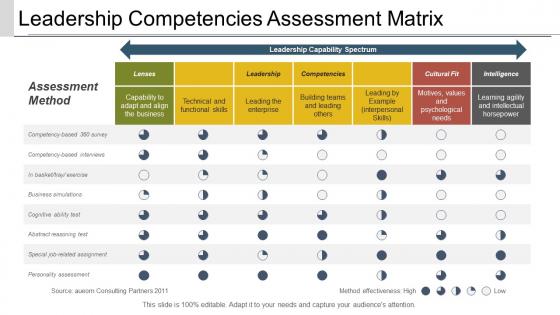
Bewertungsmatrix für Führungskompetenzen





Try Before you Buy Download Free Sample Product
 Impress Your
 Audience
 100%
100% Editable
 Save Hours
 of Time


Identifizieren und erstellen Sie die nächste Generation von Führungskräften, indem Sie die PPT-Folie für die Bewertungsmatrix für Führungskompetenzen verwenden. Legen Sie verschiedene Strategien fest und bauen Sie Ihr Geschäft auf einem ausländischen Markt mit Hilfe dieser PowerPoint-Grafik für Führungsqualitäten aus. Verwenden Sie die Präsentationsvorlage für Führungskompetenzen und heben Sie die Schritte hervor, um Ihren Kunden einen Mehrwert oder Nutzen zu bieten. Erklären Sie, wie Sie mehrere Mitarbeitergruppen und Geschäftsprozesse mit Hilfe der PPT-Slideshow zum Führungsverhalten verwalten. Mit Hilfe eines PowerPoint-Layouts für das Kompetenzmanagement können Sie die Entwicklung von Führungskräften unterstützen und das Wachstum einer Organisation maximieren. Verwenden Sie das PPT-Visual zur Führungskräfteentwicklung, um einige der wichtigsten Eigenschaften von Führungskräften aufzulisten, die die Produktivität des Unternehmens steigern. Sie können Ihre Präsentation einfach und kreativ gestalten, indem Sie hochwertige Symbole verwenden, die in der Folie vorhanden sind. Schaffen Sie ein positives Arbeitsumfeld in Ihrem Team, indem Sie unsere gebrauchsfertige PowerPoint-Folie zur Kompetenzarchitektur herunterladen.
People who downloaded this PowerPoint presentation also viewed the following :
Führungskompetenzen-Bewertungsmatrix mit allen 5 Folien:
Beeinflussen Sie die Argumentation mit unserer Leadership Competencies Assessment Matrix. Bringen Sie die Leute dazu, einen anderen Blickwinkel zu betrachten.

FAQs for Leadership
Honestly, it comes down to three things - communication, trust, and rolling with changes. You'll need to overcommunicate everything now, which feels weird at first but trust me on this. Check in more often and actually listen during calls instead of just waiting to speak. Building trust is trickier without random office chats, so be super transparent about decisions and give people real freedom to work how they want. Remote stuff shifts constantly too, so staying flexible is huge. Start with more one-on-ones and straight up ask your team what communication style works for them.
Dude, emotional intelligence totally changes how you lead. You get better at reading what your team actually needs instead of just guessing. When you know your own triggers, you don't just blow up under pressure - honestly made such a difference for me personally. People stick around when they feel understood, which builds way stronger relationships. Conflicts become easier to handle too. You can motivate people by figuring out what actually drives them. My advice? Just pause before reacting in stressful moments and check what you're feeling first. Sounds simple but it's harder than you'd think.
Look, adaptability really is what makes or breaks leaders these days. Markets flip overnight, so you've got to pivot strategies fast. Different team members need different approaches too - what works for Sarah might totally bomb with Mike. The frameworks usually focus on how you handle uncertainty and bounce back from screwups. Plus they want to see you ditch the "we've always done it this way" mentality. Try keeping track of moments you had to adapt this week - even small stuff counts. It's honestly pretty draining but you'll start noticing your own patterns.
Honestly, you can't lead people if you can't talk to them properly. Like, how are you gonna give feedback or share your vision if nobody gets what you're saying? Good leaders adapt how they communicate depending on who they're talking to - that's huge. Both speaking AND listening matter too. I've noticed the best managers I've had were just naturally good at reading the room, you know? My advice? Start paying attention to how people react when you explain stuff. If you're getting blank stares a lot, that's probably on you. Ask for feedback on your communication style - it's awkward but super helpful.
So for leadership assessment, 360-degree feedback is your best bet - gets input from managers, peers, and direct reports. Behavioral interviews work great too. Leadership simulations are honestly pretty revealing since people can't fake their way through realistic scenarios. Psychometric tests like Hogan or EQi-2.0 measure emotional intelligence well. Oh, and regular one-on-ones with structured competency discussions help with ongoing development. I'd start with 360s though - they're not too hard to set up and you'll get tons of useful data. The simulations might be overkill unless you're dealing with senior roles.
Honestly, you've gotta model that curiosity yourself first. When stuff goes wrong, ask "what'd we learn?" instead of playing blame games - I've watched managers completely flip their team culture just by switching up how they talk about mistakes. Share times you screwed up too, makes a huge difference. Give people room to experiment without freaking out if things don't work. Oh and this is key - celebrate the effort and growth, not just the wins. That mindset shift is everything.
Honestly, you'll want to focus on cultural intelligence and really listening to what people actually mean behind their words. Inclusive communication is huge too. Different backgrounds totally shape how people see things, so you've got to adapt your leadership style accordingly. Oh, and emotional intelligence - that's probably the most underrated skill for handling how differently people express themselves and deal with conflict. Creating psychological safety matters because diverse teams fall apart when people can't be themselves. I'd start by being brutally honest about your own biases first though. That part sucks but it's necessary.
Look, people notice when you consistently make the right call, especially during tough situations. They start trusting your judgment because you're not just another manager who preaches values in meetings then does whatever's convenient. That builds real credibility - suddenly you're someone they actually want to follow, not just someone they have to report to. Here's what worked for me: be upfront about how you make decisions. Walk them through the ethical stuff you considered. Honestly, most people never see behind the curtain like that, and it shows them your thought process while reinforcing that you're legit.
Honestly, I'd start by blocking out time each month just to think big picture - sounds weird but it works. Look at how your daily stuff connects to where you want to be in 2-3 years. Play the "what if" game a lot. What if this trend continues? What if my competitor does X? Reading industry reports helps too, though half of them are total snoozefests. Here's the thing that actually moves the needle: talk to people completely outside your world. They'll spot stuff you're blind to. Oh, and don't overthink it - strategic thinking is really just organized daydreaming about the future.
Honestly, conflict resolution is huge for leadership - probably top 5 skills you need. You'll constantly face team disagreements, competing priorities, all that messy stuff. Here's the thing though: conflict isn't always bad. Sometimes it means people actually care and have different valuable perspectives. Your job is channeling that energy constructively instead of letting it blow up. I've seen teams fall apart when leaders just avoid dealing with tension - productivity tanks and everyone becomes miserable. Focus on really listening to understand what people actually want underneath their arguments, not just their surface complaints. Makes a huge difference.
Okay so you'll need three main things: strategic vision, emotional intelligence, and being adaptable. First, you've gotta paint that picture of where things are headed and explain why people should actually care - not just the what but the why. Emotional intelligence is honestly massive because you're basically a therapist half the time, dealing with everyone freaking out about change. Then adaptability keeps you sane when everything goes sideways (which it will). I'd figure out which one you're already decent at, then work on whatever you're weakest in first.
Honestly, mentorship programs are game-changers for developing leaders. Your mentee gets front-row seats to watch experienced leaders tackle hard decisions and deal with office drama - can't get that from any leadership book. It's like having a safe practice space where they can mess up, get real feedback, and actually build confidence. The networking piece is huge too since mentors open doors you didn't even know existed. Oh, and here's the thing most people get wrong - match personalities over job titles. Chemistry beats credentials every time when you're trying to create these relationships.
Honestly, you can't be a good leader without solid decision-making skills. Your team needs to see you analyze situations fast and make calls even when you don't have all the info. Otherwise you create these annoying bottlenecks where everyone's just waiting around. But here's the thing - being decisive isn't enough on its own. You've got to explain your reasoning so people actually get behind your choices. I've noticed the best leaders practice this stuff constantly but still listen to their team's input. It's like... confidence mixed with curiosity, if that makes sense.
Track the numbers - productivity, project timelines, who's staying vs leaving. That stuff shifts when you change how you lead. But team surveys and one-on-ones tell you way more honestly. Pick maybe 2-3 things you want to get better at, then check in after 3-6 months to see if it's actually working. 360 feedback is clutch too, though I know it feels awkward at first. Start simple - just ask your team what's going well and what sucks. The retention data usually follows if you're doing things right.
Look, understanding different cultures can make or break your leadership game. People communicate differently - some want direct feedback, others need it wrapped in more context. I learned this the hard way with a team member who thought I was being rude when I was just trying to be efficient lol. Ask your people how they prefer to receive feedback and work together. You'll avoid so many awkward misunderstandings. When team members feel like you actually get their perspective, they're way more engaged. Plus you make smarter decisions because you're seeing problems from multiple angles instead of just your own bubble.
-
Excellent Designs.
-
Unique research projects to present in meeting.