


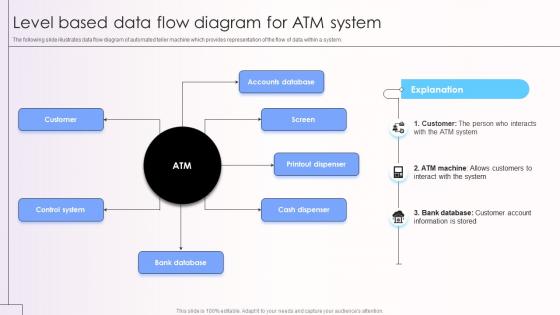
Level Based Data Flow Diagram For ATM System




Try Before you Buy Download Free Sample Product
 Impress Your
 Audience
 100%
100% Editable
 Save Hours
 of Time


The following slide illustrates data flow diagram of automated teller machine which provides representation of the flow of data within a system.
People who downloaded this PowerPoint presentation also viewed the following :
Level Based Data Flow Diagram For ATM System with all 9 slides:
Use our Level Based Data Flow Diagram For ATM System to effectively help you save your valuable time. They are readymade to fit into any presentation structure.








FAQs for Level Based Data Flow Diagram
So basically there's a card reader, keypad, cash dispenser, and receipt printer - plus the brain of the whole thing which is the CPU. When you stick your card in, it reads your info and shoots it over to your bank's servers to check your PIN and balance. Honestly wild that it happens so fast. Then the CPU tells the cash part how much to spit out and prints your receipt. It's like having a tiny specialized computer that's really just focused on turning your digital money into actual bills. Pretty simple setup when you think about it.
So ATMs use two things to verify it's really you - your card plus your PIN. The machine reads your card's stripe or chip first, then sends your encrypted PIN to your bank to double-check. Honestly the security is pretty solid - encrypted connections, cameras, transaction limits, all that stuff. Your account locks after too many wrong PIN tries too. But here's the thing - most fraud happens when people get careless at the machine itself. Always cover your hand when typing your PIN and don't let random people "help" you. That's where they get you.
So basically you've got your main ones - withdrawing cash, checking your balance, deposits, and moving money between accounts. Those cover like 90% of what people actually do. PIN changes and getting mini statements are pretty standard now too. The newer ATMs have bill pay and loan stuff, but honestly? I've never seen anyone use those features lol. If you're building something for ATMs, just nail those first four really well. Cash and balance checks are still what most people care about anyway.
So basically when an ATM is online, it's talking directly to your bank right then and there - checking your balance, processing everything instantly. But when it goes offline? That's when things get weird. The machine can still give you cash using whatever data it has stored, but you'll hit lower withdrawal limits and some features just won't work. I hate when this happens because you never know if the transaction actually went through properly. Most ATMs will try reconnecting on their own, but those offline transactions get processed later in batches. Honestly, if you see an "offline" warning, I'd just find another machine.
So basically when you stick your card in, the ATM encrypts all your info and shoots it over to your bank through secure lines - could be phone lines, internet, whatever. Your bank's processor checks your PIN and balance, then either says yes or no. Pretty wild that this whole back-and-forth happens in like 3 seconds, especially since ATMs are ancient tech from the 70s that just keeps getting tweaked. The response bounces back with approval and your new balance. Oh, and if you're doing ATM monitoring stuff, network uptime is huge because any connection hiccups will tank your transaction rates.
Dude, ATM security threats are wild these days. Skimmers are the big one - they're getting crazy sophisticated and honestly kinda terrifying. You've also got physical tampering, network attacks, and people trying social engineering tricks to get card data or straight cash. For protection? Multi-layer everything. Encrypted PIN pads are a must, plus anti-skimming tech and those transaction monitoring systems. Don't forget regular physical checks of the machines either - sometimes the old-school approach works best. Network side needs end-to-end encryption and solid communication protocols. Real-time fraud detection helps catch stuff as it happens.
Yeah mobile banking has totally changed the ATM game. Most people just use their phones now for basic stuff - checking balances, transfers, depositing checks from home. Why walk to a machine, right? Banks are definitely rethinking where they put ATMs since way fewer people use them. Though I still see crazy lines at ATMs near downtown bars because apparently half the city still needs cash for drinks lol. If you're working on any banking projects, you'll want to account for this whole mobile-first thing that's happening.
So basically ATMs are just computers running tons of software. Your PIN gets verified, cash dispensed, account updated - all happening through different programs talking to each other. There's the banking software connecting to your bank's servers, the interface you see on screen, security stuff encrypting everything. Honestly pretty impressive when you think about it. Background diagnostic programs catch problems before they break too. Banks can even troubleshoot remotely now without sending someone out. Wild to think there's probably more code in an ATM than my old phone had!
Ugh, ATM compliance is such a pain. You've got PCI DSS for payment security - that's the worst part honestly, covers encryption, physical security, everything. Then there's ADA accessibility requirements and banking stuff like the Bank Secrecy Act. Don't forget EMV standards for chip cards. Plus whatever your local financial authority wants (FDIC, state banking departments). My advice? Find vendors who already have their certs because doing it yourself takes forever. We're talking months of delays if you try to go compliant from zero.
So banks basically track all your ATM habits - when you withdraw, how much, where you go. Pretty smart actually. They use that info to predict when machines will run low and stock them ahead of time. No more "temporarily out of service" signs when you desperately need twenty bucks. They also figure out busy times to schedule maintenance better. Oh, and they can spot customers who always have problems and maybe offer them account upgrades or whatever. It's all about fixing issues before people get annoyed.
Honestly, contactless is taking over everything - NFC payments, QR codes, face/fingerprint scans. AI fraud detection is getting crazy good at catching sketchy stuff instantly. Crypto ATMs are everywhere now, though half look sus to me lol. The screens are way better too, like actual tablets with personalized options. Nobody wants to touch buttons anymore, so cardless transactions are becoming standard. My cousin's bank just rolled that out and she loves it. If you're upgrading anything, definitely go contactless first. The interface improvements are nice but won't matter if people won't use it.
ATMs are honestly huge for getting banking to people who need it most. Rural areas that'll never get a full branch? Boom, drop in an ATM and suddenly folks can grab cash or check balances without that brutal drive to the city. Banks love them too since they're way cheaper than building actual branches. The 24/7 thing is clutch for people with weird work schedules - I never really thought about that before. If you're working on inclusion stuff, ATM placement is probably your quickest win. You can literally see the impact right away instead of waiting around for some complicated program to maybe work.
Newer ATMs are honestly so much better than those old clunky ones. Contactless payments work great now, plus they've got fingerprint scanners and screens that don't make you want to throw your phone at them. You can even start transactions on your app before walking up - pretty convenient. The fraud detection catches card skimmers automatically too. Most let you deposit checks by taking a photo, pick different bill denominations, and some even give coins back. Oh, and definitely go contactless when you're upgrading - people expect it these days. Way less gross than touching those grimy keypads anyway.
Honestly, UI can make or break the whole ATM thing. When the buttons are clear and everything flows logically, people get in and out fast without stress. But terrible design? Ugh, customers get so frustrated they'll literally walk away and find another machine. I've seen people struggle with confusing interfaces - it's painful to watch. Good design cuts down on mistakes and makes transactions way smoother. Plus customers actually feel like the bank gives a damn about their experience. Clean, simple interfaces = fewer complaints and more people actually using your ATMs.
Yeah, ATMs definitely have an environmental impact - they're constantly sucking up electricity and creating e-waste when banks upgrade them. The paper receipts add up too, though that's probably the smallest issue. Most banks are getting better about it by switching to energy-efficient models and setting up recycling programs for old machines. Some are even using solar power where it makes sense. Oh, and pushing digital receipts obviously helps. If you're looking at vendors, I'd ask about their sustainability certs and what they actually do with equipment when it's done. Banks also seem to be placing them more strategically now instead of just throwing ATMs everywhere.
-
Thank you for offering such helpful pre-designed templates. They are really beneficial to me in my job.
-
Great work on designing the presentation. I just loved it!