

Management meeting agenda powerpoint slides




Try Before you Buy Download Free Sample Product
 Impress Your
 Audience
 100%
100% Editable
 Save Hours
 of Time


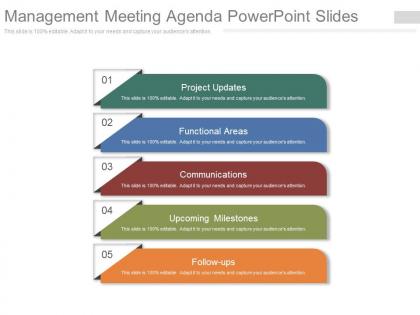
Generate a buzz with our Management Meeting Agenda Powerpoint Slides. They are good at creating curiosity.
People who downloaded this PowerPoint presentation also viewed the following :
Management meeting agenda powerpoint slides with all 4 slides:
Bring your thoughts to the forefront with our Management Meeting Agenda Powerpoint Slides. They get considered before all else.
FAQs for Management meeting
You'll want clear objectives and time slots for each topic, plus someone leading each discussion. Send it out 24 hours ahead with any prep materials - otherwise people just wing it. Start with your biggest items while everyone's actually paying attention (trust me on this one). Don't forget action items from last time and leave room for random stuff that comes up. Build in buffer time because honestly, when does anything ever finish on schedule? Oh, and wrap up with who's doing what by when - otherwise nothing actually happens after you leave the room.
Honestly, time limits are a game changer for meetings. You know that one person who always goes off about their random project? This totally shuts that down. Give each topic like 10-15 minutes max and people actually get to the point instead of rambling forever. Plus you'll figure out what stuff actually needs a whole separate meeting vs just a quick update. I learned this the hard way after sitting through way too many pointless 2-hour "discussions." Just estimate realistic time blocks for each thing and then actually stick to them - be nice but firm when transitioning.
Honestly, getting input from your team beforehand is a game-changer. Send a quick survey or just ask via email what people want to discuss. I've sat through way too many meetings where the boss decides everything and then acts shocked when nobody talks. When people contribute topics, they actually show up ready to participate instead of scrolling Instagram under the table. Draft your agenda and send it out a few days early with "what am I missing?" You'll be amazed how much more engaged everyone gets. It's like the difference between a real conversation and a lecture nobody asked for.
Dude, just get people to submit stuff beforehand - saves you from that awkward "so... what are we talking about?" moment. I use Notion but honestly even a basic Google Doc works. Fellow and Monday.com are solid if you want something fancier. The game-changer though? Time-blocking each topic. Otherwise you'll waste forever debating something minor while the important stuff gets rushed at the end. Oh, and templates for recurring meetings are clutch - you don't have to rebuild everything from scratch each week. Start simple and see what sticks.
Hit the big stuff first - decisions that actually need everyone there and can't wait. People pay attention better at the start anyway. Budget approvals, anything crossing departments, that kind of thing goes early. Honestly, routine updates should go last (or just be an email instead). If someone's only needed for one topic, put that up front so they can bail early. Quick test: does this thing actually need discussion or are you just making announcements? Because there's a difference, and half these meetings could've been emails. Trust me on that one.
Put follow-ups right after you open the meeting - like second thing on your agenda. Just run through what people were supposed to do last time and get quick updates. Close out the finished stuff, move the rest forward. I actually love this part because you can see real progress happening, you know? Track everything in a shared doc so nothing gets lost. Takes maybe 10-15 minutes but keeps everyone honest. Shows the team their commitments actually matter.
Ugh yeah, you gotta be the meeting cop but like, nicely. Set time limits upfront and actually stick to them. I made this mistake once where we spent literally 30 minutes talking about the office coffee situation - never again! When people go off track, just say "let's circle back on that later" or "take it offline." Keep a "parking lot" list going for random stuff that comes up. People won't get annoyed if they feel heard, you know? And honestly? Get someone else to watch the clock so you don't have to be the bad guy about time.
Honestly, just add a "Progress Check" section to every meeting agenda. Sounds boring but it totally works. Go through what people committed to last time and have them report back - who finished what, who didn't, and why. Track everything with names and deadlines, then actually follow up (this is where most people fail tbh). Don't make it weird and punitive though. Focus on helping remove whatever's blocking them instead of making people feel bad. Once everyone knows they'll get asked about their commitments, they'll naturally start following through more.
Honestly, virtual meetings are just messier - you need way more buffer time because someone's always having audio issues or can't figure out screenshare. I learned this the hard way lol. Make sure you're super clear about who's doing what since you can't just point at someone across the table. Keep things shorter too - staring at screens kills people's attention spans faster. In-person meetings? Way more forgiving. You can go off-script, read facial expressions better, let conversations flow naturally. Virtual agendas need to be tight and structured, but face-to-face ones can be looser.
Honestly, 24-48 hours ahead is the sweet spot - gives people time to prep without forgetting about it. I'd skip email if you can and just drop it in Slack or wherever your team actually hangs out. Break down each topic with rough time estimates so nobody's caught off guard. Oh, and if there are big decisions coming up, call those out upfront so people can think through their stance beforehand. Also maybe chase down anyone who hasn't seen it yet, because there's always that one person who misses everything.
Honestly, just ask people what they want to talk about! I'll usually shoot a quick "what should we cover?" text a few days before. Anonymous suggestion boxes work too if your team's more introverted. Oh, and try ending each meeting with 10 minutes to brainstorm the next one's topics. Maybe rotate who picks agenda items each month? That keeps things fresh. A shared doc where people can drop ideas during the week is clutch too - way better than putting them on the spot. Trust me, once people feel like their input actually matters, your meetings won't suck anymore.
Dude, bad agendas are meeting killers. People interrupt each other constantly, key decisions never happen, and half the team's basically daydreaming. Random tangents eat up time - I swear I've sat through entire debates about parking spots that went nowhere. The really important stuff? Gets shoved to the end when everyone's brain-dead. Short sentences mixed with longer ones work better than walls of text, by the way. Send that agenda out a day early so people can prep. Trust me, it's the difference between productive discussions and total chaos.
Honestly, sharing an agenda beforehand is a game-changer for building trust. People can actually prep instead of sitting there confused (been there too many times). You're showing everyone what needs to get done and why their time matters. Plus it gets people talking more because they know what's coming and can think through their thoughts ahead of time. I always throw a "questions/concerns" bit at the end - gives anyone permission to bring up random stuff. Oh, and following through on what you say you'll cover? That consistency really shows your team you mean business about being transparent.
Honestly, post-meeting surveys work great - just ask if people felt like objectives were hit and time wasn't wasted. I always do the "start/stop/continue" thing because it's super quick but tells you everything. Track stuff like whether you actually stuck to your time limits and if action items get done later. Oh, and definitely get feedback within 24 hours while it's still fresh. Sometimes I'll compare what we planned to accomplish versus what actually happened - that's pretty eye-opening. Pick whatever method feels right and stick with it. You'll start seeing patterns after a few meetings.
Honestly, I'd tie everything back to your big company goals first. Like, what are you trying to hit this quarter? Start there, then build your agenda around progress updates and whatever roadblocks are slowing you down. Skip the random operational stuff if you can - though yeah, some of that always sneaks in anyway. The key is making it obvious how each topic actually connects to your bigger strategy. I try to spend at least 60% of the time on strategic stuff instead of just putting out fires. Otherwise people get stuck in the weeds and nothing important gets done.
-
Professional and unique presentations.
-
Great quality product.