

Managing Interpersonal Conflict At Workplace Powerpoint Presentation Slides




Try Before you Buy Download Free Sample Product
 Impress Your
 Audience
 100%
100% Editable
 Save Hours
 of Time


Workplace conflict is inevitable when employees of various backgrounds and work styles are brought together for a shared business purpose. Grab our Managing Interpersonal Conflict at Workplace template. It helps you avoid such disputes. Our Workplace conflict scenarios decks primary goal is to assist businesses in resolving interpersonal conflicts, strengthening team relationships, improving employee morale, reducing employee absenteeism, and improving productivity. It begins with the latest organizational conflict trends, statistics, and different phases. Secondly, the complete deck caters to a section through which managers can highlight the impact of unresolved team conflict on the companys financial performance. Additionally, there are some common scenarios of workplace conflict and how corporates can overcome them. Furthermore, businesses can overcome employee conflict by developing an in-house strategy or by taking the assistance of a third party. Finally, the module includes a key performance indicator KPI dashboard that allows businesses to assess the impact of conflict resolution strategies on employees and company performance. Get instant access to this powerful template.
People who downloaded this PowerPoint presentation also viewed the following :
Content of this Powerpoint Presentation
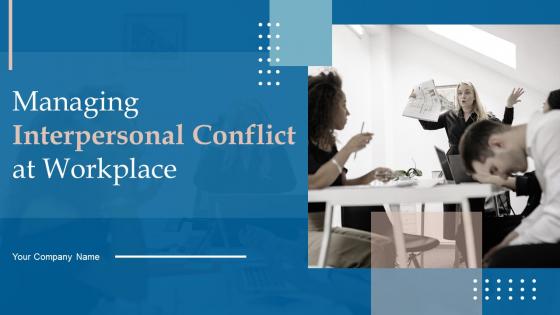
Slide 1: This slide introduces Managing Interpersonal Conflict at Workplace. Commence by stating Your Company Name.
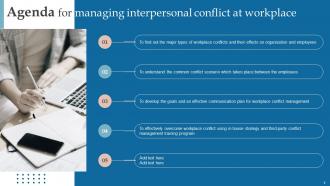
Slide 2: This slide depicts the Agenda of the presentation.
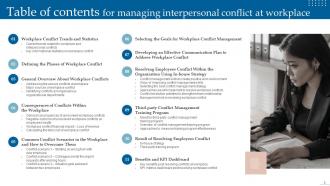
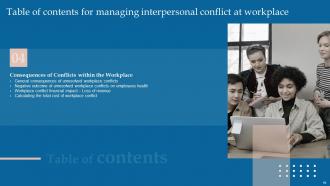
Slide 3: This slide incorporates the Table of contents.
Slide 4: This slide highlights the Title for the Topics to be discussed next.
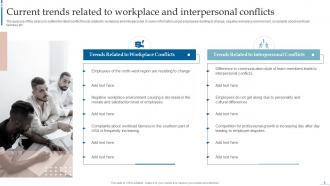
Slide 5: This slide exhibits the Current trends related to workplace and interpersonal conflicts.
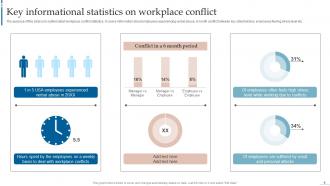
Slide 6: This slide talks about the Key informational statistics on workplace conflict.
Slide 7: This slide mentions the Heading for the Components to be discussed further.
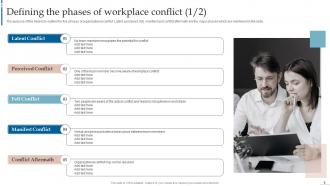
Slide 8: This slide deals with Defining the phases of workplace conflict.
Slide 9: This slide continues Defining the phases of workplace conflict.
Slide 10: This slide elucidates the Title for the Ideas to be covered in the following template.
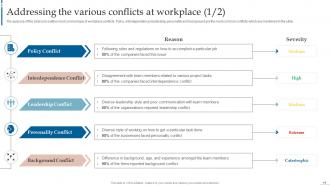
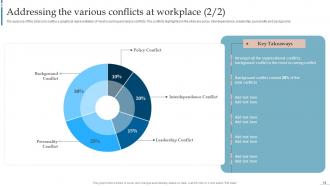
Slide 11: This slide focuses on Addressing the various conflicts at workplace.
Slide 12: This slide continues Addressing the various conflicts at workplace.
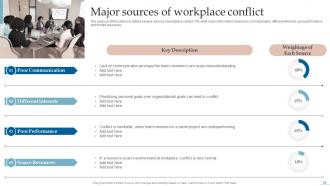
Slide 13: This slide exhibits the Major sources of workplace conflict.
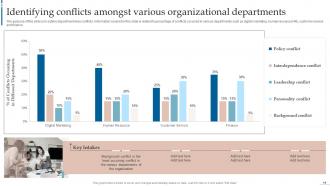
Slide 14: This slide depicts Identifying conflicts amongst various organizational departments.
Slide 15: This slide includes the Heading for the Ideas to be discussed next.
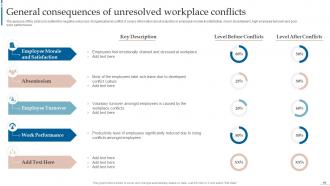
Slide 16: This slide talks about the General consequences of unresolved workplace conflicts.
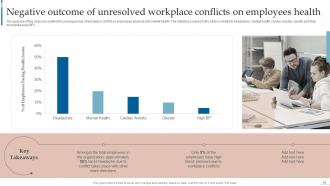
Slide 17: This slide outlines the Negative outcome of unresolved workplace conflicts on employees health.
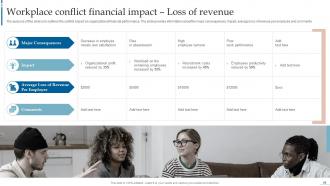
Slide 18: The purpose of this slide is to outlines the conflict impact on organizational financial performance.
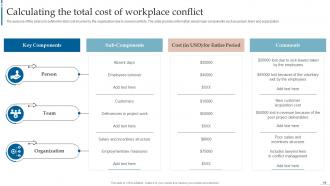
Slide 19: This slide focuses on Calculating the total cost of workplace conflict.
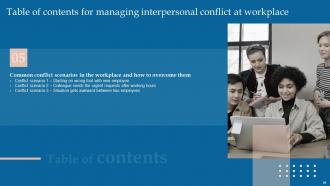
Slide 20: This slide mentions the Title for the Components to be covered in the forth-coming template.
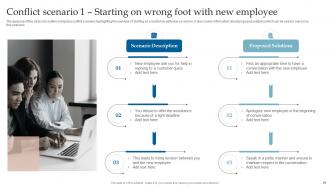
Slide 21: This slide outlines the workplace conflict scenario highlighting the overview of starting on a bad terms with new co-worker.
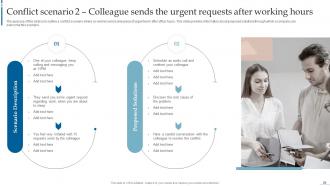
Slide 22: This slide states a conflict scenario where co-worker send some piece of urgent work after office hours.
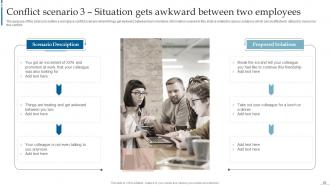
Slide 23: This slide talks about the conflict scenario where things get awkward between team members.
Slide 24: This slide mentions the Heading for the Topics to be discussed further.
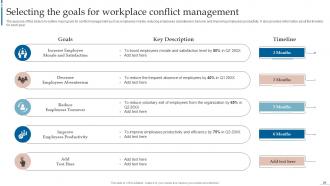
Slide 25: This slide outlines the major goals for conflict management.
Slide 26: This slide depicts the Title for the Topics to be covered in the following template.
Slide 27: This slide focuses on Developing an effective communication plan to address workplace conflict.
Slide 28: This slide displays the Heading for the Contents to be discussed next.
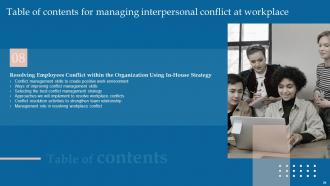
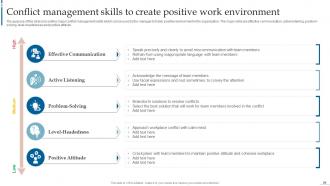
Slide 29: This slide talks about the Conflict management skills to create positive work environment.
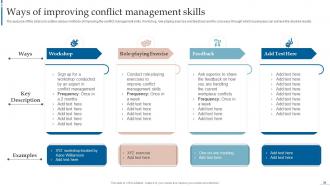
Slide 30: This slide states the Ways of improving conflict management skills.
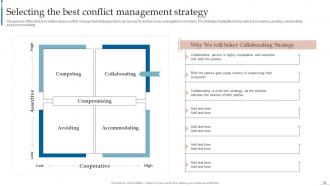
Slide 31: This slide deals with Selecting the best conflict management strategy.
Slide 32: This slide reveals the Approaches we will implement to resolve workplace conflicts.
Slide 33: This slide talks about the Conflict resolution activities to strengthen team relationship.
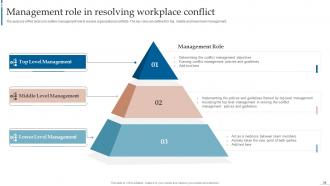
Slide 34: This slide indicates the Management role in resolving workplace conflict.
Slide 35: This slide displays the Title for the Ideas to be covered further.
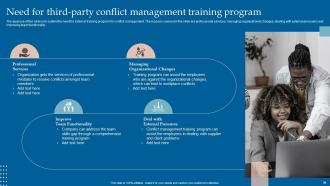
Slide 36: This slide exhibits the Need for third-party conflict management training program.
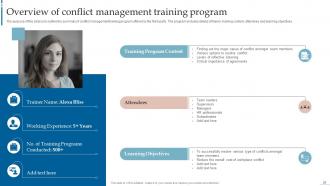
Slide 37: This slide presents the Overview of conflict management training program.
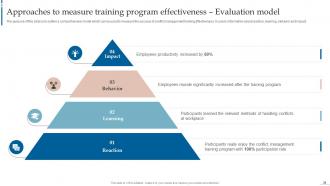
Slide 38: The purpose of this slide is to outline a comprehensive model to measure the success of conflict management training effectiveness.
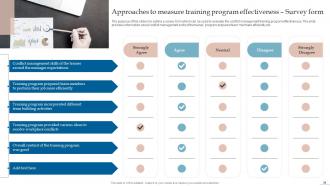
Slide 39: This slide depicts a survey form which can be used to evaluate the conflict management training program effectiveness.
Slide 40: This slide reveals the Heading for the Ideas to be discussed in the following template.
Slide 41: This slide deals with Showcasing the results of resolving employees conflict, In-house strategy.
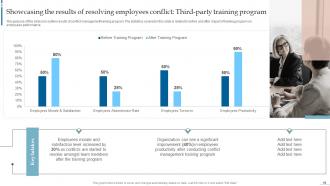
Slide 42: The purpose of this slide is to outline results of conflict management training program.
Slide 43: This slide displays the Title for the Contents to be covered next.
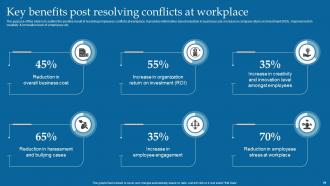
Slide 44: The purpose of this slide is to outline the positive result of resolving employees conflicts at workplace.
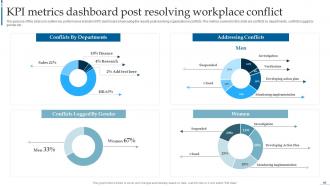
Slide 45: This slide states the KPI metrics dashboard post resolving workplace conflict.
Slide 46: This is the Icons slide containing all the Icons used in the plan.
Slide 47: This slide presents Additional information.
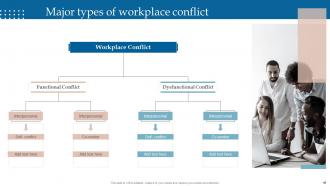
Slide 48: This slide states the Major types of workplace conflict.
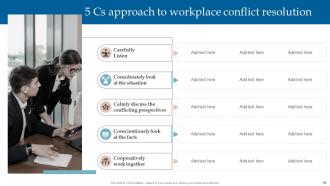
Slide 49: This slide includes the 5 Cs approach to workplace conflict resolution.
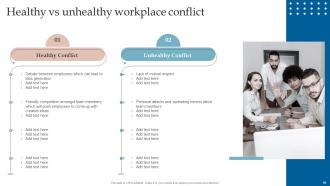
Slide 50: This slide talks about Healthy vs unhealthy workplace conflict.
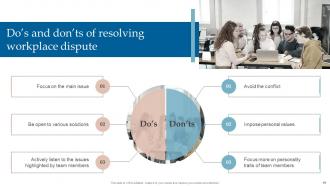
Slide 51: This slide displays the Do’s and don’ts of resolving workplace dispute.
Slide 52: This is the About us slide. State your company-related information here.
Slide 53: This slide is used for showcasing the organization's mission, vision, and goals.
Slide 54: This is Our team slide. State your team-related information here.
Slide 55: This is the Venn diagram slide.
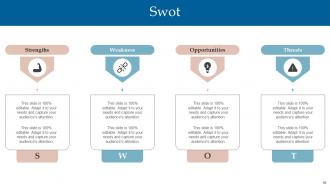
Slide 56: This slide displays the Swot analysis.
Slide 57: This is the 30 60 90 Days plan slide for efficient planning.
Slide 58: This slide illustrates the company Roadmap.
Slide 59: This is the Thank You slide for acknowledgement.
Managing Interpersonal Conflict At Workplace Powerpoint Presentation Slides with all 64 slides:
Use our Managing Interpersonal Conflict At Workplace Powerpoint Presentation Slides to effectively help you save your valuable time. They are readymade to fit into any presentation structure.













FAQs for Managing Interpersonal Conflict At Workplace
Poor communication's usually the big culprit, plus when people have totally different work styles or aren't clear on who does what. Limited resources make teams competitive too - nobody wants to fight over scraps. Oh, and personality clashes are inevitable. You know that coworker who interrupts constantly? Yeah, that creates problems. Deadline mismatches cause friction as well. My advice? Watch for early tension signs instead of waiting until things explode. Way easier to fix small issues before they become massive headaches that derail everything.
Honestly, just listen first - like *really* listen. Don't plan what you're gonna say back while they're talking (I'm so guilty of this). Reflect their feelings like "you're pissed because..." and ask questions instead of jumping straight to fixes. People mostly want to feel heard anyway. Pay attention to how they sound, not just their words. Once they feel understood, they'll actually listen to you too. Oh and summarize their main points before you share yours - sounds obvious but it works. Active listening is seriously underrated for stopping fights before they escalate.
Honestly, emotional intelligence is a game-changer for handling conflict. You know how people get mad about one thing but they're actually upset about something totally different? That's where reading emotions comes in handy. When you can spot what's really bothering someone, you can tackle that instead of arguing about surface stuff. I've noticed that staying calm yourself prevents things from turning into those awful screaming matches - nobody has time for that drama. Here's what actually works: next time you sense tension building, take a beat and figure out what emotions are happening before you try fixing anything. Sounds simple but it's surprisingly effective.
Honestly, timing is everything - catch stuff before you're both pissed off. Don't let things build up because that just makes everything worse later. When you do talk, actually listen to what they're saying instead of just waiting for your turn. Focus on the specific thing that happened, not their whole personality (people get super defensive otherwise). I've learned to say "I felt..." instead of "you always..." - way less accusatory. If it's getting heated, just pause it. Take a break or whatever. The whole point is figuring it out together, not being right.
Honestly, cultural stuff makes a huge difference in how people handle conflict. What you think is being direct? Someone else might see as totally aggressive. Some cultures are all about saving face and keeping things smooth, others want you to just say it straight up. I learned this the hard way at work once - yikes. You've gotta adapt your style depending on who you're talking to. Try to figure out their background and how they like to communicate. When you're not sure, just ask them how they prefer handling disagreements. Shows you care and usually works way better.
Honestly, you'll spot it in their emails first - suddenly everyone's being weirdly formal or short. Body language gives it away too. Crossed arms, avoiding eye contact, that awful silence when they're both in a room together. People start picking sides on random stuff that shouldn't even matter. Also watch for when someone who usually speaks up just... doesn't anymore. Side conversations are a dead giveaway. The whole vibe shifts and you can literally feel the tension - sounds dramatic but it's true. Catch it early though, before small annoyances turn into actual drama.
Honestly, the best thing you can do is lay out some ground rules first - no interrupting, no personal digs, that kind of stuff. Then actually focus on the real issue instead of dragging up old drama. I always try asking "help me understand where you're coming from" rather than going on the attack. Oh, and repeat back what they said before you respond - sounds weird but it really works! Take breaks if things get too intense. You're trying to understand each other, not "win" the argument. Maybe check in with them later too and see how they're feeling about everything.
Honestly, most fights aren't about what people think they're fighting about. Ask "why" questions instead of getting stuck on the surface stuff - like "what's this really about for you?" or "help me understand why this matters so much." Repeat back what you hear so they know you actually get it. I swear the real issue is usually something totally different than what started the argument. Watch for when their emotions seem way too big for the problem, or if they bring up random past stuff. Next time just start with "okay what's actually going on here" - sounds simple but it works.
Look, timing is everything with this stuff. Wait for emotions to cool down a bit, then make light of the situation - not the people. I've literally watched meetings flip completely because someone cracked a joke about how ridiculous things got. Something like "well, that escalated quickly" with a grin can totally reset the room's energy. Self-deprecating humor works great too. Just don't go after anyone personally during conflict - that'll backfire hard. Find what's absurd about the circumstances instead. Wait for a natural pause, then acknowledge the elephant in the room. Works way better than you'd think.
Honestly, mediators are game-changers for messy conflicts. Having someone neutral there means you both actually get heard instead of just talking past each other. They're good at cutting through all the surface drama to figure out what's really bugging everyone. Plus you get real structure instead of those awful conversations that just go in circles - you know the ones I mean? The best part is they push you toward solutions that work for everyone, not just declaring a winner. Way better than letting things fester and get worse.
Okay so first thing - look at what YOU did before blaming them. I know it sucks but like, what did you say that made things worse? Your tone probably didn't help either. We get so caught up in being right that we forget how we're coming across. Were you actually listening or just waiting to jump in? Write down your part without making excuses for it. Honestly this kind of self-reflection is huge - it'll help you avoid this mess next time and when you do talk to them, you'll seem way more mature about the whole thing.
Honestly, how you talk during fights changes everything. Defensive mode and "you always do this" language? Recipe for disaster. I've learned the hard way that slowing down actually helps - like, who knew? Listen first, use "I feel" instead of accusations, and try being genuinely curious about their side. Even your tone can make "I disagree" sound totally different. It's wild how conflicts stop feeling like wars when you match your communication to what's actually needed instead of just reacting. Suddenly you're solving problems together instead of attacking each other.
Honestly, start by actually telling people how conflicts should be handled - most teams have zero clue what the process even is. Make sure everyone feels safe speaking up about small stuff before it explodes. Your managers probably need training too (mine definitely did lol). The biggest thing though? Leadership has to walk the walk. If executives are handling their own disagreements like adults, everyone else follows suit. Set up regular check-ins so nothing festers. Oh, and do an anonymous survey first - you'll be shocked what people are dealing with behind the scenes.
Dude, unresolved team conflicts are the worst - they literally poison everything. Trust goes out the window first, then communication gets all weird and people start taking sides. I've seen it happen where productivity tanks because no one wants to work together anymore. The tension becomes this elephant in the room that even affects people who had nothing to do with the original drama. Your best team members? They'll bounce when they get sick of the toxic vibe. Honestly, one uncomfortable conversation beats months of letting crap fester and watching everything fall apart.
Honestly, role-playing scenarios work really well for this stuff. Have your leaders practice handling the messy conversations they actually deal with - way better than some random generic example about office drama. Case studies help too, but the interactive workshops are where magic happens. Focus on active listening and how to de-escalate when things get heated. I'd start by figuring out what conflicts your people face most often, then build training around those specific situations. Practice sessions are key. Make it hands-on instead of just talking about theory all day.
-
Thank you for showering me with discounts every time I was reluctant to make the purchase.
-
They had the topic I was looking for in a readymade presentation…helped me meet my deadline.