


Conflict Resolution In The Workplace Powerpoint Presentation Slides
In any organization, conflicts can arise due to differences in personalities, attitudes, and viewpoints among team members. Such conflicts are inevitable and can occur when companies have employees from diverse backgrounds and perspectives. SlideTeam offers a customizable Conflict Resolution in the Workplace template to help businesses resolve interpersonal conflicts and strengthen team relationships, improve employee morale, reduce absenteeism, and enhance productivity. The PowerPoint presentation covers the latest organizational conflict trends, statistics, and different phases, followed by a section highlighting the impact of unresolved team conflict on the companys financial performance. It also includes common scenarios of workplace conflict and strategies to overcome them, either by developing an in house strategy or taking the assistance of a third party. Lastly, the module showcases a KPI dashboard to analyze the impact of conflict resolution strategies on employees and the companys performance. Download this professionally designed PPT to avoid conflicts in the workplace.
In any organization, conflicts can arise due to differences in personalities, attitudes, and viewpoints among team members...













































-

- Google Slides is a new FREE Presentation software from Google.
- All our content is 100% compatible with Google Slides.
- Just download our designs, and upload them to Google Slides and they will work automatically.
- Amaze your audience with SlideTeam and Google Slides.
-

Want Changes to This PPT Slide? Check out our Presentation Design Services
-

- WideScreen Aspect ratio is becoming a very popular format. When you download this product, the downloaded ZIP will contain this product in both standard and widescreen format.
-

- Some older products that we have may only be in standard format, but they can easily be converted to widescreen.
- To do this, please open the SlideTeam product in Powerpoint, and go to
- Design ( On the top bar) -> Page Setup -> and select "On-screen Show (16:9)” in the drop down for "Slides Sized for".
- The slide or theme will change to widescreen, and all graphics will adjust automatically. You can similarly convert our content to any other desired screen aspect ratio.
Compatible With Google Slides

Get This In WideScreen
You must be logged in to download this presentation.


Do you want to remove this product from your favourites?
PowerPoint presentation slides
Deliver this complete deck to your team members and other collaborators. Encompassed with stylized slides presenting various concepts, this Conflict Resolution In The Workplace Powerpoint Presentation Slides is the best tool you can utilize. Personalize its content and graphics to make it unique and thought-provoking. All the fifty eight slides are editable and modifiable, so feel free to adjust them to your business setting. The font, color, and other components also come in an editable format making this PPT design the best choice for your next presentation. So, download now.

People who downloaded this PowerPoint presentation also viewed the following :
Content of this Powerpoint Presentation
Slide 1: This slide introduces Conflict Resolution in the Workplace. State your company name and begin.
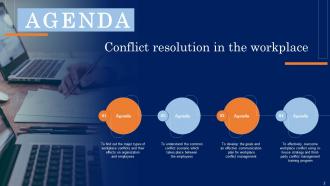
Slide 2: This slide states Agenda of the presentation.
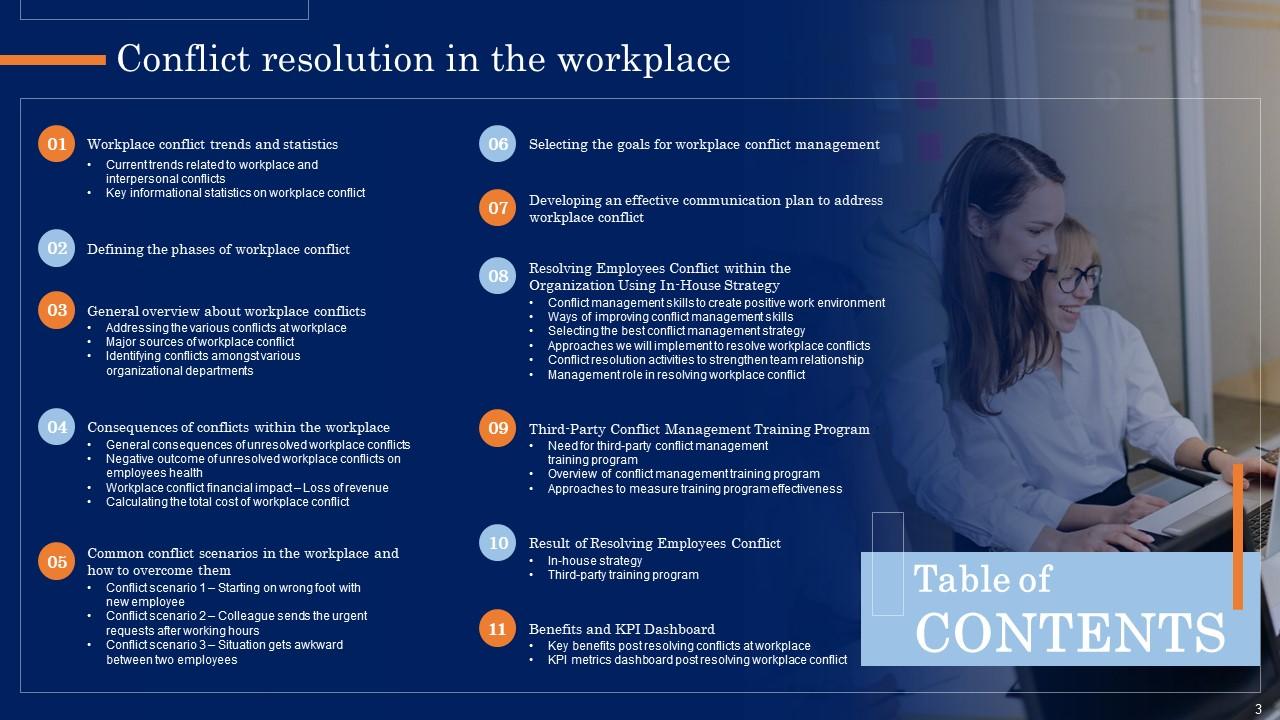
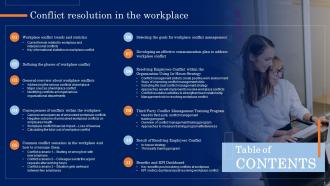
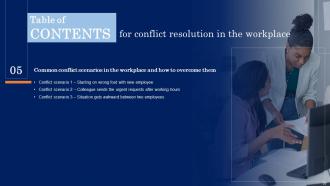
Slide 3: This slide shows Table of Content for the presentation.
Slide 4: This slide highlights title for topics that are to be covered next in the template.
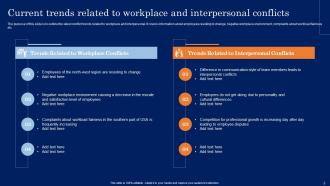
Slide 5: This slide presents Current trends related to workplace and interpersonal conflicts.
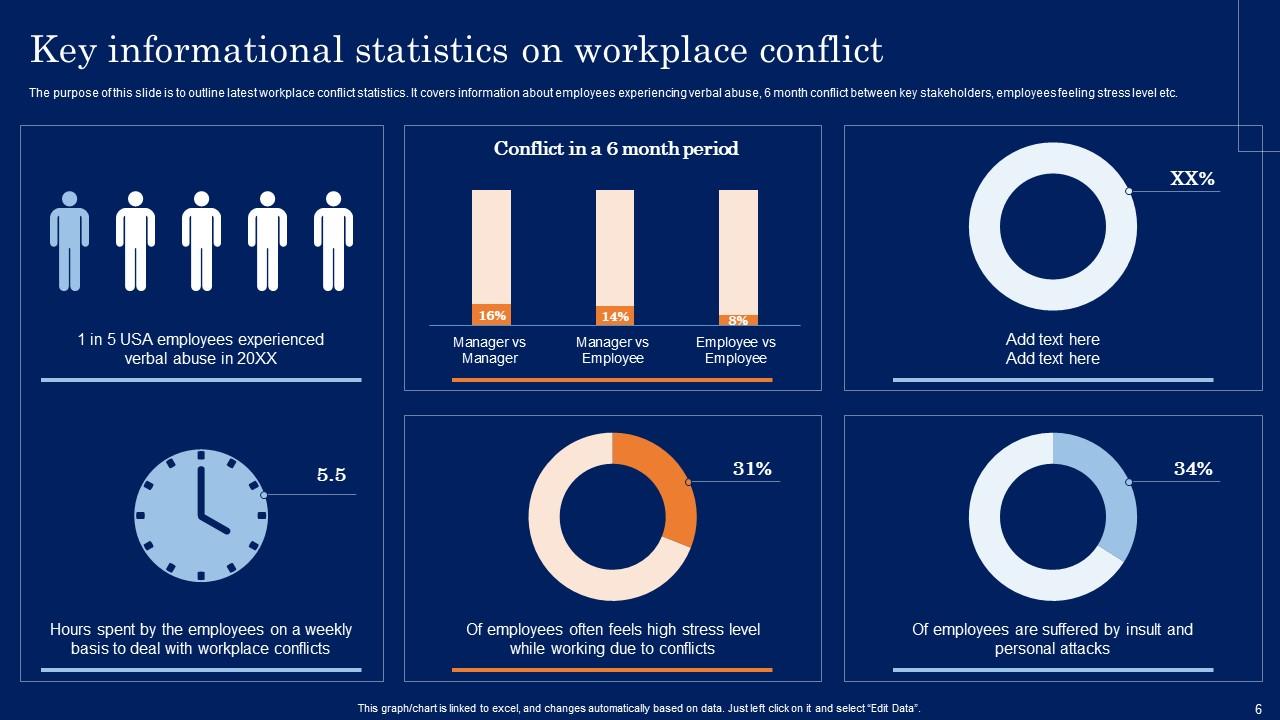
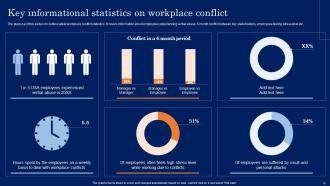
Slide 6: This slide displays Key informational statistics on workplace conflict.
Slide 7: This slide highlights title for topics that are to be covered next in the template.
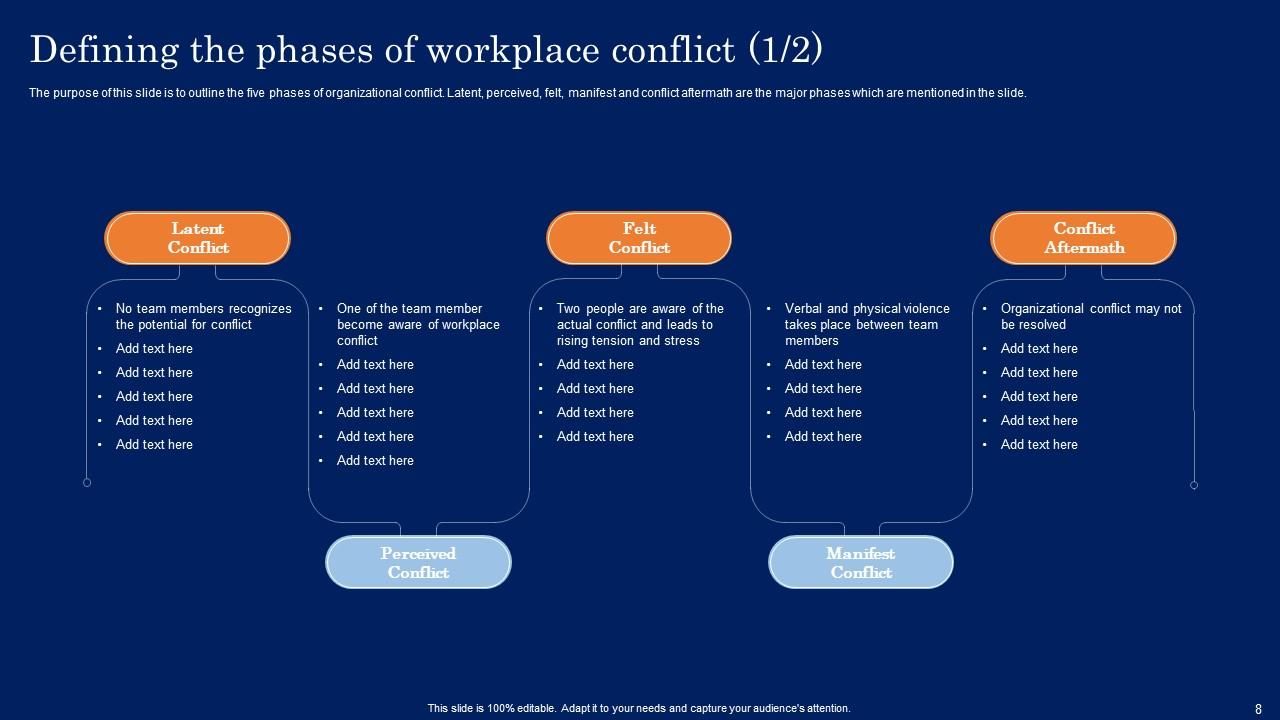
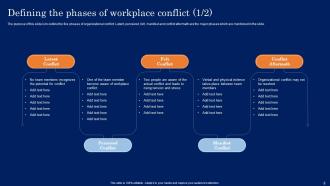
Slide 8: This slide defines the phases of workplace conflict.
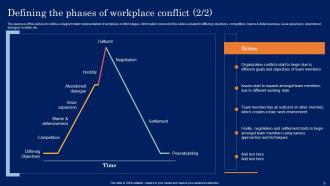
Slide 9: This is another slide continuing phases of workplace conflict.
Slide 10: This slide highlights title for topics that are to be covered next in the template.
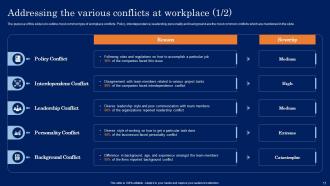
Slide 11: This slide addresses the various conflicts at workplace.
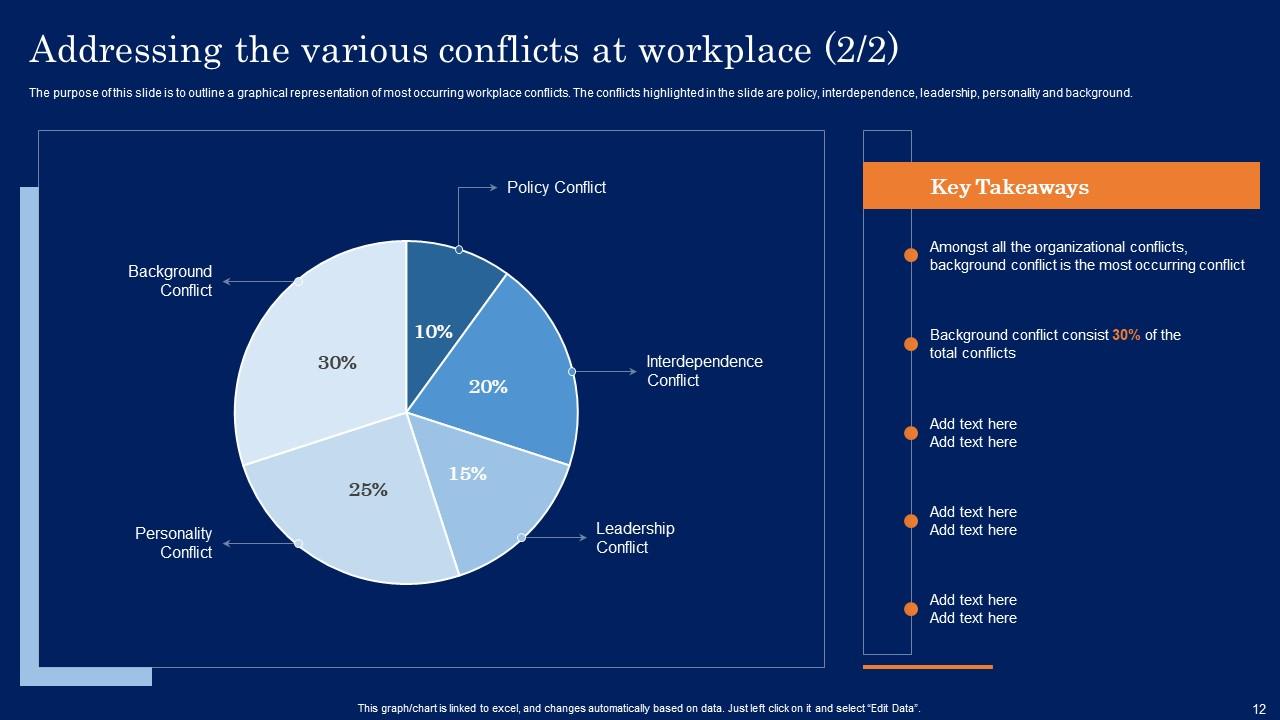
Slide 12: This is another slide addressing the various conflicts at workplace.
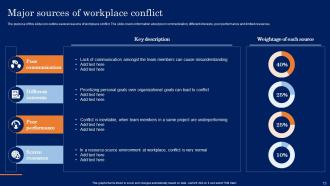
Slide 13: This slide presents Major sources of workplace conflict.
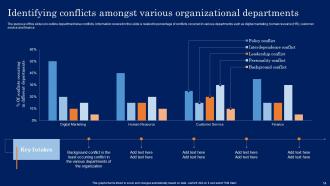
Slide 14: This slide displays Identifying conflicts amongst various organizational departments.
Slide 15: This slide highlights title for topics that are to be covered next in the template.
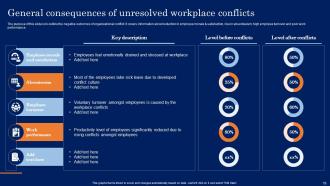
Slide 16: This slide represents General consequences of unresolved workplace conflicts.
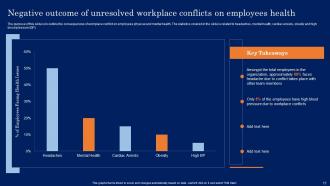
Slide 17: This slide showcases Negative outcome of unresolved workplace conflicts on employees health.
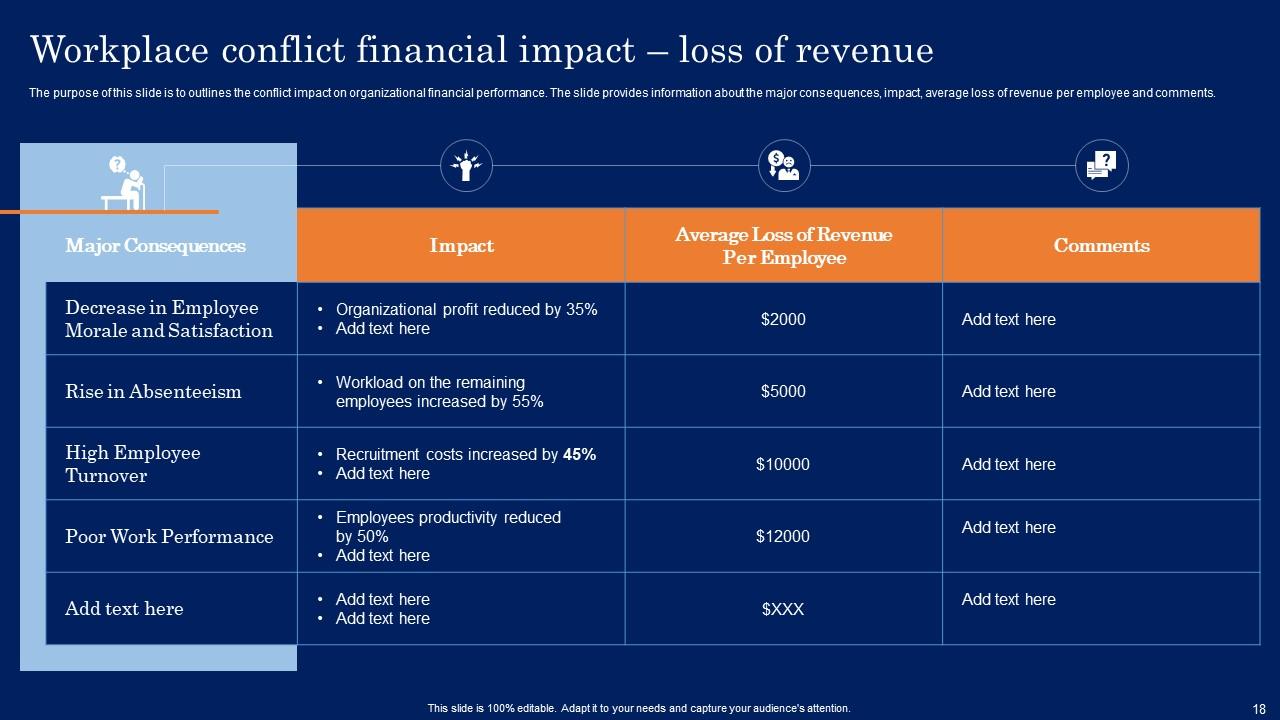
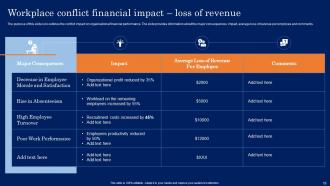
Slide 18: This slide shows Workplace conflict financial impact – loss of revenue.
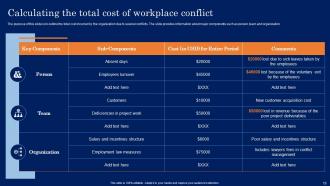
Slide 19: This slide presents Calculating the total cost of workplace conflict.
Slide 20: This slide highlights title for topics that are to be covered next in the template.
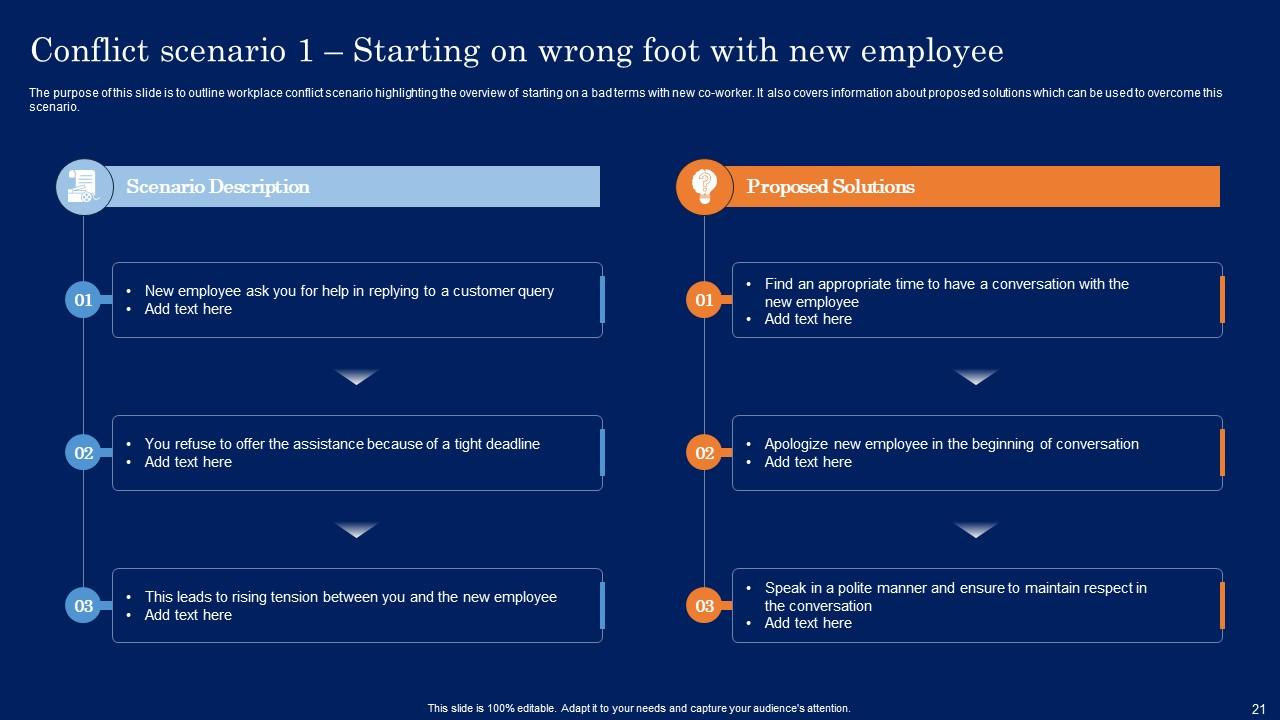
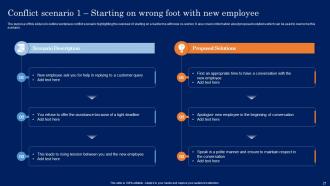
Slide 21: This slide displays Conflict scenario 1 – Starting on wrong foot with new employee.
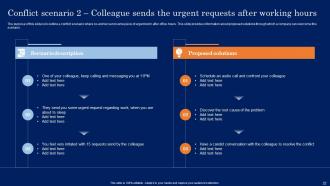
Slide 22: This slide represents Conflict scenario 2 – Colleague sends the urgent requests after working hours.
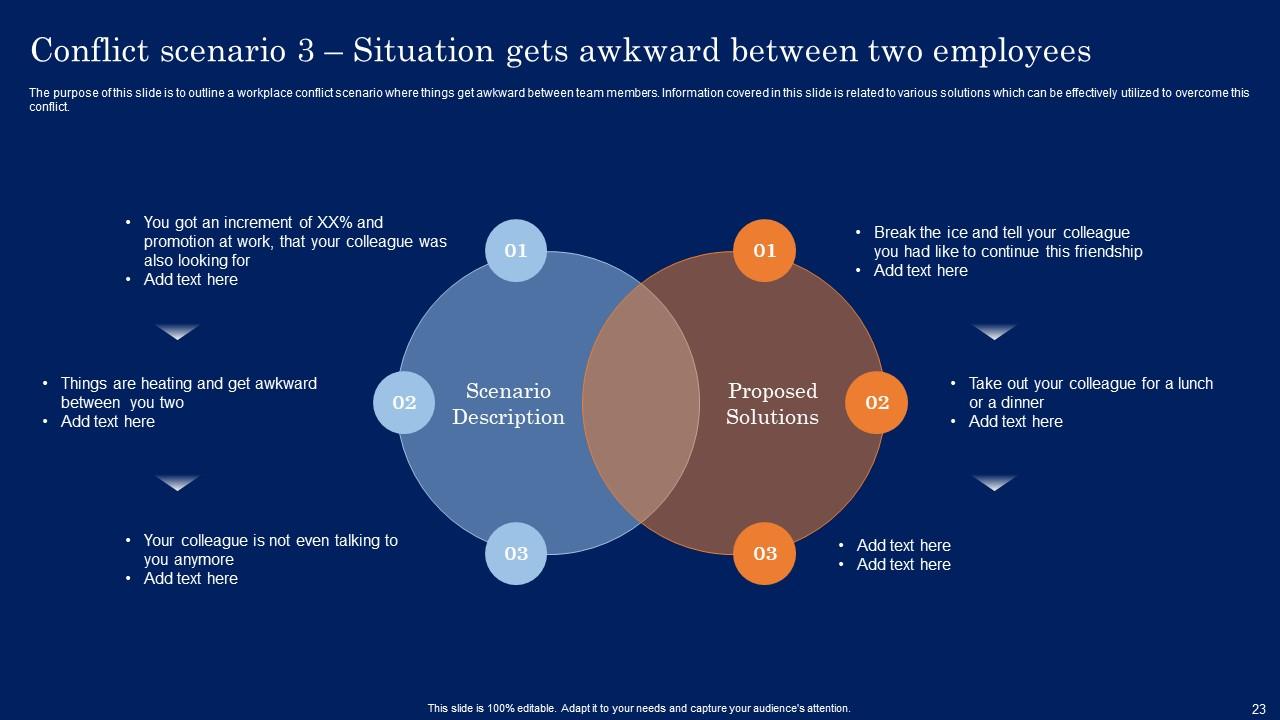
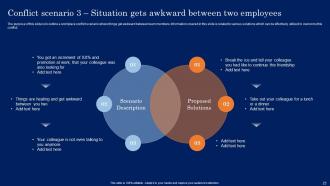
Slide 23: This slide showcases Conflict scenario 3 – Situation gets awkward between two employees.
Slide 24: This slide highlights title for topics that are to be covered next in the template.
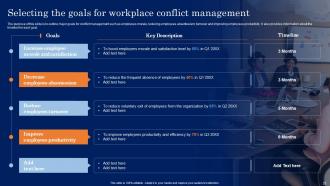
Slide 25: This slide shows Selecting the goals for workplace conflict management.
Slide 26: This slide highlights title for topics that are to be covered next in the template.
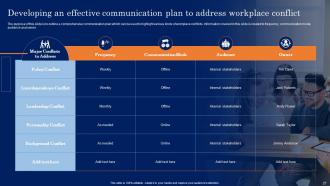
Slide 27: This slide presents Developing an effective communication plan to address workplace conflict.
Slide 28: This slide highlights title for topics that are to be covered next in the template.
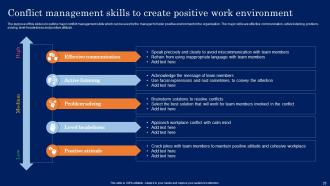
Slide 29: This slide displays Conflict management skills to create positive work environment.
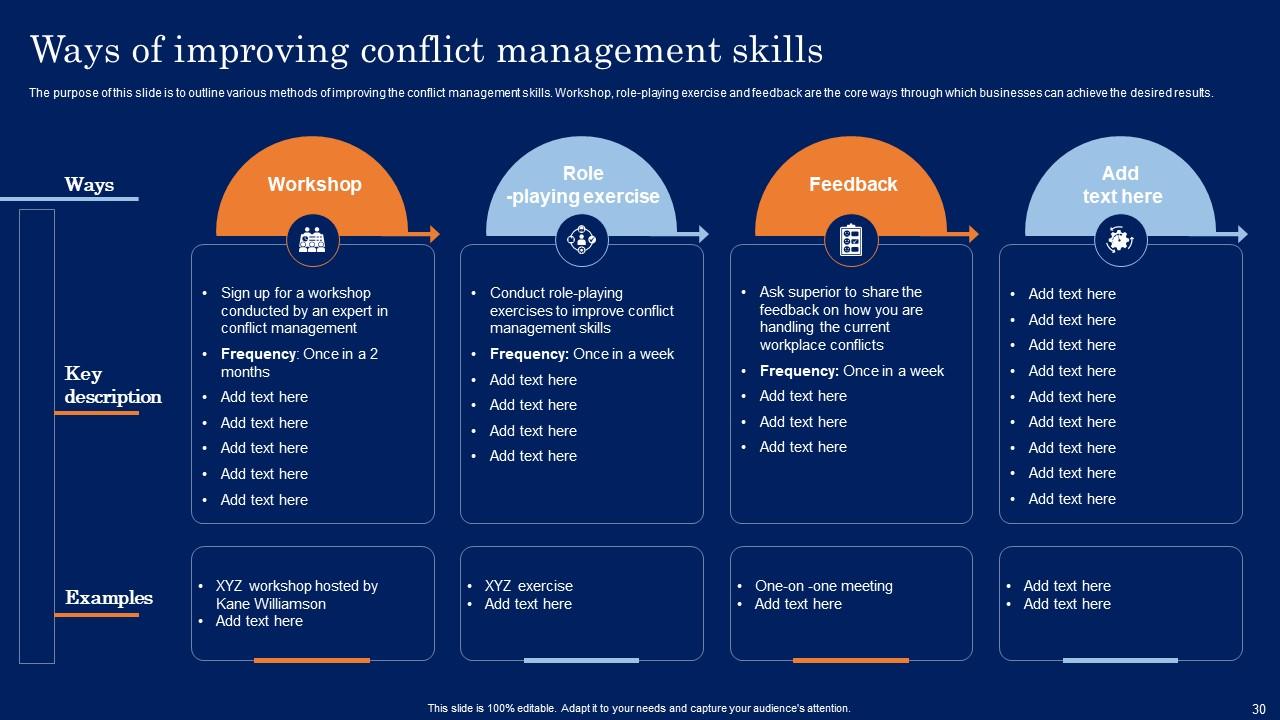
Slide 30: This slide represents Ways of improving conflict management skills.
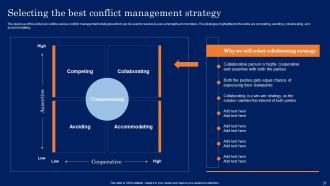
Slide 31: This slide showcases Selecting the best conflict management strategy.
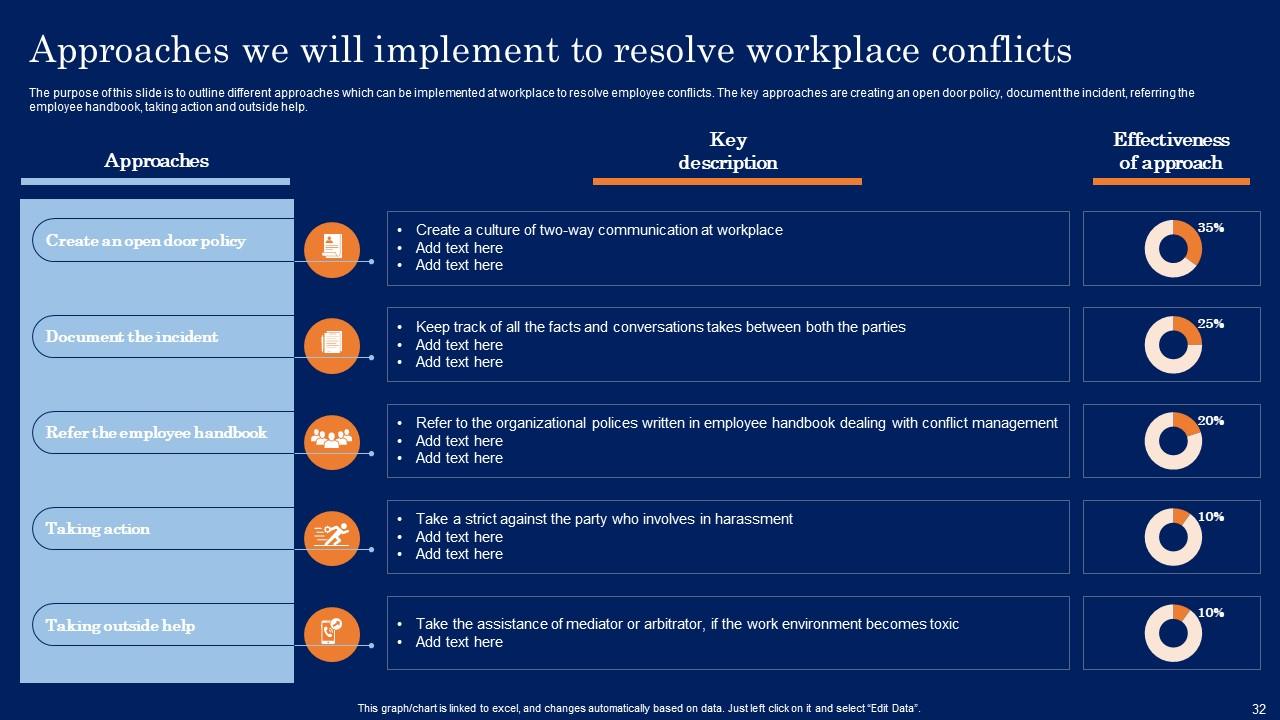
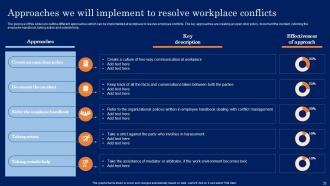
Slide 32: This slide shows Approaches we will implement to resolve workplace conflicts.
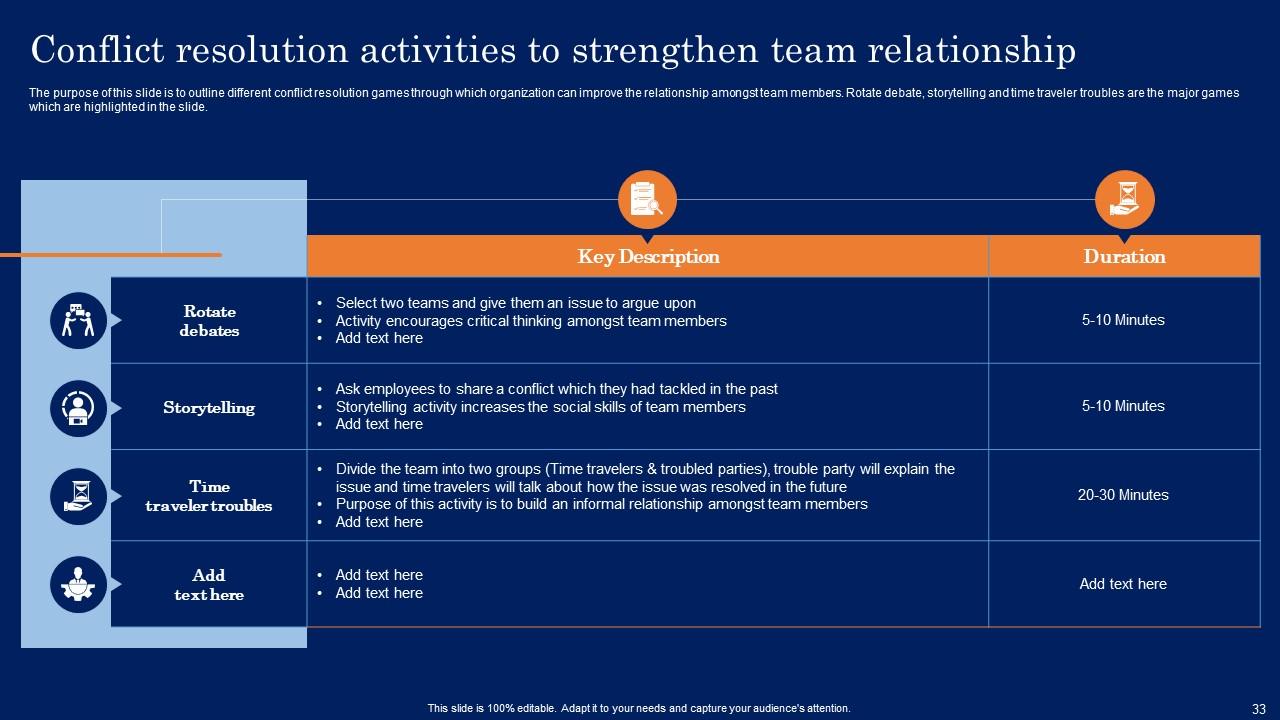
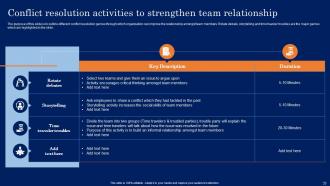
Slide 33: This slide presents Conflict resolution activities to strengthen team relationship.
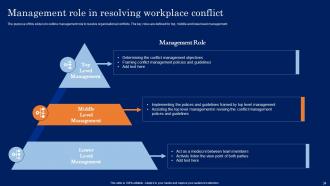
Slide 34: This slide displays Management role in resolving workplace conflict.
Slide 35: This slide highlights title for topics that are to be covered next in the template.
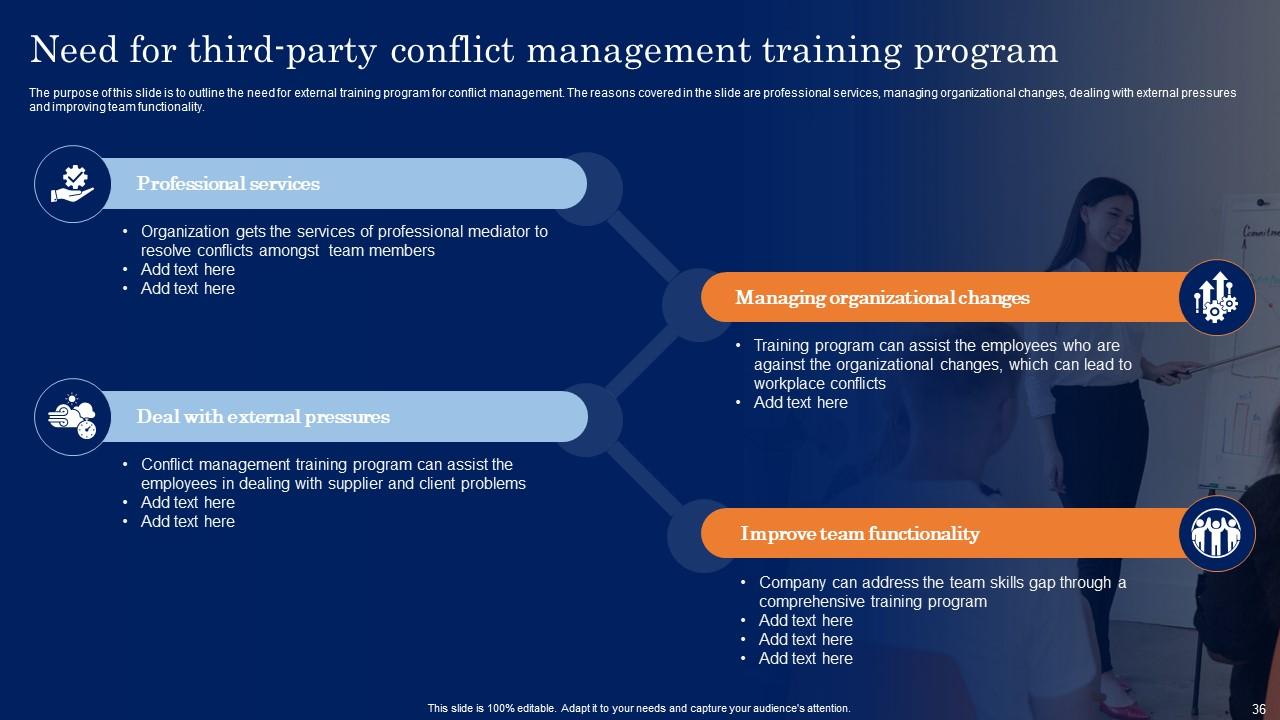
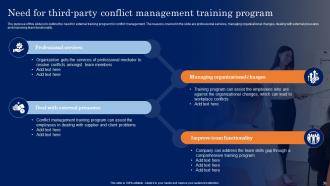
Slide 36: This slide represents Need for third-party conflict management training program.
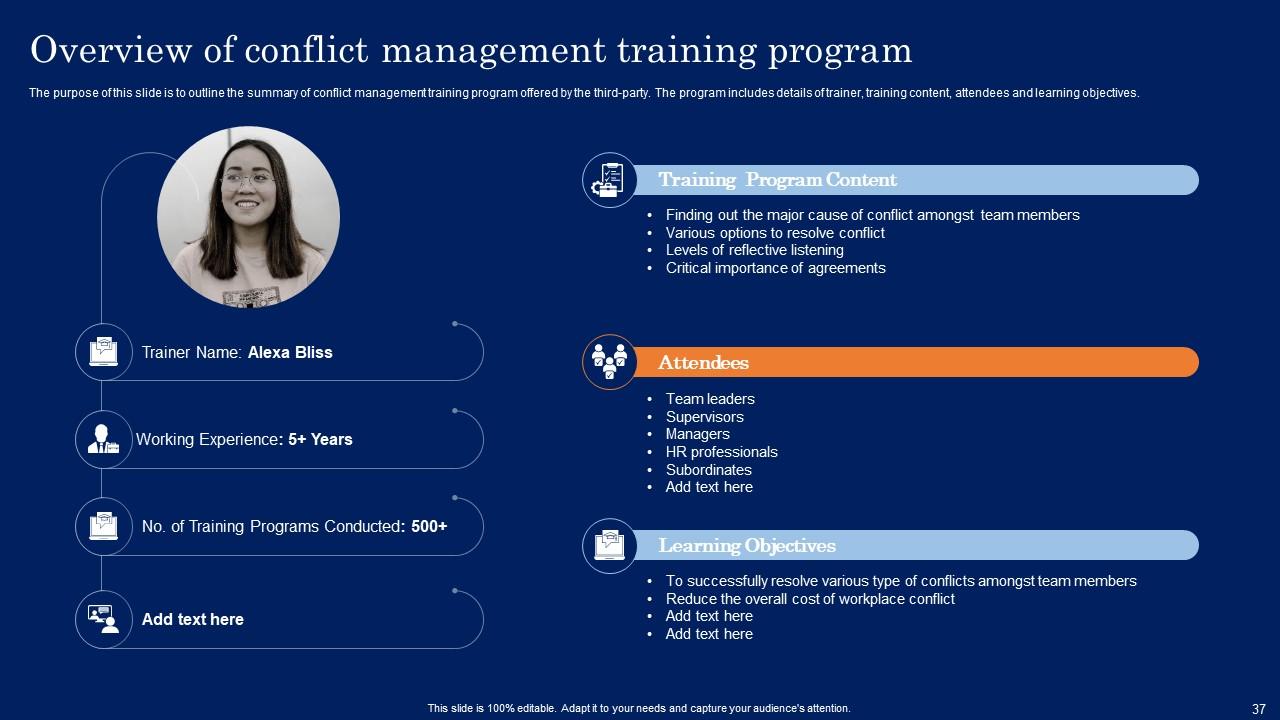
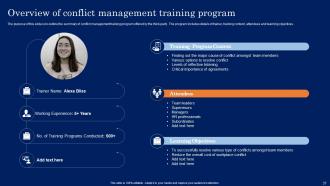
Slide 37: This slide showcases Overview of conflict management training program.
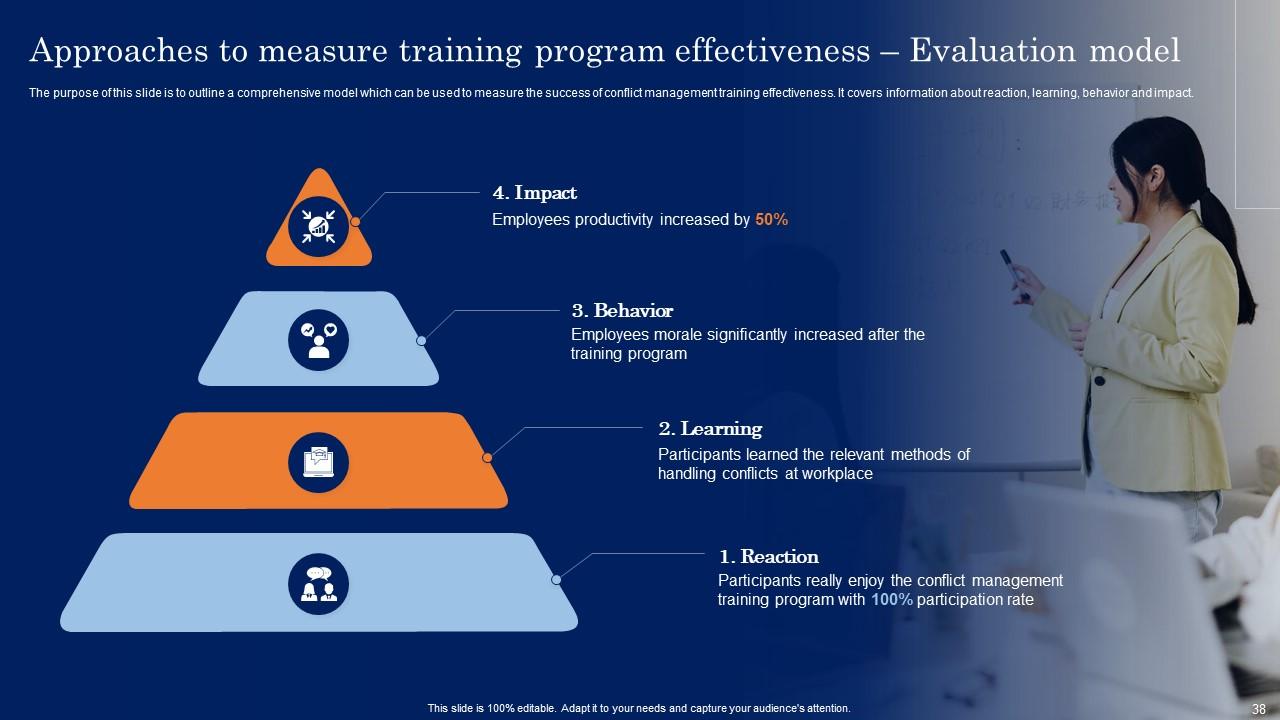
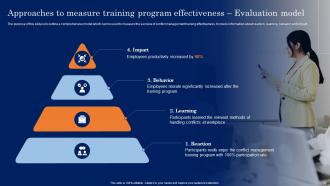
Slide 38: This slide shows Approaches to measure training program effectiveness – Evaluation model.
Slide 39: This slide presents Approaches to measure training program effectiveness – Survey form.
Slide 40: This slide highlights title for topics that are to be covered next in the template.
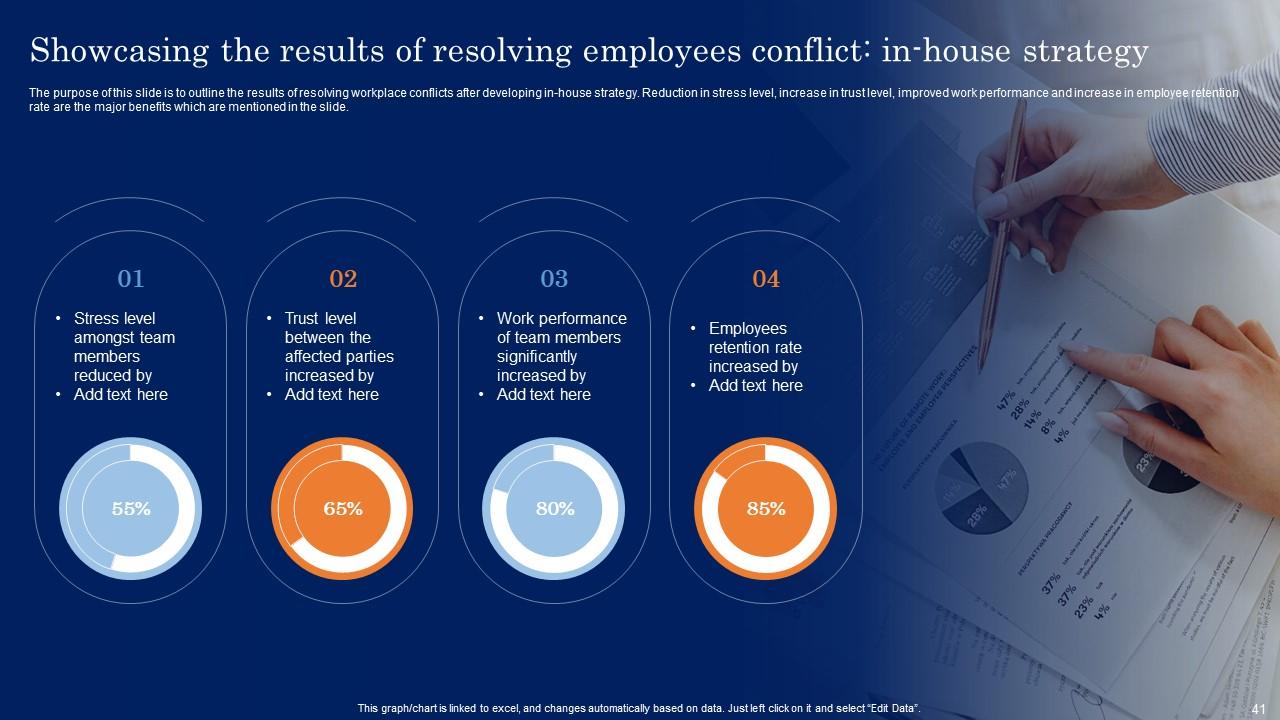
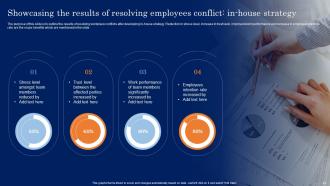
Slide 41: This slide shows the results of resolving employees conflict: in-house strategy.
Slide 42: This slide displays the results of resolving employees conflict: Third-party training program.
Slide 43: This slide highlights title for topics that are to be covered next in the template.
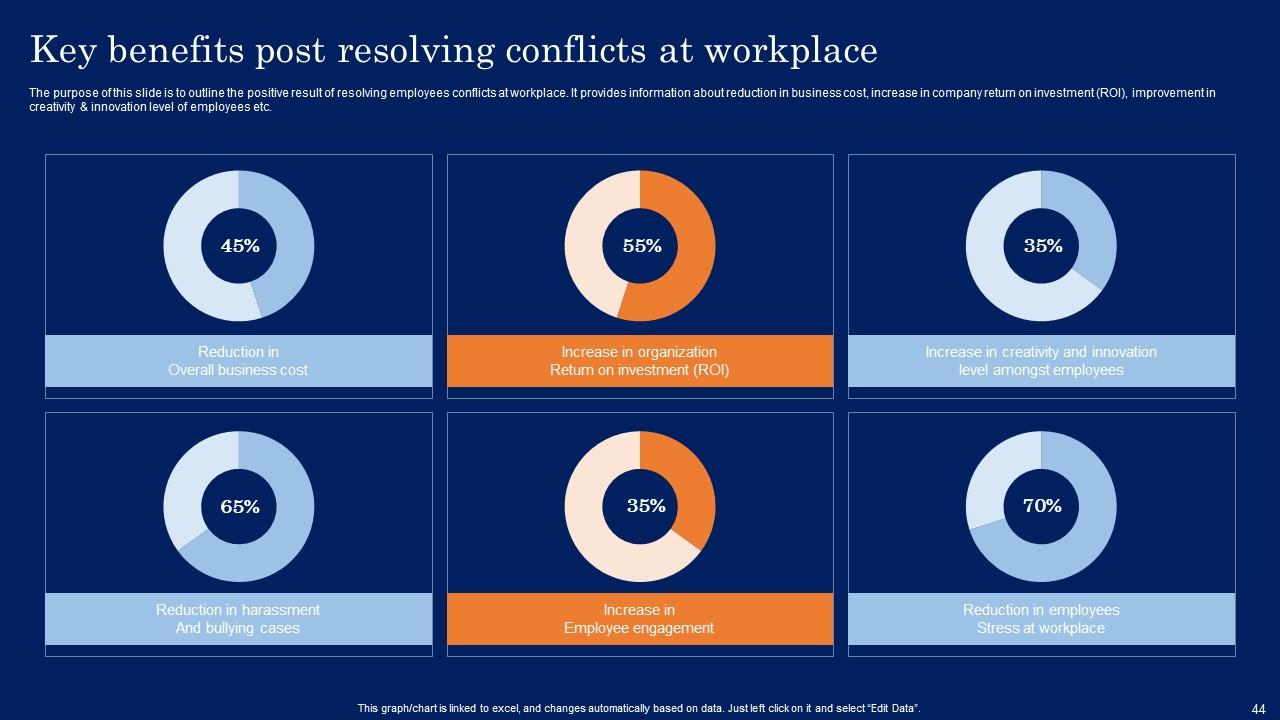
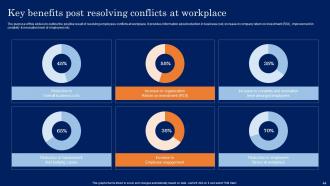
Slide 44: This slide represents Key benefits post resolving conflicts at workplace.
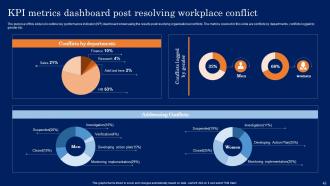
Slide 45: This slide showcases KPI metrics dashboard post resolving workplace conflict.
Slide 46: This slide contains all the icons used in this presentation.
Slide 47: This slide is titled as Additional Slides for moving forward.
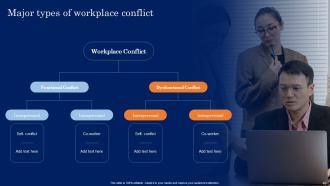
Slide 48: This slide shows Major types of workplace conflict.
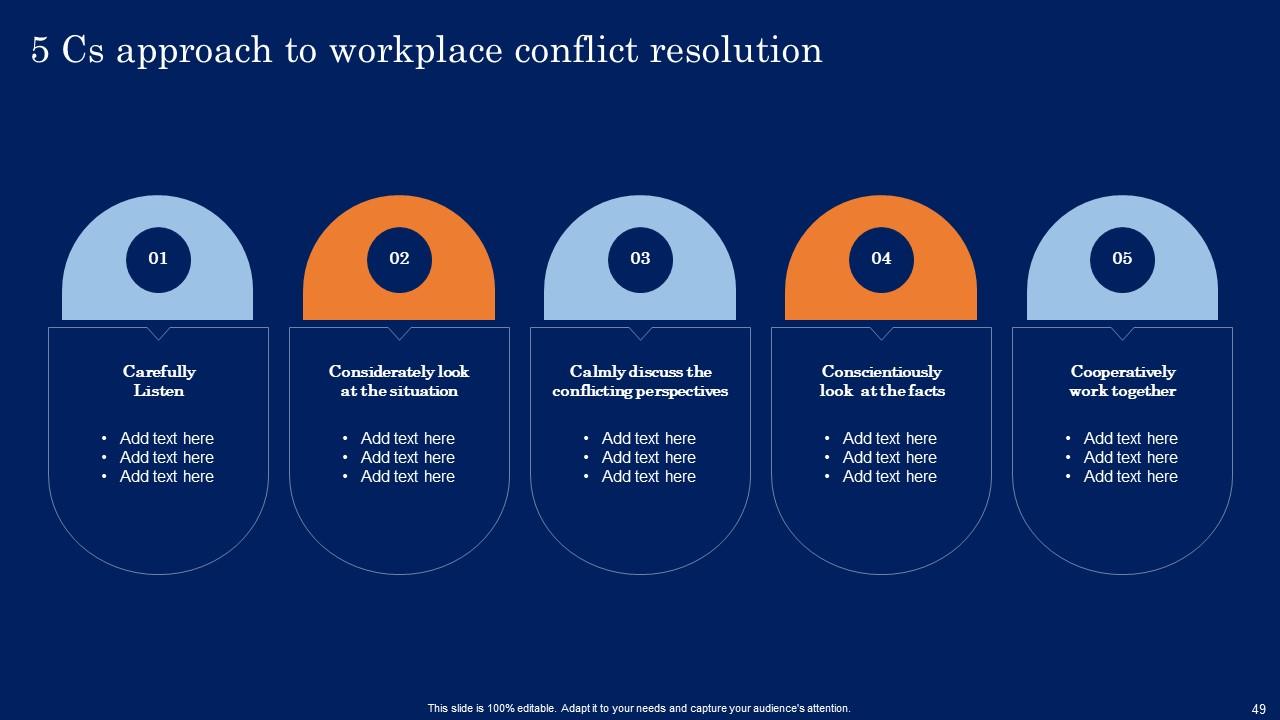
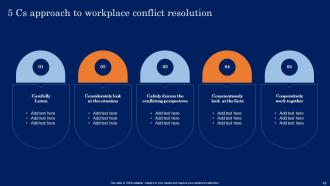
Slide 49: This slide presents 5 Cs approach to workplace conflict resolution.
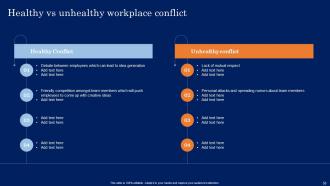
Slide 50: This slide displays Healthy vs unhealthy workplace conflict.
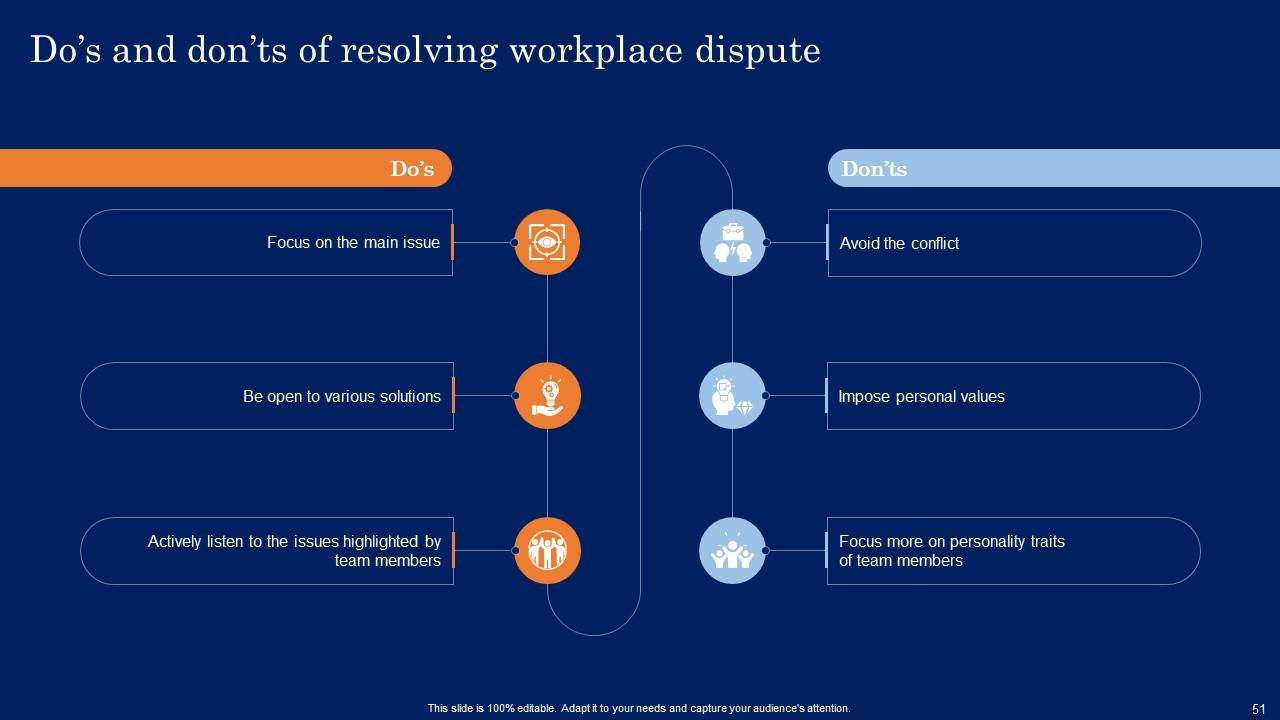
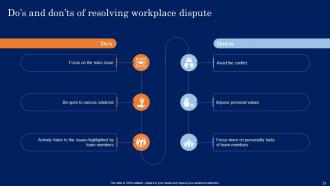
Slide 51: This slide represents Do’s and don’ts of resolving workplace dispute.
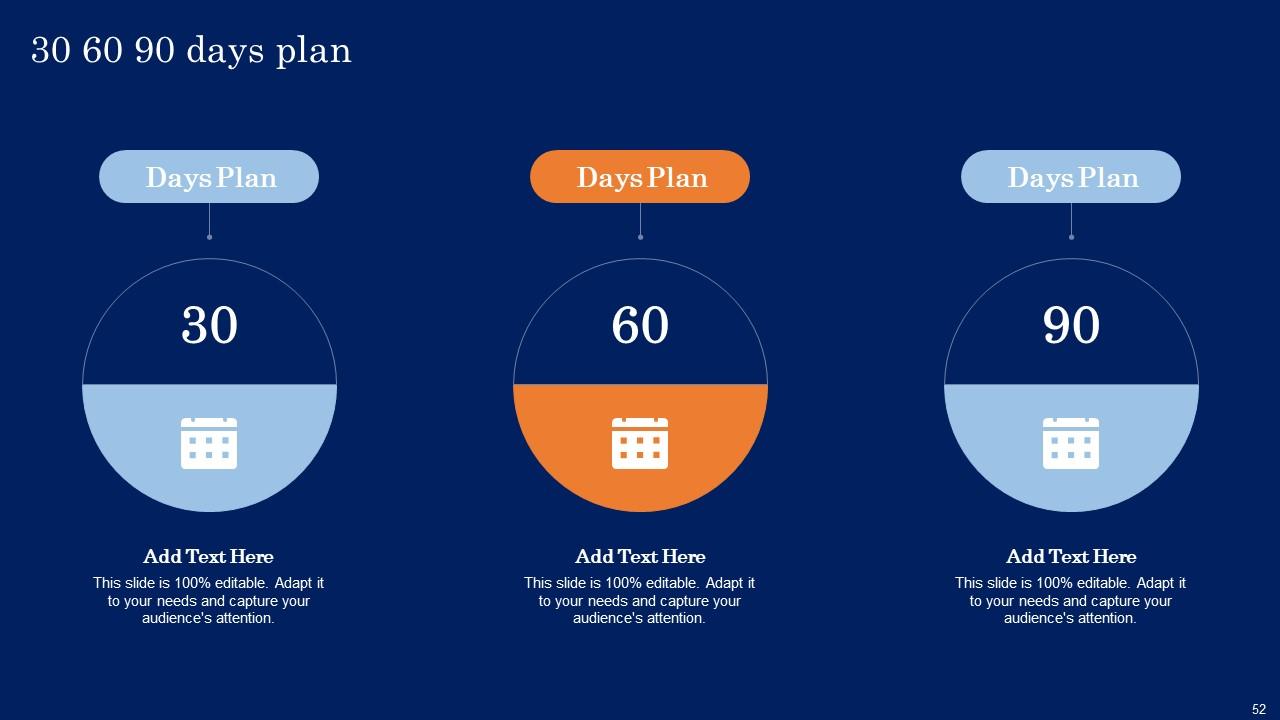
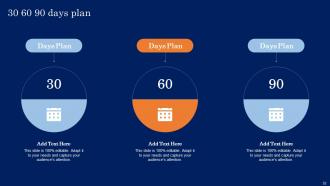
Slide 52: This slide provides 30 60 90 Days Plan with text boxes.
Slide 53: This slide shows Post It Notes. Post your important notes here.
Slide 54: This slide shows Circular Diagram with additional textboxes.
Slide 55: This is an Idea Generation slide to state a new idea or highlight information, specifications etc.
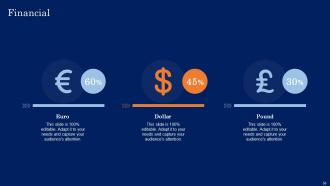
Slide 56: This is a Financial slide. Show your finance related stuff here.
Slide 57: This slide contains Puzzle with related icons and text.
Slide 58: This is a Thank You slide with address, contact numbers and email address.
Conflict Resolution In The Workplace Powerpoint Presentation Slides with all 63 slides:
Use our Conflict Resolution In The Workplace Powerpoint Presentation Slides to effectively help you save your valuable time. They are readymade to fit into any presentation structure.
-
“Excellent information with easy access.”
-
I can always count on your designs for my professional needs. I believe I found a one-stop-shop for PPTs.
