

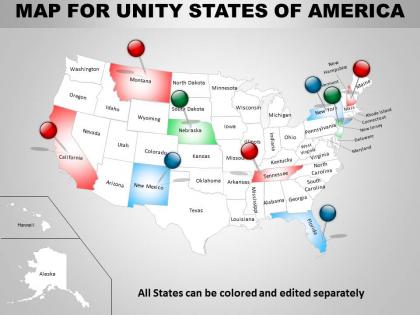
Map for united states of america ppt presentation slides





Try Before you Buy Download Free Sample Product
 Impress Your
 Audience
 100%
100% Editable
 Save Hours
 of Time


The provided map for Unites States of America PPT presentation slides depicts the 50 states of USA with the capital and large cities identified separately. The provided PowerPoint slide design can be used by teachers to teach at schools and universities. The US map PPT slide model can also be used for organizing region based quiz program or for organizing travel presentations. Use the provided American PPT presentation template in conjugation with other slide presentations for more effective output. Make use of the USA outline map with states PPT PowerPoint presentation example to detail about state demographics, or to share the strategic product launch plan. There are multiple areas where the geographical projection of USA comes in as an aided advantage. Also during elections the provided map for Unites States of America PPT slide visual is used to mark the electoral poll results. Our experts have designed a very professional and aesthetically sound presentation for you to move ahead with confidence. Our Map For United States Of America Ppt Presentation Slides foster a feeling of brotherhood. They create a family atmosphere.
People who downloaded this PowerPoint presentation also viewed the following :
Map for united states of america ppt presentation slides with all 4 slides:
Come to God's country with our Map For United States Of America Ppt Presentation Slides. Bask in the blessings of the Divine.
FAQs for Map for united states of america
So basically, our map looks weird because of British colonial mapping mixed with westward expansion. Eastern states follow natural coastlines and rivers - makes sense, right? But those boxy western states? That's from the Public Land Survey System they started in 1785. Surveyors literally just drew grid lines across the territory. Pretty lazy if you ask me, but it worked. Hand-drawn maps back then were based on whatever explorers reported, which is why we still have those random border disputes. Oh, and this grid thing actually affects how Americans think about regions today - worth knowing if you're doing geography stuff.
Yeah, map projections totally mess with how the US looks! Alaska's the worst offender - on those Mercator maps it looks ridiculously huge next to the lower 48, but it's way smaller in reality. Most US maps use Albers Equal Area because it doesn't distort things as much at our latitudes. Lambert Conformal Conic works well too, keeps the shapes pretty accurate. Honestly, if you're putting together a map or presentation, just go with Albers. People get a much better sense of actual state sizes that way instead of being totally confused about geography.
Dude, thematic maps are game changers for understanding America's crazy patterns. Raw data becomes visual stories you can actually digest. Voting trends, income gaps, disease outbreaks - suddenly it all makes sense when mapped out geographically instead of drowning in spreadsheets. You'll spot connections between location and social issues that would've taken forever to notice otherwise. Like why certain regions consistently vote red or blue? Geography tells the story. I honestly wish more people used these before forming opinions about national trends. Next time you're digging into any U.S. data, find the map version first - way more revealing than numbers alone.
Dude, GIS totally changed everything about maps. You're not stuck with those old paper ones anymore - now you can layer on traffic, weather, demographics, whatever data you want over any base map. It's pretty wild honestly. The crazy part? You can make your own custom maps now, not just look at existing ones. Zoom way in to see individual streets, share them instantly with people. I got lost in Google Earth for like 3 hours last week just exploring random places. If you haven't messed around with ArcGIS or Google Earth yet, definitely check them out.
So you've got the big mountain chains - Rockies and Appalachians - plus major rivers like the Mississippi and Colorado. The Great Lakes are huge too. Honestly, the Mississippi is like America's main artery for moving stuff around, it's crazy how much goes through there. Mountains mess with weather patterns and where people settle. Great Lakes have 20% of the world's fresh water (random fact but pretty cool). Coastal plains matter too obviously. When you're looking at any data about regions, check these features first. They explain why certain areas developed differently - like why some places are agricultural powerhouses while others became industrial hubs.
Dude, state borders are basically American history drawn on a map. That 36°30' line from the Missouri Compromise? Still visible today. The Mexican-American War carved out those weird straight borders in the Southwest. West Virginia literally broke off from Virginia during the Civil War - talk about family drama. Ohio and Michigan even fought the Toledo War over boundaries (which sounds way more epic than it actually was). Honestly, tracing these lines is like reading a timeline of every major territorial fight and political deal we've made.
Oh dude, cultural regions are way more telling than just state borders. Think Bible Belt, Pacific Northwest - those areas share values, dialects, even voting habits that cross state lines. It's wild how geography shapes everything from what people buy to which industries take off where. Honestly, if you're doing any kind of marketing or trying to understand trends, these cultural zones matter way more than state-by-state breakdowns. Like, someone in rural Oregon probably has more in common with rural Washington than urban Portland, you know?
So demographic maps basically use colors to show where people are moving - darker colors mean more people packed in, lighter means fewer. You can actually see how the Sun Belt's been exploding while places like Detroit have been hemorrhaging residents. The whole South and West thing since the 1950s is crazy when you see it mapped out. People are flocking to cities and coasts mostly. Oh, and they're super useful if you're doing any kind of planning or trying to figure out regional trends. Makes migration patterns way easier to spot than just looking at boring spreadsheets.
Dude, maps basically control where all our tax money goes. City planners look at demographic data to figure out school locations and bus routes. Environmental stuff guides zoning laws too. It's honestly crazy how much influence these cartographers have over our lives! Political boundaries determine voting districts and federal funding. Oh and economic overlays help them decide where to put development incentives. My advice? If you're ever working on policy stuff, always check the maps first - you'll spot patterns that spreadsheets totally miss.
Maps can be super engaging if you mix it up! Heat maps work great for showing data patterns. Interactive ones are cool too - click a state and boom, specific info pops up. I'm obsessed with those puzzle-piece effects where states appear one by one (seriously gets everyone's attention). Animation's solid for historical stuff or migration flows. Color coding helps with comparisons, and journey maps are perfect if you're tracing routes or timelines. Oh, and infographic overlays can make boring data way more digestible. Start with something simple though - don't go overboard on your first try. Visual stuff always beats bullet points anyway.
Oh totally depends on who's gonna use it! Kids' maps need bright colors and fun stuff like Mount Rushmore. Business ones focus on cities, highways, airports - all that logistics stuff. Tourist maps are honestly the best though, they show all the cool attractions and scenic routes (I love browsing those even when I'm not going anywhere lol). Academic maps get into geology, climate, demographics. Just figure out your audience first, then include what actually helps them instead of throwing everything at the wall.
Honestly, digital maps are pretty amazing for getting kids engaged - they can zoom around and see real-time data changes. But here's the thing: students get so distracted by all the fancy features that they miss the actual geography lesson. Plus screen time, ugh. Paper maps make kids really focus on spatial relationships without digital shortcuts, and they work when your classroom tech inevitably crashes (happened to me last Tuesday). Downside is they go stale fast. My take? Start with paper maps to nail the basics, then let them loose on digital for the fun stuff.
Honestly, maps are perfect for this kind of research. Start with plotting the obvious stuff - protest sites, Freedom Ride routes, where major legislation happened. The patterns that emerge are pretty wild. Southern states had completely different dynamics than say, Chicago dealing with housing issues. What's cool is layering demographic data over the events - you start seeing connections you'd totally miss just reading about it. Build it up one layer at a time though, or it gets messy fast. Timeline overlays are clutch too for showing how things spread geographically. Makes the whole cause-and-effect thing way clearer.
Dude, when you look at economic maps of the US, it's kinda wild how uneven things are. Coastal areas and big cities? Loaded. Tech hubs too, obviously. But then rural spots and chunks of the South are struggling with way lower incomes. Like, Massachusetts vs Mississippi is just brutal when you see the numbers side by side. You can track patterns with education and what industries are around. Oh and cost of living plays into it too - though that's a whole other mess. Anyway, if you're thinking about business stuff or just want to understand what different regions are dealing with, these maps are where you start.
Dude, interactive maps are so much better than static charts because people actually *want* to click around and explore stuff. Like, would you rather stare at a boring data table or click on different states to see what's happening there? When users can zoom in, filter things, and dig deeper into what interests them, they remember way more. Plus you can stack different data layers - population, income, voting - so people discover patterns they'd totally miss otherwise. Just don't make it too complicated though. If someone needs a manual to use your map, you've gone overboard.
-
Amazing product with appealing content and design.
-
Excellent Designs.