

Maps of north america continent region countries in powerpoint





Try Before you Buy Download Free Sample Product
 Impress Your
 Audience
 100%
100% Editable
 Save Hours
 of Time


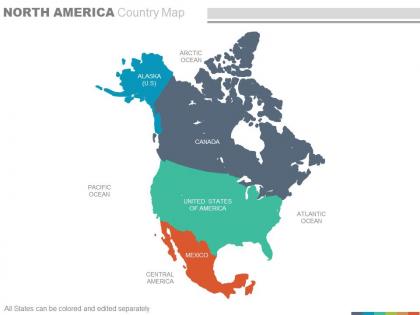
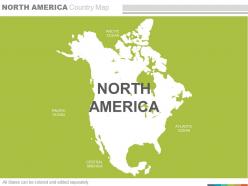
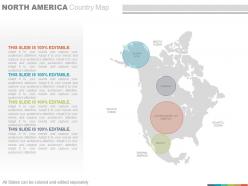
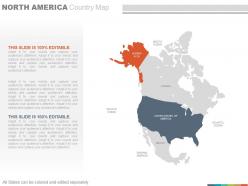
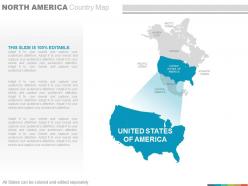
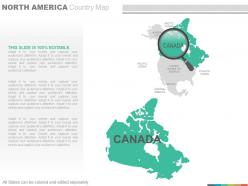
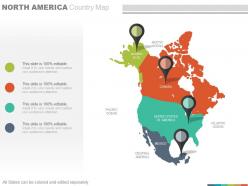
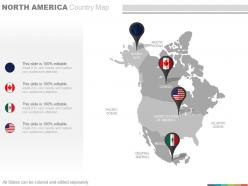
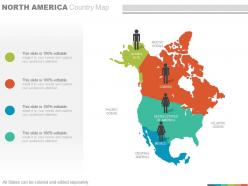
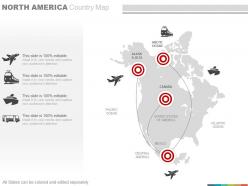
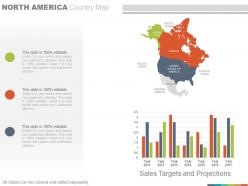
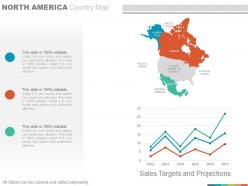
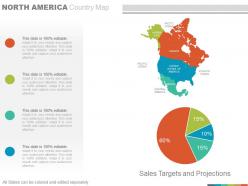
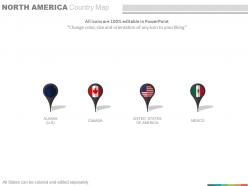
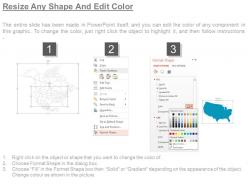
If you are interested to make a Presentation on the third largest continent of the world’s continents Lies in between the most part of arctic circle and the tropic of cancer, So use our maps of north America continent region countries in PowerPoint . You can use this flat PowerPoint image to explain the geographical limits which makes it one of the unique continent surrounded by the infinite natural resources like Pacific Ocean, Arctic Ocean, Atlantic Ocean, Caribbean Sea which makes it quite productive and developed one. With this PPT Design you can describe the features of the countries such as USA, Canada , Mexico , Alaska lying within the continent like its governmental and administrative policies, their cultural values of the indigenous people , education system, health care sector, countries International relations, history of the nation, about its national flag and emblem, art and literature etc. So just start preparing an alluring PPT template about the wonderful continent.Have a hassle free experience with our Maps Of North America Continent Region Countries In Powerpoint.They enable easy functioning.
People who downloaded this PowerPoint presentation also viewed the following :
Maps of north america continent region countries in powerpoint with all 21 slides:
Right thoughts lead to right deeds. Our Maps Of North America Continent Region Countries In Powerpoint provide the link.
FAQs for Maps of north america continent region
So political maps show boundaries - countries, states, cities, all that stuff. Physical maps are about natural features like mountains, rivers, deserts. I'm always surprised how huge the Rockies look on physical maps! Political ones are better for travel planning or understanding borders. Physical maps help you get why certain places developed how they did - terrain really matters. You'll probably want political for most work stuff. Unless you're doing geography or environmental planning, then physical makes more sense.
Dude, it's all about wars and land deals, honestly. Colonial powers kept fighting over territory, then the Revolution created the US. Westward expansion pushed everything to the Pacific. The Mexican-American War was huge - we grabbed Texas, California, basically the whole Southwest. Napoleon sold us Louisiana and doubled our size overnight (wild move on his part). Civil War kept us from splitting permanently, which would've been messy. Wars, treaties, and sketchy land purchases - that's literally how we ended up with these borders.
Dude, topographical maps are game-changers for understanding North America's landscape. They show elevation changes, mountain ranges, valleys - stuff regular maps totally miss. You can actually see why rivers flow certain directions or how the Rockies are totally different from the Appalachians. Once you figure out how to read them properly, they're weirdly fascinating. Cities developed where they did for reasons that suddenly make sense. Climate patterns start clicking too. My geography prof was obsessed with them and honestly, I get it now. If you're analyzing anything geographic about North America, start with a good topo map - it'll explain so many patterns you never noticed.
QGIS is probably your best bet since it's free and handles big datasets really well. ArcGIS works too but costs money. Natural Earth has solid base layers, and OpenStreetMap is amazing for roads and city stuff. You can pull satellite imagery from Google Earth Engine or grab Landsat data through USGS EarthExplorer. Fair warning though - prepping all the data takes forever, way longer than you'd think. I'd start simple with just a basemap first. Then add your details layer by layer. Makes debugging so much easier when something inevitably breaks.
Honestly, thematic maps are clutch for population stuff. Dot density maps show you exactly where people cluster - like how everyone's packed along coasts and the Great Lakes. Choropleth maps work well too, using colors to show population per square mile. Heat maps though? Those are where it's at - they make urban corridors like the Northeast Megalopolis just jump off the page. Oh, and definitely layer different demographic data if you can. You'll start seeing migration patterns and age distribution trends you probably missed before. It's pretty wild how clear the patterns become.
Looking at North American maps, the environmental stuff is pretty sobering. You've got massive deforestation across Canada and the Pacific Northwest, plus cities just sprawling everywhere and swallowing up natural areas. The Great Lakes region? Total pollution nightmare around all those factories. Arctic ice loss really stands out on climate maps - honestly makes you realize how bad things are getting. Drought patterns in the Southwest are crazy obvious too, and don't even get me started on those wildfire maps from the last few years. But hey, at least these maps help pinpoint where we should focus conservation efforts.
Oh this is super interesting! Indigenous peoples basically made early mapping possible - they knew all the waterways, mountain passes, and migration routes that European explorers desperately needed. Most of our river names and geographic features still come from indigenous languages today. Early maps were total collaborations, though colonizers were awful about giving credit where it was due. Native communities shared everything: territory boundaries, where to find resources, safe travel routes. All of that became the backbone for how we mapped territories later. Pro tip - when you're looking at historical maps, indigenous place names are like breadcrumbs leading back to the original knowledge systems.
Oh man, those climate maps are all over the place depending on which system they use. Some go with Köppen codes (all those weird letters), others use USDA plant zones, or just basic stuff like "temperate" and "arctic." The boundaries are honestly kind of arbitrary sometimes - like one map will show the Great Plains as super uniform while another breaks it into tons of sections. Texas transition zones are especially messy on different maps. Just check what classification system they're using first, because that makes a huge difference for whatever you're analyzing.
Maps are basically the backbone of city planning here - without them you're just guessing. Planners use them for everything: checking population density, plotting transit routes, figuring out where to put new housing. GIS software is pretty cool actually, lets you stack different data layers to see how neighborhoods connect. Toronto, Denver, Miami - they all rely heavily on this stuff for zoning decisions and infrastructure projects. My advice? Get the latest municipal mapping data first thing. Trust me, outdated maps will mess up your whole project timeline.
Honestly, interstate maps are like the skeleton of how everything connects across North America. They show you the main routes linking cities, plus cross-border stuff into Canada and Mexico. You can spot traffic patterns, freight corridors, and figure out which routes actually matter for trade. Super useful for logistics planning too. These maps help you see bottlenecks and backup routes - plus they explain why some areas developed faster than others (proximity to major highways is huge). My advice? Always check an interstate map first when you're analyzing any region. It's the foundation for understanding everything else.
Dude, demographic maps are seriously clutch for finding customers. They basically show you where people with certain ages, income levels, and interests actually live and shop. Pretty crazy how much a color-coded map can tell you, honestly. You can figure out the best spots for stores, where to run your ads, what products make sense in different areas. Way better than just guessing and hoping for the best - I learned that the hard way with my first campaign lol. Start by mapping where your current customers are, then hunt for similar patterns in places you haven't tried yet.
Honestly, satellite data mixed with AI is completely changing the game right now. Maps update in real-time instead of relying on those ancient geological surveys. Climate projections are getting layered on top too - which is smart since weather's messing with extraction schedules left and right. Government agencies, tribes, and companies are actually working together more on mapping (shocking, I know). Everything's super detailed now - like down to individual wells and forest plots. USGS has some pretty solid interactive tools if you need current stuff for your projects. Way better than what we had even five years ago.
Hey! So boundary changes happen way more often than people realize - new county lines, city limits expanding, that kind of stuff. Your maps get outdated pretty quick if you're not paying attention. Really screws with demographic research or market analysis if you're using old data. I'd honestly just set up alerts from the Census Bureau since they catch most changes first. Oh, and redistricting is probably the biggest culprit - happens every few years and can totally shift things around. Just something to keep on your radar if accuracy matters for your project.
Oh definitely check out National Geographic's education site first - their interactive maps are organized by grade level which saves you so much time. Scholastic's map workbooks are pretty solid too, love their step-by-step thing. For digital stuff, MapMaker Interactive is great and the Library of Congress has these primary source maps that kids actually get excited about (weird but true). The Smithsonian's got some cool historical map activities online too. I'd honestly just start with the free Nat Geo teacher resources since they're already aligned with standards. Way less work for you!
Dude, interactive maps are so much cooler than regular textbooks for this stuff. You can click around and see Indigenous territories, then switch to immigration patterns or food traditions - whatever you want. The crazy part is layering everything on top of each other. Start with census data, then throw migration routes on there too. You'll see how cultures actually overlap geographically instead of just reading about it. I got kind of obsessed with these last semester, honestly. Way better than staring at static maps that don't tell you anything interesting.
-
Best Representation of topics, really appreciable.
-
Colors used are bright and distinctive.