


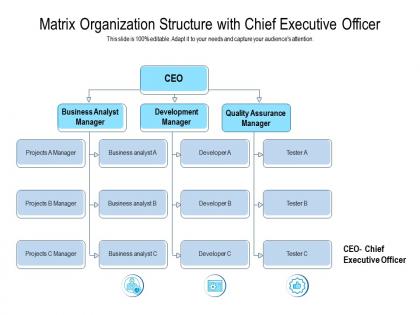
Matrix organization structure with chief executive officer




Try Before you Buy Download Free Sample Product
 Impress Your
 Audience
 100%
100% Editable
 Save Hours
 of Time


Manage large and complex projects by employing Matrix Organization Structure With Chief Executive Officer Slide. Mention some advantages of matrix organization structure with the aid of readily available PPT slideshow. You can also showcase the types of matrix structure by using this visually appealing PPT layout. You can tell your audience that matrix structure allows project team members to share information more readily across task boundaries. It also helps to increase knowledge. Highlight some major characteristics of matrix organization by using attention-grabbing organization structure PPT infographic. Present the elements of organizational structure that managers should address. Describe how matrix management works by taking the advantage of a ready-to-use PPT layout. Highlight the ways to make matrix structure more effective with the use of this PPT template. There are various high-grade icons and stunning images present in the slideshow that will enhance your presentation. Showcase the benefits and downsides of the matrix organizational structure. This will help you to determine which type of structure is best for your company.
People who downloaded this PowerPoint presentation also viewed the following :
Matrix organization structure with chief executive officer with all 2 slides:
Use our Matrix Organization Structure With Chief Executive Officer to effectively help you save your valuable time. They are readymade to fit into any presentation structure.
FAQs for Matrix organization structure with
So basically you'll answer to two bosses - like your department manager plus whoever's running the project you're on. Honestly it's pretty confusing at first because you're getting direction from multiple people. Resources and decision-making get split between them too. But the upside? Way more collaboration happens across different teams, and companies can move people around projects easier. Just heads up though - your managers might want totally different things from you sometimes. I learned this the hard way lol. Set expectations early about priorities or you'll be stuck in the middle constantly.
So matrix structures basically make people from different departments work together on the same projects, which breaks down those silos everyone hates. Team members end up reporting to both their regular manager AND a project manager - sounds confusing but it actually works. People start sharing knowledge and resources they'd never touch in normal hierarchies. Yeah, the dual reporting thing can get weird and political sometimes, but honestly the collaboration boost is usually worth it. My advice? Test it out with a small pilot project first to see how your people handle having two bosses before you go all-in.
Oh man, dual reporting is a nightmare - people literally don't know who to listen to first. Decision-making slows to a crawl because everyone needs to weigh in on everything. Plus you get these weird power struggles between the functional managers and project managers fighting over resources. Communication gets messy fast too since info has to go every direction at once. I learned this the hard way at my last job, but honestly the only thing that saves you is nailing down who does what from day one. Otherwise you'll just referee fights all day instead of actually working.
Honestly, matrix orgs make decisions way more collaborative, but that comes with a price - everything takes forever. You're not just dealing with one boss anymore. Now you've got your functional manager AND project manager both wanting input. More voices means more meetings (ugh) but also better decisions since you get different perspectives. The alignment sessions can drag on though. You'll find yourself juggling competing priorities from your different reporting lines constantly. It's frustrating sometimes but the outcomes are usually more thoughtful. Just get ready to be patient with the whole process.
Oh man, matrix structures are such a pain honestly. Your team members answer to you AND their regular managers, so you're constantly battling over who gets priority. More meetings than you can imagine - sorry but it's true. Everyone's pulling your people in different directions with their own deadlines and projects. The upside though? You can tap into way more expertise across departments and borrow resources when you need them. Just make sure you get all those functional managers on board from day one, otherwise you'll be fighting an uphill battle the whole time.
Oh man, that's rough but totally doable. First thing - talk to both managers right away about priorities and deadlines. Be super transparent about your workload with each of them. When they inevitably clash on something (and they will), don't try fixing it yourself - just escalate and let them figure it out. I learned that the hard way once! Document everything though, seriously. Start each week by checking in with both on what's most important. It's like juggling, but you'll get the hang of it. Communication saves your butt here.
Matrix structures are honestly such a nightmare - but here's what actually works. First, map out who reports to who for specific stuff, because people will get confused otherwise. Visual org charts help too. Regular check-ins between all the managers sharing people is huge. You'll want to spell out decision-making power clearly - like budget approvals vs technical calls. Oh, and create a culture where team members can immediately flag when they're getting mixed signals from different bosses. That conflicting direction thing will kill productivity fast if you don't catch it early.
So basically a matrix structure means people can work on multiple projects at once instead of being stuck in one department. Like, you could borrow that data analyst from marketing for your product launch while she's still doing her regular stuff. It gets a bit chaotic honestly - I won't lie about that. But you get the exact skills you need without hiring new people, plus resources go where they're actually needed most. The trick is just staying on top of communication with other project managers so you don't end up fighting over the same person. Way more flexible than traditional setups.
Look, matrix structures are total disasters without solid tech backing them up. Your teams need something like Asana or Monday to actually track who's responsible for what - otherwise people just point fingers when stuff goes wrong. Good video calls are clutch too since these teams are usually spread everywhere. Communication platforms that actually work help, but honestly? I've watched entire matrix setups implode because their project management tools sucked. People lose track of deadlines super fast. Start by figuring out what collaboration tools your team actually uses every day, then build from there.
Ugh, matrix structures are such a headache. People end up with like three different bosses all wanting different things - total nightmare. Everyone's confused about who they actually report to, and priorities get super messy. Honestly, I've seen teams fall apart because nobody knows what they're supposed to be doing. The only way it works is if you nail down roles from day one. Get all the managers talking regularly so they're not contradicting each other. Oh, and shared goals are crucial - otherwise it's just chaos and blame games when deadlines get missed.
Okay so matrix teams are tricky but here's what works - be super explicit about who does what from day one. Set up weekly check-ins between all your managers (project and functional). Daily standups are honestly annoying unless you're in crisis mode. Document everything in shared dashboards so everyone can see what's happening. The big thing is making sure people know who makes final calls on different stuff. I learned this the hard way when two managers gave conflicting directions and I was stuck in the middle. Better to overcommunicate than have people guessing what's going on.
Start with communication and conflict resolution training right away - that's huge. Role-playing feels super weird at first but it actually works when people practice those "both my managers want opposite things" moments. Decision-making frameworks help too, plus knowing when to just escalate and let someone else deal with it. Oh, and definitely pair newbies with someone who's already survived the matrix chaos for a while. They'll figure out the competing priorities thing way faster with a mentor. Honestly, the collaboration skills piece is what makes or breaks people in these setups.
Matrix structures are basically innovation goldmines. Engineers end up chatting with marketing people, finance teams work alongside product folks - all those silos that normally crush ideas? Gone. Different perspectives mean you'll catch opportunities everyone else misses. Problems get solved from angles nobody thought of before. Yeah, it feels messy at first (my old company went through this), but honestly that's when the best stuff happens. Dual reporting can be weird for people to adjust to. Start with something small though - test it on one project before going all-in.
So matrix structures work really well in tech and consulting - those places thrive on it. Construction and aerospace companies see huge benefits too since projects need different experts working together. Healthcare's probably the most obvious fit because doctors, nurses, and admin people are constantly collaborating anyway. Oh, and marketing agencies crush it with this setup! Creative teams can jump between client accounts while still staying in their specialty groups. Just make sure your team can actually handle multiple bosses without going crazy. Clear communication is everything here, plus you'll need solid role definitions from day one or it gets messy fast.
Oh man, culture is HUGE for this stuff. People in high power-distance places hate having two bosses - it just feels wrong to them. But individualistic cultures? They're actually pretty good at juggling the competing demands. Direct communicators will tell you when there's role confusion, which honestly makes your life easier. Indirect cultures though... good luck getting them to speak up about conflicts. Collectivist teams might push back if you're messing with their tight bonds. I'd say figure out what cultural stuff you're dealing with first, then tweak your rollout plan. Don't just copy-paste some generic approach.
No Reviews