

Diapositivas de la presentación de PowerPoint del modelo de estudio de caso de Mckinsey 7s





Try Before you Buy Download Free Sample Product
 Impress Your
Audience
 100%
Editable
 Save Hours
of Time


Crear un estudio de caso La presentación de PowerPoint desde cero es de hecho una mega tarea. Para ayudarlo en esto, aquí presentamos nuestras 55 diapositivas prefabricadas de Mckinsey 7s Model Case Study Powerpoint Presentation Slides. Con el apoyo de nuestra excelente plataforma de presentación del estudio de caso modelo Mckinsey 7s, puede cubrir fácilmente temas como agenda, estrategia, estructura, sistemas, personal, estilo, habilidades y valores compartidos, valores duros, valores blandos, estrategia comercial, análisis de GAP de recursos, GAP de habilidades análisis, marco 7-S, etc. Con tantos clientes potenciales, es absolutamente necesario que las empresas aprovechen el marketing. Utilizando los diseños de esta presentación descriptiva, también puede informar a los espectadores sobre la importancia del marketing y sus ventajas. Además, al utilizar nuestro ejemplo de PPT, los consultores pueden analizar los resultados y el impacto del marketing en el negocio para asegurarse de que se sigan correctamente o no las estrategias y regulaciones de marketing adecuadas. Se incluyen diapositivas de presentación de PowerPoint exclusivas como nuestro equipo, sobre nosotros, barra apilada, objetivo, comparación, finanzas, cotizaciones, tablero, gráfico circular, gráfico de dispersión, ubicación, líneas de tiempo, publicación en notas, mapa mental, venn, etc., para una mejor conciencia de El tema. ¿Que estas esperando? Descargue este archivo de presentación de muestra de PPT de estudio de caso del modelo Mckinsey 7s y haga que los espectadores obtengan el lado mejor del modelo de marketing correcto. Aconseje a la gente que analice los eventos pasados con nuestras diapositivas de presentación en PowerPoint del estudio de caso del modelo Mckinsey 7s. Anímelos a introspectar.
People who downloaded this PowerPoint presentation also viewed the following :
Contenido de esta presentación de Powerpoint
Diapositiva 1 : Esta diapositiva presenta el estudio de caso del modelo McKinsey 7S. Indique el nombre de su empresa y comience.
Diapositiva 2 : Esta es una diapositiva de Agenda. Agendas estatales aquí.
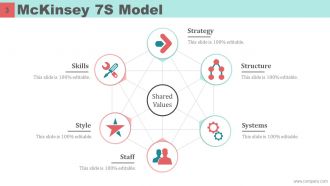
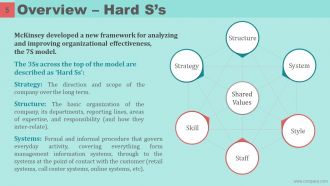
Diapositiva 3 : Esta diapositiva presenta un modelo McKinsey 7S. Los componentes son: valores compartidos, estrategia, estructura, sistemas, personal, estilo, habilidades.
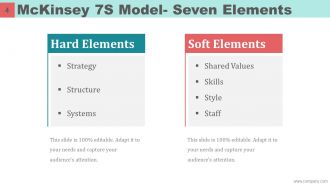
Diapositiva 4 : Esta diapositiva presenta el modelo 7S de McKinsey segregado: siete elementos en elementos duros (estrategia, estructura, sistemas) Elementos blandos (valores compartidos, habilidades, personal, estilo).
Diapositiva 5 : Esta diapositiva presenta Descripción general: cobertura de Hard S: estrategia, estructura, sistemas.
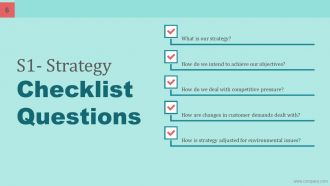
Diapositiva 6 : Esta diapositiva muestra S1- Preguntas de la lista de verificación de la estrategia- ¿Cuál es nuestra estrategia? ¿Cómo pretendemos lograr nuestros objetivos? ¿Cómo nos enfrentamos a la presión competitiva? ¿Cómo se tratan los cambios en las demandas de los clientes? ¿Cómo se ajusta la estrategia a los problemas ambientales?
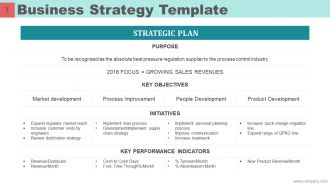
Diapositiva 7 : Esta diapositiva muestra una plantilla de estrategia empresarial.
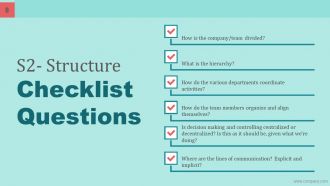
Diapositiva 8 : Esta diapositiva muestra S2- Preguntas de la lista de verificación de la estructura- ¿Cómo se divide la empresa / equipo? ¿Qué es la jerarquía? ¿Cómo coordinan las actividades los distintos departamentos? ¿Cómo se organizan y alinean los miembros del equipo? ¿La toma de decisiones y el control están centralizados o descentralizados? ¿Es así como debería ser, teniendo en cuenta lo que estamos haciendo? ¿Dónde están las líneas de comunicación? ¿Explícito e implícito?
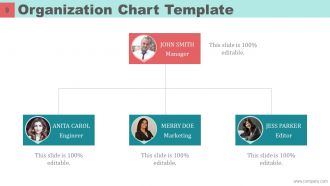
Diapositiva 9 : Esta diapositiva presenta una plantilla de organigrama.
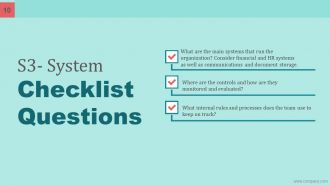
Diapositiva 10 : Esta diapositiva muestra S3- Preguntas de la lista de verificación del sistema- ¿Cuáles son los principales sistemas que ejecutan la organización? Considere los sistemas financieros y de recursos humanos, así como las comunicaciones y el almacenamiento de documentos. ¿Dónde están los controles y cómo se monitorean y evalúan? ¿Qué reglas y procesos internos utiliza el equipo para mantenerse al día?
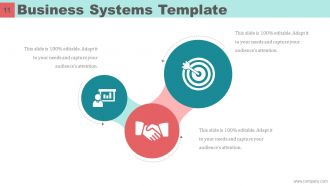
Diapositiva 11 : Esta diapositiva muestra una plantilla de sistemas empresariales.
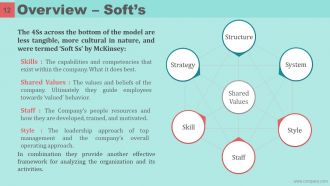
Diapositiva 12 : Esta diapositiva presenta Descripción general - Soft con - Las 4S en la parte inferior del modelo son menos tangibles, de naturaleza más cultural y McKinsey las denominó 'Soft Ss': Habilidades: las capacidades y competencias que existen dentro de la empresa. Qué hace mejor. Valores compartidos: los valores y creencias de la empresa. En última instancia, guían a los empleados hacia un comportamiento "valorado". Personal: Los recursos humanos de la Compañía y cómo se desarrollan, capacitan y motivan. Estilo: el enfoque de liderazgo de la alta dirección y el enfoque operativo general de la empresa.
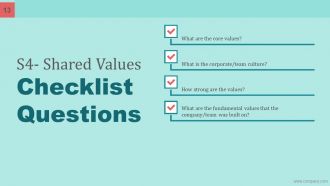
Diapositiva 13 : Esta diapositiva presenta S4- Preguntas de la lista de verificación de valores compartidos- ¿Cuáles son los valores fundamentales? ¿Qué es la cultura corporativa / de equipo? ¿Qué tan fuertes son los valores? ¿Cuáles son los valores fundamentales sobre los que se construyó la empresa / equipo?
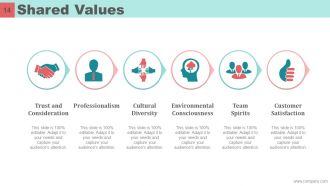
Diapositiva 14 : Esta diapositiva presenta Valores compartidos: confianza y consideración, espíritu de equipo, satisfacción del cliente, diversidad cultural, conciencia ambiental, profesionalismo.
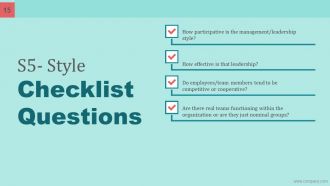
Diapositiva 15 : Esta diapositiva muestra S5- StyleChecklist Preguntas- ¿Qué tan participativo es el estilo de gestión / liderazgo? ¿Qué tan efectivo es ese liderazgo? ¿Los empleados / miembros del equipo tienden a ser competitivos o cooperativos? ¿Hay equipos reales funcionando dentro de la organización o son solo grupos nominales?
Diapositiva 16 : Esta diapositiva se titula Plantilla de estilo de liderazgo para avanzar.
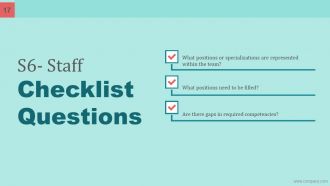
Diapositiva 17 : Esta diapositiva muestra S6- Preguntas de la lista de verificación del personal- ¿Qué posiciones o especializaciones están representadas dentro del equipo? ¿Qué puestos deben cubrirse? ¿Existen lagunas en las competencias requeridas?
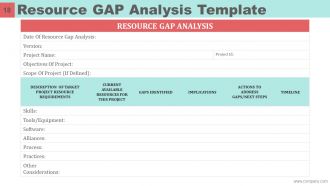
Diapositiva 18 : Esta diapositiva presenta la Plantilla de análisis de GAP de recursos.
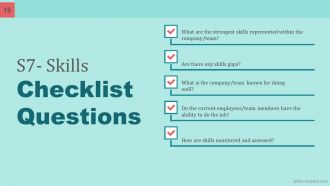
Diapositiva 19 : Esta diapositiva muestra S7- Preguntas de la lista de verificación de habilidades- ¿Cuáles son las habilidades más sólidas representadas dentro de la empresa / equipo? ¿Existe alguna brecha de habilidades? ¿Qué hace bien a la empresa / equipo? ¿Los empleados / miembros del equipo actuales tienen la capacidad para hacer el trabajo? ¿Cómo se monitorean y evalúan las habilidades?
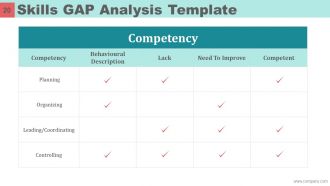
Diapositiva 20 : Esta es la diapositiva de la Plantilla de análisis de GAP de habilidades.
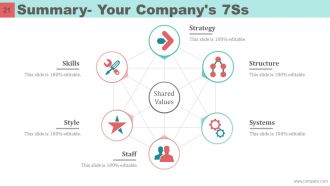
Diapositiva 21 : Esta diapositiva presenta un resumen: los valores, la estrategia, la estructura, los sistemas, el personal, el estilo y las habilidades compartidos de su empresa.
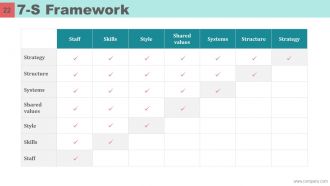
Diapositiva 22 : Esta diapositiva muestra un marco 7-S.
Diapositiva 23 : esta diapositiva se titula Diapositivas adicionales para avanzar.
Diapositiva 24 : Esta es la diapositiva de Nuestra misión. Misión de la empresa estatal aquí.
Diapositiva 25 : Esta es la diapositiva Conozca a nuestro equipo con nombres, designaciones y cuadros de imagen.
Diapositiva 26 : Esta es una diapositiva Acerca de nosotros. Indique las especificaciones de la compañía / equipo aquí.
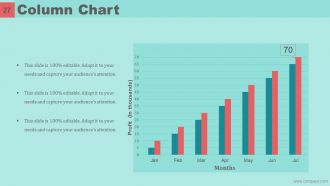
Diapositiva 27 : Esta es una diapositiva de gráfico de columnas para mostrar la comparación de productos / entidades, etc.
Diapositiva 28 : Esta es la diapositiva Nuestro objetivo principal. Indique los objetivos aquí.
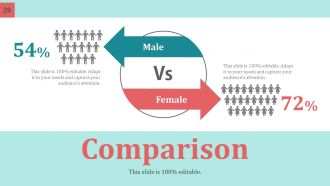
Diapositiva 29 : Esta es una diapositiva de comparación para mostrar la comparación de producto / entidad.
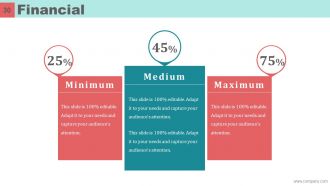
Diapositiva 30 : Esta es una diapositiva de puntuación financiera que se presenta en términos de Medio, Mínimo y Máximo.
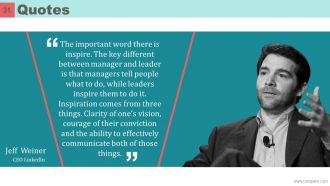
Diapositiva 31 : Esta es una diapositiva de Citas para transmitir mensajes, creencias, etc.
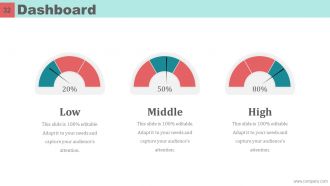
Diapositiva 32 : Esta es una diapositiva del Panel de control para mostrar los aspectos Bajo, Medio y Alto.
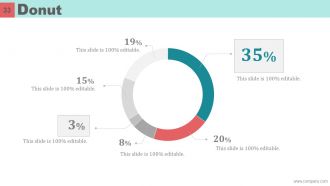
Diapositiva 33 : Esta es una diapositiva de gráfico circular de rosquilla para mostrar información, especificaciones, etc.
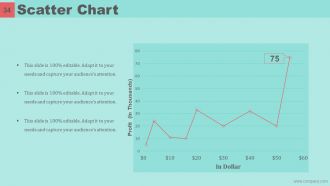
Diapositiva 34 : Esta es una diapositiva de gráfico de dispersión para mostrar información, especificaciones, etc.
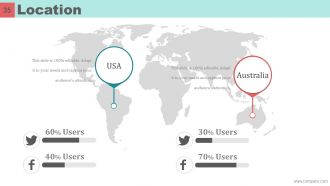
Diapositiva 35 : Esta es una diapositiva de ubicación del mapa mundial para mostrar el crecimiento global, la presencia, etc.
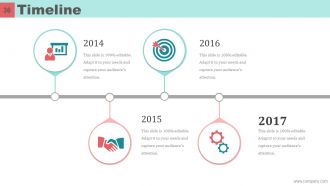
Diapositiva 36 : Esta es una diapositiva de la línea de tiempo para mostrar los factores destacados, los hitos, la evolución, etc.
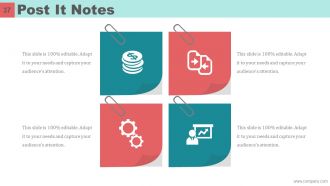
Diapositiva 37 : Esta es una diapositiva de notas Post It para eventos, recordatorios, etc.
Diapositiva 38 : Esta es una diapositiva con imagen de periódico para mostrar noticias, eventos, etc. Puede cambiar el contenido de la diapositiva según sus necesidades.
Diapositiva 39 : Esta es una diapositiva de imagen de rompecabezas para mostrar información, especificaciones, etc.
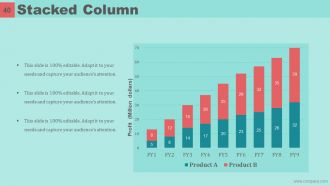
Diapositiva 40 : Esta es una diapositiva de columna apilada para mostrar la comparación de productos / entidades, etc.
Diapositiva 41 : Esta es una diapositiva de destino. Indica los objetivos, etc. aquí.
Diapositiva 42 : Esta es una diapositiva de imagen circular para mostrar información, especificaciones, etc.
Diapositiva 43 : Esta es una diapositiva de imagen del diagrama de Venn para mostrar información, especificaciones, etc.
Diapositiva 44 : Esta es una diapositiva de imagen de mapa mental para mostrar información, especificaciones, etc.
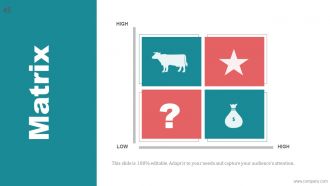
Diapositiva 45 : Esta es una diapositiva de matriz para mostrar información, especificaciones, etc.
Diapositiva 46 : Esta es una diapositiva de imagen de Lego para mostrar información, especificaciones, etc.
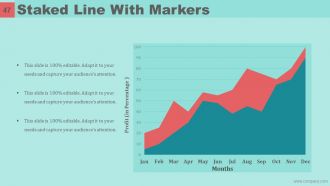
Diapositiva 47 : Esta es una línea replanteada con diapositivas de marcadores para mostrar la comparación de productos / entidades, etc.
Diapositiva 48 : Esta es una diapositiva de imagen de Idea para mostrar información, especificaciones, etc.
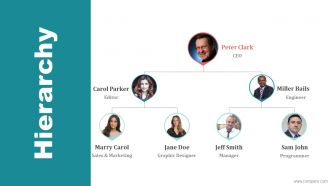
Diapositiva 49 : Esta es una diapositiva de jerarquía para mostrar las especificaciones del equipo / departamentos, etc.
Diapositiva 50 : Esta es una diapositiva de Coffee Break para detener. Puede cambiar el contenido de la diapositiva según sus necesidades.
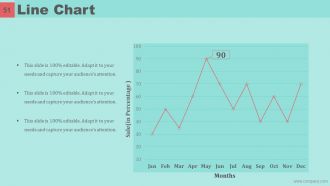
Diapositiva 51 : Esta es una diapositiva de gráfico de líneas para mostrar información, especificaciones, etc.
Diapositiva 52 : Esta es una diapositiva con imagen de lupa para mostrar información, especificaciones, etc.
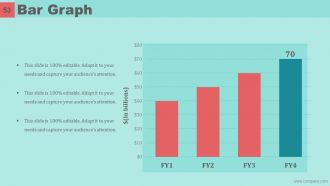
Diapositiva 53 : Esta es una diapositiva de gráfico de barras para mostrar la comparación de productos / entidades, etc.
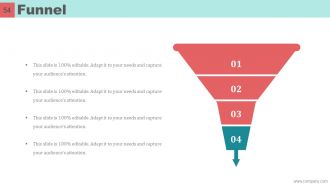
Diapositiva 54 : Esta es una diapositiva de imagen de embudo para mostrar información, especificaciones, etc.
Diapositiva 55 : Esta es una diapositiva de agradecimiento con dirección # número de calle, ciudad, estado, números de contacto, dirección de correo electrónico.
Diapositivas de presentación de PowerPoint del estudio de caso del modelo Mckinsey 7s con las 55 diapositivas:
Mejore las capacidades existentes con nuestras diapositivas de presentación en PowerPoint del estudio de caso del modelo Mckinsey 7s. Sea el catalizador para un mayor desarrollo.



FAQs for Mckinsey 7s Model Case Study
Ok so the 7S Model has these two groups - hard stuff (Strategy, Structure, Systems) and soft stuff (Shared Values, Skills, Style, Staff). Everything's connected though, which honestly makes it pretty messy to work with sometimes. Shared Values is like the hub in the middle. Change your strategy? Your staff might freak out. Tweak the structure? Suddenly your systems don't make sense anymore. The hard elements are way easier to pin down and actually change. Soft ones are slippery but they're usually what makes or breaks things. Start by mapping out where you are with all seven, then spot where things don't line up.
The 7S Model is perfect for this - map out all seven pieces (strategy, structure, systems, skills, staff, style, shared values) before you do anything major. Most teams mess up because they only fix the obvious stuff like org charts. Culture and capabilities? Totally ignored. Here's the thing though - everything's connected, so when you change one element, the others shift too. I'd start by figuring out where each S sits now, then spot what needs to move. Oh, and don't tackle them separately - that never works. You've gotta think holistically or you'll just create new problems.
So Shared Values are basically the center of the whole 7S thing - like the glue holding everything together. Your org's real beliefs and culture, not just whatever's hanging on the break room wall. These values actually shape how strategy, structure, systems (all that other stuff) play out day-to-day. Here's the thing though - people will push back hard if your changes don't match what the team genuinely cares about. I learned this the hard way once. Figure out what your people *actually* value first, not what the executives think they should value. Makes all the difference.
So basically, survey and interview people across all seven areas - strategy, structure, systems, shared values, style, staff, and skills. Map out where you're at right now, then hunt for the disconnects. Like, does your structure actually back up your strategy? Or are you stuck trying to innovate through some ancient hierarchy? (I swear this happens everywhere.) Get different teams in workshops to hash out how well everything connects. Here's the thing though - you've gotta be brutally honest about what's broken instead of just celebrating what sounds impressive in meetings. The gaps between elements are where the real problems hide.
The 7S Model is basically a reality check for when everything's changing fast. You map out seven things - strategy, structure, systems, shared values, skills, style, and staff - before making big moves. Here's the thing though: most companies obsess over strategy and structure, then wonder why their plans crash and burn. Those "soft" elements like culture and leadership style? They'll absolutely wreck your best-laid plans if you ignore them. I'd start by figuring out where you are now across all seven areas. Then spot what needs fixing for where you're headed. It's like having a checklist that actually catches the stuff people usually miss.
Yeah, definitely! I always run SWOT or PEST first to figure out what's happening externally. Then I'll use the 7S Model to see if we can actually pull off whatever strategy we're dreaming up. The 7S part is honestly the reality check - like, sure we found this amazing market opportunity, but do our systems and people actually support it? I've seen too many companies get excited about external analysis then completely ignore whether they're set up internally to execute. Works especially well when you're doing major pivots or expansions. External analysis gets you hyped, 7S keeps you grounded.
Ugh, the hardest part is juggling all seven pieces at once - it gets overwhelming fast. People hate change anyway, but mess with their culture and values? Good luck with that resistance. You can measure structure changes easily enough, but try tracking "soft" stuff like shared beliefs... yeah, that's fun. Oh, and here's the kicker - tweak one element and suddenly three others go haywire. Ripple effects everywhere. Honestly, I'd map out where you're at with all seven areas first. At least then you won't be totally blindsided when fixing your strategy accidentally breaks your systems.
Honestly, the 'Style' piece is huge - it's literally how your leaders act every single day. When managers are actually collaborative and transparent (not just saying they are), that behavior spreads like crazy through the whole company. Forget whatever's written on your values poster. What matters is how your leadership team makes real decisions and handles drama. That's what creates the actual culture people live in. Oh, and if you're trying to change things? Start with getting leaders to model what you want first. Everything else follows from there.
Start with process mapping and flowcharts - they'll show you the gap between what's happening and what should be happening. Most companies have zero useful documentation anyway, so don't rely on that. Interview people who actually use these systems daily. They know where the real pain points are. Value stream mapping works well for spotting bottlenecks too. Check your performance metrics to see where things are breaking down. Focus on your most critical processes first, then branch out. Honestly, stakeholder interviews usually give you the best insights since people love complaining about broken systems.
The 7S Model is perfect for this - it's like a diagnostic checklist for teams. Map out where you stand on all seven elements: strategy, structure, systems, shared values, style, staff, and skills. Look for disconnects between them (there's always something wonky). Start with the "soft" stuff though - leadership style, team values, skills gaps. That's usually where the real problems hide. Once you spot 2-3 major misalignments, build action plans around those. Way better than just fixing random issues as they pop up. The whole point is seeing the big picture instead of playing whack-a-mole with symptoms.
So the 7S Model is this diagnostic thing that's super helpful for M&A stuff - way more useful than just staring at spreadsheets and org charts. Map out where the two companies actually align or completely clash across all seven areas. Culture clashes? You'll catch them early since those "soft S" elements like values and management style are honestly the messiest part. Plus you can identify redundant systems that need combining and figure out what skill gaps you're gonna face afterward. I'd run through it like a checklist during due diligence to gauge how complex integration will be, then check back monthly while you're actually merging everything together.
Look, people are literally everything when it comes to pulling off your strategy. You could have the most brilliant plan ever, but wrong team = dead in the water. Most companies totally blow this part, honestly. Skills matter, but so does putting folks where they actually fit. Your staff shapes the whole vibe of how things get done too - like, culture isn't some poster on the wall, it's Bob from accounting being helpful or whatever. Performance issues? I'd start by figuring out if you've got the right mix of talent and if you're actually developing people properly.
Honestly, the 7S Model feels pretty outdated for digital stuff. It assumes companies stay relatively stable, but when your team structure shifts every month and systems update constantly, mapping all seven elements becomes pointless. Plus it's way too inward-looking - completely ignores customer feedback loops, platform dependencies, all that external ecosystem stuff that actually matters now. Traditional hierarchies? Sure, it works fine. Agile cross-functional teams though... not so much. I'd say use it as a rough starting point if you want, but you'll definitely need more dynamic tools that actually keep up with how fast digital orgs change.
Yeah totally! Just flip the focus from profit to mission. Strategy becomes how you'll actually achieve your mission goals. Structure covers stuff like volunteer coordination and board setup - honestly, board governance can be a nightmare but it matters. Systems are things like donor databases or program workflows. Skills matter even more for nonprofits since you're juggling volunteers with totally different backgrounds. Don't forget "staff" includes volunteers and community partners, not just paid employees. Your leadership style should reflect those values-driven vibes. Shared values? That's where most nonprofits already crush it. Make sure everything points toward mission impact instead of revenue.
Yeah totally, the 7S Model needs major adjustments when you're working across cultures. Like, your shared values that work great in the US will probably bomb in collectivist countries - you can't just copy-paste that stuff. Leadership styles are tricky too. What feels appropriately direct in Germany might come off as super rude in Japan, or way too stiff for a Silicon Valley crowd. I'd keep your main strategy the same globally but tweak everything else for local culture. Map out the cultural differences that actually matter in each region first. Then adjust from there - honestly it's more art than science sometimes.
-
Easily Editable.
-
Design layout is very impressive.