


Media mix powerpoint presentation slides




Try Before you Buy Download Free Sample Product
 Impress Your
 Audience
 100%
100% Editable
 Save Hours
 of Time


Introducing Media Mix PowerPoint Presentation Slides which helps you to meet your marketing objectives. If you want to measure the impact of your advertising campaigns and attain the goals, then, this media mix modeling template is really helpful for you. With the help of this media planning, PPT slides you can strategize the best combination of media to achieve the campaign goals. The media objective PowerPoint template is useful for the advertising agencies which helps to determine the product delivery to the consumers and other entities. Use data-driven charts, graphs, sheets, and other diagrams to improve your marketing level in minutes. This media mix strategy PPT is useful for various industries like broadcast media, gaming technology, mobiles, toys, remote control devices, etc. which helps in communicating with various channels in order to achieve the marketing objective. Download this media planning process presentation deck for delivering your advertisement across the best media platform.
People who downloaded this PowerPoint presentation also viewed the following :
Content of this Powerpoint Presentation
Slide 1: This slide introduces Media Mix. State Your Company Name and get started.
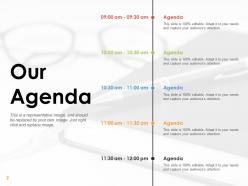
Slide 2: This slide shows Our Agenda. Add the agendas of the company and get started.
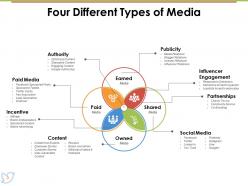
Slide 3: This slide presents Four Different Types of Media.
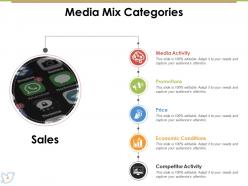
Slide 4: This slide showcases Media Mix Categories with these of the following factors- Sales, You, Media Activity, Promotions, Price, Economic Conditions, Competitor Activity.
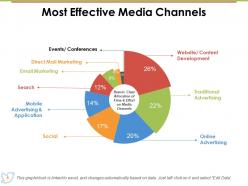
Slide 5: This slide shows Most Effective Media Channels which further showcases- Website/ Content Development, Traditional, Advertising, Online, Advertising, Social, Mobile Advertising & Application, Search, Email Marketing, Direct Mail Marketing, Events/ Conferences.
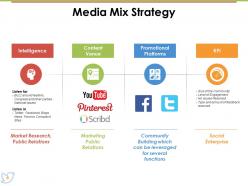
Slide 6: This slide presents Media Mix Strategy with these of the following factors.
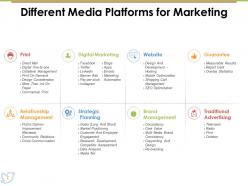
Slide 7: This slide showcases Different Media Platforms for Marketing.
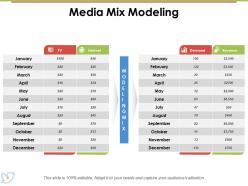
Slide 8: This slide presents Media Mix Modeling.
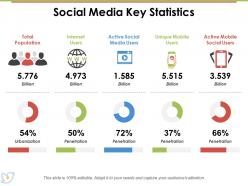
Slide 9: This slide showcases Social Media Key Statistics.
Slide 10: This slide is titled Additional Slides.
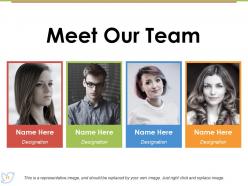
Slide 11: This slide showcases Our Team with Name and Designation to fill.
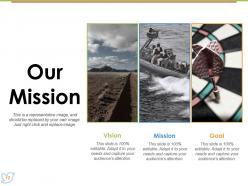
Slide 12: This slide contains Our Mission with text boxes.
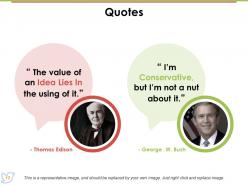
Slide 13: This slide presents Quotes.
Slide 14: This slide shows Target image with text boxes.
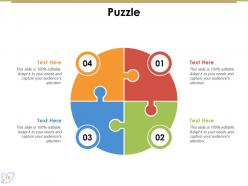
Slide 15: This slide presents a PUZZLE slide with the following subheadings- Integrity and Judgment, Critical and Decision Making, Leadership, Agility.
Slide 16: This is a Bulb or Idea slide to state a new idea or highlight specifications/information etc.
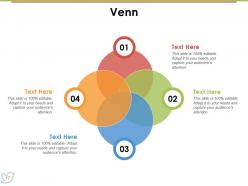
Slide 17: This is a Venn diagram image slide to show information, specifications etc.
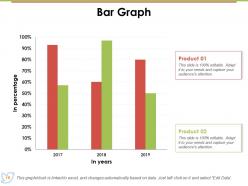
Slide 18: This is a Bar Graph image slide to show product comparison, growth etc.
Slide 19: This slide shows Critical areas to be assessed and worked on.
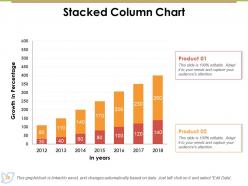
Slide 20: This slide presents Stacked Column Chart.
Slide 21: This is a Thank You slide with image.
Media mix powerpoint presentation slides with all 21 slides:
Discredit inhuman attitudes with our Media Mix Powerpoint Presentation Slides. Bring about a compassionate approach.

FAQs for Media mix
So media mix is just splitting your marketing budget across different channels - TV, digital, social, radio, whatever. You can't rely on just one because people consume media differently. Some are glued to TikTok, others still flip through magazines (somehow). Different channels also work better depending on where someone is in buying your stuff. My advice? Actually figure out where your audience hangs out first - don't just guess. Then put money toward what's actually working based on real data, not what feels right. Oh, and diversifying protects you if one platform tanks or gets expensive.
Honestly, just see where your people actually hang out first. Still watching TV and reading papers? Don't ditch traditional media completely - I know digital seems like the obvious choice but whatever. Most companies I know are getting way better targeting with digital though. Maybe try like 70% digital, 30% traditional to start? Then tweak it based on what's actually converting (not just getting views). You'll want to track everything obsessively for at least 3-6 months before switching up your budget. It's kind of a pain but worth it.
Think of audience segmentation as your cheat sheet for spending media budget smarter. You figure out where your different customer types actually hang out online, then put your money there instead of spraying it everywhere. Gen Z ditched Facebook years ago - why waste ad spend there? Map out each segment's media habits first. Then build your channel mix around what actually works for each group. It's way more strategic than the old "post everywhere and pray" approach. Plus you'll stop burning cash on platforms where your audience just... isn't.
Honestly, AI can be a game-changer for media mix if you're drowning in data. It spots patterns across all your touchpoints that you'd never catch manually - way better than just guessing or using those basic attribution models. The cool part? It predicts when you're about to hit diminishing returns, so you stop burning cash. Plus you can test different budget scenarios before actually spending. I'd start with something simple like AI attribution tools or automated bidding. Don't go crazy right away though - test small first and see what happens.
Track attribution metrics but honestly don't put all your faith in them - they're kinda broken. Incrementality testing is where it's at. Run geo holdouts or time-based experiments to see what's actually driving lift. I'd start with just one solid test this quarter, even something small. Also watch your ROAS and acquisition costs by channel. Brand lift matters too if you're doing any awareness stuff. The cross-channel attribution data is useful context but real experiments tell the truth about what's working.
So B2B is totally different - you're hitting up decision-makers on LinkedIn, sending targeted emails, maybe some solid content like whitepapers. These people actually research stuff before they buy. B2C though? That's where you go nuts with Facebook, Instagram, TV, whatever. Way more emotional and visual since people buy faster. Honestly, B2B feels easier to me because you're not chasing everyone and their mom. Just focus on fewer channels but do them really well. Figure out where your actual customers hang out first, then throw your money there. Don't spread yourself too thin.
Honestly, the tracking nightmare is what gets most people. Someone sees your display ad, hears the radio spot, then buys through search - good luck figuring out what actually worked. Each platform has totally different metrics and audience behaviors too. Budget allocation becomes this constant headache when one channel's crushing it and another's tanking. Creative messaging has to feel consistent but still work for each format's weird requirements. Oh, and don't let different teams run their own shows without talking to each other - that's a recipe for disaster. Get your attribution tools sorted first, then find one person to actually own the big picture strategy.
Honestly, just follow the data and move your money around based on what's actually working. Performance metrics don't lie - if people are ditching Facebook for TikTok, shift your budget there. Monthly check-ins are way better than those rigid yearly plans that never pan out anyway. Sometimes I'll literally just survey customers directly because why overthink it? Test smaller amounts on new platforms first before going all-in. The whole trick is staying flexible and ready to pivot when trends change. Oh, and focus groups still work surprisingly well for getting real insights about where your audience is hanging out these days.
Dude, seasonal shifts totally mess with which channels work best. Holiday shopping? Social and digital are killing it. Summer though - radio actually pops because everyone's commuting more. Check last year's data but honestly, don't bank on it repeating exactly. People's media habits are all over the place - January behavior looks nothing like July. Your audience bounces between different platforms and devices depending on the season. Build some wiggle room into your budget so you can move money around when you see those performance swings happening. Trust me on this one.
Honestly, start with incrementality testing - figure out which channels actually move the needle vs what would've happened anyway. Turn stuff on/off for 2-4 weeks and see what really impacts your metrics. I can't tell you how many teams just look at last-click attribution and call it a day (huge mistake). Document everything so you're not starting from scratch each time. Oh, and only test one big change at once - learned that the hard way when I couldn't figure out what actually worked. The lag effects are real too, so don't cut tests short or you'll miss half the story.
Oh absolutely - where your audience lives totally changes which platforms you should focus on. TV still kills it in rural areas, but urban people are all about streaming and digital stuff. Social media's weird too - like LinkedIn works great in business-heavy cities but basically nobody uses it in small towns. Local radio is surprisingly strong in some places (honestly didn't expect that when I first started). You really gotta look up the actual media consumption data for each area before you decide where to spend your money. Don't just assume everyone acts the same everywhere - they definitely don't.
Media costs are all over the place, so figure this out early. TV and radio need big upfront cash but you'll hit tons of people. Digital stuff like social and search? Way easier to start small and grow. Print shocked me honestly - newspaper rates are insane for what you get! Map out your CPMs first across different channels. Then run some scenarios to see what combo gives you the best reach without blowing your budget. It's basically about finding that sweet spot between what you can afford and how many eyeballs you need.
Don't think of social as separate from your TV and print stuff - it should connect everything together. Social moves crazy fast compared to traditional media, so timing is everything here. Use it to boost your existing campaigns, but also for getting instant feedback that you can't get anywhere else. Honestly, the audience data from social platforms is so much better than what you'll get from traditional channels. I'd start small though - pick one campaign and figure out how social can extend it and get people talking. Oh, and use those social insights to help decide where to spend your traditional ad budget too.
Okay so first off, be super clear about what data you're collecting and let people opt out easily. Don't target vulnerable groups with sketchy stuff - like if someone's drowning in debt, maybe don't bombard them with loan ads? That's just gross. Always label sponsored content so people know it's an ad, not editorial. Your media choices should vibe with what your brand actually stands for too. I always tell people to do this gut check: would you feel weird if your targeting strategy ended up on the front page of a newspaper? If yes, time to rethink it.
So basically, when you tell a story across all your marketing channels, it makes everything stick together way better. People actually remember it because there's this emotional thread connecting everything - your Instagram posts, podcast ads, whatever. I always think it's like having a real conversation instead of just screaming random facts at people, you know? When someone sees your social content after hearing your radio spot, they're like "oh yeah, I know this story." Honestly, it works so much better than just listing product features everywhere. Start with your main story, then tweak it for each platform while keeping that core vibe.
No Reviews