


Media mix modelling powerpoint presentation slides




Try Before you Buy Download Free Sample Product
 Impress Your
 Audience
 100%
100% Editable
 Save Hours
 of Time


Determine the steps that help your business to meet the marketing objectives by using our content ready Media Mix Modelling PowerPoint Presentation Slides. With the aid of this visually appealing marketing mix modeling PPT theme, you can explain how to execute the marketing operation and targets. You can describe various media channels like e-mail marketing, mobile advertising, and online advertising with the help of a media model PowerPoint graphic. Use marketing strategy presentation templates and mention the important goals of your product or the brand. Take the assistance of this professionally designed marketing management PPT visual and highlight the different media platforms for marketing of your product. Employ the media mix modeling PowerPoint layout and display the social media key statistics in an efficient manner. Use the media mix strategy presentation slides and talk about the brand message of your product that grabs the attention of your target audience. Hence, download our ready-to-use media model PPT deck and discuss how to analyze the customer needs or requirements.
People who downloaded this PowerPoint presentation also viewed the following :
Content of this Powerpoint Presentation
Slide 1: This slide introduces Media Mix Modelling. State Your Company Name and begin.
Slide 2: This is Our Agenda slide. State your agendas here.
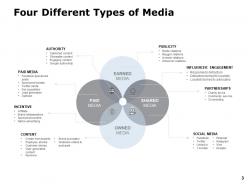
Slide 3: This slide shows Four Different Types of Media describing- AUTHORITY, PAID MEDIA, INCENTIVE, CONTENT, PUBLICITY, INFLUENCER ENGAGEMENT, PARTNERSHIPS, SOCIAL MEDIA.
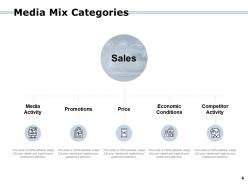
Slide 4: This slide presents Media Mix Categories describing- Media Activity, Promotions, Price, Economic Conditions, Competitor Activity.
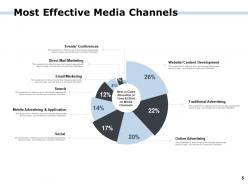
Slide 5: This slide displays Most Effective Media Channels as- Events/ Conferences, Email Marketing, Online Advertising, Traditional Advertising, Search, Mobile Advertising & Application, Social, Direct Mail Marketing, Website/ Content Development.
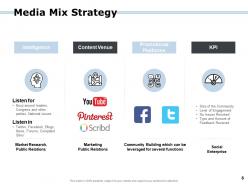
Slide 6: This slide represents Media Mix Strategy with categories as- Intelligence, Content Venue, Promotional Platforms, KPI.
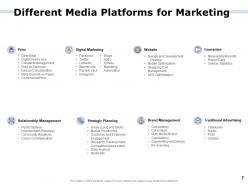
Slide 7: This slide showcases Different Media Platforms for Marketing including- Relationship Management, Strategic Planning, Brand Management, Print, Traditional Advertising, Website, Guarantee, Digital Marketing.
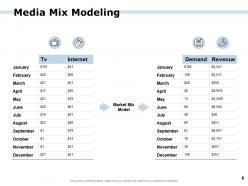
Slide 8: This slide shows Media Mix Modeling on monthly basis.
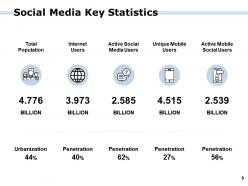
Slide 9: This slide presents Social Media Key Statistics.
Slide 10: This slide displays Media Mix Modelling Icons.
Slide 11: This slide is titled as Additional Slides for moving forward.
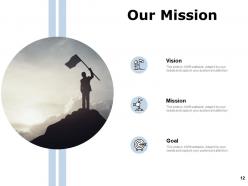
Slide 12: This is Our Mission slide with related imagery and text.
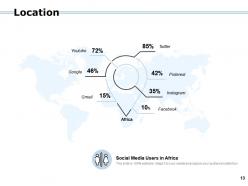
Slide 13: This is a Location slide with maps to show data related with different locations.
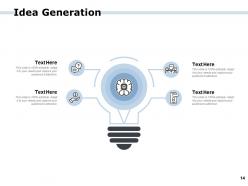
Slide 14: This is an Idea Generation slide to state a new idea or highlight information, specifications etc.
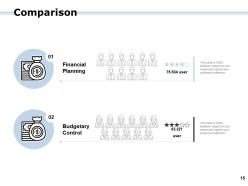
Slide 15: This is a Comparison slide to state comparison between commodities, entities etc.
Slide 16: This is a Thank You slide with address, contact numbers and email address.
Media mix modelling powerpoint presentation slides with all 16 slides:
Use our Media Mix Modelling Powerpoint Presentation Slides to effectively help you save your valuable time. They are readymade to fit into any presentation structure.

FAQs for Media mix modelling
You'll need your media channels (TV, digital, radio), sales data, and outside stuff like seasonality or what competitors are doing. Adstock parameters are crucial too - people don't buy right after seeing an ad, which is kind of obvious but easy to forget. The model uses regression to separate what's actually driving sales from what just happens to correlate. Oh, and you need at least 2-3 years of clean data or it won't work well. Honestly, I'd check what data you can actually get your hands on first. That step trips up way more people than the actual modeling part.
MMM basically shows you which channels actually work instead of just eating your budget. Like, your Facebook ads might get credit for sales that really came from that radio campaign running simultaneously - the modeling untangles all that mess. You can see exactly where each dollar performs best across touchpoints. Honestly, most people are shocked when they compare their current attribution to what MMM reveals. Then you just shift money from the dead weight channels to your winners. Pretty straightforward once you map it out.
So you'll need three types of data basically. Media spend across all your channels - paid search, social, TV, whatever you're running. Sales data at the same time intervals, like weekly or daily. Then external stuff like seasonality, competitor moves, pricing changes. Media data is honestly such a pain because every platform measures things differently. Your sales data timing needs to match your media data timing though. Oh and those external variables? Super important for actually isolating what your media's doing versus everything else happening. I'd start by just seeing what data you can actually get your hands on first.
So basically you're running regression analysis on your sales data to figure out what marketing actually works. Feed it everything - TV spend, digital ads, seasonality, promos, all of it. The model separates what's genuinely driving new sales from stuff that just looks good (search ads are notorious for this, they just capture people already buying). You'll get attribution coefficients and saturation curves showing which channels have staying power versus quick wins. Honestly, the adstock effects are pretty fascinating once you dig in. Just make sure you have at least 2 years of weekly data across all touchpoints or the results won't mean much.
Mostly you'll run into multivariate regression with adstock and saturation curves - that's like the bread and butter. Bayesian stuff and time series analysis pop up a lot too. Ridge regression is everywhere since media channels are always correlated with each other, which creates a mess. Some people mess around with random forests or neural networks, but good luck explaining that to your CMO lol. Honestly, most platforms stick with regression because executives actually get it. Oh and time series - did I mention that already? Start simple with basic regression, then add the fancy stuff once you're not drowning.
Dude, seasonality will totally screw up your media mix model if you're not careful. Black Friday sales aren't happening because your Facebook ads suddenly became brilliant - people are just shopping like crazy anyway. Your model might give all the credit to whatever channels were running during busy seasons when it's really just normal demand patterns. I learned this the hard way on a project last year, honestly. You've got to build in seasonal controls from day one or do year-over-year comparisons. Otherwise you'll think certain channels are performing way better than they actually are just because they ran during peak times.
So here's the thing with customer segmentation - you can build different models for each audience group instead of lumping everyone together. Way more useful insights that way. Like instead of just knowing "TV drives 30% of conversions," you might find out TV crushes it for high-value customers but does basically nothing for bargain hunters. Total game changer honestly. Then you can spend your budget smarter - more digital for younger people, traditional ads for older folks. Oh, and make sure you've got enough data in each segment or the models get wonky. Pretty straightforward stuff once you think about it.
So media mix modeling basically tells you which channels actually work and which ones are just burning cash. You'll spot patterns like TV building awareness while digital closes the deal, or that radio spend doing absolutely nothing (seriously, happens all the time). The cool part is running "what-if" scenarios before you blow your budget on something stupid. Plus you get frequency caps and seasonal trends for each channel. Honestly, I'd just look at your 3 worst performers from the last model and move that money to whatever's giving you the best ROI. Way easier than guessing.
Honestly, MMM is pretty demanding data-wise - you need like 2+ years of solid spend history or you're basically SOL. Newer brands get stuck here all the time. Short-term stuff? Forget about it. These models are built for big picture trends over months, not quick campaign adjustments. They're also kinda terrible at picking up creative changes or those subtle audience targeting wins that actually matter. I'd say use it for high-level budget decisions but don't expect it to help with your daily optimizations. It's more strategic planning tool than tactical weapon, you know?
Honestly? Every 6-12 months is the sweet spot, but it really depends on your situation. Stable business with consistent spend? Once a year is totally fine. But if you're constantly launching stuff or shifting strategies around, definitely go quarterly. I've watched models just completely fall apart after 18 months - consumer behavior changes so damn fast sometimes. The real trick is monitoring how well your predictions match reality. Once they start getting wonky consistently, time to rebuild with newer data. Oh, and entering new markets always throws things off too.
Media mix modeling shows you what's actually working vs what's just eating your budget. You can spot if Facebook ads are messing with your Google performance, or whether that pricey TV campaign justifies the cost. Think of it as X-ray vision for marketing spend - sounds cheesy but it's true. The modeling helps you figure out optimal budget splits, find those diminishing returns points, and catch weird interactions between channels. Oh, and definitely audit your current attribution setup first. Most people way overvalue last-click stuff.
So MMM picks up these synergy effects between online and offline channels through interaction terms and adstock stuff. TV and radio usually boost your search volume and direct traffic. Then digital channels amplify traditional media through retargeting - honestly the whole thing's pretty fascinating once you see it working. The model uses statistical techniques to measure how much lift you get across different touchpoints. Oh, and definitely include interaction variables between your biggest offline and online channels when you build it. You'll miss tons of lift opportunities otherwise, which would suck.
So the main things to watch out for? First off, don't skimp on cleaning your data - you know how that goes. Your model needs to factor in stuff like holidays, what competitors were doing, economic shifts, otherwise it'll think your ads caused a spike when really it was just Black Friday. Oh and try not to go overboard with variables or you'll just confuse the thing. Honestly, the biggest red flag is when your results don't match reality. If your model says that Super Bowl commercial did nothing but you saw sales explode afterward, then something's definitely broken in your setup.
Yeah totally! Small businesses can do media mix modeling too. Just keep it simple - Google Analytics plus some basic Excel analysis works fine to start. Don't try tracking every single channel (I learned this the hard way). Pick your top 3-4 and focus there. You'll need at least 6 months of solid data before patterns start making sense. Maybe find a local marketing person or freelancer to help set up basic models? Way cheaper than those fancy enterprise solutions. Honestly, starting small and growing into it makes way more sense anyway.
Honestly, AI and ML are completely transforming MMM right now. These new models can crunch way more data sources in real-time and actually figure out incrementality instead of just showing correlation. The non-linear stuff they handle now is wild. Cloud computing means smaller teams can access sophisticated models without waiting weeks for results - thank god for that! What's really changed the game is automation. You'll get continuous updates instead of those brutal quarterly model refreshes we all used to suffer through. Oh, and the automated MMM platforms are getting scary good at handling the technical heavy lifting if you're still doing manual work.
-
Informative presentations that are easily editable.
-
Design layout is very impressive.