


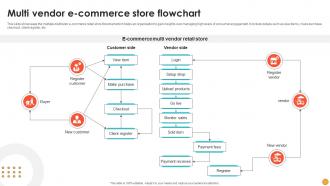
Multi Vendor E Commerce Store Flowchart





Try Before you Buy Download Free Sample Product
 Impress Your
Audience
 100%
Editable
 Save Hours
of Time


This slide showcases the multiple distributor e-commerce retail store flowchart which helps an organization to gain insights over managing high levels of consumer engagement. It include details such as view items, make purchase, checkout, client register, etc.
People who downloaded this PowerPoint presentation also viewed the following :
Multi Vendor E Commerce Store Flowchart with all 9 slides:
Use our Multi Vendor E Commerce Store Flowchart to effectively help you save your valuable time. They are readymade to fit into any presentation structure.








FAQs for Multi Vendor E
Honestly, the variety is huge - you'll have tons of products without dealing with inventory headaches. Vendors handle their own stock and shipping, which is awesome. You can grow fast since they're doing most of the work while you just collect commissions. No upfront costs either. Think of it like running a mall instead of just one shop - customers love having options and better prices. Plus you're not stuck relying on one product type, which I've seen bite people before. Just don't skip the vendor vetting part though, because one bad seller can mess up your whole reputation.
Honestly, multi-vendor stores are pretty great for keeping people on your site longer. Customers get way more variety without having to jump around different websites - they can compare stuff, read tons of reviews, find weird unique products. The competition thing is huge too since vendors are basically fighting each other for sales, so you end up with better prices and shipping. Just make sure your search filters don't suck and people can actually find what they want. Oh, and streamline that checkout process or you'll lose people when they're literally about to buy.
Start with vendor tools - can sellers easily set up shop and manage their stuff? Commission structure is basically your business model, so that's critical. Payment splitting between multiple vendors gets messy fast if the platform sucks at it. The admin dashboard better be decent since you'll practically live there dealing with drama and approvals. Mobile and SEO are obvious must-haves now. Their integration options matter too - you'll probably need random apps later you haven't thought of yet. Oh, and make a list of dealbreakers vs nice-to-haves before demos. Trust me on that one.
So basically you've got two main options for handling payments across multiple vendors. Split payments work where the gateway automatically divides everything up between vendors (after taking your cut), or you can use a master account approach where all money comes to you first, then you distribute it. Stripe Connect is really good for this stuff, and PayPal has their marketplace version too - though honestly the fees can get pretty brutal. Oh, and definitely pick a gateway that already does marketplace functionality. Trust me, trying to add payment splitting later is such a headache.
Don't just compete on price - you'll lose every time against Amazon. Instead, find what makes you special and lean into it hard. Maybe it's bundles, faster shipping, or actually knowing your stuff when customers have questions. Good photos are obvious, but your story matters more than you think. People genuinely want to support real businesses over faceless corporations. Pick one or two things you can absolutely nail - being okay at everything won't cut it. Could be eco-friendly options, expert advice, whatever. Just own your niche completely and don't try to be everything to everyone.
Honestly, start with a solid approval process where vendors submit all their product info and photos before anything goes live. Customer reviews are huge too - let people call out bad stuff. I'd also do random inventory checks myself because you can't trust everyone, you know? For pricier categories, maybe require some kind of certification or proof it's legit. The whole point is catching problems early instead of dealing with angry customers later. Oh and whatever guidelines you set up, actually stick to them or vendors will walk all over you.
Dude, reviews are everything for multi-vendor stores. Think about it - would you buy from some random seller you've never heard of? Hell no. Reviews let customers check if the product's actually good AND if the seller isn't gonna screw them over. It's like built-in validation for your whole marketplace. Plus they help with SEO stuff and show vendors which products are actually selling well. Honestly, the competition aspect is huge too - sellers will step up their game when they know bad reviews hurt their sales. Just make sure people can review both the product and the seller's service.
Honestly, having multiple vendors is like having backup plans for your backup plans. Set up real-time inventory tracking so you don't accidentally oversell stuff. Automated reorder alerts are clutch for keeping popular items in stock. If one supplier craps out, the others can cover you - way better than relying on just one. Track your vendors' performance too. Delivery times, quality, all that. Then when busy season hits or there's shortages, you'll actually know which ones to lean on first. It's basically spreading your risk around while staying on top of everything.
Start with a solid onboarding checklist - account setup, product requirements, payment stuff. Get your vendor agreement nailed down first with commission rates and shipping policies spelled out clearly. Honestly, skipping this step always bites you later. Build them a portal where they can upload docs and see where they stand in the approval process. I'd also do weekly check-ins for their first month or so. The whole thing should feel like you're helping them succeed, not drowning them in paperwork. Oh, and make sure they can actually reach someone when they're stuck.
Honestly, data analytics is like having x-ray vision for your business. Track which vendors are killing it and which ones suck. You'll spot buying patterns that help with inventory decisions - way better than just guessing. It also shows exactly where customers bail out during checkout, which is gold for fixing conversion problems. The cool part? You can use all this to give people personalized product suggestions. I'd start simple though - just set up basic dashboards for vendor performance and customer behavior first. You might be surprised what weird trends pop up.
Honestly, logistics with multi-vendor stores is like herding cats. Each seller ships from their own spot with different timelines and packaging - it's chaos. Your customers still expect everything to arrive fast though, even if their order comes from three different places (which is kinda nuts but whatever). The tracking situation gets messy real quick when you're juggling multiple fulfillment centers. Plus you can't see everyone's inventory in real time since vendors handle their own stock. Set some shipping standards upfront. Maybe look into a logistics platform that pulls all the tracking together - saves you from going insane trying to coordinate everything manually.
Look, if your multi-vendor site is confusing to navigate, people will just leave. Simple as that. You need solid search filters and clear info about each seller - trust is already shaky when customers don't recognize the vendors. Make checkout work smoothly across all sellers too. Honestly, I'd start with mobile since that's where most shopping happens anyway. The whole point is making it stupidly easy to find stuff, compare different sellers, and actually complete the purchase. Bad UX kills these platforms faster than anything else because you're already asking customers to take a leap of faith with unfamiliar sellers.
Start with vendor liability stuff - who pays when orders get screwed up or products are defective. Your terms need GDPR coverage if you're hitting EU markets, plus tax collection and IP protection. Most people totally botch the vendor contracts, honestly that's where everything falls apart. Set up dispute processes and nail down your refund/return policies early. Oh, and definitely ban sketchy products upfront. I know it sounds boring, but get a lawyer to check your vendor agreements before you launch. Trust me, it's way cheaper than dealing with legal drama later when you're trying to scale.
Oh man, multi-vendor marketing is such a headache compared to single stores. You're juggling like 20 different brands instead of just focusing on one message. Single vendor is easy - you control everything. But with marketplaces? Good luck balancing vendor promotion while keeping your own brand strong. Amazon nailed this somehow - they push sellers but you still think "Amazon" first. You'll be doing tons of vendor onboarding campaigns and trying to rotate promotions fairly. Honestly, the vendor conflicts alone will drive you crazy. Focus on making your platform the go-to spot, then let all that variety work for you.
Honestly, social media is like your best friend for driving traffic to multi-vendor stores. Instagram and TikTok are insane for getting people to discover products - I swear half my impulse buys come from there. Facebook's better for building actual communities and retargeting people who already visited. The beauty is you can showcase all your vendors' stuff while they're also promoting their own sections, so you're basically doubling your reach. Plus all that user-generated content builds trust way better than fancy ads. Pick maybe 2-3 platforms where your people actually spend time, then just stay consistent with posting and actually reply to comments. That's really it.
-
Enough space for editing and adding your own content.
-
“I've always gotten excellent slides from them and the customer service is up to the mark.”