


Concept BATNA In Negotiation Training Ppt




Try Before you Buy Download Free Sample Product
 Impress Your
 Audience
 100%
100% Editable
 Save Hours
 of Time


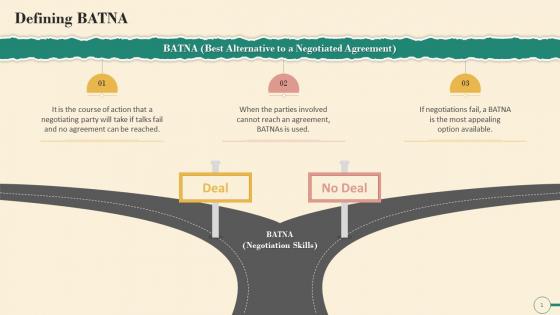
This slide explains that BATNA Best Alternative to a Negotiated Agreement refers to a negotiating partys action plan if talks fail and no agreement can be reached. It also mentions that BATNAs are used when the parties involved cannot reach an agreement. If negotiations fail, the most appealing option is a BATNA.
People who downloaded this PowerPoint presentation also viewed the following :
Concept BATNA In Negotiation Training Ppt with all 16 slides:
Use our Concept BATNA In Negotiation Training Ppt to effectively help you save your valuable time. They are readymade to fit into any presentation structure.










FAQs for Concept BATNA In
Having a solid BATNA is like holding pocket aces in poker - suddenly you're not desperate anymore. You've got options if the deal goes south. Honestly, I've watched people get steamrolled in negotiations because they convinced themselves it was "this deal or nothing." That's never true though. Your alternatives become your floor - they tell you exactly when to walk away. The trick is actually mapping out what you'd do instead beforehand. Don't just wing it. Once you know your backup plan, you'll negotiate with way more confidence instead of accepting whatever scraps they throw at you.
Okay so first thing - grab a pen and actually write down every option you'd have if this deal doesn't work out. Don't just think about it because you'll forget half of them. Then dig into the details of each one. What's it gonna cost? How long will it take? Be super realistic here - no fantasy scenarios. Rank everything from best to worst. Your top choice? That's your BATNA right there. Honestly, this whole process is kinda tedious but it's worth it. Once you know your backup plan, you'll feel way more confident and you'll know exactly when to say "nah, I'm good" and walk.
Honestly, the worst thing you can do is fall in love with backup options that sound amazing but totally crumble when you actually need them. Don't romanticize alternatives you haven't tested - that's just setting yourself up for disappointment. Your backup plan from last month? Might be completely useless now, so keep updating it. Also double-check those alternatives are still on the table when crunch time hits. I learned this the hard way once. Before any big negotiation, run through some worst-case scenarios with your backup plan to see if it actually holds up.
When you know what alternatives your opponent has, you basically know how desperate they are. Bad alternatives? Push harder on your terms since they'll probably take whatever you offer. Good alternatives mean you gotta make your deal way more attractive or they'll just walk. It's honestly like having x-ray vision in poker - you can see exactly how strong their position really is. The tricky part is figuring out if they're bluffing about having better options elsewhere. Do some digging beforehand to see what they're actually working with.
Oh totally, having a killer backup plan can mess with your head. You start thinking you're untouchable and get way too pushy at the negotiating table. Plus the other person can tell when you're half-checked-out, which pisses them off. I've watched people torpedo deals that would've been amazing just because they felt invincible with their Plan B. Don't get me wrong - your BATNA's there for a reason. Just don't let it turn you into an arrogant ass who won't bend on anything.
So your BATNA strategy totally changes based on what kind of negotiation you're dealing with. In adversarial ones? Keep that thing locked down - it's what lets you walk away and make bold moves. Collaborative talks are weird though - sometimes you'll actually want to share bits of your BATNA so everyone can brainstorm better solutions together. Don't dump everything upfront even then. The whole point shifts from "I have power over you" to "let's both win bigger than our backup plans." I learned this the hard way last year, but seriously - figure out your BATNA beforehand or you're flying blind.
Honestly, visual templates are a game-changer for explaining your BATNA. People get so confused when you just ramble about your backup options - I swear it's painful to watch sometimes. Flowcharts work great for mapping everything out, or you could do a simple comparison table. Even just ranking your alternatives A, B, C makes a huge difference. The other person can actually follow what you're saying instead of getting lost in your verbal mess. Templates force you to think clearly too, which is half the battle. Definitely sketch something out before you negotiate - trust me on this one.
So BATNA is your best backup plan if things fall through - like having another job offer in your pocket. WATNA? That's the nightmare scenario. MLATNA is what'll probably actually happen if you walk away. Most people only think about BATNA, which is honestly a mistake. You need all three mapped out before you sit down to negotiate. Your BATNA gives you that "I don't need this" confidence. WATNA keeps you realistic about risks - maybe you'll be jobless for months, who knows. Use your BATNA as your walk-away point. Trust me, knowing these ahead of time saves you from making desperate decisions in the moment.
So there's actually some decent tech that can help with BATNA stuff. Data analytics platforms will crunch market alternatives way faster than doing it manually. Negotiation software lets you model different scenarios - honestly the simulation apps are pretty neat for testing things out beforehand. AI tools are good at spotting alternatives you might overlook (though sometimes they're weird suggestions lol). Visualization tools help when you need to show stakeholders your options clearly. Don't overcomplicate it though - just pick one simple tool first and see how it goes. The whole point is saving research time, not adding more steps to your process.
Start with role-playing - have people practice spotting their alternatives before they negotiate. Most folks don't realize how many options they actually have, which is kind of crazy when you think about it. Run workshops using real scenarios your team deals with. Teach them to brainstorm systematically and research what's standard in the market. The trick is making this a regular habit, not something you do once and forget. Set up sessions where teams share their BATNAs with each other for feedback. Builds confidence and catches blind spots before the big negotiations hit.
Your industry totally changes what counts as a good backup plan. Tech people can juggle multiple offers or go freelance pretty easily. Academia? Way fewer options but they're more specialized. Startups move crazy fast so timing matters a lot, but government jobs have these long drawn-out processes that actually give you more time to figure things out. Here's what I'd do - research what's realistic in your field first. Look up typical salary ranges, how long hiring usually takes, what other paths exist. Don't just follow some generic advice that doesn't fit your situation.
Dude, when your backup plan sucks, don't panic and take whatever scraps they throw at you. I've watched people do that and it's painful to watch. Instead, flip the script - get curious about what they actually need and start brainstorming solutions together. Ask tons of questions. Sometimes having zero leverage is weirdly freeing because you can just be real with them? Focus on making the pie bigger instead of fighting over crumbs. And honestly, buy yourself time while you quietly work on better alternatives. The collaborative approach works way better than you'd think.
Look, the trick is building up backup options while you're still talking. Start digging around for other deals or partners that could work instead. Honestly, you'd be shocked how many alternatives pop up once you actually start hunting for them. Work on fixing whatever sucks about your current backup plan too. Maybe there's a way to make it less terrible? The whole point is doing this legwork now, not when everything's falling apart and you're panicking. Don't wait until you desperately need it - start today.
Your BATNA can look completely different depending on who you're negotiating with culturally. Some cultures won't walk away easily because maintaining relationships matters way more than quick wins. Others might think certain alternatives are just straight-up inappropriate or embarrassing. Time perspective plays into this too - like, cultures that think long-term will weigh their options totally differently than ones focused on immediate payoffs. Honestly, the "strong" backup plan you're proud of might seem weak or even offensive to them. Do some homework on how their culture typically handles alternatives and relationships before you sit down to negotiate.
Don't show your BATNA directly - it's like revealing your cards too early. Be indirect about it instead. Show confidence through body language and willingness to walk away if needed. I totally messed this up in my first major negotiation btw! Reference market standards without getting into specifics about your backup plans. Say stuff like "I'm exploring other opportunities" rather than naming actual companies. You want them knowing you've got options without giving them ways to mess with those alternatives. Short sentences work. Practice beforehand so you don't sound rehearsed when it matters.
-
I never had to worry about creating a business presentation from scratch. SlideTeam offered me professional, ready-made, and editable presentations that would have taken ages to design.
-
Attractive design and informative presentation.