


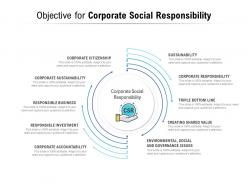
Objectives for corporate social responsibility





Try Before you Buy Download Free Sample Product
 Impress Your
 Audience
 100%
100% Editable
 Save Hours
 of Time


Address feelings of jealousy with our Objectives For Corporate Social Responsibility. Handle any cause for envy.
People who downloaded this PowerPoint presentation also viewed the following :
Objectives for corporate social responsibility with all 5 slides:
Handle any cause for envy with our Objectives For Corporate Social Responsibility. Address feelings of jealousy.




FAQs for Objectives for
CSR today is mostly about building real trust and managing risk - not just the PR stuff. Companies finally get that it directly hits employee retention and customer loyalty. Honestly, the "checking boxes" approach is pretty dead at this point. You'll want to find issues that actually connect to what your business does and what stakeholders care about. Brand reputation matters, sure, but authentic impact is where the long-term value comes from. Don't just pick random causes. Start with social or environmental problems that genuinely tie back to your operations somehow.
Look, people actually want to support companies that give a damn about something beyond just making money. Pick a cause that genuinely fits your business - not some random trendy thing. Sustainability, community stuff, whatever makes sense. Customers aren't stupid though. They can smell fake CSR bullshit from a mile away, so you've got to mean it. When it's real, people will literally share your story for free on social media. That's gold right there. Just commit to one thing long-term instead of jumping around. Trust me on this.
Look, you can't just guess what stakeholders want and hope your CSR hits the mark. Survey employees, customers, communities first - find out what actually matters to them. I've watched companies blow it by setting goals in isolation, then wondering why nobody cares. Getting people involved from day one? That's how you build real credibility. Plus you'll avoid those awkward moments when your "impact" totally misses what people need. Honestly, stakeholder input isn't optional anymore - they're literally the ones deciding if you're making a difference or just doing fancy PR.
Honestly, CSR works way better when it actually helps your business instead of just being this random charity thing on the side. Look for spots where doing good stuff also makes business sense - like going sustainable to save money, or having employees volunteer because it keeps them around longer. Most companies still just check boxes though, which is kinda pointless. The smart ones bake it right into how they operate. I'd start by looking at what CSR you're already doing and see how it lines up with your actual business goals. There's probably more overlap than you think.
Oh dude, CSR totally works for keeping employees happy. People genuinely want to work somewhere that cares about more than just making money. Your team feels way more engaged when they see the company doing good stuff - environmental projects, helping the community, whatever. Plus it's a magnet for good candidates, especially millennials who literally google your values before interviewing. Honestly, retention becomes so much easier when people actually believe in what you're doing. I'd start by just asking your employees what causes they care about most - might surprise you what matters to them.
Honestly, I'd focus on just a few solid metrics instead of trying to measure everything. Carbon footprint reduction and waste diversion are good starting points for environmental stuff. For social impact, track volunteer hours and how much you're investing in communities. Employee engagement surveys matter way more than people think - if your own team isn't bought in, you're screwed. Financial metrics work too, like savings from sustainability programs. The trick is picking maybe 3-5 things that actually match what you're trying to accomplish with CSR. Oh, and don't ignore stakeholder perception surveys - those tell you if people actually care about what you're doing.
Look, the trick is connecting your CSR stuff to actual business results and real community problems - none of that fluffy "making the world better" nonsense. Pick employees who genuinely give a damn about the cause because fake enthusiasm is painfully obvious. Focus on solving problems your stakeholders actually have, not what sounds impressive on LinkedIn. Honestly, I'd start small with just one area you can measure properly. Get your baseline numbers first, then expand based on what's working. The programs that last are the ones creating real value for everyone involved - your company AND the community. Otherwise you're just throwing money at feel-good projects that'll get cut when budgets tighten.
Honestly, budget's gonna be your biggest headache - CSR costs money upfront but the payoff isn't obvious right away. Leadership gets skeptical fast. Measuring results is a nightmare too since most benefits are touchy-feely stuff, not hard data. Oh, and people will absolutely roast you for greenwashing if your initiatives don't match what your company actually does. I've seen that blow up badly. Resource fights happen constantly when other priorities pop up. My advice? Start tiny with something you can actually track, build some wins, then expand from there.
Oh totally - culture makes a huge difference for CSR stuff. Like, Europeans are super into environmental programs, but in Southeast Asia they care more about community development. Japan has completely different expectations around labor practices than the US or Brazil. Even charity is weird - some places want corporate donations, others think employee volunteering is better (honestly never thought about that until I started working internationally). You can't just copy-paste the same strategy everywhere. Each market needs its own approach based on what locals actually value.
Look, transparency is what separates real CSR from total BS greenwashing. People are super skeptical of companies right now - and honestly, they should be. You've got to be upfront about your goals, timelines, and yeah, even when you mess up. Share actual numbers, not just those glossy feel-good stories everyone rolls their eyes at. Admit where you're failing. Explain your fix-it plan. Regular progress reports with real data will keep you honest and build trust. It's basically the only way to prove you're not just throwing around buzzwords to look good.
Honestly, tech can totally transform how you handle CSR stuff. Data analytics helps you actually track environmental impact instead of just guessing. AI optimizes your supply chain sustainability, and blockchain makes sourcing way more transparent. Mobile apps get employees excited about volunteering - way better than boring emails. Social platforms amplify your message too. Here's the best part though: you can finally prove ROI on these initiatives, which makes getting budget approval less painful. Don't overthink it. Start with something simple like carbon tracking or a digital volunteer portal. Just pick whatever CSR thing you're already doing and make it digital first.
Honestly, the biggest stuff to track right now is climate commitments and supply chain transparency - investors aren't messing around with ESG reporting anymore. Social justice and employee wellbeing became huge (for obvious reasons). Net-zero targets are everywhere now, but companies actually have to prove they're hitting them. Oh, and digital responsibility is blowing up fast - data privacy, AI ethics, all that. Don't sleep on stakeholder capitalism either. My advice? Do a materiality assessment first to figure out what actually applies to your industry instead of chasing every trend.
So regulations basically just give you the floor for CSR stuff - like the bare minimum you've gotta hit. New environmental rules come out? You'll need to work those into your social responsibility plans, probably go a bit beyond too if you want to stay competitive. Here's the thing though - don't just stop at meeting requirements. Smart companies use regs as their starting line, not the finish. It keeps you ahead of what's coming next and honestly makes you look way better than competitors who are just scraping by with the basics.
Dude, definitely team up with non-profits for your CSR stuff. They've got the community connections you don't, plus people actually trust them over corporate PR speak. Non-profits are also way better at tracking real impact instead of just vanity metrics. Think of it like having a local show you around a new city - they know where to go and who to talk to. Your employees will love the volunteer opportunities too. Oh, and you'll dodge those cringey campaigns that totally miss the mark. Just find orgs that actually match what your company stands for.
Look at what you already care about and just build from there. Maybe start sourcing locally or cut down on waste - something small that won't drain your budget. Honestly, the whole CSR department thing is overrated when you're trying to run a business day-to-day. Pick one thing first. Could be supporting a local charity, going greener, or just treating your team really well with decent pay. Whatever you choose, make sure it's actually you, not some corporate BS your customers will see right through. Go with something you can stick to long-term instead of burning yourself out trying to save the world overnight.
No Reviews