

Occupational Stress Management Strategies Powerpoint Presentation Slides




Try Before you Buy Download Free Sample Product
 Impress Your
 Audience
 100%
100% Editable
 Save Hours
 of Time


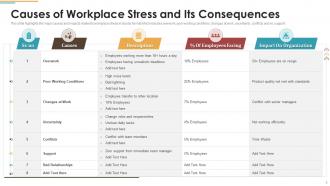
Occupational stress management strategies or programs are designed to prevent and cure the negative effect of job stress on employees. First, this module highlights the causes and dimensions of workplace stress, including overwork, poor working conditions, change at work, uncertainty, conflicts, and zero support from management as the main causes and its consequences on the organization and employees. Grab our professionally designed Occupational Stress Management Strategies template. Additionally, it covers the need for work-related stress, including the importance of managing stress, symptoms-based self-assessment of stress levels, and physical and emotional signs to evaluate stress. Further going, it highlights the different methods to reduce stress levels, including promoting supportive management, and covers various strategies and techniques to deal with stress, including behavioral techniques, diversion techniques, workplace techniques, and physical techniques. Lastly, it mentions the stress management training program along with positive effects, and in the final stage, it covers the dashboard to measure occupational stress management effectiveness. Get access now.
People who downloaded this PowerPoint presentation also viewed the following :
Content of this Powerpoint Presentation
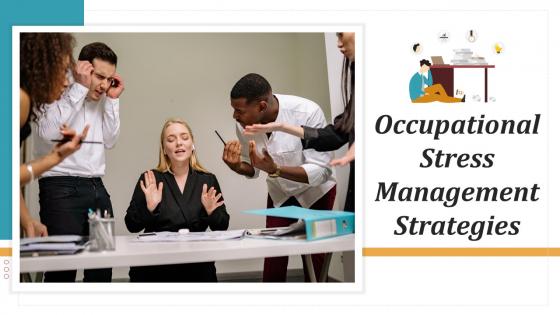
Slide 1: This slide introduces Occupational Stress Management Strategies. State Your Company Name and begin.
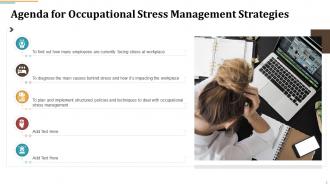
Slide 2: This slide states Agenda of the presentation.
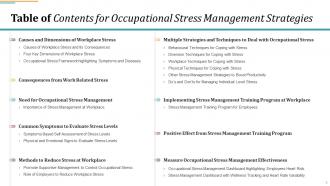
Slide 3: This slide presents Table of Content for the presentation.
Slide 4: This slide highlights title for topics that are to be covered next in the template.
Slide 5: This slide displays Causes of Workplace Stress and Its Consequences.
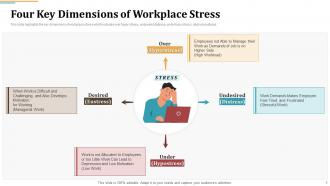
Slide 6: This slide highlights the key dimensions of workplace stress.
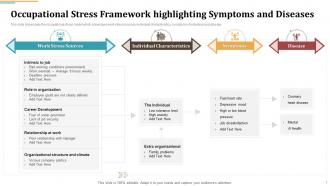
Slide 7: This slide represents Occupational Stress Framework highlighting Symptoms and Diseases.
Slide 8: This slide highlights title for topics that are to be covered next in the template.
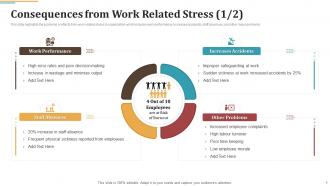
Slide 9: This slide showcases Consequences from Work Related Stress.
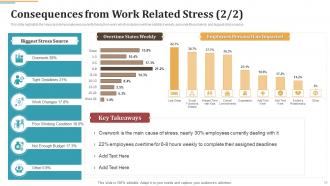
Slide 10: This is another slide continuing Consequences from Work Related Stress.
Slide 11: This slide highlights title for topics that are to be covered next in the template.
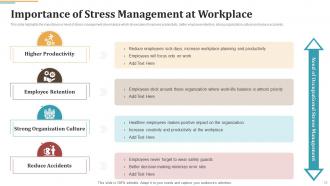
Slide 12: This slide shows Importance of Stress Management at Workplace.
Slide 13: This slide highlights title for topics that are to be covered next in the template.
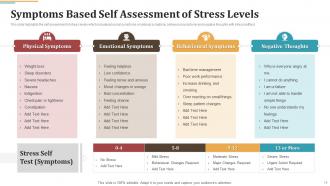
Slide 14: This slide presents Symptoms Based Self Assessment of Stress Levels.
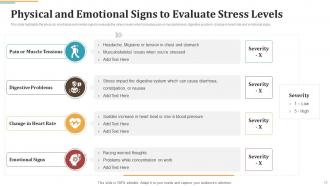
Slide 15: This slide displays Physical and Emotional Signs to Evaluate Stress Levels.
Slide 16: This slide highlights title for topics that are to be covered next in the template.
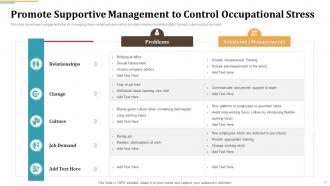
Slide 17: This slide represents Promote Supportive Management to Control Occupational Stress.
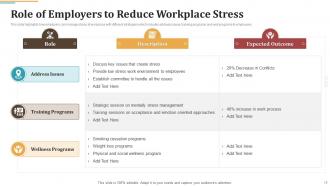
Slide 18: This slide showcases Role of Employers to Reduce Workplace Stress.
Slide 19: This slide highlights title for topics that are to be covered next in the template.
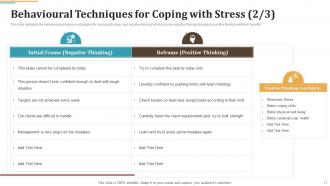
Slide 20: This slide shows Behavioural Techniques for Coping with Stress.
Slide 21: This is another slide continuing Behavioural Techniques for Coping with Stress.
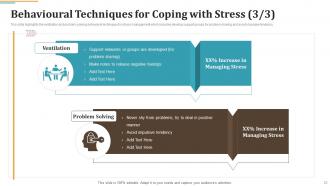
Slide 22: This is another slide continuing Behavioural Techniques for Coping with Stress.
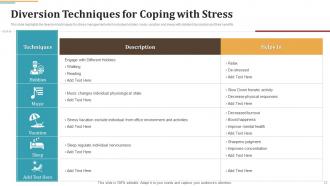
Slide 23: This slide presents Diversion Techniques for Coping with Stress.
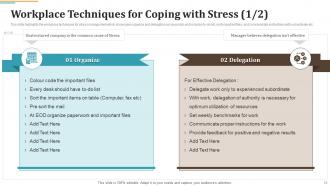
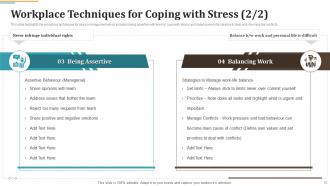
Slide 24: This slide displays Workplace Techniques for Coping with Stress.
Slide 25: This is another slide continuing Workplace Techniques for Coping with Stress.
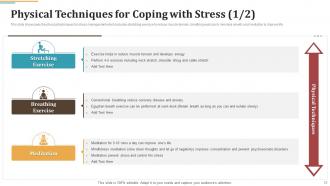
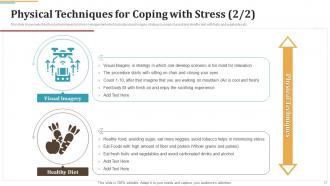
Slide 26: This slide showcases Physical Techniques for Coping with Stress.
Slide 27: This slide shows Physical Techniques for Coping with Stress.
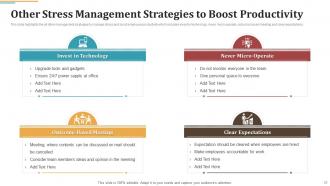
Slide 28: This slide presents Other Stress Management Strategies to Boost Productivity.
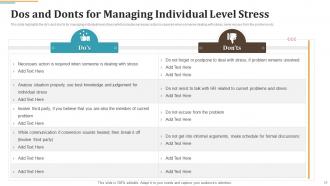
Slide 29: This slide displays Dos and Donts for Managing Individual Level Stress.
Slide 30: This slide highlights title for topics that are to be covered next in the template.
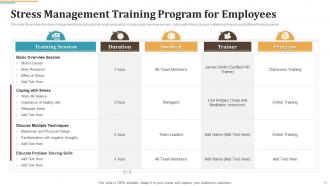
Slide 31: This slide represents Stress Management Training Program for Employees.
Slide 32: This slide highlights title for topics that are to be covered next in the template.
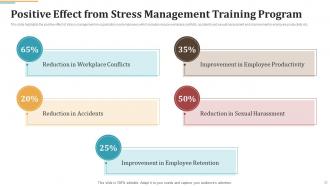
Slide 33: This slide showcases Positive Effect from Stress Management Training Program.
Slide 34: This slide highlights title for topics that are to be covered next in the template.
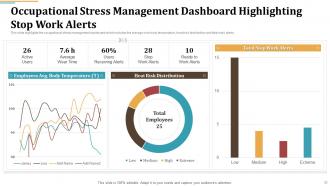
Slide 35: This slide shows Occupational Stress Management Dashboard Highlighting Stop Work Alerts.
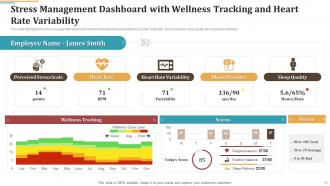
Slide 36: This slide presents Stress Management Dashboard with Wellness Tracking and Heart Rate Variability.
Slide 37: This slide displays Icons for Occupational Stress Management Strategies.
Slide 38: This slide is titled as Additional Slides for moving forward.
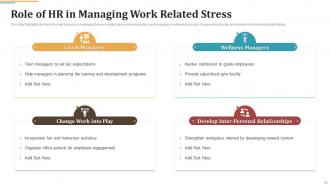
Slide 39: This slide represents Role of HR in Managing Work Related Stress.
Slide 40: This is About Us slide to show company specifications etc.
Slide 41: This is Our Mission slide with related imagery and text.
Slide 42: This is Our Team slide with names and designation.
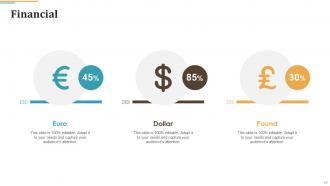
Slide 43: This is a Financial slide. Show your finance related stuff here.
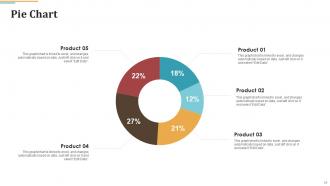
Slide 44: This slide shows Pie Chart with data in percentage.
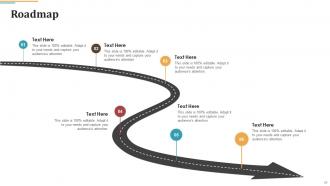
Slide 45: This slide presents Roadmap with additional textboxes.
Slide 46: This slide contains Puzzle with related icons and text.
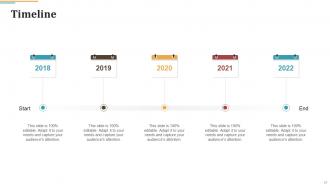
Slide 47: This is a Timeline slide. Show data related to time intervals here.
Slide 48: This is a Thank You slide with address, contact numbers and email address.
Occupational Stress Management Strategies Powerpoint Presentation Slides with all 53 slides:
Use our Occupational Stress Management Strategies Powerpoint Presentation Slides to effectively help you save your valuable time. They are readymade to fit into any presentation structure.






FAQs for Occupational Stress Management Strategies
Work stress usually comes from having too much on your plate or weirdly, sometimes too little. Bad managers are the worst though - they'll give you zero direction then act shocked when things go sideways. Different jobs have their own drama too. Healthcare workers deal with literal life-or-death stuff daily, while retail people get yelled at by Karens over expired coupons. Tech bros face those brutal deadlines that make no sense. Feeling like you can't control anything at work? That's stress gold right there. Job security issues don't help either. Figure out what's hitting you hardest first, then you can actually tackle it.
Honestly, you gotta hit this from multiple angles. Anonymous surveys are clutch for getting the real tea - people will actually tell you about bad managers or crazy workloads when they know it's safe. But also do some face-to-face stuff like focus groups or one-on-ones since some folks just communicate better that way. Exit interviews are pure gold too, even though you're catching problems on the way out. Look at your numbers while you're at it - tons of sick days or people quitting left and right tells a story. Main thing is making sure people feel safe enough to be honest instead of giving you that "oh everything's great!" BS.
Dude, workplace culture makes or breaks your stress levels. When companies normalize crazy hours and no breaks, you're toast. I've seen it happen too many times. Good cultures actually respect boundaries - they're not hitting you up at 9pm or piling on impossible deadlines. Open communication helps too, plus managers who get that you have a life outside work. The weird thing is toxic places never think they're the problem! Red flags: constant "emergencies," guilt trips about vacation days, people looking dead behind the eyes. Find somewhere that values actual work-life balance.
Honestly, start with making people feel safe to actually tell you when they're drowning. Those formal check-ins are useless - do real one-on-ones where they can be honest. Give them flexible schedules if you can swing it, and for the love of god, help them prioritize so they're not trying to do seventeen things at once. Make sure they have what they need to actually get stuff done. Oh, and here's the thing - you've got to model good boundaries yourself because they're watching everything you do. Maybe try a team stress-check this week? It's pretty eye-opening.
Honestly, I learned this the hard way - your body's basically screaming at you before you even realize you're stressed. Watch for tension headaches, weird sleep, or that awful Sunday night pit in your stomach. I used to power through all of it until I completely crashed, which was dumb. Here's what actually helps: jot down your triggers in your phone (probably certain people or deadlines, let's be real). Then you can prep for them - quick walks between meetings, blocking off focus time, or just saying no to random stuff that doesn't matter. Catch it early though, because once you're drowning it's way harder to fix.
Okay so I swear by box breathing - that 4-4-4-4 count thing you do right at your desk when everything's going insane. Sounds weird but it genuinely works. Time-blocking helps too, plus those micro-boundaries where you just step away from your screen for like 2-3 minutes. Your stress response literally resets. Oh, and there's this two-minute rule I'm obsessed with - if something takes under two minutes, just knock it out immediately instead of adding it to your endless mental list. Honestly, pick one thing and try it this week? Don't overwhelm yourself with all of them at once.
Honestly, most workplace anxiety comes from not knowing where you stand. When your manager gives you regular feedback, you're not sitting there wondering if you're totally bombing at your job. I mean, who hasn't spiraled thinking their boss hates them? Weekly check-ins are a game changer - doesn't have to be fancy, just 15 minutes to touch base. You can bring up stuff that's bugging you before it becomes this huge thing. Way better than waiting around for your annual review to find out how you're actually doing.
Honestly, chronic stress usually shows up in pretty predictable ways. Watch for the physical stuff first - constant headaches, always tired, catching every bug that goes around. Then there's the behavioral changes: calling in sick more, missing deadlines they'd normally hit easily, avoiding team stuff. The emotional side is trickier to spot - irritability, anxiety, just seeming checked out. What makes this hard is it all happens slowly, so you don't notice until it's been weeks. If you're seeing a combo of these signs, definitely pull them aside for a casual check-in.
Dude, work-life balance is everything for stress. Your brain literally can't reset if you're checking emails at 9pm or obsessing over deadlines during dinner. I swear, those Sunday scaries hit different when you never actually disconnect, you know? Setting boundaries is the game changer here. Turn off notifications after work hours. Take real lunch breaks instead of eating at your desk like some kind of corporate zombie. Even tiny changes help tons. Pick one boundary this week and stick to it - you'll be shocked how much better you feel.
Honestly, these programs are game-changers because you actually learn real coping skills instead of just winging it. They teach you time management, breathing techniques, boundary-setting with difficult coworkers - all that good stuff. What I love is you get to practice everything in a low-pressure setting first. Plus they help you recognize burnout warning signs before you're completely toast (we're all pretty bad at catching that ourselves, let's be real). You end up with an actual toolkit of strategies for when work gets crazy, not just some theoretical BS that sounds nice but doesn't help when you're drowning.
Ugh, chronic work stress is seriously no joke. Your body gets stuck in that constant fight-or-flight thing, which messes with everything - heart problems, depression, anxiety, you name it. Sleep goes to hell too. What really sucks is how it snowballs - one issue triggers another, and suddenly you're dealing with a whole mess of health problems. Plus it destroys relationships (been there), and some people end up self-medicating just to cope. I've even read it can mess with your brain long-term. Honestly, if you're already seeing red flags, deal with it now before everything falls apart.
Okay so basically these programs give you actual coping skills before you hit that panic mode. Deep breathing and quick meditation sessions literally lower your cortisol - like, your brain chemistry actually changes and you think clearer. The whole wellness thing also shifts workplace culture so self-care isn't viewed as being lazy (which is ridiculous but whatever). Consistency matters most though. Try just 5 minutes of breathing exercises between meetings. Sounds simple but it genuinely helps you tackle whatever comes next without losing your mind.
Okay so definitely look into Employee Assistance Programs first - they're game changers for confidential counseling stuff. Stress management workshops work great too, plus mindfulness training or even getting your team access to meditation apps like Headspace. Flexible schedules are honestly where it's at though. Sometimes people just need a quiet room to chill out in, you know? Oh and actually survey your employees first because what works for one person might be totally useless for another. Time-off policies that don't suck make a huge difference too. Multiple options is key since everyone's different with this stuff.
You know those cheesy trust falls everyone rolls their eyes at? They actually work. Building those relationships means people will actually help you when you're drowning in deadlines. I've seen it happen - teams that know each other personally handle crises way better because there's real trust there. The activities also teach you how to deal with pressure in a controlled setting first. But skip the basic social stuff and go for things that make people communicate and solve problems together. That's where the magic happens.
Ugh, tech is so weird with stress. Like yeah, it makes some stuff easier - no more filing cabinets or whatever. But then you're getting Slack messages at 10 PM and your boss expects instant replies. I swear every company changes their software monthly too, so you're constantly relearning everything. What works for me is being kinda ruthless about boundaries. Turn off those stupid notifications after work hours. Don't check email from bed (I'm terrible at this). The apps should work for you, not the other way around.
-
These stunning templates can help you create a presentation like a pro.
-
Great designs, really helpful.