


Off page seo techniques outline ppt design templates




Try Before you Buy Download Free Sample Product
 Impress Your
 Audience
 100%
100% Editable
 Save Hours
 of Time


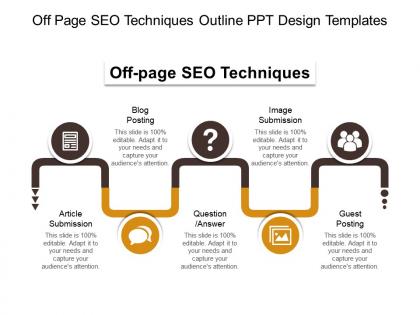
Manage your business online presence with our off page SEO techniques outline PPT design template. You can simply define the various off page SEO methods which may help in improving your business reputation. Use this off page SEO tools PowerPoint layout diagram to describe the techniques graphically to define their significance for your business also. Few of the effective SEO techniques are social marketing sites, blog marketing, forum marketing, blogging and more. You can also represent the importance of managing your online reputation and the need of online marketing for any business entity with this SEO marketing techniques Presentation layout. Such as, it helps in managing your business sales. It also helps in improving your business growth opportunities too. It also helps in developing some competent marketing strategies. Hence, start working over this professional off page SEO strategies PowerPoint slide design right now to enhance your business overall profits. Click on the download link given below. Be able to confidently clarify your actions with our Off Page Seo Techniques Outline Ppt Design Templates. It helps demonstrate accountability.
People who downloaded this PowerPoint presentation also viewed the following :
Off page seo techniques outline ppt design templates with all 5 slides:
Get a good hallmark with our Off Page Seo Techniques Outline Ppt Design Templates. Cement their belief in your expertise.
FAQs for Off page seo techniques outline
Focus on getting quality backlinks first - that's honestly where you'll see the biggest impact. Guest posting works great for this, plus you get exposure to new people. I'd hit up design blogs, educational sites, maybe those template directories. Pinterest and Dribbble are clutch for social signals too. Don't sleep on connecting with other template creators either - cross-promotion is surprisingly effective. Design communities and forums help build your reputation over time. Start with guest posting though since it's the easiest to control and you get both the backlink and the audience exposure.
So social media won't directly bump up your search rankings, but it creates this whole chain reaction that's super helpful. When people share and comment on your stuff, you get way more eyes on your content. Traffic goes up, and sometimes other websites discover your posts through social and link back to you - which is gold for SEO. I've watched content blow up on social and bring crazy amounts of visitors! Search engines notice when people actually engage with your content too. They're like "okay, this must be good stuff." Just focus on making things people want to share and actually talk to your audience.
Yeah, backlink quality makes a huge difference for template sites. Google basically looks at who's linking to you as a trust signal. One solid link from a legit design blog beats like 50 random directory links any day. You want links from places where actual designers hang out - dev forums, creative communities, that kind of thing. I'd focus on making stuff that's actually useful rather than just hunting for links. Oh, and avoid those sketchy link farms - they'll just hurt you in the long run. The whole thing's about building real relationships with people in your space.
Definitely try guest posting - it's one of the best ways to get quality backlinks for your presentation site. Target design blogs, business publications, maybe some marketing sites where your people actually read. Write genuinely helpful stuff about presentation tips or storytelling (editors hate obvious promo content, so don't). I'd honestly start small - maybe 5 sites this week? Oh, and make sure your content naturally mentions your templates. The whole point is showing expertise while getting those sweet backlinks. Business storytelling posts work really well for this kind of thing.
So design blogs are your best bet - they eat up template content. Hit up people writing about PowerPoint or presentation tips since they're always hunting for stuff their readers can actually use. Those roundup posts work really well too, like "50 best template sites" or whatever. Template galleries are solid for backlinks. Honestly, the trick is making templates that actually solve problems instead of just being pretty. I'd start small - maybe 10 blogs in your space and write personal pitches. Don't do mass emails, they can smell that from a mile away.
Honestly, influencer collabs are pretty solid for off-page SEO. Get them to mention your brand naturally in their posts - those backlinks tell Google you're legit. Their followers find you organically too, which usually leads to even more links later. Don't get obsessed with follower counts though, that's where most people mess up. Look for micro-influencers in your space instead. They're way cheaper and their audiences actually engage. I'd start there since big influencers are expensive and sometimes their engagement is trash anyway.
Reviews are seriously underrated for SEO - they're like gold mines for your site. Google eats up that trust stuff, plus you get natural backlinks when people review you on Yelp or whatever. Local rankings especially depend on how many reviews you have and if they're positive. You should definitely claim your Google Business Profile first (surprised how many people skip this). Then just ask happy customers to leave reviews - sounds obvious but most don't do it. Respond to everything too, even the bad ones. Honestly, handling negative reviews well sometimes looks better than having zero complaints. Makes you seem real instead of fake perfect, you know?
Honestly, joining forums and online communities is such an underrated way to build authority and score good backlinks. I've found that when you actually help people out on Reddit or industry groups (not just spam your stuff), relationships naturally develop. People start noticing your expertise. Some will check out your site, others might link to your content later when it's relevant to something they're writing. The trick is being genuinely useful first - nobody likes the person who just drops links everywhere. Oh, and it's way more enjoyable than you'd think! Start with maybe 2-3 communities where your audience actually spends time.
Check out Ahrefs or SEMrush to peek at what your competitors are doing with their backlinks. I'm obsessed with finding their guest posting spots - it's like discovering their secret playbook. You'll see which sites link to them and what anchor text they're using. Their social media game is worth studying too. Google Alerts will catch brand mentions you might miss otherwise (Mention.com works great for this stuff). The real win is spotting opportunities they haven't grabbed yet. Or just steal their best tactics and put your own spin on it - nothing wrong with that approach honestly.
Honestly, content marketing is your best bet for getting natural backlinks to your presentation templates. Write blog posts about design trends or presentation tips that actually help people. Other sites will start linking to you when your stuff is genuinely useful. Think of it like this - be the go-to person for advice and word spreads fast. Your domain authority grows, plus you get traffic flowing back to your template pages. Oh, and don't forget social media amplifies everything. Just focus on solving real problems your audience has. The SEO wins happen naturally after that.
So basically, make videos that other sites actually want to link to. YouTube's obvious, but don't sleep on Vimeo and niche platforms in your industry. Turn your best blog posts into video explainers - way more engaging honestly. Then hit up relevant sites and offer them as resources they can embed. Partner testimonials work great too since they'll share (and link back) when you feature them. Virtual events get coverage if done right. Oh, and chop up those long webinars into smaller clips for social - people's attention spans are shot these days. Start with one platform first though, don't spread yourself too thin.
Yeah, directory submissions can still work for template sites - they'll help build some backlinks and boost your domain authority. Focus on design-specific directories and legit business listings though. Those sketchy mass submission sites are basically dead now anyway, thank god. Creative industry directories are gold for template sites, plus web design resource lists work well too. Local directories might help if you're targeting specific areas. Quality beats quantity here - maybe 5-10 solid submissions instead of spamming hundreds of crappy ones. The trick is finding directories that actually have traffic and some editorial standards rather than just accepting anyone.
Yeah, content syndication definitely works for presentation templates. Your stuff is already made to be shared anyway, so why not use that? I'd pick maybe 2-3 platforms where your people actually spend time - SlideShare's obvious, but Medium or niche industry sites work too. You'll get backlinks plus reach folks who wouldn't stumble across you otherwise. Just don't copy-paste the same thing everywhere (I see people do this all the time). Tweak your content for each platform while keeping your branding recognizable. Set up a simple publishing schedule so you're not scrambling to post randomly. It's pretty straightforward once you get the rhythm down.
Honestly, infographics are amazing for getting other sites to link back to you. People love sharing visual stuff, especially if it's packed with useful data or breaks down complex topics. I've seen bloggers grab infographics constantly for their own posts - just make sure you include that embed code so they can't resist. Social media goes crazy for them too, which means more eyeballs on your brand. The trick isn't making them gorgeous (though that helps), it's making them actually valuable. Industry stats work great, or maybe a step-by-step guide your audience would bookmark.
Track your domain authority monthly using Moz or Ahrefs - I'm probably too obsessed with checking mine honestly. Quality backlinks matter more than quantity, so monitor what's coming in. Referral traffic is where you'll see real results though, shows actual humans clicking through to your site. Brand mentions without links are pure gold for outreach opportunities. Google Alerts will catch these automatically for your brand name. Oh, and don't ignore how much traffic other sites send you - that's often more telling than DA scores anyway.
-
Out of the box and creative design.
-
Very unique, user-friendly presentation interface.