


Operational Excellence Strategy Powerpoint Ppt Template Bundles




Try Before you Buy Download Free Sample Product
 Impress Your
 Audience
 100%
100% Editable
 Save Hours
 of Time


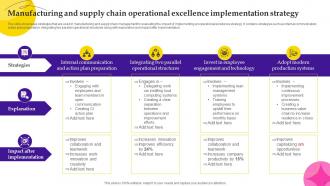
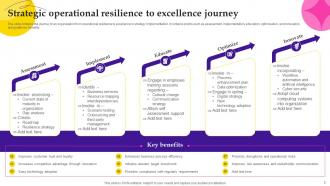
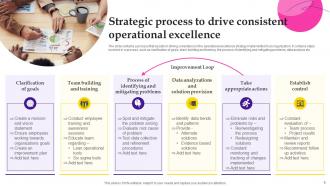
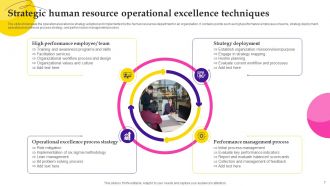
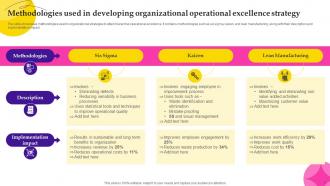
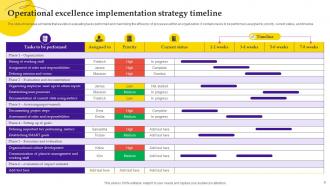
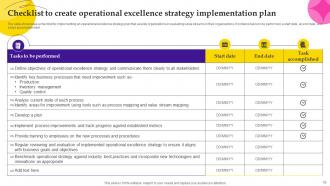
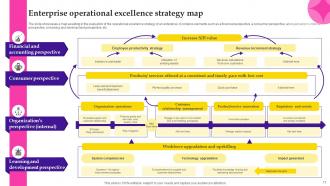
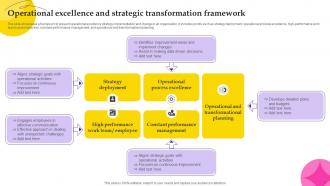
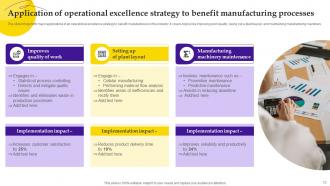
Introducing our comprehensive PPT on Operational Excellence Strategy designed to guide businesses towards achieving operational excellence and resilience. This presentation focuses on key areas such as quality management strategies, manufacturing and supply chain optimization, implementation strategies, and operational resilience. Through visually engaging slides and expert insights, this PPT empowers organizations to enhance their operational processes, minimize inefficiencies, and drive continuous improvement. Discover effective methodologies for quality management, streamline manufacturing and supply chain operations, and develop an implementation strategy tailored to your unique business needs. Unlock the secrets to building operational resilience, enabling your organization to thrive in the face of challenges. Harness the power of operational excellence to drive growth and success.
People who downloaded this PowerPoint presentation also viewed the following :
Operational Excellence Strategy Powerpoint Ppt Template Bundles with all 22 slides:
Use our Operational Excellence Strategy Powerpoint Ppt Template Bundles to effectively help you save your valuable time. They are readymade to fit into any presentation structure.






FAQs for Operational Excellence Strategy Powerpoint
Honestly, start with getting your basics down first - standardized processes and a team that's always looking to improve things (kaizen style works great). You'll want solid data analytics to catch problems before they blow up. Employee buy-in is massive here. Focus on metrics that actually mean something, not just pretty numbers for presentations. Leadership has to be all-in or it becomes another forgotten initiative. Map out what you're doing now, find the biggest headaches, then tackle one area where you can get some quick wins. That momentum thing is real - once people see it working, they get excited about it.
Track the obvious stuff first - cost cuts, cycle times, defect rates, productivity bumps. Leadership eats that data up. But honestly? Employee engagement and customer satisfaction scores matter way more than people think. Those tell you if things are actually working or just look good on paper. Oh, and definitely do regular check-ins with your frontline people since they're dealing with the changes every day. Pick maybe 3-5 metrics that actually align with what you're trying to accomplish and stick with tracking them consistently. Don't go overboard with too many - you'll just confuse yourself.
Honestly, leadership makes or breaks this stuff. They've gotta actually model what they're preaching - not just talk about it in meetings and disappear. Celebrate the small wins, get down to the frontlines and ask real questions. I've watched so many "excellence" programs crash because executives wouldn't walk the walk. Your team needs to feel empowered to fix things without jumping through a million hoops. Short story: get your leadership aligned on what operational excellence actually looks like day-to-day. Otherwise you're just wasting everyone's time with another buzzword initiative.
So basically, start with Lean to clean up your processes and get rid of all the obvious waste. Once that's done, Six Sigma comes in to fix the quality problems you couldn't see before - kinda like decluttering your garage so you can actually find what's broken. Map out your value streams first, then hit your worst problem areas with DMAIC. Honestly, they work great together since Lean speeds things up while Six Sigma keeps everything precise. I'd just pick one messy process and try both on it as a test run. You'll see how they actually complement each other pretty quickly.
Honestly, most companies try to do everything at once - huge mistake. Pick like one or two things max to start with. Also, nobody explains the "why" to employees, so people just think it's another annoying change from management. You can't treat it like checking boxes either. This stuff is a real culture shift that takes forever to actually stick. And don't get me started on leadership expecting magic results in 3 months... realistic timeline is more like 12-18 months for anything meaningful. My advice? Start small. Over-communicate the reasoning behind changes. Give people realistic expectations about when they'll actually see improvements.
Automation's seriously a game-changer for getting your operations running smoothly. Repetitive stuff gets handled automatically, which means less mistakes and your people can actually work on things that matter. Real-time monitoring catches problems before they blow up, and data analytics shows you where things are getting stuck. One team I know literally cut their processing time in half just by automating reports - crazy right? Start with whatever process is making everyone want to pull their hair out. If it's painful and happens over and over, that's your goldmine. Scale up from there and you'll see results pretty quick.
Dude, your frontline people are the ones who see what's actually broken every day. When they give a damn about their job, they'll tell you about problems before they blow up. Plus they come up with solutions leadership never thinks of. Engaged employees don't bail after six months either - honestly, turnover is such a pain and expensive as hell. The trick? Actually listen when they suggest stuff and follow through on the decent ideas. I bet they already know exactly what needs fixing, you just gotta ask.
First, connect every operational change to actual business results - show how fixing your supply chain boosts profits or customer satisfaction. Honestly, I've watched companies waste months on process tweaks that sound impressive but don't actually matter. Make sure each initiative ties to revenue, cutting costs, or beating competitors. Your leadership only cares about metrics that hit their goals, so focus there. Don't get distracted by improvements that look good on paper. Set up quarterly reviews to stay aligned - business priorities shift constantly and you'll need to pivot your ops work accordingly.
Track both speed and quality - cycle time, defect rates, customer satisfaction, cost per unit. That's your baseline. Don't go crazy measuring everything though, seriously it becomes a nightmare. Employee engagement matters too since they're doing the actual work. Pick maybe 5-7 metrics that actually move the needle for your business, not just numbers that look good on paper. I'd start by figuring out what "killing it" looks like for your specific setup, then find the metrics that prove you're hitting those goals. Way easier than drowning in data you don't need.
Honestly, customer feedback is like having a cheat sheet for fixing your business. People will straight-up tell you when something's broken - that slow approval process or weird checkout thing you've been ignoring? They'll call it out. What's cool is complaints usually point to stuff you had no clue was even a problem. Don't forget the good feedback too though - shows you what's already working so you don't mess it up trying to "fix" it. I'd start by connecting common complaints to actual processes, then tackle the big impact stuff first. You need some kind of system to capture all this feedback consistently.
Your supply chain is literally everything - if it's broken, your whole operation tanks. Map out what you've got first and find the worst bottlenecks. Those are your quick wins. Better supplier relationships = more reliable deliveries. Smart inventory management cuts waste. Streamlined logistics shrink lead times. It all connects, you know? Fix one piece and the rest starts falling into place. Quality goes up, costs drop, customers are happier. I'd honestly start there before trying to optimize anything else - it's like the foundation of everything operational.
Start with Lean basics for your whole team - that's your foundation. Get at least Yellow Belt Six Sigma training too. Process mapping is huge, plus you'll need some data analytics skills because you can't fix what you don't measure, right? Change management training is honestly underrated but super important. Leadership development should be a priority since this stuff needs buy-in from the top. Oh, and definitely do cross-functional workshops - silos are efficiency killers. I'd probably tackle Lean first, then add the other pieces based on whatever gaps you're seeing in your operations.
Make improvement stuff part of everyday work, not some quarterly thing you roll out with fanfare. Give your people actual time for it - maybe 10% weekly - and don't let other crap steal that time away. I've watched so many places where improvement gets ditched the second things get hectic. Train managers to coach people through problem-solving instead of just jumping in themselves. Simple sharing between teams works better than fancy systems. Honestly, celebrating tiny wins beats waiting around for some massive breakthrough. Pick one team to start with and let it spread from there.
Start small - pick two departments and get them working on something real together, not some made-up exercise. Cross-functional teams work, but only if someone actually owns the outcome (those committee things are useless tbh). Regular check-ins help a ton. Weekly standups or monthly reviews where people share what's actually happening. When teams nail something together, make a big deal about it publicly. People need to see collaboration pays off. Honestly, shared goals sound obvious but most places never actually align on them. Get everyone solving real problems side by side and the rest follows.
Think of regulations as guardrails for your whole operation - they show you what you can actually optimize without getting in trouble. Build compliance checks right into your processes from day one. Yeah, it slows things down at first, but trust me, way better than dealing with violations later. I've seen smart companies flip this around and use regulations to force better standardization. Actually cuts out waste sometimes. Map out where your compliance stuff overlaps with daily workflows - that's where you'll find room to streamline without breaking any rules.
-
Excellent template with unique design.
-
Love how there are no boring templates here! The design is fresh and creative, just the way I like it. Can't wait to edit and use them for my extended projects!