

Opportunities And Challenges Powerpoint Presentation Slides





Try Before you Buy Download Free Sample Product
 Impress Your
 Audience
 100%
100% Editable
 Save Hours
 of Time


With Opportunities And Challenges PowerPoint Presentation Slides, overcome business obstacles and hazards. Find business opportunities and solutions to improve the processes, operations and projects using opportunities and challenges PPT slideshow. Incorporate relevant and professional challenges and solutions PPT templates to showcase your audience various problems your business is facing. Raise concern by showcasing the visuals. Encourage your team to have an open discussion and find solutions to the problems with the help of right opportunities and challenges PowerPoint presentation templates. This ready-to-use opportunities and challenges PPT deck consists of well-suited visuals, apt icons and professional business graphics to solve your purpose. Download now and grab this professionally designed opportunities and challenges PPT presentation to engage your audience in the important discussion. Use these visuals, showcase problems and overcome those challenges to run your business smoothly. Our Opportunities And Challenges Powerpoint Presentation Slides can be fairly catchy. It forces folks to be attentive.
People who downloaded this PowerPoint presentation also viewed the following :
Content of this Powerpoint Presentation
Slide 1: This slide introduces to Opportunities & Challenges. State your Company Name and get started.
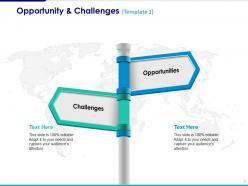
Slide 2: This slide presents Opportunity & Challenges with imagery and text boxes.
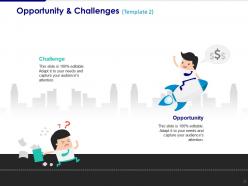
Slide 3: This slide shows Opportunity & Challenges with human imagery and text boxes.
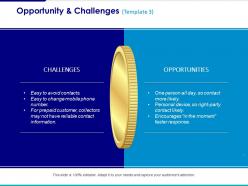
Slide 4: This slide showcases Opportunity & Challenges with coin imagery and text boxes.
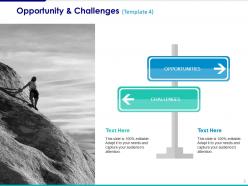
Slide 5: This slide presents Opportunity & Challenges with mountain image and text boxes.
Slide 6: This slide displays Opportunity & Challenges with handshake and limitation imagery with text boxes.
Slide 7: This slide showcases Opportunity & Challenges with target and human imagery with text boxes.
Slide 8: This slide presents Opportunity & Challenges with target and gear imagery with text boxes.
Slide 9: This slide displays Opportunity & Challenges with handshake and hurdle imagery with text boxes.
Slide 10: This slide presents Opportunity & Challenges with arrow target and human imagery with text boxes.
Slide 11: This is an Opportunities & Solution Icon Slide. Use them as per your need.
Slide 12: This is a Coffee Break slide to halt. You may choose or change image and theme as per your choice.
Slide 13: This slide is titled Charts And Graphs to move forward.
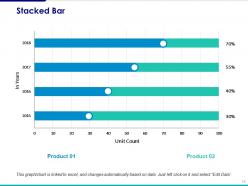
Slide 14: This is a Stacked Bar slide to show product/entity comparison, growth etc.
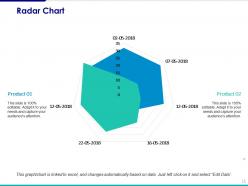
Slide 15: This is a Radar Chart slide to to show product/entity comparison etc.
Slide 16: This slide is titled Additional Slides to proceed forward.
Slide 17: This is Our Mission slide with Vision ans Mission. State them here.
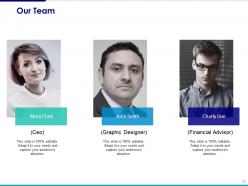
Slide 18: This is Our Team slide with name, designation and text boxes.
Slide 19: This is an About Us slide. State company/team specifications etc. here.
Slide 20: This is Our Target slide with- Success, Awareness, Quality. State your targets here.
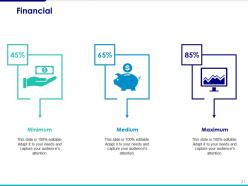
Slide 21: This is a Financial score slide. State financial aspects here.
Slide 22: This is a Thank You slide with Email Address, Contact numbers and Address# street number, city, state.
Opportunities And Challenges Powerpoint Presentation Slides with all 22 slides:
Display a charitable disposition with our Opportunities And Challenges Powerpoint Presentation Slides. Demonstrate compassion for fellow beings.




FAQs for Opportunities And Challenges
Honestly, start with customer experience - that's where you'll see the biggest impact. Digital channels let you personalize stuff at scale and get way better data than you ever could before. Automation is huge too, especially for all those tedious manual processes that drain your team's time. Oh, and don't sleep on new business models like subscriptions or platforms. COVID was actually a perfect example of this - companies that went digital-first didn't just survive, they killed it. My advice? Pick one area where you can get quick wins first, then expand from there. No point trying to do everything at once.
Dude, tech is seriously a game-changer for small businesses right now. Social media gets you in front of customers worldwide without burning through cash on ads. Cloud tools? They're basically giving you the same power as big corporations for like nothing. E-commerce platforms mean you don't need to blow money on rent for a physical store either. The AI stuff is getting pretty crazy too - you can actually compete with huge companies on customer service now. But here's the thing: don't go nuts trying every new app. Pick maybe 2-3 tools that'll fix your biggest headaches first. Whatever's eating up your time or money, start there.
Honestly, remote work is a game changer for productivity. You can finally set up your space exactly how you want it, skip that soul-crushing commute, and actually work during your peak hours instead of pretending to be productive at 8am. The work-life balance improvement is huge too - people get way more control over their schedules and can tap into jobs they'd never have access to locally. I'd definitely survey your team about when they're sharpest mentally. You might be surprised how different everyone's natural rhythms are, and building flexibility around that could boost performance across the board.
Ugh, resource allocation is such a nightmare - you're always scrambling to keep up while trying not to blow money on trends that'll be dead in six months. Teams need to move fast, but most companies have these clunky systems that make pivoting feel impossible. Honestly, reading consumer behavior every quarter is mentally draining! The worst part? Data's always behind, so you're making calls based on old info. Oh, and trying to retrofit agility after you're already behind is brutal. Way better to build that flexibility from day one if you can swing it.
Honestly, your frontline people probably know more than you think - sales and support hear everything first but nobody listens to them. Set up Google alerts for your space and actually read trade publications. Talk to those teams regularly. I'd also keep tabs on what competitors are doing, especially their patent stuff. But here's the thing - don't just collect all this info and let it sit there. You need some kind of monthly meeting where you actually discuss what you're seeing. Otherwise you'll just have a bunch of data collecting dust while opportunities pass you by.
Dude, you're missing out on serious money here. Sustainability stuff opens up revenue streams most people don't even think about - renewable energy, turning waste into actual profit, all that. Your customers already want greener options anyway, so beat everyone else to it. Early movers always win while competitors are still scratching their heads. Long-term, sustainable practices usually cut costs through better efficiency too. Honestly, I'd start by just looking at what you're doing now and seeing where green upgrades could save cash or create new products.
Look, mixed teams just work better for innovation. You get people challenging assumptions instead of everyone agreeing on mediocre ideas. Different backgrounds = different ways of attacking problems. The trick though? Making sure people actually speak up - nobody shares bold ideas if they think they'll get shot down. I learned this the hard way on a project last year, honestly. Start by hiring people who don't think like you do. Then create space in meetings where weird ideas are welcome. Short sentences work. But you also want some natural back-and-forth happening during brainstorms.
Honestly, diversify your income streams and save cash before you actually need it. Customer retention beats chasing new clients during rough patches - way cheaper too. I totally learned this lesson in 2020, ugh. Renegotiate supplier contracts early, not when you're panicking. Flexible staffing helps a ton, plus automate whatever you can to cut fixed costs. Companies that make it through downturns? They prep when times are good. Start running different budget scenarios now and figure out what expenses you could axe fast if things get weird.
Honestly, global markets are such a mixed bag for startups. Yeah, you get access to way more customers and revenue potential than just staying local. But the flip side? You're dealing with different regulations, cultural stuff, currencies - it gets messy fast. I've watched so many founders get burned trying to expand everywhere at once. Smart move is picking one or two markets first and really nailing those. The scale opportunity is definitely there, but you gotta be realistic about what you can actually handle resource-wise.
Regulation changes can completely flip your market overnight. New compliance costs might hurt your margins, but honestly? They usually create fresh opportunities too. Bigger competitors suddenly face the same hurdles you do. I've watched entire industries change direction because of this. Don't wait for changes to hit - track what's coming instead. Google alerts for your industry news work great. Trade associations give you insider heads-up too, which is clutch. What looks like a nightmare regulation today could become your biggest advantage if you prep early enough.
Honestly, you gotta build ethics into your decisions right from the start - can't just slap them on later when things go sideways. Figure out your hard lines first, like what you absolutely won't do for money. Then when opportunities come up, check if they pass both the money test AND the "can I sleep at night" test. I've watched so many companies grab quick cash only to get completely roasted later (and rightfully so). Get different types of people around you who'll call out your dumb ideas. The opportunities worth pursuing? They're the ones where doing the right thing actually makes good business sense too.
Honestly, AI and automation are huge right now - they're changing customer service, manufacturing, you name it. Cloud computing lets startups scale without dropping tons of cash on infrastructure. IoT is creating these crazy data-driven business models I never would've thought of. Blockchain? Still figuring itself out, but it's doing interesting stuff in finance and supply chains. Oh, and sustainability tech is everywhere because people actually give a damn about the environment now. Don't just chase whatever's trendy though - pick what makes sense for your specific situation and customers.
Look, change is messy and people hate it - that's just reality. Your leaders need to explain WHY things are changing, not just bark orders about what's different. Be upfront about timelines so nobody's left guessing. Create space for people to actually voice their concerns without getting shut down. Honestly, half the battle is just acknowledging that transitions suck while staying positive about where you're headed. Leaders who walk the walk instead of just talking get way better results. Oh, and don't sugarcoat the difficult parts - people see right through that anyway.
Honestly, developing your team is such a no-brainer move. You're basically building your own talent pipeline instead of constantly hiring from scratch - saves you tons of money and hassle later. Your current people already get how things work around there, which is huge. When the market gets weird or new challenges pop up, they'll adapt way faster than some new hire who needs three months just to figure out where the bathroom is. I'd say look at what skills you'll actually need in a couple years, then build training around that stuff. It's one of those investments that actually pays off.
Look, customer research is basically your cheat code for innovation. Talk to people regularly and you'll spot problems your competitors are totally blind to. Their frustrations? Those are goldmines. I learned this the hard way at my last job—we built so much stuff nobody wanted because we never actually asked. Pain points literally become your next product features. Skip the fancy surveys though, just have real conversations. You'll discover what people are actually trying to accomplish versus what you think they need. It's wild how different those two things can be.
-
The content is very helpful from business point of view.
-
Great experience, I would definitely use your services further.