

Market Opportunity Powerpoint Presentation Slides





Try Before you Buy Download Free Sample Product
 Impress Your
 Audience
 100%
100% Editable
 Save Hours
 of Time


Select our content ready Market Opportunity PowerPoint Presentation Slides to demonstrate industry trends and insights. Identify and access the attractiveness of business opportunities with the help of this professionally designed market driver’s presentation deck. The visually appealing business opportunity analysis PowerPoint complete deck comprises of ready-to-use templates such as key market drivers, restraint, forecasts, internet of things, food industry, technology market drivers, challenges, etc. Make use of self-explanatory market profitability PPT visuals to analyze the market and ascertain probable profits. Incorporate professional looking commercial opportunity PowerPoint templates to showcase business planning and strategy process before undertaking a project. Utilize the easy-to-use opportunity analysis plan PPT slides to research your customers and competition. Furthermore, the easy-to-understand opportunity landscape model PPT slides are also helpful to showcase a high-level view of the market. Therefore, download the high-quality business growth opportunities PowerPoint presentation to understand the business environment factors and identify the gap in the market. Our Market Opportunity Powerpoint Presentation Slides act like a calling card. Give them a good account of your capability.
People who downloaded this PowerPoint presentation also viewed the following :
Content of this Powerpoint Presentation
Slide 1: This slide introduces Market Opportunity. State Your Company Name and begin.
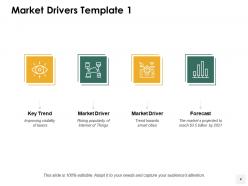
Slide 2: This slide shows Market Drivers Template 1 describing- Key Trend, Market Driver, Forecast, etc.
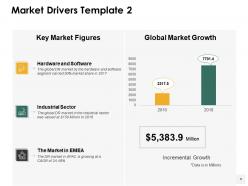
Slide 3: This slide presents Market Drivers Template 2 describing- Hardware and Software, Industrial Sector, The Market in EMEA.
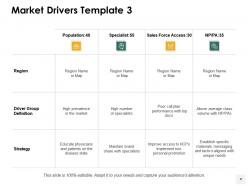
Slide 4: This slide displays Market Drivers Template 3 in tabular form.
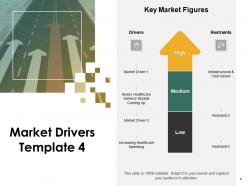
Slide 5: This slide represents Market Drivers Template 4 with related imagery.
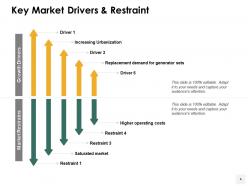
Slide 6: This slide showcases Key Market Drivers & Restraint.
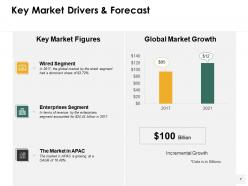
Slide 7: This slide shows Key Market Drivers & Forecast.
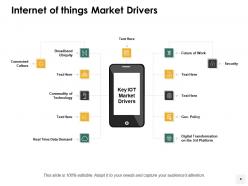
Slide 8: This slide presents Internet of things Market Drivers with related flow chart.
Slide 9: This slide displays Food Industry Market Drivers describing- Market Growth, Market Driver, Market Trend.
Slide 10: This slide represents Business & Technology Drivers & Restraints describing- Key Business Restraints, Key Business Drivers, Key Technology Drivers, Key Technology Restraints.
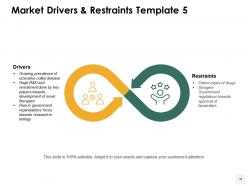
Slide 11: This slide showcases Market Drivers & Restraints Template 5.
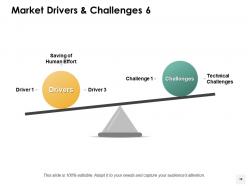
Slide 12: This slide shows Market Drivers & Challenges 6 with related diagram.
Slide 13: This slide displays Market Opportunity Icons.
Slide 14: This slide is titled as Additional Slides for moving forward.
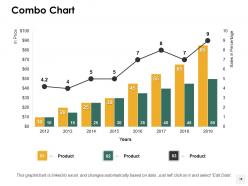
Slide 15: This slide shows Combo Chart with three products comparison.
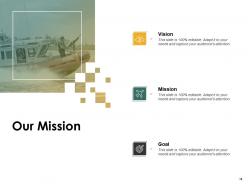
Slide 16: This is Our Mission slide with related imagery and text.
Slide 17: This is Our Team slide with names and designation.
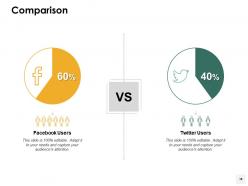
Slide 18: This is a Comparison slide to state comparison between commodities, entities etc.
Slide 19: This is About Us slide to show company specifications etc.
Slide 20: This is a Thank You slide with address, contact numbers and email address.
Market Opportunity Powerpoint Presentation Slides with all 20 slides:
Use our Market Opportunity Powerpoint Presentation Slides to effectively help you save your valuable time. They are readymade to fit into any presentation structure.






FAQs for Market Opportunity
Check out search volume trends and see where people are complaining about current solutions - that's usually a dead giveaway. VC money flowing into a space is another solid signal. Regulatory changes can be huge if you catch them early (though honestly, timing that is tricky). Gen Z hitting their spending prime is creating tons of opportunities right now. I always watch for weird new job titles popping up - sounds dumb but it works. Social media chatter helps too. The trick is finding spots where demand clearly outpaces supply but competition isn't nuts yet. Pick 2-3 things to track consistently instead of trying to monitor everything.
Honestly, I'd start with the obvious stuff - who's your competition and what could regulators throw at you? Customer demand can be super unpredictable too. But here's what people miss: look inward. Do you actually have the right team and enough cash to execute this? I'm kinda obsessed with risk matrices lately (yeah, sounds nerdy) - just plot probability vs impact for each threat. Talk to real customers, not just your mom who thinks everything you do is brilliant. Pick your top 3-5 risks and have actual plans to deal with them.
Dude, competitor analysis is like getting cheat codes for business. Study what your top 5 competitors do well and where they suck - you'll spot market gaps without spending a fortune on research. Check their pricing, features, customer complaints, coverage areas. The money's usually in places they're overcharging or ignoring certain customers completely. I swear, some companies are so blind to emerging trends it's almost painful to watch. Look for 3 solid gaps you could fill. Way smarter than going in blind and hoping for the best.
Healthcare tech is going crazy right now - telemedicine, AI diagnostics, all that stuff. Clean energy's huge too with government money backing it. Fintech's getting pretty saturated though. Cybersecurity and AI are solid bets. Honestly, the unsexy industries might be your best play - logistics, agriculture, construction. They're stuck in the stone age and desperate for tech solutions. My advice? Don't just chase whatever's trending on Twitter. Pick something that actually matches what you already know. Way easier than starting from scratch in some random field.
Here's the thing - consumer behavior shows you exactly where the gaps are between what people actually want and what's out there right now. That's your goldmine. Dig into the "why" behind their buying decisions first. Honestly, most companies totally miss this part. Check out shopping patterns, complaints, social media chatter, even random survey responses. Then just map those findings against what competitors are doing. You'll spot the white space pretty quick. Oh, and start with your own customer data - bet you've got tons of insights just sitting there already that nobody's bothered to analyze properly.
Mix surveys (Typeform's pretty solid) with Google Analytics data - that combo always works for me. Customer interviews are honestly where the gold is though, people tell you stuff you'd never think to ask about. I also stalk competitors on SEMrush way too much, but whatever works right? Social listening tools like Brandwatch catch conversations you're missing. Focus groups help test ideas before you go all-in. Just don't rely on one source - I learned that the hard way. Cross-reference everything so you're not making decisions off sketchy data.
Location can totally make or break your business idea. Different regions have completely different demand, competition levels, and regulations - plus cultural stuff varies like crazy. Something that crushes it in Silicon Valley could be a disaster in rural areas, you know? Don't forget about logistics costs and whether you can actually find good talent there. Infrastructure matters too, obviously. Honestly, I'd say test your assumptions locally first, even if the overall market research looks solid. Way better than burning through cash on bad assumptions.
So basically, new tech opens up markets in three ways. First, it solves old problems way better than before. Second, it creates totally new products we never had - like how smartphones suddenly gave us the whole app world (still crazy to think about). Third, expensive stuff becomes cheap enough for everyone. Look for tech that's moving past the "cool but useless" phase into actually working. Then figure out what problems your customers are dealing with. AI's doing this with personalized medicine right now - making it affordable instead of just for rich people. The sweet spot is finding where new tech completely changes how an industry works.
Honestly? Get scrappy when opportunities dry up. Find what you're actually better at than everyone else and crush that one thing. Don't try to be everything to everybody - I see way too many startups make this mistake. Partnerships can be huge here, especially with bigger companies that already have the distribution you'd take years to build. Look for the weird niches and underserved customers that big players totally ignore. Move fast, but be ready to change direction when something actually starts working. Sometimes the best opportunities hide in the least obvious places.
So you can set up alerts for industry keywords and watch social media for what's blowing up before everyone else catches on. Hootsuite Insights or Brandwatch are solid for tracking mentions and sentiment changes. Honestly, some of the best opportunities come from people just complaining about stuff that doesn't exist yet - I've watched companies stumble onto goldmines that way. Look for sudden spikes in discussions around problems your audience faces. Oh, and don't forget hashtag patterns - they're weirdly predictive. Monitor your target demographics regularly and you'll start spotting those early signals. Worth starting today honestly.
Honestly, the worst mistake is jumping in without talking to your actual customers first. So many founders think they know what people want - spoiler alert, they usually don't. You'll also probably overestimate how big the market really is or completely miss who your competitors are. Oh, and don't try to chase like 5 different opportunities at once, that never works. Set clear metrics upfront so you know if you're making progress or just bleeding money. Start with small pilot tests. Talk to real people who might buy your thing. Then decide if it's worth going all in.
Honestly, partnerships can be game-changers if you do them right. Pool your resources with someone who's got what you're missing - maybe they have the connections, you have the product. I've watched startups get massive enterprise deals just because their partner already had those relationships built up. The trick is finding people who fill your gaps, not compete with you. Like, don't partner with another early-stage company doing the exact same thing (obviously). Map out where you're weak, then hunt down who's already crushing it in those areas. Way better than trying to build everything yourself.
Here's what I'd track if I were you: market penetration (basically how much of your target you're actually grabbing), plus customer acquisition cost vs lifetime value. Revenue growth in new segments matters too. The acquisition cost thing is huge - when that starts dropping, you know you're onto something good. Don't forget competitive market share shifts either. Oh, and time-to-market for new opportunities. Customer satisfaction in those fresh areas tells you a lot. The magic happens when penetration grows but you're not bleeding money on acquisition. Monthly dashboard works best - looking at this stuff together beats checking random metrics.
Dude, regulatory changes are seriously underrated money makers. GDPR created a whole army of compliance companies basically overnight. Environmental rules? Boom - clean energy explosion. But here's the thing - they crush opportunities just as fast as they create them. You gotta watch policy discussions months before anything becomes official. I set up Google alerts for random policy keywords in my industry (and related ones too). Trade publications are clutch for this stuff. Move fast when you spot trends shifting. Honestly, most people sleep on regulatory timing, but it can totally make or break your play.
Customer feedback is your reality check. You might think you found this incredible market gap, but customers will tell you if you're actually solving something they care about. Or if you're just chasing ideas that look good on paper - which happens more than you'd think. Their input helps refine your target audience and adjust what you're offering. I've watched so many "guaranteed" opportunities fall apart once real people gave their honest thoughts. Start getting feedback early through surveys, interviews, or just casual chats. You'll constantly need to validate and tweak your assumptions anyway.
-
Thanks for all your great templates they have saved me lots of time and accelerate my presentations. Great product, keep them up!
-
Content of slide is easy to understand and edit.
-
It saves your time and decrease your efforts in half.