

Org Structure Xiaomi Post Ipo Investor Funding Elevator Pitch Deck




Try Before you Buy Download Free Sample Product
 Impress Your
 Audience
 100%
100% Editable
 Save Hours
 of Time


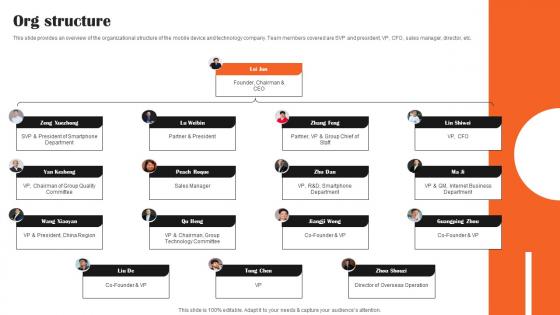
This slide provides an overview of the organizational structure of the mobile device and technology company. Team members covered are SVP and president, VP, CFO, sales manager, director, etc.
People who downloaded this PowerPoint presentation also viewed the following :
Org Structure Xiaomi Post Ipo Investor Funding Elevator Pitch Deck with all 6 slides:
Use our Org Structure Xiaomi Post Ipo Investor Funding Elevator Pitch Deck to effectively help you save your valuable time. They are readymade to fit into any presentation structure.





FAQs for Org Structure Xiaomi Post Ipo Investor Funding
So Xiaomi's structured around their product lines - smartphones, IoT stuff, laptops, whatever. Pretty flat hierarchy compared to most tech companies, which honestly works better for how quickly they pivot. They've got the standard R&D and manufacturing teams, but also dedicated groups for software services and international expansion. Each division runs independently but shares resources when needed. The cool part? These departments actually collaborate instead of fighting each other for budget - that's honestly rare in tech. Oh, and their supply chain team is huge since they make everything from phones to rice cookers.
So Xiaomi basically keeps their hierarchy super flat - ideas can zip straight from engineers to the people making decisions without getting bogged down in bureaucracy. They've got these small product teams that can pivot crazy fast when they see new opportunities. It's like having mini startups inside the company, honestly. Teams constantly experiment and iterate with their "internet thinking" approach. Oh, and they don't really separate hardware from software teams, which is pretty smart for innovation. Worth studying if you're into org design - though I'm still not sure how they keep everything aligned across teams.
So Xiaomi basically can't run everything from one headquarters - the global market's too messy for that. They've got separate teams for China, India, Europe, wherever, because honestly what sells in Mumbai isn't gonna work in Madrid. Each region handles their own marketing, supply stuff, even tweaks products for local tastes and regulations. That's how they can be super cheap in some places but go premium in others. Just make sure you know which regional team you're actually talking to since they're pretty much independent operations. Learned that the hard way once.
So they use this "inverted triangle" thing - headquarters handles the big stuff like R&D and supply chain, but product teams and regional offices get to make their own calls on everything else. Pretty smart actually. Lei Jun sets the overall vision, then business unit heads can adapt products however they want for local markets. Their hierarchy is super flat too, like maybe 3-4 management levels tops. Oh and they're big on data transparency to keep everyone on the same page without being control freaks about it. Way better than most companies tbh.
So Xiaomi does this "inverted triangle" thing that's actually pretty smart. Small teams can make calls without waiting for approval from like 5 different managers. They mix engineers, designers, and marketing people together from the start instead of handing projects off between departments. The CEO even has engineers present straight to executives - no middleman BS. People rotate between teams too, which keeps things fresh. Honestly, most companies could learn from this approach. If you're thinking about your own team, just give small groups ownership of whole problems rather than tiny pieces. Way more effective than the traditional mess most places have.
So Xiaomi's flat structure works really well because decisions happen fast - no waiting around for like five different managers to sign off. Teams can switch directions quickly when the market changes. Lei Jun being super involved keeps everyone on track, though sometimes he becomes the bottleneck himself (kinda ironic). The setup lets people at any level talk directly and come up with new ideas. That's honestly why they pump out products so quickly compared to other companies. If you're analyzing them, look at how they manage to stay coordinated across all their different product lines without losing that speed.
So basically Xiaomi's flat structure means way fewer approval layers, which speeds up decisions like crazy. They can share suppliers across all their products - phones, laptops, those electric scooters everyone's riding now. Cutting out retail middlemen saves them a fortune too. What's cool is how fast they pivot when supply chain issues pop up or new opportunities emerge. Their hardware and software teams actually talk to each other, which sounds obvious but most companies suck at that. Oh and the whole ecosystem thing gives them serious buying power - they're not just ordering parts for one product line.
So Xiaomi basically runs these tiny teams that act like startups inside the company. Pretty smart actually. Engineers can literally walk up to VPs without going through a million managers first - none of that corporate ladder BS. They're doing weekly iterations on hardware prototypes instead of waiting months for some committee to approve things. The whole flat structure thing really works for them. Teams can pivot fast and make their own calls without drowning in bureaucracy. If you want to copy this, just cut out the approval chains and let small groups experiment more. Oh, and definitely embrace the failing fast part - that's huge.
So basically, Xiaomi's whole flat structure thing starts falling apart when you're managing thousands of people instead of a few hundred. Their "inverted pyramid" sounds cool on paper - engineers get tons of autonomy which is great for innovation. But coordinating across different products and regions becomes a total mess. Decision-making gets weird too since everyone's empowered but no one's really on the hook when things go wrong (been there lol). They're always trying to keep teams small while still being able to execute globally. If you're hitting similar issues, I'd say nail down who owns what first, then let people run wild within those boundaries.
Yeah so Xiaomi basically runs like a startup even though they're huge now. Way fewer management layers than most tech companies. Teams can make decisions without waiting for approval from like 5 different bosses - which honestly sounds amazing compared to where I work lol. Lei Jun pushes this whole "act like owners" thing where anyone can actually influence product stuff. Decision-making stays spread out instead of everything going through the top. If you're trying this with your team, just let people make calls instead of adding more approval steps.
So Xiaomi's thing is keeping their structure super flat - like only 3-4 management layers when most tech companies are drowning in bureaucracy. Engineers basically run the show instead of executives making all the calls, which is pretty refreshing honestly. They're weirdly good at staying nimble even though they're huge now. Oh and they ditched the whole department silo thing for cross-functional teams that can actually ship stuff fast. I still don't get how they pull off that startup vibe at their scale but it works.
So Xiaomi's pretty smart about this - they built feedback right into how they're organized. Every week they do all-hands meetings where anyone can grill the executives directly. Plus they have this internal chat thing that's basically like Slack but company-wide, so ideas actually bubble up instead of getting stuck. What's really cool though is their "user feedback sessions" where the front-line people share what customers are saying with the product teams and bosses. Way more direct than most places I've worked at, honestly. The whole point is cutting out the middleman bureaucracy nonsense. If you're trying to copy this, maybe start with regular cross-team feedback meetings?
So Xiaomi's pretty smart about this - they keep teams small and autonomous so there's less red tape slowing things down. They do these "iron triangles" where product, engineering, and design basically live in each other's pockets. Async communication is huge for them, plus they're obsessive about virtual stand-ups (honestly more than they probably need to be, but whatever works). The real genius is giving teams ownership over results instead of breathing down their necks about every little process. Still feels startup-y even though they're massive now. I'd say try it with just a few small teams first before going all-in.
So Xiaomi basically reshuffles constantly - they're always moving teams around when new tech pops up. Instead of making existing teams learn everything, they just create whole new divisions for stuff like IoT or electric cars. Pretty smart actually. Their engineers and designers work super closely together, which helps them iterate fast. It's honestly pretty messy from the outside, but somehow it works? The main thing is they'd rather move quickly and pivot than waste time with perfect org charts. Speed beats planning every time in their world.
Honestly, Xiaomi's structure is pretty genius for startups. Small teams can make calls without waiting for approval from like 5 different managers - which is basically startup heaven. Speed beats perfection when you're trying to get off the ground. They also force their product, marketing, and engineering people to actually work together instead of staying in separate bubbles (wild concept, right?). Break down those walls early or you'll regret it later. Skip the traditional corporate layers and build everything around fast iteration from the start. Your future self will thank you.
-
“Excellent service from the customer support team when I wanted a slide that was a bit different from those on their standard menu. Super helpful.”
-
A perfect platform for all your presentation needs. Unlimited products at an affordable price.