

Organization chart build a scrum team structure for agile development




Try Before you Buy Download Free Sample Product
 Impress Your
 Audience
 100%
100% Editable
 Save Hours
 of Time


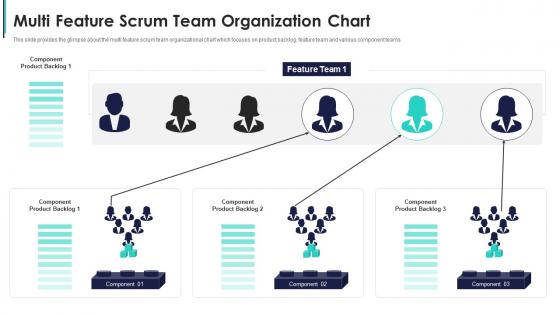
This slide provides the glimpse about the multi feature scrum team organizational chart which focuses on product backlog, feature team and various component teams.
People who downloaded this PowerPoint presentation also viewed the following :
Organization chart build a scrum team structure for agile development with all 6 slides:
Use our Organization Chart Build A Scrum Team Structure For Agile Development to effectively help you save your valuable time. They are readymade to fit into any presentation structure.





FAQs for Organization chart build a scrum team structure
So Scrum has three main roles that work together. The Product Owner decides what gets built and ranks priorities. Development team (3-9 people usually) does the actual coding and building stuff. Then there's the Scrum Master who runs meetings and clears roadblocks - though they're honestly doing a ton more work than anyone sees. Product Owner = the "what" person, dev team = the "how" people, Scrum Master keeps things moving. They talk daily through standups, planning sessions, all that. My advice? Don't stress about perfect process when you're starting out. Just focus on everyone actually communicating well.
Your Scrum Master is basically the team's coach - they'll jump in when communication gets messy and help sort things out. They run ceremonies, clear blockers, and create that safe space where people actually speak up (which honestly makes such a difference). If teammates aren't clicking, they might suggest pair programming or help facilitate those awkward conversations. Plus they're great at shielding you from random distractions and interruptions. Short version: struggling with team dynamics? Definitely talk to your Scrum Master about it.
Talk to your customers all the time - that's where the real insights are. Sales and support teams are goldmines too since they hear complaints daily. Honestly, way too many product owners just become feature factories instead of thinking about actual outcomes. MoSCoW prioritization helps, or those value vs effort grids where you plot everything out. But here's the thing - don't just rank stuff and walk away. Your team needs to understand WHY you picked certain features over others. Business metrics matter obviously, but transparency about your reasoning is what gets everyone aligned. Makes those tough trade-off conversations way easier.
So the Product Owner handles what gets built - they manage the backlog and decide which features matter most for business value. Your Scrum Master is like the team's process coach, clearing roadblocks and making sure everyone follows Scrum properly. Development Team does the actual building and figures out how long stuff will take. Honestly, these roles overlap more than people admit, which can get confusing at first. You're all working together constantly anyway. My advice? Master your own role before trying to understand how everyone else fits in. Way less overwhelming that way.
Daily standups are clutch for keeping everyone honest - you share yesterday's work, today's plan, and whatever's blocking you. Your sprint board shows real-time progress so nobody's working in the dark. Oh, and having solid "Definition of Done" criteria helps tons, though honestly getting everyone to agree on what "done" actually means is harder than you'd think! Just don't be that person who only updates the board during standups - keep it fresh throughout the day or it becomes useless pretty quick.
Honestly, start small - pick one or two things to fix instead of changing everything at once. Daily standups work best when you find those overlapping hours, but rotate meeting times sometimes so the same people aren't always stuck with 6am calls (been there, it sucks). Slack or Teams help fill the gaps between meetings. Your sprint ceremonies need solid video and screen sharing - nothing kills momentum like "can you see my screen?" for five minutes. Oh, and actually document decisions somewhere everyone can see them. Confluence, Notion, whatever works for your team.
Yeah, team composition is huge - honestly can make or break everything. You need your technical bases covered obviously (frontend, backend, testing, maybe UX). But here's the thing - having all the right skills means nothing if people can't actually work together. I've seen brilliant devs who just couldn't collaborate worth a damn, and it tanked the whole sprint. Communication with your PO and Scrum Master matters too. Build that psychological safety thing first where people feel comfortable speaking up. Then worry about filling skill gaps. Trust me on this one.
Cross-functional teams are game changers because you're not sitting around waiting for other departments to finish their part. Everyone you need - devs, testers, designers - they're all on your team already. Way faster to ship stuff that way. The whole team owns the product too, which honestly makes people care more about quality. I've seen teams where communication flows so much better when people aren't stuck in their own silos. My advice? Figure out what skills you're missing first, then either train your current people or hire for those gaps. Takes some effort upfront but totally worth it.
Honestly, you've gotta create that psychological safety thing first - where people actually feel okay speaking up. Retrospectives are perfect for this stuff, just make sure your Scrum Master stays neutral (which is harder than it sounds when everyone's pissed). Focus on what people are doing, not who they are as humans. Daily standups catch the small problems before they blow up too. Oh and if things stay messy, maybe bring in someone from outside to help sort it out. Don't just cross your fingers hoping conflicts disappear - they won't.
Honestly, start with velocity - just track how many story points your team knocks out each sprint. Sprint goal achievement matters way more than people think though. Cycle time's solid too (how long from starting a story to actually finishing it). But here's the thing - team happiness surveys are clutch. Miserable teams produce garbage no matter what their velocity looks like. Track how often you actually deliver what you commit to, plus keep an eye on bugs escaping to prod. Burndowns are fine but don't check them obsessively. Pick maybe 3-4 metrics and review trends during retros instead of panicking over every sprint's ups and downs.
Honestly, team size makes a huge difference in how well your Scrum flows. Smaller teams (3-5 people) are gold - decisions happen fast and everyone stays on the same page without much effort. Once you hit 7-9 people though? It gets messy. Standups drag on forever, there's always side chatter, and coordinating anything becomes this whole ordeal. I swear larger teams sometimes feel like managing a daycare lol. The magic number is usually 5-7 members - you get good skill variety but meetings don't turn into marathons. If things feel chaotic, maybe split into smaller teams with clear roles.
So DevOps is like the magic glue between dev and ops teams - makes your Scrum workflow way smoother. You'll get automated testing and CI/CD built right into your sprints instead of that whole "throw code over the wall and pray" thing. Honestly, the feedback loops alone are worth it. Your Definition of Done can actually mean "live in production" without waiting around for other teams to handle releases. Plus fewer late-night deployment disasters, which is always nice. I'd say start with automating your build pipeline first - that's where you'll see the biggest impact right away.
Yeah, totally doable! Just swap the roles around - instead of a Product Owner you'd have like a Project Lead handling whatever you're prioritizing. Marketing campaigns, construction stuff, research tasks, whatever. Daily standups become about design tweaks or production hiccups instead of coding problems. Scrum Master stays pretty much the same role though. Short sprints and retrospectives are the real magic anyway. I know content teams that swear by this approach - honestly works better than traditional project management sometimes. Event planning teams use it too! Just ditch the tech jargon and make the terminology fit what you're actually doing.
Jira and Azure DevOps are pretty standard for tracking sprints and backlogs. Trello works too if you want something simpler. For meetings, just use Zoom or Teams - whatever your company already has. Slack is solid for quick messages between standups. Honestly? I've watched teams waste weeks debating tools instead of just picking one and moving on. Start with the basics your team already knows. You can always switch later if something isn't working. The "perfect" setup doesn't exist anyway - I learned that the hard way on my last project. Pick tools people will actually use consistently and you're good.
Oh man, cultural stuff definitely messes with Scrum teams. Direct feedback cultures clash hard with indirect ones - your retros get weird fast. Authority respect varies too - some people won't push back on the Product Owner even when they totally should. Time perception's another thing that gets tricky. Some teammates focus on individual accountability while others are all about group responsibility. It's actually pretty interesting from an anthropology angle, but yeah, creates chaos if you don't address it. Get psychological safety going early and nail down communication norms that actually work for your specific mix of people.
-
Great quality product.
-
Unique design & color.