


Scrum team organization chart it powerpoint presentation slides




Try Before you Buy Download Free Sample Product
 Impress Your
 Audience
 100%
100% Editable
 Save Hours
 of Time


Organized scrum teams are cross functional and self managing and are equally vital for a business to deliver such a working product, i.e., skillful and knowledge based. Scrum helps improve the team members morale, self organizing the teams, acknowledging expertise in work, etc. Here is an efficiently designed template on Scrum Team Organization Chart IT that focuses on decreasing the time to market, increasing ROI, higher customer satisfaction, better quality, higher team morale, increasing collaboration, etc. The purpose of this proposal is to provide a structured agile scrum team organization chart of a large team that shows delivery team structure and PMO management. Organizations can display a variety of scrum teams through this template, such as a multi feature scrum team, cross functional team, organization chart, chart for enterprise agility, agile testing charts, chart with scrum implementation, and more. One can acknowledge the facts relating to the product owner by exhibiting scrum stakeholders team and the information for all such investors of your firm. The template lets companies demonstrate their stats by explaining to clients about their company, target audience, financials, values, goals, objectives, premium services, yearly sales forecasts, ideas, 30-60-90-day plan of tasks, etc. Book a free demo with our experts and customize a 100 percent editable Scrum Team Organization Chart template based on your needs. Get access and download it now.
People who downloaded this PowerPoint presentation also viewed the following :
Content of this Powerpoint Presentation
Slide 1: This slide displays the title i.e. 'Scrum Team Organization Chart (IT)' and your Company Name.
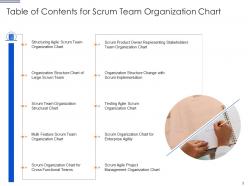
Slide 2: This slide presents table of contents.
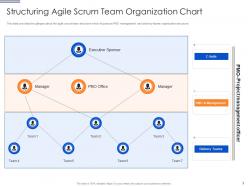
Slide 3: This slide provides the glimpse about the agile scrum team structure which focuses on PMO management and delivery teams organization structure.
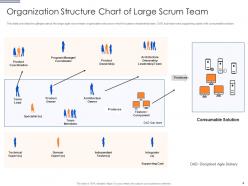
Slide 4: This slide shows large agile scrum team organization structure which focuses on leadership team, DAD sub-team and supporting casts with consumable solution.
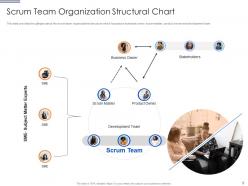
Slide 5: This slide provides the glimpse about the scrum team organizational structure which focuses on business owner, scrum master, product owner and development team.
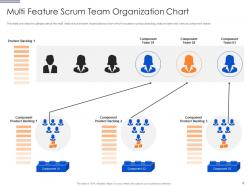
Slide 6: This slide presents multi feature scrum team organizational chart which focuses on product backlog, feature team and various component teams.
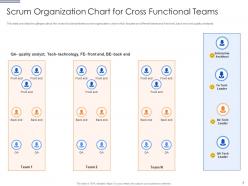
Slide 7: This slide shows cross functional teams scrum organization chart which focuses on different teams and front end, back end and quality analysts.
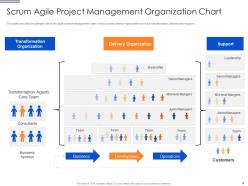
Slide 8: This slide provides the glimpse about the agile project management team which covers various organization such as transformation, delivery and support.
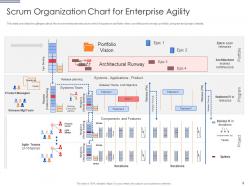
Slide 9: This slide exhibits scrum enterprise structure which focuses on portfolio vision, architectural runway, portfolio, program and project details.
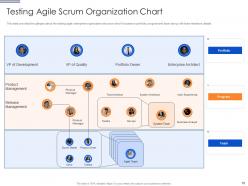
Slide 10: This slide explains testing agile enterprise organization structure which focuses on portfolio, program and team along with team members details.
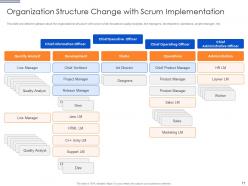
Slide 11: This slide displays organizational structure with scrum which focuses on quality analysts, operations, project manager, etc.
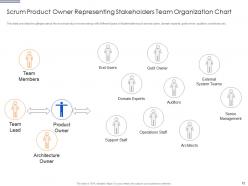
Slide 12: This slide presents scrum product owners along with different types of stakeholders such as end users, auditors, architects, etc.
Slide 13: This slide showcases the title for additional slides.
Slide 14: This is the icons slide for the project.
Slide 15: This slide explains about company, target audience, premium services, etc.
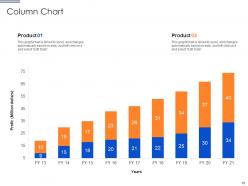
Slide 16: This slide displays the yearly profits column chart for different products. The charts are linked to Excel.
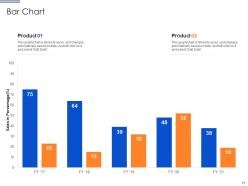
Slide 17: This slide displays the bar chart for different products. The charts are linked to Excel.
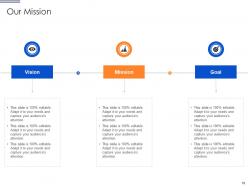
Slide 18: This slide shows the vision, mission and goals of your company.
Slide 19: This slide describes your goals.
Slide 20: This slide displays the puzzle of your company.
Slide 21: This slide displays your ideas generated.
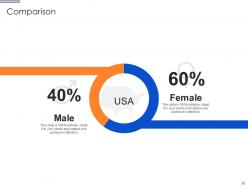
Slide 22: This slide shows comparison of products based on several selects.
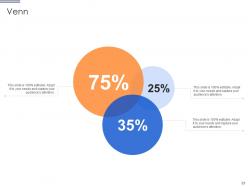
Slide 23: This slide exhibits the venn for your company.
Slide 24: This slide displays your mind map.
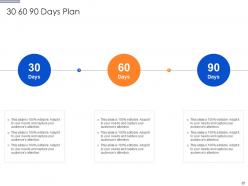
Slide 25: This slide exhibits the 30-60-90 days plan of the project.
Slide 26: This slide is the thank you slide and contains contact details including phone no., office address, etc.
Scrum team organization chart it powerpoint presentation slides with all 26 slides:
Use our Scrum Team Organization Chart IT Powerpoint Presentation Slides to effectively help you save your valuable time. They are readymade to fit into any presentation structure.


FAQs for Scrum team organization chart it
So there's three main people on a Scrum team. Product Owner handles what gets built and ranks the priorities. Development Team does the actual coding/building stuff. Then you've got the Scrum Master - they're more like a coach than a boss, keeping things moving and clearing roadblocks. The PO and devs talk constantly about what's realistic vs what's needed. Scrum Master just makes sure meetings don't turn into chaos (trust me, they can). It's weird but nobody really reports to anyone else - more like they're all equally important. Oh, and don't let roles get too blurry, but definitely keep everyone talking to each other.
Your Scrum Master is basically the team's communication glue. They run standups, retros, and sprint planning so everyone stays in sync. Plus they're always clearing roadblocks that mess with collaboration. Mine's really good at spotting when someone's gone quiet or there's weird tension building up. They'll coach you on working better together and - this is huge - shield you from stakeholders dropping random requests mid-sprint. Honestly, a good SM creates that safe space where people actually feel comfortable calling out problems instead of just suffering in silence.
Honestly, having clear roles saves you from so much drama. Nobody wants those awkward sprint meetings where everyone's like "wait, wasn't that your thing?" Product Owner handles the what and why. Scrum Master deals with blockers and process stuff. Developers own the how. Super straightforward when people actually stick to it. I've seen teams waste entire days just trying to figure out who dropped the ball - it's painful to watch. Get your boundaries written down somewhere obvious so people can stay in their lane and actually ship things instead of playing accountability hot potato.
So here's what I've noticed with mature Scrum teams - the whole org chart thing gets way flatter. People start self-organizing instead of waiting for someone to tell them what to do. Your Product Owner and Scrum Master? They become more like facilitators than bosses, which is honestly refreshing. Team members naturally grab ownership of different stuff, cross-training happens more, and decisions get made together. Oh, and rotating who runs meetings really helps this along - let people lead retros or tech talks. It sounds cheesy but watching teams evolve like this is actually pretty satisfying.
Honestly, I'd go with Lucidchart or Draw.io first - they're built for org charts and the collaboration stuff actually works well. Miro and Mural are solid too, especially if you're already doing retrospectives or planning in them. Why juggle multiple tools, right? PowerPoint works in a pinch but feels clunky compared to the others. My buddy's team just uses Google Slides and they seem fine with it, though I personally think the specialized tools look way more professional. Start with whatever you already have though - no point buying new software until you know what you actually need.
Dude, cross-functional teams are a game changer. No more sitting around waiting for "the one person" who knows databases or whatever. Your team can actually jump in anywhere there's a bottleneck instead of being blocked constantly. Quality gets better too since you've got different people looking at everything with fresh eyes. Way less drama when stuff breaks - nobody's pointing fingers at other departments. Oh, and delivery speeds up like crazy once everyone stops being so siloed. I'd start by figuring out what skills your team's missing, then get people pairing up to learn from each other. Trust me on this one.
Oh man, remote Scrum is rough. Communication gets so slow and you lose all those quick "hey can you look at this?" moments that actually matter. Timezone juggling makes standups a nightmare - someone's always joining at 6am looking dead inside. Your best bet? Get decent video tools and maybe rotate meeting times so it's fair. Those virtual coffee rooms help recreate some of the casual problem-solving you'd normally get. Miro's pretty solid for sprint stuff too. Honestly though, you'll need to over-explain everything and build in way more time for people to actually respond to things.
Hey, so Product Owners don't really prioritize tasks through org charts - they're focused on ranking the product backlog based on business value and customer needs. They work with different stakeholders to gather requirements, sure, but their main job is owning the "what" and "why" of features. Think of it like they're constantly juggling priorities based on impact and urgency. The actual prioritization happens in the backlog itself, not through company hierarchy. My advice? Build a solid relationship with your PO so they get your team's capacity and technical limits when they're making those calls. Makes everything smoother honestly.
So here's the thing - the Product Owner is basically your buffer between the dev team and all those stakeholders who want to give input. They handle all the external stuff and translate business needs into actual work items. You definitely don't want developers getting dragged into random stakeholder meetings (been there, it's a nightmare). The PO collects feedback and requirements, then brings that context to sprint planning. It creates this clean hierarchy where stakeholders get heard but the team stays focused. Honestly, it's one of Scrum's best features - just make sure your stakeholder input goes through the PO.
Dude, an org chart is basically your survival guide when you join a new Scrum team. You can see the three main roles - Product Owner, Scrum Master, and developers - without having to awkwardly ask who does what. It shows reporting lines too, so you know who to bug for different stuff. Plus you'll get how your team connects to the rest of the company, which honestly matters more than you'd think for understanding dependencies and context. I always keep mine handy the first couple weeks until I stop feeling completely lost.
Honestly, the biggest win is how much faster your team moves when they don't need permission for everything. People closest to the actual work make better calls anyway - they see problems and fix them without waiting around. Your team members start caring more too since they actually own their decisions. Plus they get way more creative when they're not just following orders from above. Oh and when things change (which they always do), self-organizing teams pivot super quick. Just make sure everyone's crystal clear on the goals first, then step back and let them figure it out.
Smaller teams (3-5 people) are basically like a tight friend group - everyone does everything and talks directly. No real hierarchy. Bigger teams closer to 9 people? Way more structured with clear Product Owner/Scrum Master boundaries. Honestly, I think 5-7 is the magic number - you get defined roles without losing that close teamwork vibe. Oh, and heads up - communication gets messy FAST when you add more people. Like, exponentially messier. The coordination overhead can kill you if you're not careful about it.
Co-located teams can just walk over and figure stuff out on the spot, which is pretty nice. But with distributed teams, you gotta be way more intentional about your communication rituals - probably need better digital tools for sprint boards too. Remote teams actually get more disciplined about timeboxing though, since nobody wants endless video calls (learned that the hard way!). Your Definition of Done will probably need tweaking. Distributed teams need way more documentation since you can't rely on those random hallway chats. During sprint planning, over-communicate everything to avoid mid-sprint confusion.
Track your velocity first - that's the easiest one to start with. Are you hitting your story points consistently? Then look at sprint goals - honestly, this matters way more than most teams realize. Cycle time shows how fast work actually moves through your process. Don't skip team satisfaction surveys either, they catch problems early. Defect rates and deployment frequency are solid indicators too. Oh, and pay attention to how your retros feel - sometimes the vibe tells you more than spreadsheets do. Start simple with velocity and sprint goals, then add the rest.
Honestly, org charts are lifesavers when your Scrum team starts getting messy. You can figure out fast who handles what kind of drama - like whether you need the Scrum Master for process stuff or loop in the Product Owner for priority fights. It's basically your "who do I bug about this" guide. Plus everyone knows their role upfront, which stops a lot of stupid conflicts before they even start. I learned this the hard way last year when our team was a total disaster. Next time things get tense, just follow the chain up until someone can actually fix it.
-
Great designs, really helpful.
-
Good research work and creative work done on every template.