


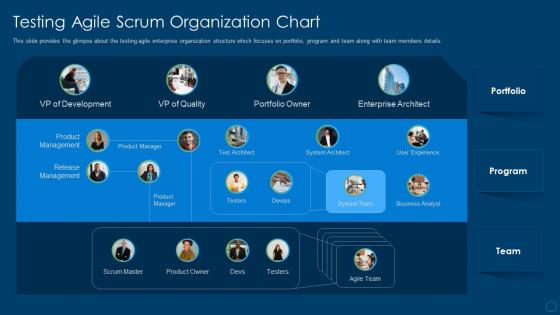
Organizational structure in scrum testing agile scrum organization chart




Try Before you Buy Download Free Sample Product
 Impress Your
 Audience
 100%
100% Editable
 Save Hours
 of Time


This slide provides the glimpse about the testing agile enterprise organization structure which focuses on portfolio, program and team along with team members details.
People who downloaded this PowerPoint presentation also viewed the following :
Organizational structure in scrum testing agile scrum organization chart with all 9 slides:
Use our Organizational Structure In Scrum Testing Agile Scrum Organization Chart to effectively help you save your valuable time. They are readymade to fit into any presentation structure.








FAQs for Organizational structure in scrum testing agile
So you've got your Product Owner who decides what gets built, then your Scrum Master keeping everyone on track. Development Team does the coding obviously, plus Test Engineers or QA folks right there with them. Some places still have a Test Lead managing strategy across teams - technically not "pure" Scrum but whatever works, right? The big shift is testers aren't waiting around for dev to finish anymore. They're collaborating throughout each sprint instead of that old waterfall mess. I'd start by figuring out who's doing what testing-wise now, then see what's missing.
Your Scrum Master won't directly manage testing, but they're basically your behind-the-scenes advocate. They'll remove blockers and help coordinate between devs and testers. During sprint planning, they make sure testing gets proper time allocated - not just squeezed in at the end. Here's the thing: good SMs will actually push back when stakeholders try rushing releases without adequate testing. They also coach teams on building quality into the definition of done. Oh, and definitely partner with them early to flag testing roadblocks. Trust me, they're way better at those awkward conversations with product owners than most of us are!
Yeah so in Scrum there's no separate tester role anymore. Everyone on the dev team handles quality together - developers, testers, whoever. No more throwing stuff over the wall to QA. Testing becomes a team sport instead of one person's problem. You'll still have people good at testing, but they work with everyone else throughout the sprint. Code reviews, exploratory testing, writing tests - the whole team jumps in. Honestly, it works way better than the old silo approach. Just make sure your testing people sit in on planning and get devs involved in test discussions.
Honestly, you've got way more control over testing than you think! Your acceptance criteria basically sets the whole quality bar - if you write clear, testable requirements, testers know exactly what they're aiming for. During sprints, you're literally the one accepting or rejecting work, so you're the final gatekeeper (which is kind of a big deal). Your feedback in demos shapes what gets tested next too. The trick is staying plugged in daily instead of just popping up at the end. Write stories specific enough that testers can actually build real test cases from them. It makes such a difference.
Honestly, the biggest thing is testing constantly throughout your sprints instead of cramming it all at the end. Get your whole team involved - testers, devs, and product owners working together from sprint day one. Unit tests, integration tests, acceptance tests... do them all within each sprint cycle. Automated testing will literally save your sanity during sprint reviews, trust me on this one. I'd start by figuring out which tests you can automate first. Oh, and build testing right into your definition of done - that way there's no debate about whether something's actually finished. It's about shifting your mindset from having a "testing phase" to just testing all the time.
Yeah, so Scrum flips the whole testing thing on its head - it's everyone's problem now, not just one person's. Developers write unit tests while they're coding. If you've got a tester, they handle the exploratory stuff and work with the Product Owner on acceptance criteria. That old "toss it to QA when we're done" approach? Still happens way too much honestly, but teams gotta break that habit. Build testing right into your Definition of Done. Nothing gets called finished without proper test coverage. Quality becomes the whole team's job, which actually works better once people get used to it.
Most Scrum teams I've worked with use a combo of automated and manual stuff. Selenium's solid for web testing, Jest or Cypress work great for JavaScript apps. For APIs, Postman's your friend. JIRA and Azure DevOps handle the test management side - though honestly, some teams still just use spreadsheets for exploratory testing which works fine too. Jenkins is clutch for running your automated tests in CI/CD pipelines. That's where you catch the sneaky bugs early. Pick whatever automation tool matches your stack first, then expand from there. Don't overthink it initially.
Scrum's pretty smart about testing - it forces you into these short sprints with constant feedback. Daily standups catch problems early. Sprint reviews become real testing sessions with actual users (way better than those pointless demo meetings, honestly). Retrospectives help you fix what's not working. The "shippable increment" rule means you're always validating stuff instead of waiting forever to discover everything's broken. Sprint planning naturally breaks work into chunks you can actually test. Oh, and those stakeholder touchpoints? They're gold for catching issues fast. Just don't treat sprint reviews like theater - get real feedback from real people.
Honestly, just build testing right into your sprints from day one - don't bolt it on later. Get your CI/CD running tests automatically on every commit. Your Definition of Done should include passing tests, period. I've watched teams absolutely implode when they skip this step! Developers need to write unit tests while they're coding, not weeks later when they've forgotten everything. Oh, and make the whole team own automation - not just QA. Schedule some regular cleanup sessions too because test suites get messy fast. Start with your most critical flows first, then expand.
Don't treat QA like some separate thing that happens after dev work. Get your QA people in standups and sprint planning from the start so they actually know what's being built. Pair programming with devs and QA is honestly a game changer - we started doing it last year and caught so many issues early. Make sure your definition of done includes testing stuff everyone's already agreed on. Cross-training helps too - devs can write basic tests, QA learns the codebase. Oh, and shared testing environments that both teams can use without jumping through hoops.
So I'd focus on the metrics that actually tell you something useful - defect escape rate is clutch, plus how many bugs you're catching during development vs after the sprint ships. Test coverage matters but honestly, velocity is what I watch most. Are you hitting your Definition of Done consistently? Cycle time from code complete to deployment shows where you're getting stuck too. Oh and don't sleep on the team vibes during retros - if people seem stressed about quality, that's data. Start with maybe 2-3 things your team's actually struggling with right now instead of drowning in dashboards.
Your testing strategy totally depends on what you're building. Customer-facing stuff? Go heavy on user acceptance and UI testing. APIs need way more integration and contract testing. Legacy systems are honestly such a headache - you'll be doing regression tests forever, but whatever, it's unavoidable. Greenfield projects are great because you can automate everything from scratch. Maintenance work though? You'll need exploratory testing to figure out what the hell the existing code actually does. Get your testers in sprint planning early so they can push for the right mix based on your actual risks.
Dude, cross-functional teams are a game changer for testing bottlenecks. No more waiting around for other teams to get back to you with fixes or info. Having devs, testers, and BAs all working together daily means testing happens throughout the sprint - not just crammed at the end like some afterthought. You'll get way faster feedback and catch issues early when they're actually cheap to fix. The trick is getting your testers into those daily conversations instead of just throwing requirements at them. Oh, and make sure they're in standups and sprint planning if they aren't already. Trust me on this one.
So the big issue is usually role confusion - like who's testing what exactly? Testers end up feeling totally disconnected from the dev teams too. Oh, and they get pulled in a million directions across different teams which is honestly the worst part. First thing I'd do is map out who's responsible for what testing. Then embed your testers directly into each squad instead of keeping them separate. Regular sync meetings between test leads help a lot. You'll also want shared standards across teams so everyone's on the same page. Communication channels between roles are key - can't stress that enough.
So the Definition of Done is basically your quality checklist - everything that needs to happen before you can call a story "finished." Unit tests passing, integration testing done, code reviews, acceptance criteria met, all that stuff. Honestly, it saves you from those super awkward moments where someone thinks they're done but... they're really not. Your testing activities should be built right into the DoD from day one. Oh, and make sure your whole team actually gets it and agrees to these requirements upfront - otherwise you'll just end up arguing about what "done" means later.
-
Nice and innovative design.
-
Great product with highly impressive and engaging designs.
-
Excellent products for quick understanding.
-
Best way of representation of the topic.
-
The content is very helpful from business point of view.