


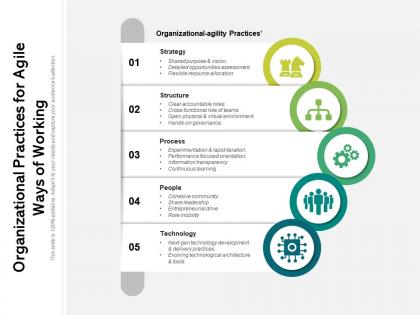
Organizational practices for agile ways of working





Try Before you Buy Download Free Sample Product
 Impress Your
 Audience
 100%
100% Editable
 Save Hours
 of Time


Our Organizational Practices For Agile Ways Of Working are topically designed to provide an attractive backdrop to any subject. Use them to look like a presentation pro.
People who downloaded this PowerPoint presentation also viewed the following :
Organizational practices for agile ways of working with all 2 slides:
Use our Organizational Practices For Agile Ways Of Working to effectively help you save your valuable time. They are readymade to fit into any presentation structure.
FAQs for Organizational practices for agile
So basically Agile has four main things: people matter more than rigid processes, actually working software beats tons of documentation, collaborating with customers over strict contracts, and being flexible instead of sticking to some perfect plan. It's way different from waterfall where you plan everything first then pray it works. With Agile you do short sprints - like 2 weeks - and constantly get feedback. Requirements always change anyway (learned this the hard way), so you're adapting as you go. You ship working pieces regularly instead of waiting months for one big reveal. Try daily check-ins to start.
Yeah totally! Forget the tech stuff and just use the basics. I'd start with daily check-ins - super easy win. Break everything into short chunks with actual deadlines you can hit. Marketing teams crush this approach, way better than most dev teams honestly. Your "sprint review" might be customer feedback sessions or whatever makes sense. Don't stress about doing Scrum perfectly - that's missing the point. Regular retrospectives are gold though, like asking "what sucked this week?" Keep stakeholders in the loop constantly. The whole thing's about adapting fast, not following some rigid playbook.
Honestly, user feedback is everything in Agile - like, it's your compass for not building useless stuff. Get it constantly through demos, user tests, whatever works. Short sprints are perfect because you can actually DO something with what people tell you instead of letting it sit in some forgotten document (ugh, hate when that happens). Throw their input straight into backlog prioritization. Each sprint needs its own feedback loop - waiting until the project's done is way too late. Oh, and stakeholder check-ins help too, obviously. The whole point is pivoting quickly when users point you in a different direction.
Honestly, it comes down to how predictable your work is. Scrum's all about those fixed sprints - you plan everything out, have your daily standups, retrospectives, the whole nine yards. Kanban's more like... you just keep moving stuff through columns as priorities shift. I'd go with Scrum if your team likes structure and you can actually stick to 2-week cycles. But for support tickets or when requirements keep changing? Kanban's way less stressful. My old team tried forcing Scrum on maintenance work and it was a disaster. Start simple though - pick whichever feels more natural for how you already work.
Sprint planning works way better when you've got your backlog sorted beforehand - nobody wants to waste time debating priorities in the meeting. Be realistic about capacity too, not just optimistic about what sounds doable. Mix up your retros! That sailboat method is actually pretty fun compared to the same old "good/bad" format. But honestly, the biggest thing is making sure people feel safe to speak up. Otherwise you'll just get polite BS. Oh, and actually do something with those action items from retros. Teams get cynical fast when nothing changes.
Honestly, Agile is perfect for remote teams. Daily standups keep everyone in the loop - no more guessing what your teammate three time zones over is doing. Short sprints mean you catch problems fast instead of waiting months to realize something's off. Visual stuff like Kanban boards are clutch because everyone sees the same project status. The regular check-ins (planning, retros, all that) force you to actually talk to each other consistently. I'd start simple - just do daily standups and get a shared board going. You'll notice the difference right away. Way better than those old-school project methods that leave remote people totally in the dark.
Honestly, start with velocity - how many story points you're knocking out each sprint. Burndown charts are clutch for seeing if you're on track mid-sprint. Cycle time matters too (how long stuff takes start to finish), plus lead time for your full delivery pipeline. Track defect rates obviously, but don't sleep on team satisfaction scores - cranky developers write buggy code, trust me. Sprint goal success rate shows if you're being realistic about what you can actually get done. Just don't become a metrics zombie. Pick maybe 3-4 that'll actually move the needle and review them in retros.
Honestly, if your executives aren't doing it themselves, forget about it - nobody's gonna follow. Make sure people can actually mess up without getting fired, that's huge for trying new stuff. The people side is way trickier than any tech you'll deal with! Don't cheap out on training either, those quick workshop things are pretty much useless. Give teams real decision-making power and cut through the red tape that slows everything down. Oh, and celebrate when people learn something, even if they fail. Cultural shifts take forever though - like months - so track how teams are feeling and what they're shipping, not some checklist.
Oh man, the worst mistake is doing "Agile theater" - just slapping new names on your old waterfall meetings. Seriously drives me nuts when teams do that. Don't try implementing everything at once either, you'll burn everyone out. Management pushes back hard when they can't get their precious detailed plans upfront. Here's what actually works: pick one team to start with. Get them proper training first - like, real training, not some half-day workshop. Leadership needs to genuinely get it, not just pay lip service. Work on changing how people think before you worry about standups and sprints.
Honestly, Agile just bakes change right into how you work instead of pretending it won't happen. Those 2-4 week sprints? They're your reset button. You can pivot when stakeholders inevitably change their minds (and they will). Daily standups catch problems before they explode your timeline. Sprint reviews let you course-correct based on real feedback. The trick is treating requirements like ongoing conversations, not some sacred document carved in stone. I've seen teams fight change for months then scramble at the end. Way better to roll with it from day one.
So for Agile stuff, Jira's pretty solid for sprints and user stories - Azure DevOps and Linear are good too. Communication wise, you can't go wrong with Slack or Teams for daily check-ins. Miro's awesome for digital whiteboarding (seriously saved my butt during COVID). If you're doing dev work, GitHub or GitLab are must-haves and they play nice with most PM tools. Oh, and Figma's great for design collaboration too. Main thing is don't pick tools that hate each other - your team will thank you later. I'd start with one PM tool first, then add what you actually need.
Check out SAFe, LeSS, or Scrum of Scrums - they're built for exactly this kind of multi-team chaos. Program increment planning sessions help get everyone aligned, though honestly the time zone juggling is brutal at first. Async tools become your best friend. Start with just a couple distributed teams before going all-in - trust me on that one. You'll need solid interfaces between teams and everyone using the same definition of done. The tooling investment hurts upfront but pays off. Oh, and those overlapping work hours? Game changer for communication. Way easier to debug problems early than fix a mess later.
Okay so user stories are basically just capturing what people actually want from your product. They keep your team grounded in reality instead of building random stuff that sounds cool but nobody needs. Format's pretty straightforward - "As a [user type], I want [goal] so that [benefit]." Honestly, this template feels weird at first but it really does force you to think like your users. Keep them small enough to knock out in a sprint but detailed enough so your devs aren't guessing. Oh and definitely write acceptance criteria - trust me, it'll save you from those awkward "wait, this isn't what I meant" conversations later.
Honestly, agile just makes way more sense than waiting forever for some big launch. Break your product into tiny pieces you can actually ship - then get real feedback from users right away instead of guessing what they want. When priorities change (and they always do), you can pivot fast. Cross-functional teams help too since you're not waiting around for other departments to finish their part. Testing happens continuously so problems don't blindside you later. Start small though - figure out the most basic version that's still useful to people.
Honestly, keep your backlog super tight - like 2-3 sprints of detailed stories tops. Everything else should just be rough epics until you actually need them. I've seen teams with literally hundreds of stale stories and it's a nightmare. Your product owner needs to clean house regularly. Toss the dead stuff, shuffle priorities when business needs change. Don't let stories into sprints without solid acceptance criteria either. Get your devs involved in estimating too - they'll spot technical gotchas you totally missed. Oh, and seriously audit what you have now. If something's been sitting there for months, it's probably garbage anyway.
No Reviews