


Scrum master roles powerpoint presentation slides




Try Before you Buy Download Free Sample Product
 Impress Your
 Audience
 100%
100% Editable
 Save Hours
 of Time


Agile methodologies are getting more traction across all industries these days, as organizations are focusing on introducing flexible development models such as scrum. A process expert is required to execute the agile scrum methodologies flawlessly, which is where scrum masters come in. Here is a professionally designed template on Scrum Master Roles that will benefit all those organizations looking to provide insight into the scrum process, majorly focusing on the roles of scrum masters. Firstly, the scrum process at a glance section will help the organization address the whole scrum methodology process. After highlighting the process, an organization can use various agile scrum roles to manage different scrum roles after introducing the scrum methodology. To highlight the certified scrum master CSM procedure information, organizations can use the section procedure and requirements to become certified CSM. You can also address in depth details about the scrum master roles and responsibilities and talk about how scrum master serves the organization, product owners, development teams, and what makes an excellent scrum master. In the end, organizations will be able to address the information on becoming a scrum master through a five point checklist to becoming an influential scrum master. Get access to this proposal now and book a free demo with our experts. Download the template.
People who downloaded this PowerPoint presentation also viewed the following :
Content of this Powerpoint Presentation
Slide 1: This slide displays the title i.e. 'Scrum Master Roles' and your Company Name.
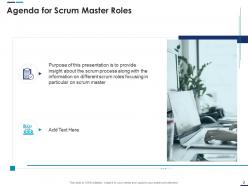
Slide 2: This slide presents the agenda for the project.
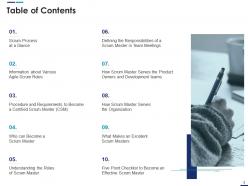
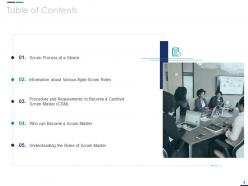
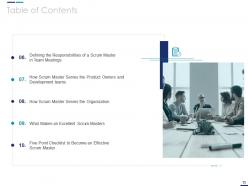
Slide 3: This slide exhibits the table of contents for the project.
Slide 4: This slide showcases the title for glance of scrum master.
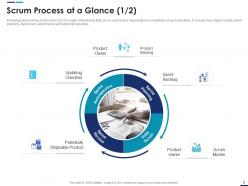
Slide 5: This slide portrays the process of scrum agile methodology that can be used by the organizations to meet their project objectives.
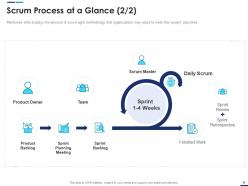
Slide 6: This slide displays the process of scrum agile methodology that organizations may adopt to meet their project objectives.
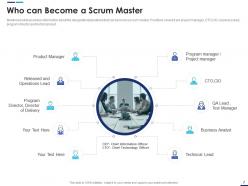
Slide 7: This slide provides information about the designations/positions that can become a scrum master.
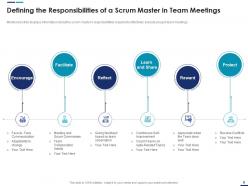
Slide 8: This slide displays information about the scrum master’s responsibilities required to effectively execute project team meetings.
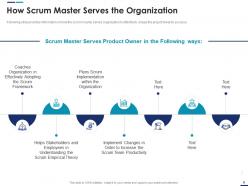
Slide 9: This slide provides information on how the scrum master serves organization to effectively shape the project towards success.
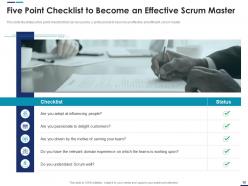
Slide 10: This slide illustrates a five point checklist that can be used by a professional to become an effective and efficient scrum master.
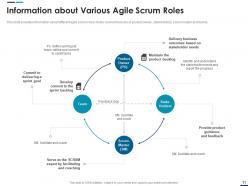
Slide 11: This slide provides information about different agile scrum roles. Roles covered here are of product owner, stakeholders, scrum master and teams.
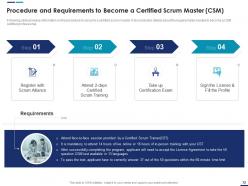
Slide 12: This slide provides information on the procedure to become a certified scrum master.
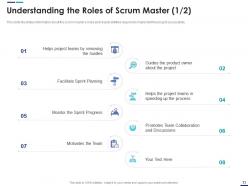
Slide 13: This slide illustrates information about the scrum master’s roles and responsibilities required to implement the project successfully.
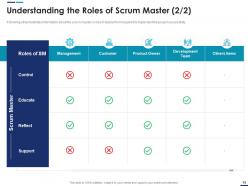
Slide 14: This slide illustrates information about the scrum master’s roles in tabular form required to implement the project successfully.
Slide 15: This slide exhibits the title for responsibilities of scrum master.
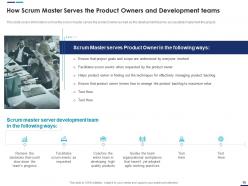
Slide 16: This slide covers information on how the scrum master serves the product owner as well as the development team to successfully implement the project.
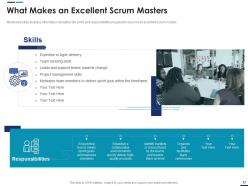
Slide 17: This slide displays information about the SM skills and responsibilities required to become an excellent scrum master.
Slide 18: This is the icons slide for the project.
Slide 19: This slide displays the title for additional slides.
Slide 20: This slide showcases the pie charts for different products. The charts are linked to Excel.
Slide 21: This slide exhibits about the company, target audience and its client's values.
Slide 22: This slide showcases the vision, mission, strategies and goals of your company.
Slide 23: This slide displays details about the team responsible for the project.
Slide 24: This slide presents the targets of your company.
Slide 25: This slide exhibits the mind map of the company.
Slide 26: This slide showcases the posts related to past experiences of clients.
Slide 27: This slide exhibits the roadmap of the company.
Slide 28: This is the thank you slide and displays the contact details of the company i.e. office address, contact number, etc.
Scrum master roles powerpoint presentation slides with all 28 slides:
Use our Scrum Master Roles Powerpoint Presentation Slides to effectively help you save your valuable time. They are readymade to fit into any presentation structure.




FAQs for Scrum master roles
So basically you're the one making sure everything runs smoothly and clearing roadblocks for your team. Run those ceremonies - sprint planning, standups, retros - but keep them tight (nobody wants another soul-crushing 2-hour standup, trust me). Coach people on how Scrum actually works. When conflicts pop up, help sort them out. Your job is protecting the team from random interruptions so they can get stuff done. You're not their boss though - more like the process keeper. Honestly, I'd start by watching where your current meetings go off the rails and fix those pain points first.
So as a Scrum Master, you're basically the team mediator when things get messy. Help people dig into what's actually causing the conflict, not just the surface drama. Create space where everyone feels safe to speak up - honestly this part can be tricky at first. Don't try to be the boss making decisions for everyone. Instead, guide conversations so they can work through stuff together. You'll start noticing warning signs early during standups or retros. Stay neutral but keep pushing for those hard conversations. Better to hash it out than let problems bubble under the surface forever.
So the Scrum Master basically helps your Product Owner make better decisions without micromanaging them. They'll run those backlog refinement sessions and coach on writing clearer user stories. During sprints, they block out all the random interruptions - trust me, POs get pulled in a million directions otherwise. Sprint reviews become way more useful because they facilitate getting real feedback from stakeholders. Oh, and they clear organizational roadblocks that would normally slow down product decisions. It's not about telling the PO what to build. More like giving them the space and support to focus on maximizing value.
Stick with the basics - velocity, sprint burndown, and whether you're hitting your sprint goals. Cycle time is huge too (basically how long stuff takes from start to done). I'd throw in team happiness surveys after retros because honestly, miserable teams don't ship good work. Don't chase shiny metrics that just make your dashboards look pretty. The real value comes from catching blockers before they derail everything and having better conversations during standups. Three or four metrics tops - review them weekly with the team and figure out what's actually slowing everyone down. Less really is more here.
Look, start by watching how your team actually talks to each other right now. Pick one annoying communication thing to fix this sprint - maybe those awful standups that feel like death by PowerPoint? Make them actually conversational instead of just status dumps. Listen for the stuff people aren't saying out loud, that's where the real problems hide. When your tech people and business folks are speaking totally different languages, jump in and translate. Oh, and please get people talking face-to-face instead of those never-ending email threads. You're basically the team's communication grease - sounds weird but it's true.
Honestly, the hardest part is people just hate change. Teams will try cramming their old ways into Scrum whether it fits or not. Stakeholders constantly want to sneak "just one tiny thing" into active sprints - drives me crazy. Half your team will probably blow off retrospectives thinking they're useless meetings. Organizations say they want Scrum but then micromanage everything, which defeats the whole point of self-organizing teams. Oh, and you'll spend way more time explaining why processes exist than you'd expect. Focus on teaching people the "why" behind everything upfront. Trust me, it saves headaches later.
Honestly, most retros are just complaint sessions that go nowhere. Ask better questions that dig into real blockers. When your team comes up with action items, actually follow through - I can't stress this enough. Track those experiments and talk openly about what worked (or didn't) next time. Celebrate the small wins too, even the failures, because that's how you build psychological safety. Give people room to try new stuff without freaking out about mistakes. The magic happens when teams feel safe to experiment and know their feedback actually matters.
Try lunch and learns first - pick one principle per session and use real examples from your current projects. Pair programming works well too since people naturally talk about collaboration while coding together. Honestly, retrospectives are where you'll make the biggest impact though. That's when teams actually reflect and figure out what to change. When issues pop up, use the "five whys" to dig deeper into root causes (works way better than surface-level fixes). The trick is keeping everything practical. Don't get theoretical - always connect principles back to whatever's happening in their current sprint.
So basically you're the translator between your dev team and all the business people. Set up demos and sprint reviews to show what's getting built. Stakeholders need to see progress, devs need clear priorities - you're stuck in the middle making both sides happy. I'd start by figuring out who actually matters on the stakeholder side (some people just like meetings but don't really influence anything). Coach them on when they can jump in with feedback without derailing sprints. Regular check-ins are your friend here. It's really about cutting through all the usual communication mess that bogs projects down.
Honestly, I'd stop being the Scrum police and figure out what's actually going wrong first. Maybe they're confused about the process, or they just hate change - happens all the time. Try pairing your strugglers with people who actually get it. Retrospectives are clutch for this stuff since people can vent without feeling judged. You could also run some quick workshops on estimation or sprint planning if that's where they're stuck. Oh, and definitely celebrate the small wins along the way. Change is slow and kinda painful, but patience pays off.
Make sure everyone feels safe to speak up honestly without getting blamed for stuff. Switch up your retro formats - that same "what worked/what sucked" thing gets old real quick. Actually stick to your time limits or you'll be there forever. Here's the big one though: end with concrete action items and check on them next time. I can't stress this enough - if people see nothing changes after these meetings, they'll mentally check out. Oh, and always start by reviewing last retro's commitments. Shows you're not just going through the motions.
So when you're working with multiple teams, you basically become this cross-team problem solver. Gone are the days of just focusing on one group - now you're dealing with alignment issues and making sure teams aren't stepping on each other. Honestly, the politics can get messy real quick. You'll spend tons of time talking to other Scrum Masters, which is actually pretty helpful. Whether you're doing SAFe or LeSS or whatever framework, your job shifts to being more of an organizational coach. Create those communities of practice - they're lifesavers. Push for changes that help teams collaborate instead of compete.
So first thing - make all the work visible to everyone. Burndown charts, updated boards, that whole deal. During standups and retros, push for real open conversations. Here's what really works though: ask "what's blocking you?" instead of "why isn't this done?" People respond so much better to that. Set clear sprint goals but don't be annoying about follow-ups. Oh and create a safe space where your team can share wins AND failures without getting roasted. Honestly, start by being transparent yourself - admit when you screw up or don't know something.
You'll need facilitation, coaching, and conflict resolution skills - basically helping your team work through problems and keep improving. Communication is massive since you're always translating between stakeholders and developers. And patience... seriously, so much patience! Scrum Master certs help, but honestly the real learning happens when you're actually doing it. Try facilitating retrospectives and ask your team how you're doing as a coach. Shadow other SMs if you can. Don't try mastering everything at once though - that's a recipe for burnout. Pick one skill and focus there first.
Honestly, remote work makes you way more deliberate about everything - those random hallway chats where you'd pick up on drama? Gone. I spend way more time in one-on-ones now checking how people are actually doing. Virtual standups are weirdly hard to keep engaging too. You can't just look around and see who's checked out. Digital tools become your lifeline for collaboration, but you're also constantly hunting for roadblocks that might get buried in Slack threads. The ceremonies are basically the same, just... different energy? Bottom line: you'll over-communicate like crazy and create way more structured check-ins to keep everyone synced up.
-
Understandable and informative presentation.
-
Unique and attractive product design.
-
Really like the color and design of the presentation.
-
Nice and innovative design.
-
Great product with effective design. Helped a lot in our corporate presentations. Easy to edit and stunning visuals.
-
Presentation Design is very nice, good work with the content as well.