


Organization Structure Astrazeneca Company Profile CP SS




Try Before you Buy Download Free Sample Product
 Impress Your
 Audience
 100%
100% Editable
 Save Hours
 of Time


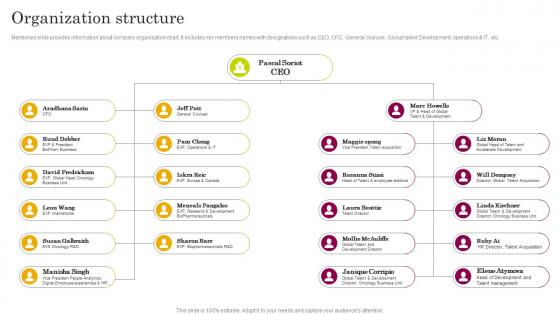
Mentioned slide provides information about company organisation chart. It includes key members names with designations such as CEO, CFO, General counsel , Global talent Development, operations And IT, etc.
People who downloaded this PowerPoint presentation also viewed the following :
Organization Structure Astrazeneca Company Profile CP SS with all 9 slides:
Use our Organization Structure Astrazeneca Company Profile CP SS to effectively help you save your valuable time. They are readymade to fit into any presentation structure.








FAQs for Organization Structure Astrazeneca Company
So AstraZeneca basically has three big chunks: Oncology, BioPharmaceuticals (that's respiratory, heart stuff, rare diseases), and then their newer Rare Disease unit. They've got regional teams too - US, Europe, China, you know the drill. Each area runs its own R&D and commercial teams but shares the boring corporate stuff like HR and finance. Pretty standard pharma setup if you ask me. Oh, and if you need to reach someone there? Figure out which therapeutic bucket your thing fits into first. Trust me, it'll save you from getting transferred five times and ending up back where you started.
So AstraZeneca runs this matrix setup where regional teams handle local stuff - market needs, regulatory headaches, you know. But they've got global R&D centers backing everyone up. Pretty clever actually since they don't waste money duplicating research everywhere. Local teams can jump on opportunities fast, but they're plugged into the whole global pipeline and resources. Honestly, their decision-making can be a bit slow though because you'll usually need buy-in from both local and global people. Just something to factor in if you're dealing with them.
So AstraZeneca basically flattened their whole structure, which cuts out all those bureaucratic layers. Scientists can pitch straight to executives without waiting forever. Pretty genius move, honestly. They also throw together these mixed teams - R&D people working with regulatory and commercial folks right from the start. Saves them from those "oh crap, this won't get approved" disasters later on. The matrix thing they do lets people jump between different drug areas too. Wait, did I mention this is for work research or just curiosity? Either way, their balance of freedom vs oversight is worth looking at.
So AstraZeneca is huge on cross-functional stuff - like, their whole setup revolves around it. R&D teams work directly with commercial and regulatory people from the start, which is way better than the typical approach where departments just toss projects to each other. They've got this matrix structure thing going on, so you're basically building relationships everywhere instead of just moving up in your own department. Honestly, it beats the old silo mentality by miles. Oh, and if you're considering them, definitely work on your collaboration game because you'll be in cross-functional teams constantly. Makes the work more interesting though.
So AstraZeneca organizes everything by disease areas - oncology, cardiovascular, respiratory, that kind of thing. Each one basically runs like its own mini-company with separate R&D and commercial teams. Pretty clever actually, since the cancer experts can just focus on cancer stuff instead of bouncing around different diseases. They all have their own profit targets too. Oh and if you're trying to figure out their partnerships or what's in development, just look at which therapeutic area it falls under - makes way more sense that way. Way better than the old geographic structure most pharma companies used to do.
So basically AstraZeneca's matrix setup means you'll report to multiple people but get way more exposure to different projects. They can grab specialists from various departments while still staying focused on their main drug areas. Pretty smart move for pharma honestly - you need so many different experts collaborating to get drugs developed. No one gets trapped in their little departmental bubble, which speeds things up a lot. Decision-making flows better too. Just be ready for the complexity of having several bosses, but the trade-off is you'll work on much more interesting stuff across the business.
So AstraZeneca does this cascade thing where info gets passed down level by level through meetings. Digital platforms and town halls help too - honestly the town halls are pretty useful for getting the bigger picture. Their matrix setup is kinda chaotic but it actually works in their favor because you'll hear things through different channels, not just your boss. Skip-level meetings happen where senior people talk directly to folks way below them on the org chart. You'll get bombarded with updates from everywhere, which beats hearing nothing I guess.
So AstraZeneca basically flattened their whole hierarchy and lets teams make decisions way closer to the actual work - which is genius for a massive pharma company. Their matrix setup means scientists can collaborate across different therapeutic areas without drowning in red tape. Regional leaders can adapt fast to regulatory stuff and patient needs instead of waiting around for corporate to catch up. Oh, and they somehow nail that balance between global coordination and local freedom. If you're thinking about restructuring, honestly their approach is worth stealing from.
So AstraZeneca basically organizes their R&D around three big areas - Oncology, BioPharmaceuticals, and Rare Disease. Each has its own research teams. But here's the smart part: they ditched that old school approach where researchers just throw stuff over the wall to commercial teams. Now scientists actually work with the business side from day one through launch. Makes so much more sense, right? They also do these cross-functional project teams mixing researchers with regulatory and market access people. Oh, and R&D isn't stuck in some corner - it's woven into pretty much every major business decision they make.
So AstraZeneca's got these regional regulatory teams that can move fast when rules change. Each region - EU, US, emerging markets - has its own compliance setup. The local regulatory directors work straight with authorities and don't need to wait for global sign-off every time, which honestly makes so much sense in pharma where everything shifts constantly. They can tweak clinical protocols or marketing apps pretty quickly. Oh and if you're dealing with them, definitely hit up the regional lead first. Those people know all the weird local quirks that headquarters probably doesn't even think about.
Honestly, it's mostly the crazy scale - 83,000+ people spread across 100+ countries. Time zones are absolutely brutal when London's ending their day and Shanghai's just starting. Different cultures clash too... some teams love hierarchy while others are super flat and collaborative. Language barriers mess things up even when everyone speaks English (which, let's be real, creates its own problems sometimes). The good news? AstraZeneca actually puts decent money into cross-cultural training and digital tools. So if you're struggling with global team stuff, definitely hit up those resources first before you lose your mind.
Honestly, AstraZeneca's matrix thing works pretty well for quick decisions. Their cross-functional teams can jump on R&D stuff and market opportunities without waiting forever for approvals. Therapeutic area leaders make calls directly - way faster than traditional pharma hierarchies. Plus regional teams adapt strategies for local markets, which matters a ton since regulations are all over the place. There's some friction when divisions want different things (typical corporate drama), but they pivot way quicker than competitors. Just heads up - you'll deal with multiple stakeholders instead of one decision maker.
So AstraZeneca actually has their diversity stuff pretty well organized. They've got dedicated D&I people at both regional and global levels, plus employee resource groups that can actually influence decisions. What I think is smart - they tie exec pay to diversity targets, which is way more effective than just making nice statements. Their latest sustainability report has all the specific numbers if you want details. They publish gender representation goals for leadership too. Oh and since they're structured regionally, different areas can tailor programs to local culture. Honestly beats most companies that just do surface-level diversity theater.
AstraZeneca's got the typical big pharma setup - matrix structure with therapeutic areas like oncology and cardio, plus regional divisions. Same thing you'd see at Pfizer or GSK, really. What's different is they give their regional teams way more freedom to make decisions than most competitors do. Pretty refreshing honestly. But here's the thing - if you're trying to benchmark against them, don't get hung up on org charts. Their R&D spending patterns and what's in their pipeline? That's where you'll actually see how they're different from everyone else.
The matrix thing at AstraZeneca is kinda mixed tbh. Yeah, you'll get to work on different projects and meet people across therapeutic areas - actually pretty solid for your career. But juggling multiple bosses? That gets messy fast. I have a friend there who says some weeks she's not sure which deadline to prioritize. The cross-functional stuff does keep things from getting boring though. You won't be stuck doing the same thing forever. If you interview, definitely ask how they handle when managers give you conflicting priorities. Also what kind of support they have for navigating all that chaos.
-
Thank you SlideTeam for such an excellent service.
-
Placing an order on SlideTeam is very simple and convenient, saves you a lot of your time.