

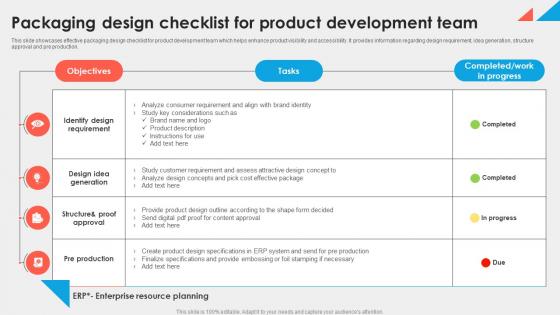
Packaging Design Checklist For Product Development Team




Try Before you Buy Download Free Sample Product
 Impress Your
 Audience
 100%
100% Editable
 Save Hours
 of Time


This slide showcases effective packaging design checklist for product development team which helps enhance product visibility and accessibility. It provides information regarding design requirement, idea generation, structure approval and pre production.
People who downloaded this PowerPoint presentation also viewed the following :
Packaging Design Checklist For Product Development Team with all 6 slides:
Use our Packaging Design Checklist For Product Development Team to effectively help you save your valuable time. They are readymade to fit into any presentation structure.





FAQs for Packaging Design Checklist For
Key elements include bold color schemes, clear typography, strategic imagery, consistent branding, and intuitive layout hierarchy that guides consumer attention. These design components work together by creating memorable shelf presence, communicating product benefits instantly, and building brand recognition, with many retail brands finding that cohesive visual elements significantly boost purchase decisions and customer loyalty.
Brand ethos communicates through packaging design via visual identity alignment, color psychology, typography choices, material selection, and storytelling elements that reflect core values. Sustainable brands increasingly use eco-friendly materials and minimalist designs, while luxury brands leverage premium finishes and sophisticated aesthetics, ultimately creating emotional connections that drive consumer loyalty and differentiate products in competitive markets.
Color psychology significantly influences packaging design by triggering emotional responses, conveying brand personality, establishing product positioning, and driving purchase decisions through subconscious associations. Strategic color choices enhance brand recognition, communicate quality levels, and appeal to target demographics, with many consumer goods companies finding that warm colors stimulate appetite while cool tones suggest reliability and trust.
Sustainability has become critically important in modern packaging design, driving consumer purchasing decisions, regulatory compliance, and brand differentiation in increasingly environmentally conscious markets. Through eco-friendly materials, reduced waste strategies, and circular design principles, companies across retail, food services, and consumer goods enhance brand reputation, reduce operational costs, and meet evolving customer expectations, ultimately delivering competitive advantage.
Common packaging mistakes include poor readability, inconsistent branding, inadequate protection, ignoring target demographics, and overlooking sustainability concerns. These oversights can significantly impact sales performance, with many retail brands finding that cluttered designs, weak shelf presence, and failing to communicate key benefits ultimately damage customer perception and competitive positioning in crowded marketplaces.
Typography enhances packaging effectiveness by establishing clear brand hierarchy, improving readability across different viewing distances, and creating emotional connections with target audiences. Strategic font choices, appropriate sizing, and thoughtful placement guide consumer attention, communicate product benefits seamlessly, and differentiate products on crowded retail shelves, ultimately driving purchase decisions and brand recognition.
Effective shelf-standout packaging incorporates bold color contrasts, clear brand hierarchy, distinctive shapes or textures, strategic typography sizing, and compelling visual focal points that draw attention from three feet away. These design elements work by creating immediate visual differentiation, communicating key product benefits within seconds, and establishing emotional connections with target consumers, with many retail brands finding that strategic packaging redesigns increase purchase consideration and brand recognition significantly.
Packaging design influences consumer purchasing decisions by creating immediate visual impact, communicating brand values, and triggering emotional responses at the point of sale. Through strategic color psychology, clear messaging, and distinctive shelf presence, brands enhance product appeal, build consumer trust, and differentiate from competitors, with retail studies showing that effective packaging increases purchase intent by up to 70%.
Packaging design considerations for different regions include cultural color meanings, religious symbols, language preferences, local regulations, and aesthetic traditions. These strategic adaptations enhance market acceptance by respecting cultural values, meeting regulatory requirements, and aligning with consumer expectations, with many international brands finding that culturally-sensitive packaging significantly improves sales performance and brand perception.
E-commerce packaging optimization focuses on durability, cost efficiency, size minimization, and brand consistency while ensuring product protection during transit. Strategic design considerations include lightweight materials, compact dimensions that reduce shipping costs, sustainable packaging that appeals to environmentally conscious consumers, and unboxing experiences that enhance brand loyalty, with many retailers finding that optimized packaging significantly reduces damage rates and delivery expenses while improving customer satisfaction.
Latest trends in packaging materials and designs include sustainable biodegradable materials, minimalist designs, smart packaging with QR codes, flexible pouches, and recyclable alternatives to traditional plastics. These innovations enhance brand differentiation while addressing environmental concerns, with many retail companies finding that eco-friendly packaging significantly boosts consumer loyalty and reduces operational costs.
Functionality and aesthetics should be balanced by ensuring packaging protects the product while creating visual appeal, considering factors like durability, ease of use, brand identity, and consumer experience. Successful designs integrate practical elements like secure closures and product visibility with compelling graphics and materials, ultimately delivering both operational efficiency and market differentiation that drives purchasing decisions.
Recommended packaging design tools include Adobe Illustrator, Photoshop, InDesign, ArtiosCAD, and Esko Studio, alongside specialized software like PackEdge and Impact for structural design. These platforms streamline creative workflows, enable precise dieline creation, and support 3D visualization, with many design teams finding that integrated software suites ultimately deliver faster prototyping and enhanced collaboration across packaging development cycles.
Packaging design significantly impacts brand loyalty by creating memorable visual experiences, establishing emotional connections, and reinforcing brand values at every touchpoint. Consistent, appealing packaging builds recognition and trust, with retail brands finding that distinctive design elements increase repeat purchases by 30-40%, while premium packaging enhances perceived value and customer satisfaction.
**INPUT**: What are some case studies of successful packaging design rebranding? **OUTPUT**: Successful packaging rebranding includes Tropicana's return to iconic imagery, Method's sustainable household products transformation, and Pepsi's modernized visual identity evolution. These strategic redesigns enhanced brand recognition, attracted new demographics, and delivered increased market share, with many consumer brands finding that thoughtful rebranding ultimately streamlines customer connection while maintaining core brand equity.
-
No second thoughts when I’m looking for excellent templates. SlideTeam is definitely my go-to website for well-designed slides.
-
Commendable slides with attractive designs. Extremely pleased with the fact that they are easy to modify. Great work!