


Product Development Project Planning Calendar




Try Before you Buy Download Free Sample Product
 Impress Your
 Audience
 100%
100% Editable
 Save Hours
 of Time


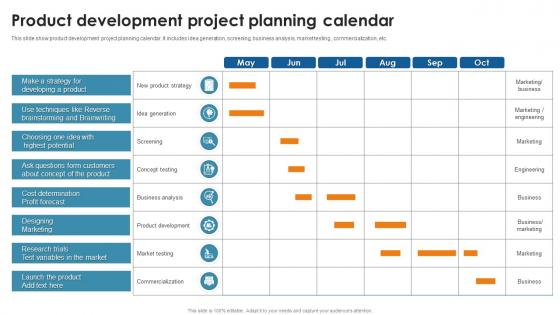
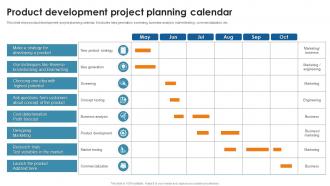
This slide show product development project planning calendar. It includes idea generation, screening, business analysis, market testing , commercialization, etc.
People who downloaded this PowerPoint presentation also viewed the following :
Product Development Project Planning Calendar with all 6 slides:
Use our Product Development Project Planning Calendar to effectively help you save your valuable time. They are readymade to fit into any presentation structure.





FAQs for Product Development
So you'll hit these main stages: ideation, research/validation, design, prototyping, development, testing, then launch. Don't skip the research part - I know it's tempting but you'll hate yourself later when nobody wants what you built. Testing isn't just an end thing either, it happens constantly. Most products take 6-18 months depending on how complex you're getting. Oh and timeline totally depends on your resources too. Before you dive into building anything cool, figure out what actual problem you're solving first. That's like step zero honestly.
Honestly, market research is a game-changer because it shows you what customers *actually* want instead of what you're assuming they need. Those two things are usually worlds apart, which I learned the hard way once. Do it early so you can validate ideas before wasting months building stuff nobody cares about. You'll catch pain points you missed and see how people really use your product day-to-day. Plus you can find market gaps and figure out where competitors are screwing up. Don't wait until the end when it's too late to change direction.
Honestly, user feedback is everything. Without it you're just building stuff and hoping it works. I've watched teams spend months on features that users hated or couldn't figure out - such a waste. Get people testing your wireframes and prototypes super early, not just the finished product. Short feedback loops save your ass. Users will tell you what's confusing, what they actually need vs what you think they need. Keep iterating based on what they say. It's like having a GPS instead of driving around lost.
Honestly, resource constraints will be your biggest headache - never enough time or budget for what you're dreaming up. Sometimes your "genius" idea just won't work in practice, which sucks but happens to everyone. Oh, and scope creep is brutal. You'll get feedback from like five different people who all want completely different things. Before you know it, your clean prototype becomes this weird mess trying to make everyone happy. Start with super clear boundaries from day one. Also - just build separate prototypes instead of cramming everything into one. Way less stressful.
Cross-functional teams are honestly a game changer for product development. You get engineers, designers, marketers, and customer success people all working together from the start instead of that annoying handoff approach. Problems get solved way faster when everyone's already talking to each other. Your products end up solving actual customer issues rather than just being cool tech demos (which happens more than you'd think). Decisions happen quicker too since you don't need to hunt people down for meetings. Just make sure everyone knows how their piece fits the puzzle and set up regular check-ins.
Honestly, you need both the hard numbers and the softer stuff to really know what's going on. User adoption and retention are obvious ones - if people aren't sticking around, something's wrong. Revenue growth too, obviously. I'd also track customer satisfaction scores because happy users don't churn as much. Daily/monthly active users give you the engagement picture, and support tickets are actually gold for spotting quality issues (though nobody talks about that one much). Oh, and NPS if you're into that. But seriously, don't go crazy tracking everything - pick like 3-5 that actually matter for your product and check them weekly. Dashboard makes it easier.
Honestly, Agile is way better than those massive do-or-die deadlines. You break everything into 2-week sprints instead, which sounds intense but it's actually the opposite. Catch problems early before they blow up your whole timeline. My team made the switch last year and wow, so much less stressful. You're constantly shipping working features instead of crossing your fingers for months hoping the big launch doesn't suck. Try mapping your next project into those 2-week chunks - you'll be shocked how much clearer everything becomes. Way more predictable than the old way, trust me.
Honestly, there's a bunch of good options out there. Jira and Asana work great for sprint tracking and backlogs. Linear's been blowing up lately - the interface is super clean, I get why people love it. Notion's cool if you want to build custom workflows, though sometimes I think it's almost too flexible? For gantt charts, Microsoft Project or Monday.com do the job, but gantt charts feel kinda old school for agile anyway. Trello's perfect if you don't want to overwhelm anyone. I'd just pick whatever plays nice with your current tools and won't require training everyone.
Look for problems your competitors don't even notice yet. Talk to your actual customers about their daily headaches - that's where the gold is. Most companies just slap new features on old products and think they're innovating (they're not). Check out what startups are doing, or honestly, peek at totally different industries for ideas. I always find the weirdest inspiration there. Keep having real conversations with users and stay curious about markets next to yours. Oh, and map out one unmet need this week - don't just think about it.
Okay so definitely do alpha testing first with your team - I learned this the hard way lol. Start way earlier than feels right, trust me. Then get some beta testers who actually match your target users and make sure they can easily give feedback. Usability testing catches the weird UX stuff nobody thinks about. A/B testing's great if you've got bandwidth for it. Oh and don't wait around trying to make everything perfect before testing - that's just procrastination disguised as thoroughness. Test stuff, fix it, test again.
Okay so first thing - nail down your budget, timeline, and tech stuff before anyone gets creative. Works way better than you'd think. Get your designers and engineers talking from the start, not halfway through when everything's already decided. Run quick prototypes constantly because half your "brilliant" ideas will suck in practice, honestly. The constraint challenge thing is genius though - give people less money or time on purpose and watch them get weirdly innovative. It's like how you write better songs when you only have three chords to work with, you know? Kill the bad stuff fast. That's where most teams mess up.
Look, MVPs save you from wasting months building stuff nobody wants. Test your biggest assumptions first with bare minimum features - just enough to see if people actually care about the problem you're solving. Yeah, it sucks shipping something that feels half-baked, but you'll learn way more from real users than sitting around perfecting features. Get feedback fast, then iterate. I've seen too many startups disappear into a cave for six months only to launch something completely off-target. You can always polish it later once you know you're not building the wrong thing entirely.
Compliance basically runs the whole show from design to launch. If you're in pharma, medical devices, food - anything FDA regulated - you're building around their requirements from the start. Can't just slap it on at the end. Development takes way longer because of all the documentation and approval hoops. Sometimes it feels like the regulations are calling all the shots, which is frustrating but that's just how it is. The trick is planning for this stuff upfront instead of getting blindsided later when you're trying to ship.
Dude, sustainability isn't optional anymore - it's literally make or break. Customers expect it, regulations are getting stricter, and ignoring it will kill your business long-term. You've gotta think about environmental impact from the start: where materials come from, how you manufacture, packaging, what happens when people throw it away. I know it sounds overwhelming but it actually shapes everything - material choices, designing stuff that lasts, making things repairable. Companies that don't get this? They're already falling behind. Start with a lifecycle assessment of what you're doing now. That'll show you the biggest problem areas to tackle first.
Honestly? Start by giving your user personas actual stories instead of just demographic bullet points. Like, don't just say "Sarah, 32, working mom" - tell the story of how your app saves her from those insane morning scrambles when she can't find anything. Map out the emotional ups and downs users go through. When you frame features as plot points in someone's real journey, even boring requirement docs become readable (weird but true). Bring these stories into meetings and design reviews. It keeps everyone thinking about actual humans instead of getting lost in technical rabbit holes. Way better than the usual feature-dumping approach.
-
Excellent design and quick turnaround.
-
Definitely a time saver! Predesigned and easy-to-use templates just helped me put together an amazing presentation.