


Patient Safety Powerpoint Ppt Template Bundles




Try Before you Buy Download Free Sample Product
 Impress Your
 Audience
 100%
100% Editable
 Save Hours
 of Time


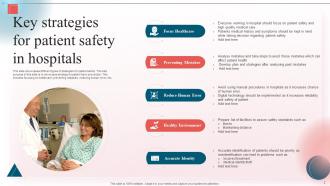
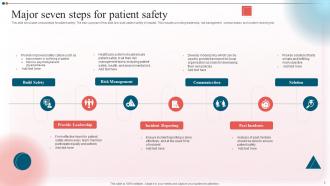
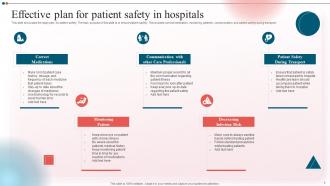
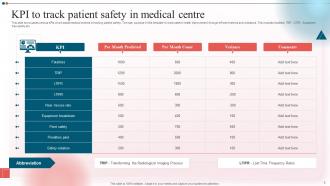
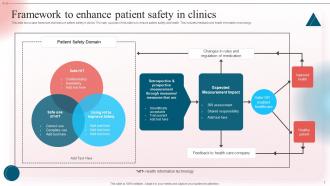
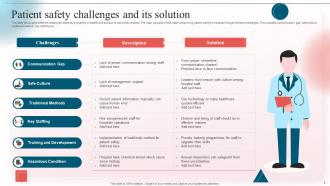
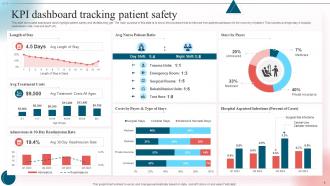
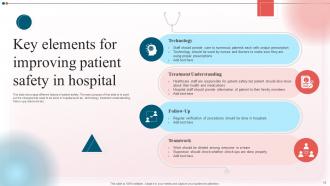
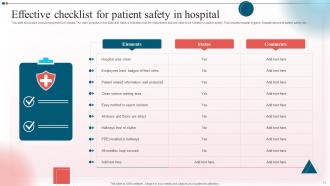
Patient safety refers to preventing, reducing, and mitigating risks, errors, and harm that can occur to patients during their healthcare journey. It encompasses a wide range of measures, protocols, and strategies to ensure the well being and safety of patients receiving medical care.We are introducing our comprehensive Patient Safety PowerPoint presentation a strategic roadmap for ensuring optimal healthcare quality. This presentation dives deep into patient safetys critical role in healthcare institutions.Discover a robust framework encompassing vital strategies and plans to enhance patient safety, mitigating challenges that arise in complex healthcare environments. Learn to identify and set essential Key Performance Indicators KPIs to measure the effectiveness of safety initiatives.Unveil innovative solutions for tackling the multifaceted challenges tied to patient safety, be it communication gaps, procedural errors, or technological limitations. This presentation equips you with actionable insights to foster a safety culture, aligning teams and processes with the highest standards.
People who downloaded this PowerPoint presentation also viewed the following :
Patient Safety Powerpoint Ppt Template Bundles with all 22 slides:
Use our Patient Safety Powerpoint Ppt Template Bundles to effectively help you save your valuable time. They are readymade to fit into any presentation structure.








FAQs for Patient Safety Powerpoint
Honestly, focus on three things: better handoff communication, a no-blame reporting system, and double-checking high-risk meds. SBAR works great for shift changes - keeps everyone on the same page. Your incident reporting has to feel safe though, or staff just won't use it when things go sideways. Most errors happen during handoffs anyway, which is super frustrating since it's preventable. Double-verification for dangerous meds is non-negotiable. I'd start by looking at your current handoff process first - probably finding gaps everywhere. Oh, and make sure people actually want to report near-misses without fear.
Hey! So barcode scanning is honestly your best bet - cuts errors by like 40% and gives you the most impact for the money. Electronic prescribing fixes all those "is this a 5 or an S?" moments with doctor handwriting. Smart IV pumps are pretty cool too, they'll actually stop you if the dose looks wrong. Oh and electronic med reconciliation helps track what patients are really taking when they bounce between different places. I'd probably start with the barcode thing first though - seems like the easiest win.
Honestly, most safety issues come down to crappy communication. Someone didn't pass along the right info, or people made assumptions instead of actually talking. I've watched so many near-misses happen because a nurse thought the doctor "already knew" something important. SBAR and other standardized handoffs help a ton - they force you to hit all the key points. But really, you gotta speak up when something feels off. Document everything clearly, but don't skip the face-to-face conversations either. Oh, and always make sure they actually heard you correctly. Better to over-explain than have someone get hurt because of a miscommunication.
Look, psychological safety is everything here - people won't report mistakes if they think they'll get fired. Set up reporting systems that don't punish anyone, and honestly? Celebrate when staff flag near-misses. Most leaders totally blow this part though. Regular safety huddles keep everyone talking and sharing what went wrong (or almost did). Don't forget patients - listen when they voice concerns about their care. The biggest thing is staying consistent. Can't preach safety Monday then throw someone under the bus Tuesday for an honest error. I'd start with just one unit and let success spread from there.
Medication errors are probably the biggest thing - wrong doses, missed allergies, drug interactions. Falls happen way more than you'd think too. Communication between doctors is honestly terrible half the time, which creates so many unnecessary problems. Don't even get me started on test results that just disappear into the void. Patients never hear back, critical findings get buried. Infection control issues pop up constantly. If I were you, I'd really nail down your med reconciliation process first. That and having a bulletproof system for tracking lab results and follow-ups. Those two things alone will save you from most headaches.
Honestly, data analytics is a game-changer for catching stuff you'd never spot otherwise. Medication errors, readmission patterns, infection outbreaks - it tracks all of it across your patient population. The real magic happens with real-time monitoring though. Instead of waiting weeks for reports, algorithms flag weird trends as they're happening. You can actually identify high-risk patients before things go sideways. Plus it shows you which processes keep causing headaches (and trust me, there's always a few). I'd say start with your most critical metrics first, then build from there.
Start with TeamSTEPPS - it's honestly a game changer for communication stuff. Simulation training for scary scenarios is huge too. Root cause analysis helps teams actually learn instead of just panicking when things go wrong. Hand hygiene training seems obvious but people still mess it up constantly, which blows my mind. Medication safety and fall prevention are your bread and butter since they happen most. Oh, and don't make these one-time things - weave them into regular assessments and onboarding. New hires need this stuff from day one.
Okay so patient engagement is huge for safety - like, patients actually catch stuff we miss all the time. They know their own bodies way better than we do, right? When patients feel comfortable asking questions about their meds or speaking up during procedures, you're getting this extra safety net. Plus they'll actually follow treatment plans better when they understand what's happening. The key is making sure they don't feel bad about "bothering" anyone with questions or concerns. I always tell patients to write down questions before appointments because honestly, you forget half of them once you're sitting there in that gown feeling awkward.
Start with Joint Commission standards - they're your bread and butter for stuff like medication safety and infection control. CMS has their own reporting requirements for adverse events too. FDA jumps in whenever medical devices or drug safety are involved (which honestly feels like everywhere now). Don't forget your state health department's licensing stuff, plus OSHA keeps both patients and staff safe. I'd audit against Joint Commission's National Patient Safety Goals first since that'll cover the most ground. Way less overwhelming than trying to tackle everything at once.
Look, different people catch different problems - that's just how it works. Your pharmacist might spot a drug interaction the doctor missed. Physical therapy sees fall risks everyone else overlooked. Nurses notice stuff from spending actual time with patients. The trick is getting everyone to actually communicate, not just show up to mandatory meetings and zone out (we've all been there). When people feel safe speaking up about weird gut feelings or concerns, way fewer things slip through the cracks. It's honestly pretty simple - more eyes, more expertise, fewer disasters.
Track both outcome and process stuff - infection rates, med errors, falls that cause injury, pressure ulcers, 30-day readmissions. The data's gonna feel crazy overwhelming at first, trust me. Focus on trends instead of freaking out over single incidents. Near-miss events are actually super valuable for catching problems early. Don't sleep on those staff safety culture surveys either. Pick maybe 3-5 metrics that match your biggest problem areas. Then build dashboards people will actually use - not those boring ones that sit there collecting digital dust.
Hit them everywhere they're actually looking - staff meetings, emails, those posters by the elevators (seriously, people read those more than you'd think). Mix it up because everyone processes stuff differently. Your patient materials need to be super clear too. But here's the thing - don't just blast out info and cross your fingers. Actually ask the nurses what's landing and check if patients get the new protocols. Oh, and do regular check-ins because what sounds obvious to you might be confusing as hell to everyone else. Repetition across different formats is your friend here.
Honestly, most patient safety disasters come down to broken systems, not one person screwing up. Look at Theranos - Elizabeth Holmes basically faked everything for years because nobody wanted to challenge the boss (still can't believe investors fell for that). Communication breakdowns between teams are huge culprits too. Plus rushed decisions when everyone's stressed. The real game-changer? Staff need to feel safe calling out problems without getting fired. Anonymous reporting helps catch issues early. Also those quick daily safety huddles work surprisingly well - sounds boring but they actually prevent major disasters.
Don't make it a standalone course - weave safety into everything instead. Case studies work really well early on, then clinical rotations show them what actually happens when things go wrong. Simulation is honestly where they get it most - watching a mock code fall apart because nobody spoke up? That sticks with them way more than any lecture about protocols ever could. Make students practice the hard stuff: calling out errors, speaking up when something feels off. Partner with your QI team if you can - real projects beat theoretical examples every time. It's gotta be hands-on or they won't remember it when it counts.
Look, patient feedback is like your early warning system for stuff that's going wrong. They see things we totally miss because we're buried in the day-to-day work. When communication breaks down or processes feel chaotic? Patients notice first. They're experiencing care from a completely different angle than us. So yeah, collect feedback through surveys, bedside chats, complaints - whatever. But here's the thing that actually matters: you've got to close the loop. Tell patients when their input changed something real. That's what builds trust and gets people to keep being honest with you about what's not working.
-
It saves your time and decrease your efforts in half.
-
Satisfied with the way SlideTeam resolved my query regarding the right business PPTs that I was having difficulty finding. I found the perfect match with their assistance.