


Pizza Business Plan Powerpoint Presentation Slides BP




Try Before you Buy Download Free Sample Product
 Impress Your
 Audience
 100%
100% Editable
 Save Hours
 of Time


Pizza Business is a flourishing venture that caters to the widespread adoration for this iconic dish across the globe. Introducing our Pizza Business Plan PowerPoint presentation. It comprehensively assesses the market size, trends, growth opportunities, success factors, and significant challenges the global pizza industry faces. Firstly, it encompasses a range of crucial elements, starting with an executive summary, mission, vision, and well defined goals. It also includes a concise summary of startup costs, a market gap analysis, and an overview of the products offered by the pizza business. Additionally, the Pizza House business templates delve into vital statistics related to the US pizza industry, the target market, and the buyer persona, along with a thorough TAM SAM SOM analysis. It further provides an attribute based comparison of major players in the pizza industry, a SWOT analysis, and an assessment using Porters five forces model. Furthermore, the Pizza business financial projections deck outlines comprehensive marketing, operational, and financial plans. Lastly, the presentation concludes with a management summary, exit strategies, and key abbreviations to offer a well rounded and informative overview of the proposed pizza business venture. Get access to this 100 percentage editable template now.
People who downloaded this PowerPoint presentation also viewed the following :
Content of this Powerpoint Presentation
Slide 1: This slide introduces Pizza Business Plan. State your company name and begin.
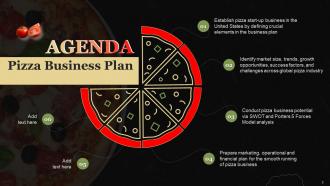
Slide 2: This is an Agenda slide. State your agendas here.
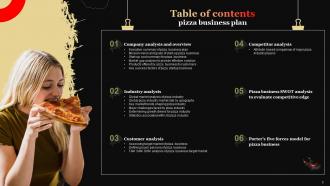
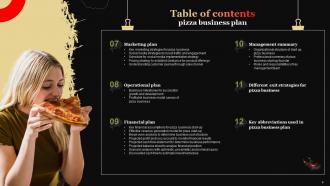
Slide 3: This slide shows Table of Content for the presentation.
Slide 4: This slide continues showing Table of Content for the presentation.
Slide 5: This slide shows title for topics that are to be covered next in the template.
Slide 6: This slide presents the executive summary of pizza business plan, which includes a company summary such as aim, product offerings, etc.
Slide 7: This slide represents the mission and vision of the start-up pizza business, which shows the future desired position of the business.
Slide 8: This slide showcases the start-up summary of pizza business which includes start-up expenses such as equity capital, start-sup cost etc.
Slide 9: This slide covers the market gap analysis to provide an effective solution which includes concern such as personalized services, price accessibility, and limited availability.
Slide 10: This slide focuses on products offered by pizza start up to clients such as pizza, pasta, appetizers & sides and cold & hot beverages.
Slide 11: This slide shows key success factors of pizza business such as recipes, promotion, employees, quality of ingredients and customer service.
Slide 12: This slide shows title for topics that are to be covered next in the template.
Slide 13: This slide showcases the global market analysis of the pizza industry, including projected market size from 2021 to 2027.
Slide 14: This slide presents the global pizza industry statistics and insights.
Slide 15: This slide covers the key market trends shaping global pizza industry which includes local produce, dairy and meat, vegan & gluten-free options etc.
Slide 16: This slide showcases the major challenges faced by pizza industry which includes labor expenses, stiff competition, ingredient costs etc.
Slide 17: This slide covers the growth drivers for pizza industry which includes convenience, innovation, globalization etc.
Slide 18: This slide focuses on pizza market growth across United States which includes pizza restaurant sales, consumption percentage by Americans etc.
Slide 19: This slide shows title for topics that are to be covered next in the template.
Slide 20: This slide represents the target market of pizza business which includes local residents of Texas.
Slide 21: This slide showcases the buyer persona of pizza business which includes demographics, key concern & pain points, personality traits etc.
Slide 22: This slide showcases the TAM, SAM and SOM analysis of pizza target market which includes global pizza market value and US market size.
Slide 23: This slide shows title for topics that are to be covered next in the template.
Slide 24: This slide covers the comparison of major pizza industry players on the basis of different attributes such as founding date, headquarters etc.
Slide 25: This slide shows title for topics that are to be covered next in the template.
Slide 26: This slide showcases the strengths, weakness, opportunities and threats to evaluate competitive position of pizza.
Slide 27: This slide shows title for topics that are to be covered next in the template.
Slide 28: This slide showcases the Porter’s five forces model for pizza business which includes competitive rivalry, bargaining power of buyers & suppliers, threat of new entrants, etc.
Slide 29: This slide shows title for topics that are to be covered next in the template.
Slide 30: This slide represents the key marketing strategies for a pizza business, including professional food visuals, effective coupon offers etc.
Slide 31: This slide showcases the social media strategies to boost traffic and engagement.
Slide 32: This slide presents the schedule for social media implementation strategy which includes Facebook, Instagram, LinkedIn and Twitter.
Slide 33: This slide showcases the pricing strategy to establish the best price for product offerings, including bundle pricing, dynamic pricing, value pricing and menu pricing.
Slide 34: This slide presents the customer journey through sales funnel which includes awareness, conversion, loyalty and retention.
Slide 35: This slide shows title for topics that are to be covered next in the template.
Slide 36: This slide presents the business milestones for five years of operations.
Slide 37: This slide shows the business model canvas of pizza business which includes key partners, key activities, value proposition etc.
Slide 38: This slide shows title for topics that are to be covered next in the template.
Slide 39: This slide represents the key financial assumptions for pizza start up which includes marketing expenses, equipment & supplies, etc.
Slide 40: This slide covers the revenue generation model for pizza start-up which includes revenue projection for different products.
Slide 41: This slide shows the break even analysis of company to determine cost structure.
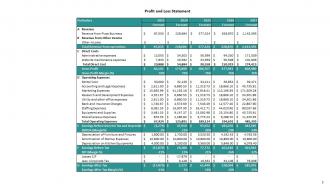
Slide 42: This slide showcases the projected profit and loss statement prepared by company to monitor financial results.
Slide 43: This slide displays the graphical representation of projected profit and loss statement prepared by company to monitor financial results.
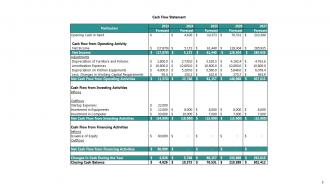
Slide 44: This slide covers the projected cash flow statement to determine business performance which shows inflow and outflow of cash from operating, investing and financing activities.
Slide 45: This slide displays the graphical representation of projected cash flow statement to determine business performance.
Slide 46: This slide represents the projected balance sheet to analyze the financial position of the company.
Slide 47: This slide displays the graphical representation of projected balance sheet to analyze the financial position of the company.
Slide 48: This slide examines the effects of potential future events on the pizza business performance by considering numerous different outcomes.
Slide 49: This slide shows the effects of potential future events on the pizza business performance by considering numerous different outcomes.
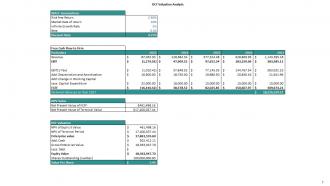
Slide 50: This slide showcases the discounted cash flow for the valuation of investment which includes WACC, NPV value, free cash flow to firm, DCF valuation, etc.
Slide 51: This slide shows title for topics that are to be covered next in the template.
Slide 52: This slide represents the organizational structure of pizza start up company which includes director, manager, supervisor, delivery man, chef, cashier and waitress.
Slide 53: This slide shows the professional summary of pizza business start-up founder which includes educational qualification and skills.
Slide 54: This slide covers the roles and responsibilities of pizza business team to ensure effectiveness and efficiency in operations.
Slide 55: This slide also covers the roles and responsibilities of pizza business team to ensure effectiveness and efficiency in operations.
Slide 56: This slide shows title for topics that are to be covered next in the template.
Slide 57: This slide showcases the exit strategies for pizza business which includes sale to strategic buyer, selling to private equity group etc.
Slide 58: This slide shows title for topics that are to be covered next in the template.
Slide 59: This slide showcases the key abbreviations used in pizza business plan which includes Chief Executive Officer, United States etc.
Slide 60: This slide shows all the icons included in the presentation.
Slide 61: This slide is titled as Additional Slides for moving forward.
Slide 62: This slide provides 30 60 90 Days Plan with text boxes.
Slide 63: This slide depicts Venn diagram with text boxes.
Slide 64: This is Our Goal slide. State your firm's goals here.
Slide 65: This slide contains Puzzle with related icons and text.
Slide 66: This is a Timeline slide. Show data related to time intervals here.
Slide 67: This is a Thank You slide with address, contact numbers and email address.
Pizza Business Plan Powerpoint Presentation Slides BP with all 72 slides:
Use our Pizza Business Plan Powerpoint Presentation Slides BP to effectively help you save your valuable time. They are readymade to fit into any presentation structure.





FAQs for Pizza Business Plan Powerpoint
First things first - figure out if you're doing fancy artisanal stuff or quick family pizza. Location is huge, like seriously, foot traffic will make or break this thing. Your menu and pricing need to match whatever vibe you're going for. The pizza game is insanely competitive right now, so you've got to stand out somehow. Don't overlook the boring operational stuff - equipment costs, staffing, suppliers. Marketing matters too, especially getting found online locally. Oh, and definitely eat at your top competitors before you commit to anything. Trust me on that one.
Look, market analysis just tells you what's actually going down in your area so you don't walk in blind. Check out your competition - what they're charging, what styles they're doing. I swear half the time there's some obvious gap nobody's filling. Like maybe everyone's stuck on basic pepperoni but nobody's doing good Detroit-style, you know? You'll also figure out the best spots to set up shop and when people actually order food. Plus it shows you which neighborhoods have money to spend. Honestly, anything that keeps you from going head-to-head with Pizza Hut is worth doing.
Start with your neighborhood - those are gonna be your regular customers. Post tons of pics on social media, especially those satisfying cheese pulls (pizza is basically made for Instagram). Hit up local schools and businesses for catering gigs. Yeah, grand opening deals are kinda obvious but they work - free lunch slices or BOGO pizzas. I'd say get on DoorDash and Uber Eats even though they're total vultures with their fees. Partner with sports teams too if you can. Honestly though, none of this marketing stuff matters if your pizza sucks. Word of mouth will make or break you.
Honestly, you want areas with tons of foot traffic - colleges, office buildings, busy neighborhoods. That's where the money is. My cousin learned this the hard way when he picked some random isolated spot. Don't worry about other pizza places nearby though, that usually just means people want pizza there. I'd drive around during lunch and dinner to see how busy it actually gets, not what some website claims. Also try walking around for like 30 minutes and literally count people. Sounds weird but it works way better than guessing.
Honestly, cheese and sauce suppliers matter most - they'll make or break your pizza. I found that out the hard way with some terrible mozzarella guy who kept flaking on deliveries. Get quotes from at least three suppliers for your main ingredients. Quality's obviously huge, but don't forget about reliability and whether they hit their delivery windows consistently. Check their minimums too since some places want crazy bulk orders. Oh, and see if they do volume discounts - that stuff adds up fast. Food safety standards are non-negotiable. Payment terms should work with your cash flow situation.
Figure out what actual problem you're solving that nobody else is. Maybe it's your crazy good wood-fired crust, or you're the only place doing 30-second pizzas for the lunch rush crowd. Be specific though - saying "best pizza in town" is what literally every pizza place does, and honestly it's pretty meaningless. Focus on one thing that actually matters to the people you want as customers. Once you think you've got it, definitely test it out with some potential customers first. No point building your whole brand around something that doesn't actually resonate with anyone.
Definitely need your main financials - income statement, cash flow, balance sheet for the first 3 years. Revenue should break down by dine-in, delivery, catering, all that. For expenses, get specific about food costs, labor, rent, equipment, marketing. Pizza's weirdly seasonal btw - Super Bowl weekend vs random Tuesday in February are totally different beasts. Don't skip your break-even analysis and metrics like average order value. I'd go month-by-month for year one, then quarterly. Oh and document where you're pulling these numbers from - investors hate when assumptions come out of thin air.
Dude, first thing - grab a business license from the city and a food service license from health dept. They'll inspect your kitchen before giving the green light. If you're doing beer/wine, liquor license is a must (pizza without beer feels wrong, right?). Workers' comp if you hire people. Oh and zoning permits might be needed depending on your spot. Honestly the SBA office saved my ass when I helped my cousin with this - they have area-specific checklists that'll keep you from missing random stuff you'd never think of.
So for sustainability stuff - definitely go local with ingredients first. Way cheaper on shipping plus customers eat up that whole farm-to-table thing. LED lights and better ovens will slash your electric bill too. Packaging is honestly where you'll get the most props from customers though. Those compostable boxes cost a bit more but people actually notice and comment on it. Maybe team up with some local farms? Oh and composting your scraps is pretty easy once you get going. Don't try everything at once - you'll burn out. Pick like 2 things max to start.
Dude, you absolutely need tech to compete now. Start with online ordering - that's your foundation. Kitchen display systems are a game changer for reducing screwups. Yeah, you'll have to get on DoorDash and Uber Eats even though they steal like 30% of your profits (total scam but whatever). GPS tracking keeps people from calling every five minutes asking where their pizza is. Customer analytics help you figure out who orders what and when. POS systems obviously. Build it piece by piece though - don't try to do everything at once or you'll go broke.
Dude, menu design is actually huge for sales. Put your high-margin stuff like specialty pizzas in the top-right corner - that's where people look first. Use boxes or bold text to make those items pop. Keep descriptions short but mouth-watering, and don't overwhelm people with too many choices or they'll just freeze up. Here's the sneaky part: list your expensive items first to make everything else seem reasonable. I learned this from a restaurant owner friend and it's wild how well it works. Your menu's basically guiding customers to order what makes you the most money.
Dude, the pizza game is absolutely cutthroat right now. Food costs will kill you first - negotiate bulk deals with suppliers and track every bit of waste like your life depends on it. Competition's insane too, so pick one thing and nail it instead of being mediocre at everything. Maybe go full Neapolitan or do some crazy topping combos, idk. Labor's a nightmare everywhere (my cousin's restaurant can't keep anyone), so pay decent wages upfront and actually train people properly. Oh, and start small - tiny menu, smaller spot. You can always expand once you've got the basics down.
Honestly, pizza sells itself visually - those cheese pulls are pure gold for Instagram and TikTok. Post your best pie shots, some behind-the-scenes kitchen action, customers looking happy. Customer reviews make great story content too. Try running polls about favorite toppings or whatever, people eat that stuff up. Daily specials and new menu items always perform well. Maybe hit up some local food influencers for reviews? The key thing though - actually respond when people comment. I see so many places just ghost their followers. Post regularly and you'll see those online orders start picking up for sure.
Dude, labor costs are gonna eat up like 25-30% of your revenue, just so you know. Map out who you need - kitchen people, someone running the counter, drivers, plus a manager every shift. Weekends and late nights are absolute chaos for scheduling since that's when everyone wants pizza. Training takes forever too because food safety stuff is serious. I'd start with fewer people but make sure you won't kill your team during rush hours. Oh and budget for people calling out sick constantly - the turnover in pizza places is pretty brutal honestly.
Dude, feedback is literally your cheat code for figuring out what's working. Set up surveys, check social media, or just chat with people when they're grabbing their orders. Look for patterns - maybe your pepperoni's always cold or delivery takes forever. The negative stuff hurts to hear, but that's where the real money is. Double down on whatever people love, fix what they hate before it kills your rep. Oh, and don't overthink it - just pick one day each week to go through everything and actually do something about it.
-
SlideTeam makes creating presentations easy. Unlimited products, premium quality designs and affordable.
-
Helpful product design for delivering presentation.