


Bread Bakery Business Plan Powerpoint Presentation Slides




Try Before you Buy Download Free Sample Product
 Impress Your
 Audience
 100%
100% Editable
 Save Hours
 of Time


Explore our meticulously crafted Bread Bakery Business Plan PowerPoint presentation, offering a comprehensive insight into the catering services industry. This business plan encompasses vital facets, including industry statistics, growth catalysts, market trends, and key challenges, while also spotlighting lucrative opportunities within the sector. Catering businesses are perennially in demand, especially for special events, weddings, and corporate functions, and this plan outlines the crucial aspects from marketing strategies to financial and operational perspectives. Embarking on a catering venture provides the advantage of entrepreneurship, granting control over your work schedule. The presentation delineates the companys vision, mission, objectives, startup expenses, core services, and success factors. It delves into a comprehensive customer analysis tailored to the catering industry in the USA, with insights into buyers personas and market sizing. Additionally, the plan conducts competitor analysis, SWOT analysis, utilizes PORTERS framework, and lays out a detailed marketing strategy. The financial summary section offers a revenue model, economic impact assessment, profit and loss statement, and a break even analysis. Harness the potential of this editable presentation to craft a winning business strategy for your bread bakery and catering enterprise. Download it now and embark on a path to business success.
People who downloaded this PowerPoint presentation also viewed the following :
Content of this Powerpoint Presentation
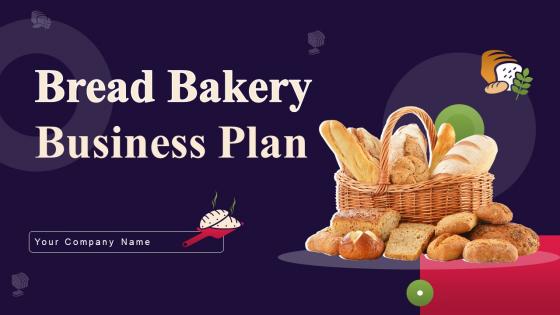
Slide 1: This slide introduces Bread Bakery Business Plan. State your company name and begin.
Slide 2: This slide states Agenda of the presentation.
Slide 3: This slide shows Table of Content for the presentation.
Slide 4: This slide highlights title for topics that are to be covered next in the template.
Slide 5: This slide presents Executive summary of catering start-up.
Slide 6: This slide displays Vision, mission and goals associated with catering company.
Slide 7: This slide represents Start-up cost summary for catering company.
Slide 8: This slide showcases Catering industry market gap and solution.
Slide 9: This slide shows Major services offered by catering company.
Slide 10: This slide presents Analyzing key success factors to strategize catering company.
Slide 11: This slide highlights title for topics that are to be covered next in the template.
Slide 12: This slide displays Catering industry global market at a glance.
Slide 13: This slide represents US catering management industry outlook.
Slide 14: This slide showcases Key market trends shaping catering industry.
Slide 15: This slide shows Major challenges catered by catering industry.
Slide 16: This slide presents Determining growth drivers for catering industry.
Slide 17: This slide displays Ideal business location for catering business.
Slide 18: This slide highlights title for topics that are to be covered next in the template.
Slide 19: This slide represents Target customer profile selection for catering business.
Slide 20: This slide showcases Buyer personas of the catering service provider.
Slide 21: This slide shows TAM SAM SOM analysis of catering business.
Slide 22: This slide highlights title for topics that are to be covered next in the template.
Slide 23: This slide presents Competitive analysis of catering business major players.
Slide 24: This slide displays Direct business competitors of catering business.
Slide 25: This slide highlights title for topics that are to be covered next in the template.
Slide 26: This slide represents Comprehensive SWOT analysis of catering business.
Slide 27: This slide highlights title for topics that are to be covered next in the template.
Slide 28: This slide showcases PORTER’S five forces analysis for catering industry.
Slide 29: This slide highlights title for topics that are to be covered next in the template.
Slide 30: This slide shows Effective for catering business.
Slide 31: This slide presents Best promotional strategies for catering business.
Slide 32: This slide displays Major pricing strategies for catering business.
Slide 33: This slide represents Catering business marketing and sales funnel.
Slide 34: This slide highlights title for topics that are to be covered next in the template.
Slide 35: This slide showcases Short and long term goals for catering businesses.
Slide 36: This slide highlights title for topics that are to be covered next in the template.
Slide 37: This slide shows Key financial assumptions for catering business.
Slide 38: This slide presents Catering services revenue generation model.
Slide 39: This slide displays Break-even analysis with fixed and variable cost.
Slide 40: This slide represents Projected profit and loss account statement.
Slide 41: This is another slide continuing Projected profit and loss account statement.
Slide 42: This slide showcases Projected cash flow statement for catering business.
Slide 43: This is another slide continuing Projected cash flow statement for catering business.
Slide 44: This slide shows Catering business comparative balance sheet statement.
Slide 45: This slide presents Catering business comparative balance sheet statement.
Slide 46: This slide displays Scenario-based analysis with realistic, optimistic, and pessimistic cases.
Slide 47: This is another slide continuing Scenario analysis with realistic, optimistic, and pessimistic cases.
Slide 48: This slide represents Discounted cash flow valuation for catering business.
Slide 49: This slide highlights title for topics that are to be covered next in the template.
Slide 50: This slide showcases Catering service company organizational structure.
Slide 51: This slide shows Professional summary of catering business founder.
Slide 52: This slide presents Catering staff job roles and responsibilities.
Slide 53: This is another slide continuing Catering staff job roles and responsibilities.
Slide 54: This slide highlights title for topics that are to be covered next in the template.
Slide 55: This slide displays Possible exit strategies for catering industry.
Slide 56: This slide highlights title for topics that are to be covered next in the template.
Slide 57: This slide represents Key abbreviations used in the plan.
Slide 58: This slide contains all the icons used in this presentation.
Slide 59: This slide is titled as Additional Slides for moving forward.
Slide 60: This is About Us slide to show company specifications etc.
Slide 61: This slide provides Clustered Column chart with two products comparison.
Slide 62: This is a Comparison slide to state comparison between commodities, entities etc.
Slide 63: This slide depicts Venn diagram with text boxes.
Slide 64: This is Our Mission slide with related imagery and text.
Slide 65: This slide presents Roadmap with additional textboxes.
Slide 66: This is a Financial slide. Show your finance related stuff here.
Slide 67: This is an Idea Generation slide to state a new idea or highlight information, specifications etc.
Slide 68: This slide contains Puzzle with related icons and text.
Slide 69: This is a Timeline slide. Show data related to time intervals here.
Slide 70: This is a Thank You slide with address, contact numbers and email address.
Bread Bakery Business Plan Powerpoint Presentation Slides with all 74 slides:
Use our Bread Bakery Business Plan Powerpoint Presentation Slides to effectively help you save your valuable time. They are readymade to fit into any presentation structure.










FAQs for Bread Bakery Business Plan
Dude, first figure out who's actually gonna buy your bread - like why would someone skip the grocery store for yours? The money stuff is where everyone crashes and burns though, so get real about startup costs and what you'll actually make. Obviously you need the operations figured out - suppliers, staff, location, all that. Word-of-mouth is everything for artisan bread, so nail your marketing plan. Oh and definitely plan for slow months because they'll hit you. Your executive summary better grab people immediately or they won't even read the rest. Honestly, I'd start there and work backwards.
Market trends will totally mess with your startup budget in weird ways. Sourdough's trendy? Now you need specialized equipment and fancy ingredients. Health kicks mean organic flours cost way more upfront. But hey, sometimes trends work for you - when chain bakeries close, you might score cheap used equipment. Location's the real kicker though. Trendy neighborhoods = crazy rent. Honestly, I'd research what's popular locally before you lock in numbers. Also throw in like a 15-20% buffer because trends always bring surprise costs you didn't think about.
Pick 3-4 things that actually fit your customers. Busy professionals? Load up on artisan sourdough and fancy sandwich bread, plus those grab-and-go pastries they love. Families just want the basics - whole wheat, multigrain, regular white bread. Don't spread yourself thin trying to please everyone (learned that one the hard way). Figure out what's missing locally and what people will actually pay good money for. Perfect your best recipes first. Get those down solid, then you can branch out based on what sells and customer requests. Way better than guessing what might work.
So first thing - grab Google Maps and find every bakery within like 3 miles of where you're thinking. Actually drive around too because you'll spot places that don't show up online. Hit them all as a regular customer (honestly the best way to see what they're actually like) and note their prices, what they sell, hours, busy times. Their Instagram will tell you what customers are loving. Make a simple spreadsheet comparing what each place does well and where they suck. Then figure out 2-3 things that'll make you different - maybe it's specialty items they don't have or better hours.
Location seriously makes or breaks bakeries. Find somewhere with tons of foot traffic - near offices or neighborhoods where people actually walk by daily. Visibility is huge too. You'll want decent parking because honestly, who's gonna hunt for a spot just to grab bread? Don't go for the most expensive rent though, that'll kill your margins fast. Being close to other food spots can actually help since it draws hungry people to the area. Oh, and definitely scout the location at different times - morning rush vs afternoon lull tells you everything about potential sales.
Okay so first things first - you need the basic business license and food service permit. Health department approval is mandatory too, and honestly they're gonna be your biggest headache. Commercial kitchen rules are insane. Fire department has to inspect everything, plus you might need a signage permit depending on your area. If you're anywhere near residential zones or want tables, zoning approval gets thrown into the mix. Oh and don't forget food handling certs for your staff. Each city does this stuff totally different though, so call your local small business office before you do anything else. They'll hook you up with a checklist.
Okay so first thing - list out all your big startup costs. Commercial ovens, mixers, display cases, inventory, permits, lease deposits. That stuff adds up fast, like $50-100k depending on how fancy you go. Then there's monthly expenses: rent, utilities, ingredients, staff, insurance, loan payments. Honestly? Budget 20% more than whatever you calculate because you'll definitely forget something stupid like... I dunno, new door handles or whatever. Try to peek at other bakeries' numbers if you can swing it. Monthly cash flow projections are clutch for your first year. Be pessimistic with revenue, generous with costs.
Dude, start super local. Instagram is perfect for those money-shot pastry pics - seriously, nothing sells a croissant like good lighting. Get your Google listing sorted so people can actually find you when they're craving something sweet. I'd partner with coffee shops nearby, maybe do some free samples at farmers markets or whatever. Opening week specials are clutch for getting bodies through the door. Honestly though, word-of-mouth will make or break you. If your stuff's amazing, people will tell their friends. Oh, and loyalty cards - start those right away. Being the neighborhood spot should be your whole thing before you think bigger.
What's your thing that nobody else has? Like maybe it's your grandma's sourdough recipe or you get your grains from that farm down the road. Whatever it is, lean into it hard. Too many places just slap "artisan" on everything and call it a day - honestly, it's boring. Your customers need to know why they should drive past three other bakeries to get to yours. Once you figure that out, make sure everything matches that vibe. Your logo, how your staff talks to people, even the way you design your storefront. It all needs to feel like the same place, you know?
Honestly, your menu design can make or break customer flow. People scan menus super fast, so you want yours to highlight the good stuff and guide them toward your best sellers. I'd update it seasonally too - keeps things fresh. Smart placement actually pushes higher-margin items, which is clutch for profits. And okay, this might sound shallow, but those Instagram-worthy menu boards really do help with word of mouth marketing. Try testing different layouts to see what works. Your menu's basically doing the selling when you're busy in the back, so don't sleep on it!
Start small - maybe source flour locally and switch to compostable bags instead of plastic. Your customers actually give a shit about this stuff now, so it helps business too. Food waste is huge - donate day-old bread or make breadcrumbs from leftovers. Oh, and those energy-efficient ovens pay for themselves eventually. Give people like 10% off if they bring reusable bags. Don't try everything at once though, you'll burn out. Pick two things that won't break your budget and actually stick with them.
Look, you'll definitely need revenue projections - think daily sales, how slow winter might be, that kind of stuff. Startup costs are obvious: equipment, initial inventory, all that. But honestly? The ongoing expenses will eat you alive if you're not careful. Rent, ingredients, labor, utilities add up fast. Cash flow is probably your biggest headache since you'll have daily costs but revenue might be all over the place at first. Do a break-even analysis so you know when you'll actually make money. Oh, and get realistic with your numbers - check what competitors charge locally. Trust me on this one.
Definitely get those gorgeous bread pics on Instagram and Facebook every day - food just sells itself visually, you know? Behind-the-scenes shots work great too, like your bakers doing their thing at 5am (honestly, people eat that authentic content up). Make sure you're using local hashtags and location tags so neighbors can actually find you. Daily specials create that FOMO effect perfectly. Oh, and those "tag a friend" contests are surprisingly effective for getting your name out there. Just make sure you're actually responding to people quickly when they comment. Try posting consistently for like two weeks - I bet you'll see your morning crowd pick up.
Okay so first things first - you need the heavy hitters: commercial ovens, mixers, proofing cabinets, good refrigeration. Prep tables and scales are obvious but don't forget storage racks. Your facility needs solid ventilation because flour literally gets into everything (learned that the hard way lol). Make sure you've got enough sinks and electrical capacity for all this stuff. Oh and space - you need room for production AND storage, not just one. My advice? Buy used equipment where you can to save money, but seriously don't cheap out on ovens. They're everything.
Honestly, customer feedback is like a cheat sheet for what people actually want to buy. Comment cards work, but I get better stuff from just chatting with customers or throwing up quick social media polls. We've had some weird flavor requests that I thought were crazy but ended up being huge hits - go figure. If multiple people say the same thing, like your croissants being too greasy, that's real data. Don't just collect feedback and let it sit there though. Actually do something with it or you're wasting everyone's time. Start tracking everything in a simple notebook and look at it monthly.
-
Happy to found you SlideTeam. You guys are value for money. Amazing slides.
-
SlideTeam is my one-stop destination for templates. Highly recommended!