


Portfolio management process ppt slides




Try Before you Buy Download Free Sample Product
 Impress Your
 Audience
 100%
100% Editable
 Save Hours
 of Time


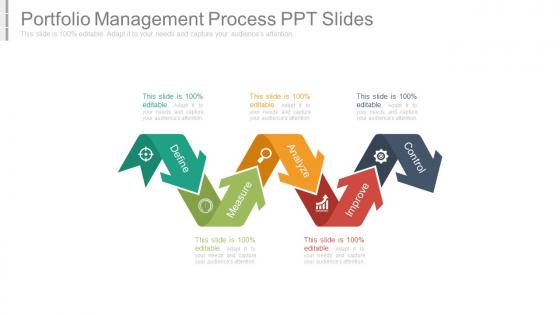
On one hand, investing in corporate securities is profitable as well as exciting but, on the other, proper planning and analysis are essential to cover the risks involved. Here comes the need for our portfolio management process PowerPoint slide. Asset management is indispensable to prevent losses and so, this portfolio management investment portfolio template is a life saver for your investments. The stages outlined in this process info graphic image are define, measure, analyze, improve, control. This template of a process flowchart with arrows depicts a perfectly planned investment strategy. The inter – connected arrow flowchart means that all the loopholes have been plugged well. The vector icons used in the design add to its aesthetic value. Thus, the slide is a display of the perfect strategy along with eye – catching visual display. The strategy presented by you for the company’s portfolio management must have an edge over the others and this impeccable PPT design will help you achieve that. This template will help you identify the weakness of the company’s investments, zero – in on the areas to be improvised upon, plan ways to control losses and minimize risk factors involved. So, without much ado, download this portfolio management process PowerPoint slide at the click of a button. Did you know that when it comes to designing your presentation the correct use of space is important? Well even if you didn't you don't have to bother when you can make use of our readymade Portfolio Management Process Ppt Slides.
People who downloaded this PowerPoint presentation also viewed the following :
Portfolio management process ppt slides with all 7 slides:
Our Portfolio Management Process Ppt Slides encourage fraternity. They help dissolve differences.


FAQs for Portfolio management
Okay so you need four main things: asset allocation, rebalancing, risk management, and tracking performance. First figure out your risk tolerance and timeline - that drives everything else. Most people totally ignore rebalancing because it's annoying, but don't be like them. It keeps your portfolio from getting too heavy in one area. Track how you're doing against benchmarks and tweak things when markets shift or your goals change. Oh and set up quarterly reviews now - seriously, do it today. Otherwise you'll panic-sell when things get crazy (we all want to, but don't).
Honestly, start with simple questionnaires and one-on-one conversations with your key people - execs, board members, whoever matters. Risk assessment tools help too, covering stuff like timeline and financial capacity. But here's the thing: most people totally overestimate their risk tolerance until shit hits the fan. I've seen it happen so many times. If you can, dig into how they reacted during past market drops - that's way more telling than what they say they can handle. Document it all and circle back yearly. Oh, and definitely after any major market mess because people's comfort levels shift fast.
Honestly, tech just handles all the boring stuff so you can focus on actual strategy. Robo-advisors do the rebalancing automatically. AI spots risk patterns you'd miss completely - it's pretty wild what it catches. Real-time portfolio tracking beats those awful spreadsheets we used to live in. Machine learning finds trends, automated reports keep clients from bugging you constantly (seriously, game changer). Cloud platforms mean you're not chained to your desk anymore. My advice? Don't go crazy trying to automate everything at once. Pick automated rebalancing first, then expand from there.
Asset allocation is where you decide how much goes into stocks vs bonds vs cash - honestly way more important than which specific stocks you pick. Most of your returns actually come from getting this mix right. You'll want to match it to how much risk you can handle and when you need the money. Like if you're young, maybe go heavier on stocks since you have time to ride out the bumps. Set your target percentages first, then rebalance every so often to stay on track. It's all about finding that balance between growing your money and not losing sleep over market swings.
Market trends are basically your GPS for portfolio decisions. Bullish market? I'll usually bump up equity exposure and maybe grab some growth stocks. Things turning bearish? That's when bonds and value plays become your best friends. You can't just ignore what's happening - that'd be pretty stupid, honestly. But don't chase every shiny trend either (learned that one the hard way). Filter everything through your client's risk tolerance and timeline first. Oh, and use trends to time your rebalancing - makes a huge difference in returns.
Check your stuff at least monthly, weekly if you're actively trading. I do mine every Monday with my coffee - whatever works for you though. Track returns against benchmarks and watch your Sharpe ratio, max drawdown, sector drift. The boring metrics actually matter. Set alerts when positions drift too far from targets so you can rebalance before it gets messy. Document everything - wins AND losses. Consistency is what separates people who actually improve from those who just wing it and wonder why their portfolio's all over the place.
Honestly, rebalancing is like having a system that forces you to buy low and sell high without thinking about it. Your winners start taking over your portfolio? Time to trim some profits and move that cash into the stuff that's been lagging - those might bounce back. Plus it stops you from accidentally going all-in on one sector. I learned this the hard way when my portfolio became basically all Tesla a few years back lol. Just pick a schedule and stick with it. Quarterly works, or whenever things drift 5% from your target. Set those phone reminders or you'll definitely forget.
Honestly, just track your total return first and see how it stacks up against the S&P 500 or whatever benchmark makes sense. Sharpe ratio is clutch too - tells you if the risk you're taking is actually worth it. I used to obsess over like 20 different metrics but it just made me crazy. Maximum drawdown shows your worst losses, which is depressing but useful I guess. Volatility gives you the consistency picture. Stick to maybe 3-4 of these and check monthly. Don't go down the rabbit hole of tracking everything - you'll just confuse yourself.
So basically you want to weave ESG into three spots: screening, analysis, and monitoring. First, screen out stuff you don't want - tobacco, weapons, whatever goes against your values. During analysis, look at ESG risks right alongside your usual metrics like P/E ratios. Honestly, ESG issues can actually predict performance better than most investors think. Then keep monitoring because these ratings shift all the time. The trick is baking it into your normal process from the start. Don't just slap it on at the end - that never works well.
Honestly, diversification is your best friend here - spread stuff across different asset classes and regions. Don't go crazy concentrated in one sector (learned that the hard way in 2020). Set up target allocations based on how much risk you can actually stomach, then rebalance regularly. Cash reserves are clutch for when opportunities pop up. You might want to look into some hedging with options or inverse ETFs if you're worried about big drops. Oh, and check your current portfolio for concentration risk first - that's usually where people mess up without realizing it.
Dude, behavioral finance stuff will totally screw you over if you don't watch out. Like, you'll anchor to what you paid for a stock and make terrible decisions from there. People chase hot performance way too late, then panic sell good positions while bag-holding the losers forever. Loss aversion is probably the worst one though - you get so scared of losing money that you miss actual good opportunities. Honestly, I think most people would be better off just setting automatic rules. Schedule when you'll rebalance, use stop losses, whatever. Just don't trade on emotions because that never ends well.
Look, an IPS is basically your game plan that stops you from doing stupid stuff when the market tanks. It maps out your goals, how much risk you can handle, and what you're working with. Honestly, it's like having guardrails - keeps you from chasing hot stocks or freaking out during crashes. Plus it gives you something concrete to measure against instead of just winging it. Without one? You're basically gambling and hoping for the best. Start with figuring out what your client actually wants and how much volatility they can stomach - everything else builds from there.
Basically spread your money around different stuff - stocks, bonds, real estate, maybe commodities. That 2000 tech crash taught everyone not to go all-in on one sector lol. Mix big companies with smaller ones, throw in some international exposure too. Growth vs value stocks, that whole thing. What you don't want is everything tanking together when markets freak out. Oh and check if you're too heavy in any single stock or sector - anything over 5-10% of your portfolio probably needs trimming. The goal is just making sure one bad day doesn't wreck your whole setup.
Bloomberg Terminal or Charles River are your go-to options for portfolio management - there's a reason everyone uses them. Excel's still weirdly essential though, I swear I end up in spreadsheets daily even with all the expensive software. Risk stuff like Axioma or MSCI RiskMetrics you absolutely need for stress testing and monitoring exposures. FactSet or Morningstar Direct will handle performance attribution way better than doing it manually. Honestly, just start with whatever your company already pays for since these systems take forever to learn. Then figure out what's missing from your actual day-to-day work.
Quarterly reviews are the sweet spot for most people. I personally do monthly check-ins because I'm maybe a bit obsessive about it, but that's probably overkill. Big life stuff changes everything though - new job, marriage, kids, whatever - and you'll want to reassess right away. Don't fall into the daily checking trap when markets get crazy. Trust me, it just makes you want to panic-sell at the worst times. Focus on whether your overall mix of stocks/bonds still makes sense for your timeline. I set phone reminders every three months and try to ignore the noise unless my actual goals shift.
-
Presentation Design is very nice, good work with the content as well.
-
Content of slide is easy to understand and edit.