


Preventing Data Breaches Through Cyber Security Awareness Powerpoint Presentation Slides
Data Breaches can be prevented by creating Cyber Awareness as it helps employees detect various types of cyber attacks. Grab our professionally designed Preventing Data Breaches through Cyber Security Awareness template. It includes a few slides discussing the broad trends in ransomware attacks, business email breaches, and social engineering. Our Security Awareness Campaign deck starts by outlining the complete overview, current situation, and gap analysis of a companys cyber security. Online courses, automation tools, general tactics, in-house training programs, etc., will help firms create a strong workplace security culture and prevent downtime. There are also a few slides the business can use to discuss the organization of the cyber security team. Along with a thorough checklist, it also includes details on the difficulties and solutions related to security awareness. Download our 100 percent editable and customizable template, which is also compatible with Google slides.




































-

- Google Slides is a new FREE Presentation software from Google.
- All our content is 100% compatible with Google Slides.
- Just download our designs, and upload them to Google Slides and they will work automatically.
- Amaze your audience with SlideTeam and Google Slides.
-

Want Changes to This PPT Slide? Check out our Presentation Design Services
-

- WideScreen Aspect ratio is becoming a very popular format. When you download this product, the downloaded ZIP will contain this product in both standard and widescreen format.
-

- Some older products that we have may only be in standard format, but they can easily be converted to widescreen.
- To do this, please open the SlideTeam product in Powerpoint, and go to
- Design ( On the top bar) -> Page Setup -> and select "On-screen Show (16:9)” in the drop down for "Slides Sized for".
- The slide or theme will change to widescreen, and all graphics will adjust automatically. You can similarly convert our content to any other desired screen aspect ratio.
Compatible With Google Slides

Get This In WideScreen
You must be logged in to download this presentation.


Do you want to remove this product from your favourites?
PowerPoint presentation slides
Deliver an informational PPT on various topics by using this Preventing Data Breaches Through Cyber Security Awareness Powerpoint Presentation Slides. This deck focuses and implements best industry practices, thus providing a birds-eye view of the topic. Encompassed with seventy eight slides, designed using high-quality visuals and graphics, this deck is a complete package to use and download. All the slides offered in this deck are subjective to innumerable alterations, thus making you a pro at delivering and educating. You can modify the color of the graphics, background, or anything else as per your needs and requirements. It suits every business vertical because of its adaptable layout.

People who downloaded this PowerPoint presentation also viewed the following :
Content of this Powerpoint Presentation
Slide 1: This slide introduces Preventing Data Breaches Through Cyber Security Awareness. Commence by stating Your Company Name.
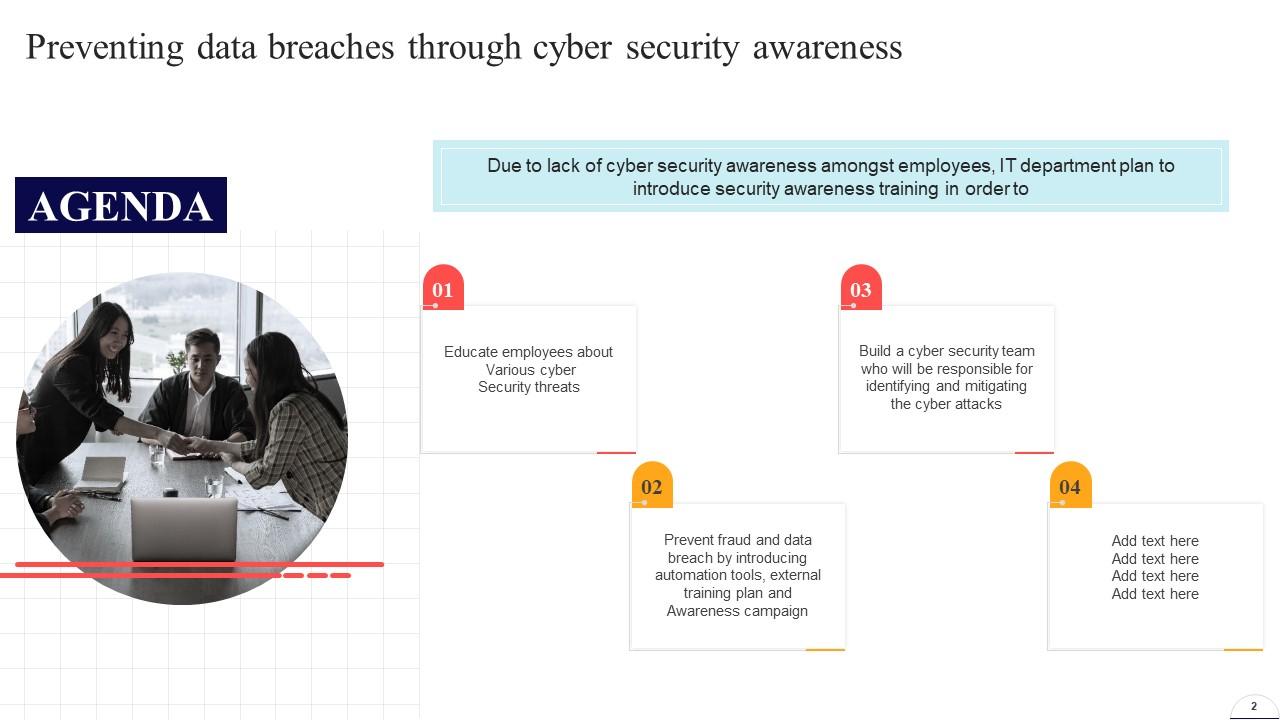
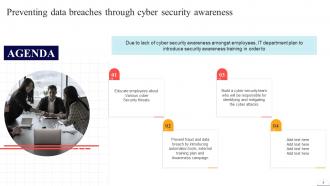
Slide 2: This slide depicts the Agenda of the presentation.
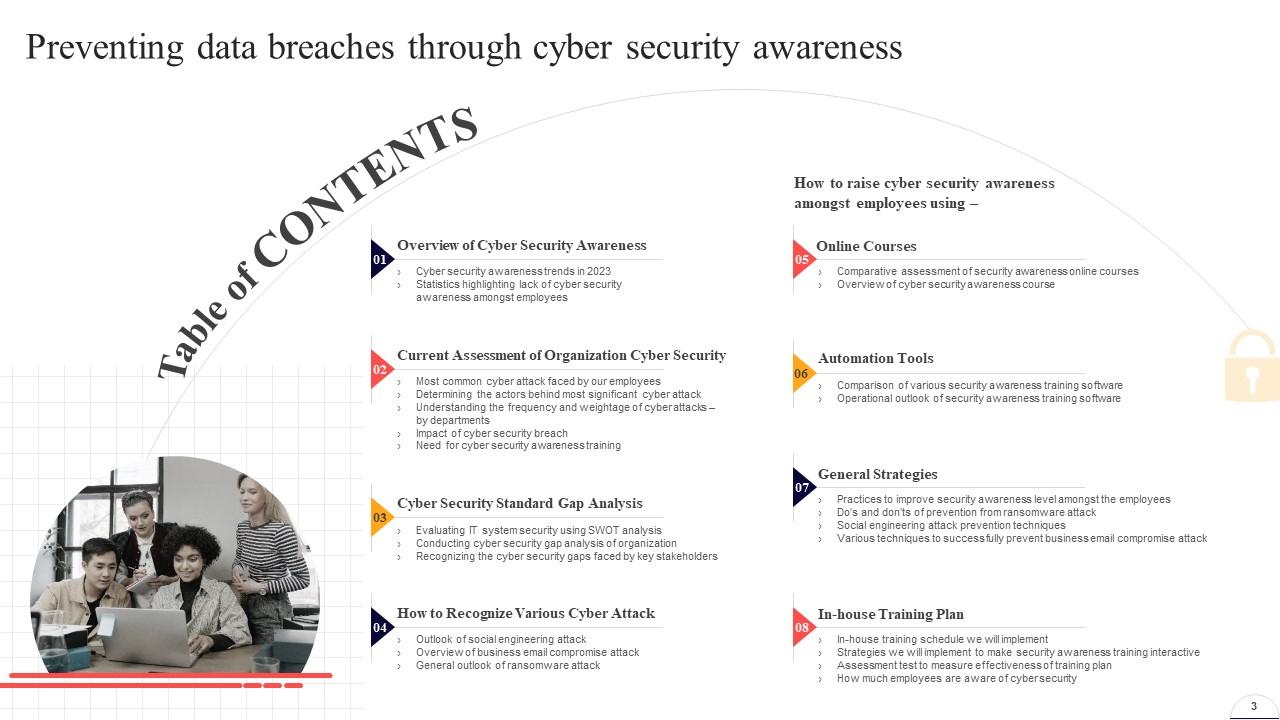
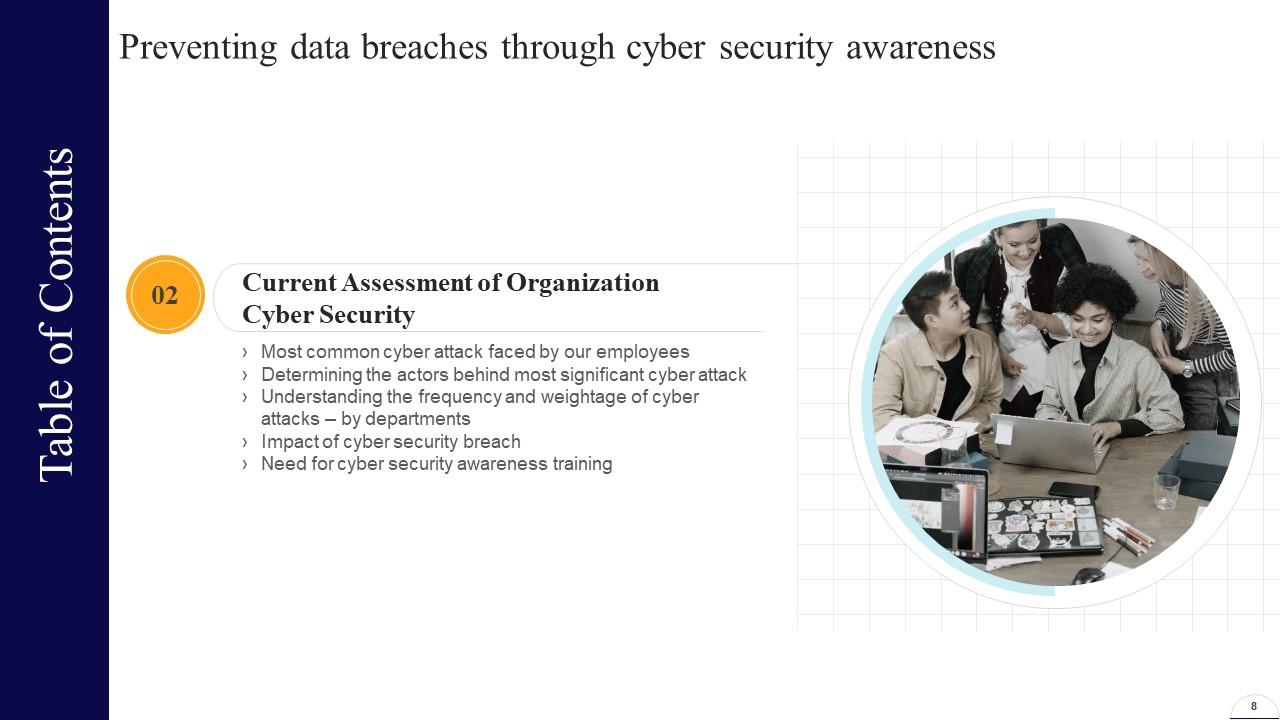
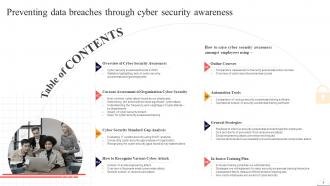
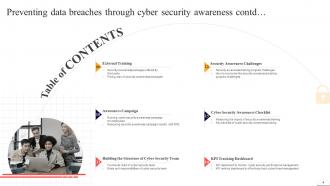
Slide 3: This slide incorporates the Table of Contents.
Slide 4: This is yet another slide continuing the Table of Contents.
Slide 5: This slide presents the Title for the Topics to be discussed further.
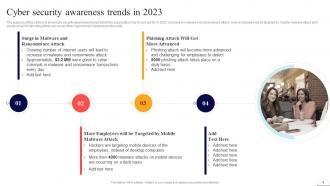
Slide 6: The purpose of this slide is to showcase security awareness trends which the organization has to look out for in 2023.
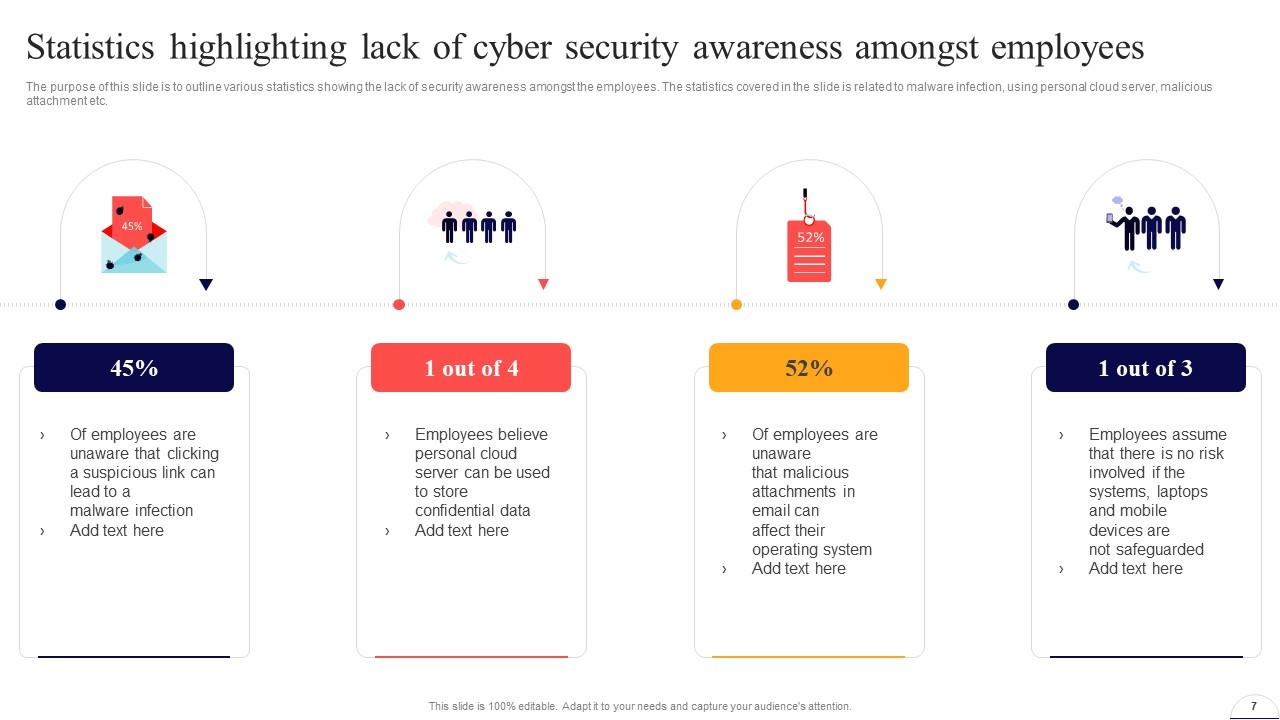
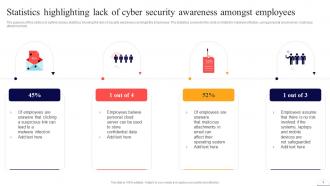
Slide 7: This slide outlines various statistics showing the lack of security awareness amongst the employees.
Slide 8: This slide elucidates the Heading for the Components to be discussed in the upcoming template.
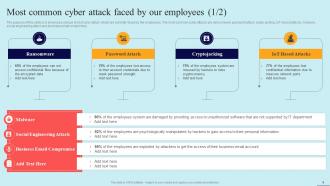
Slide 9: This slide highlights the Most common cyber attack faced by the employees.
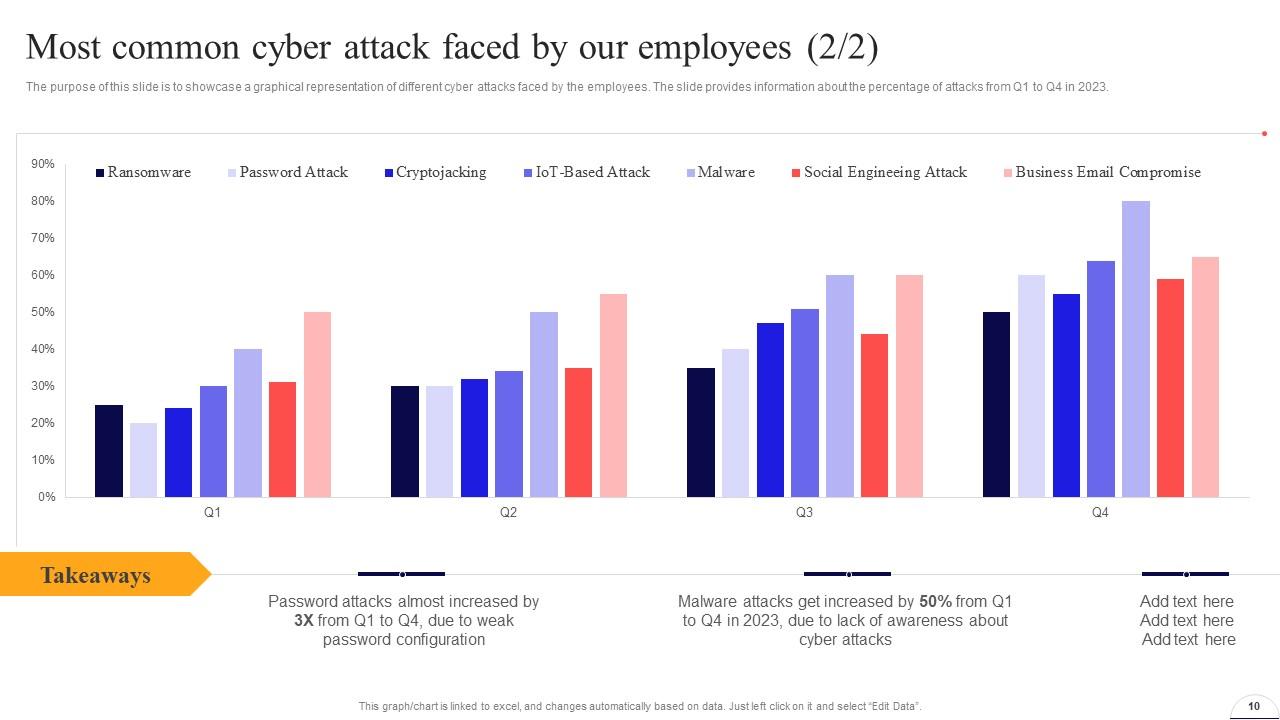
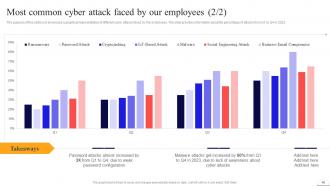
Slide 10: This slide continues the common cyber attack faced by the employees.
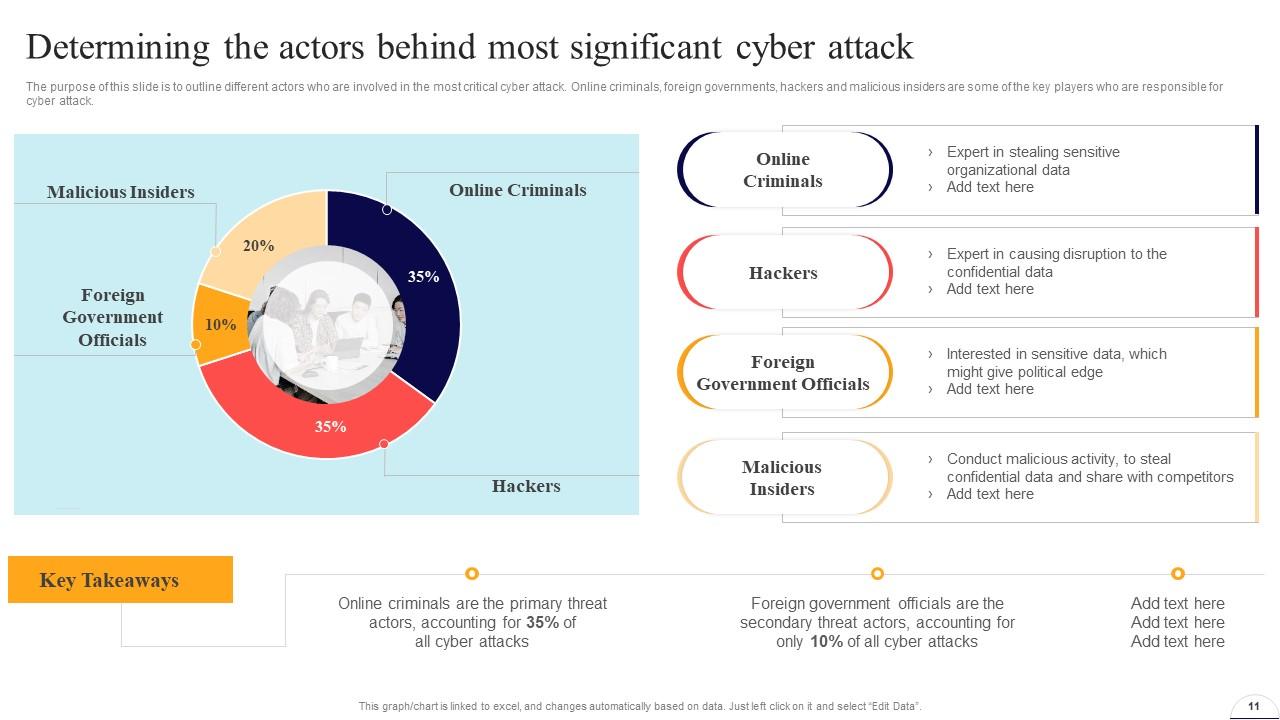
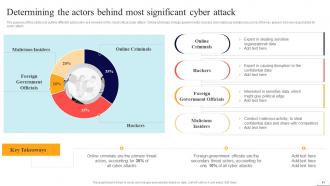
Slide 11: This slide deals with Determining the actors behind most significant cyber attack.
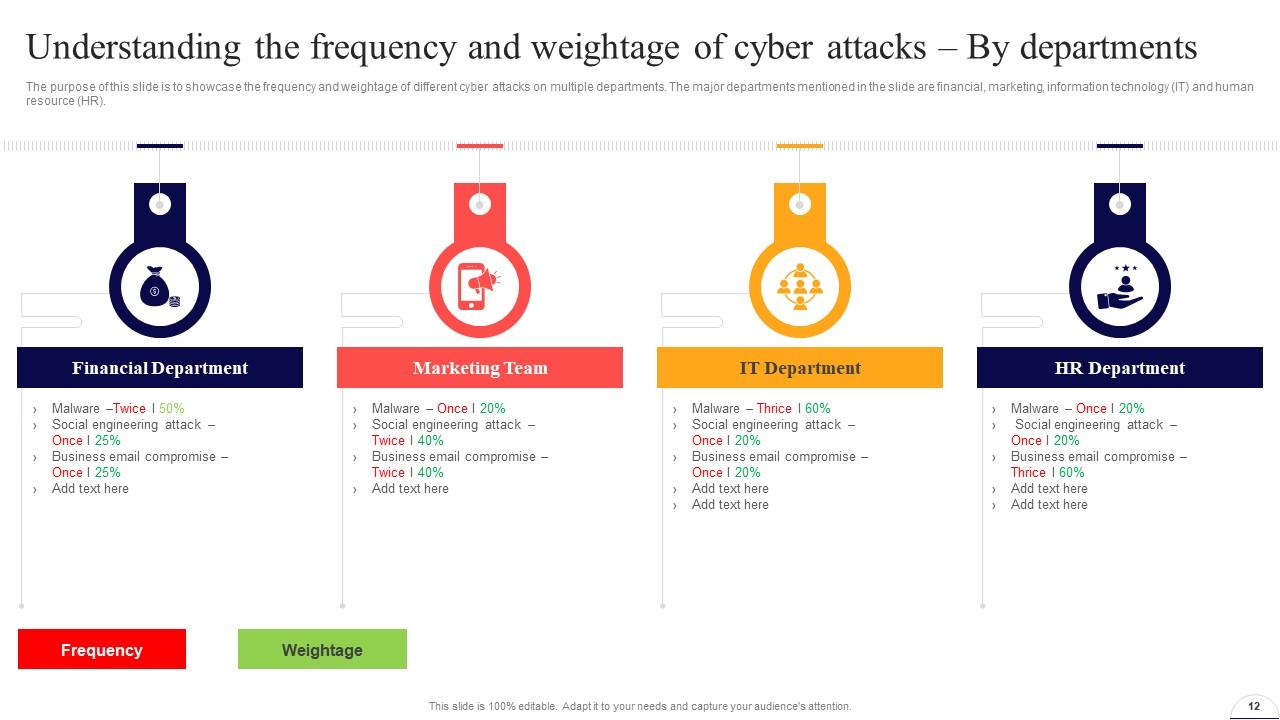
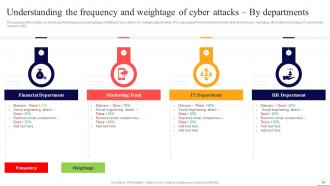
Slide 12: This slide showcases the frequency and weightage of different cyber attacks on multiple departments.
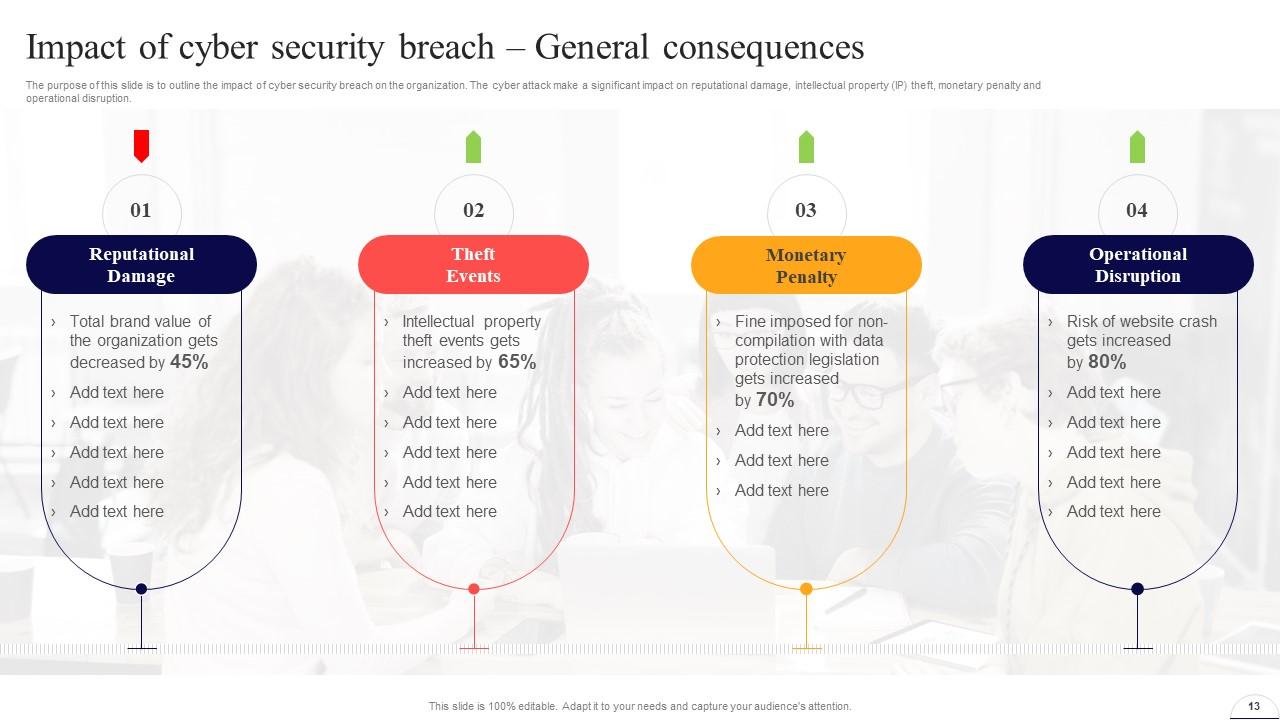
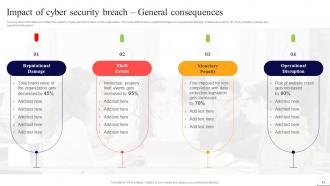
Slide 13: This slide outlines the impact of cyber security breach on the organization.
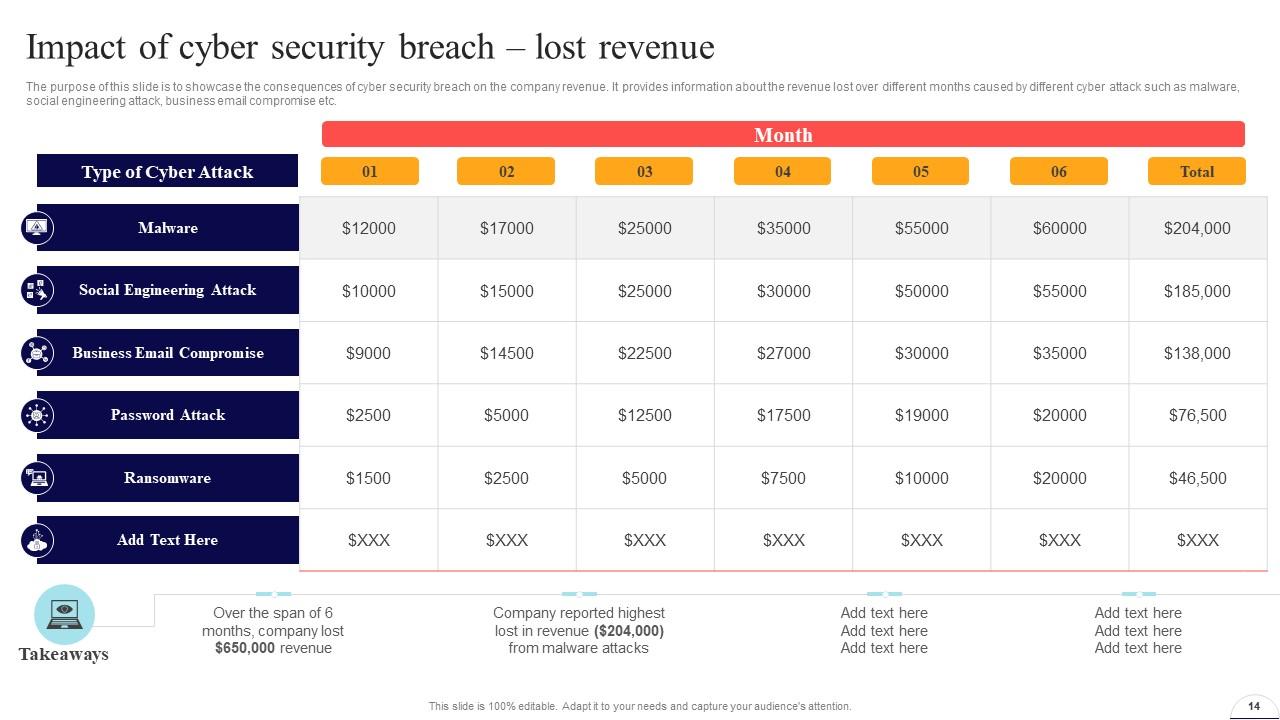
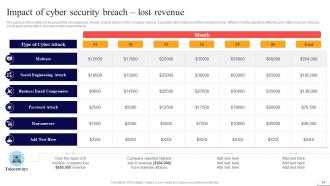
Slide 14: The purpose of this slide is to state the consequences of cyber security breach on the company revenue.
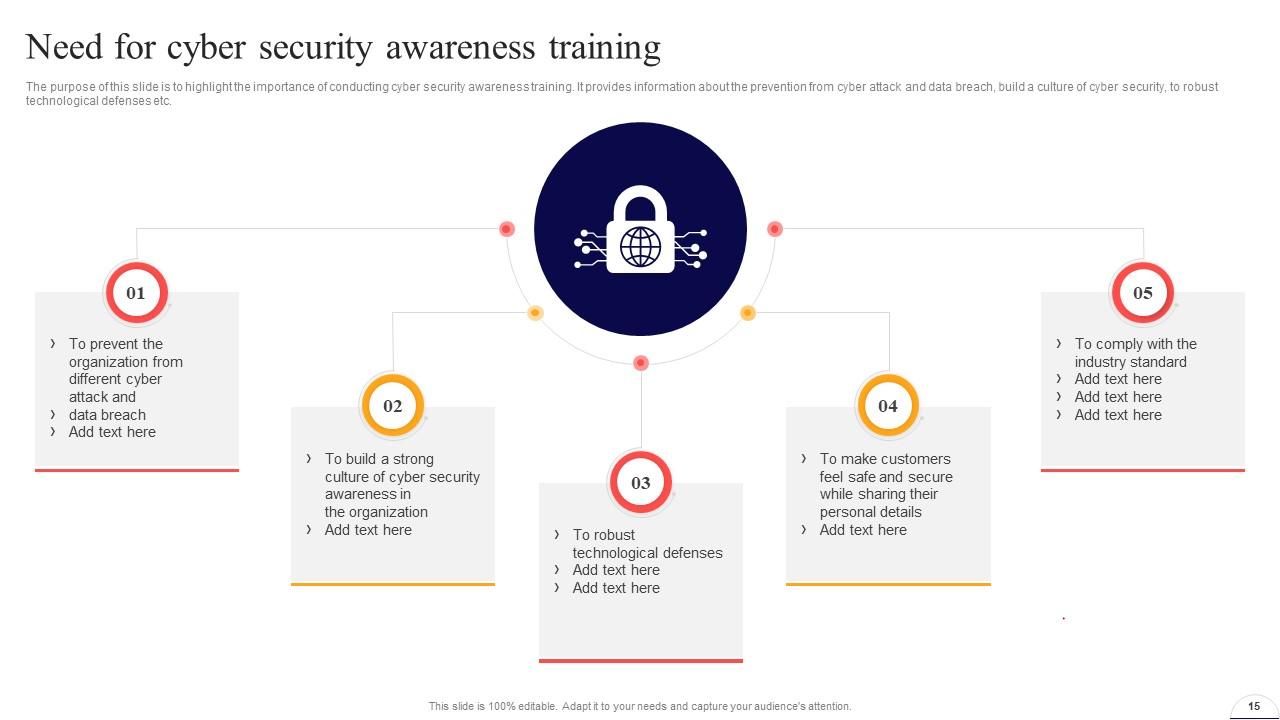
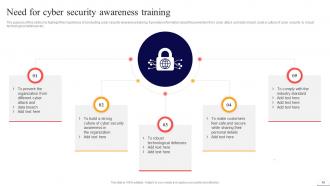
Slide 15: This slide focuses on the Need for cyber security awareness training.
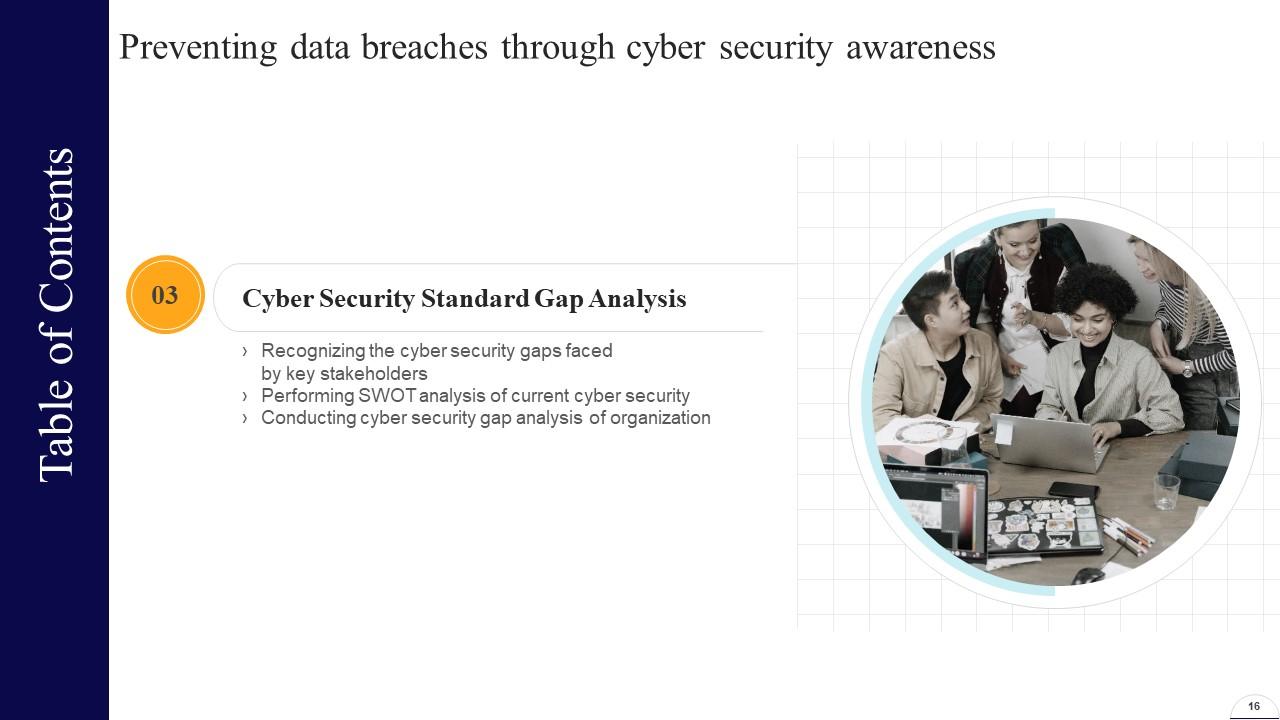
Slide 16: This slide mentions the Title for the Ideas to be discussed next.
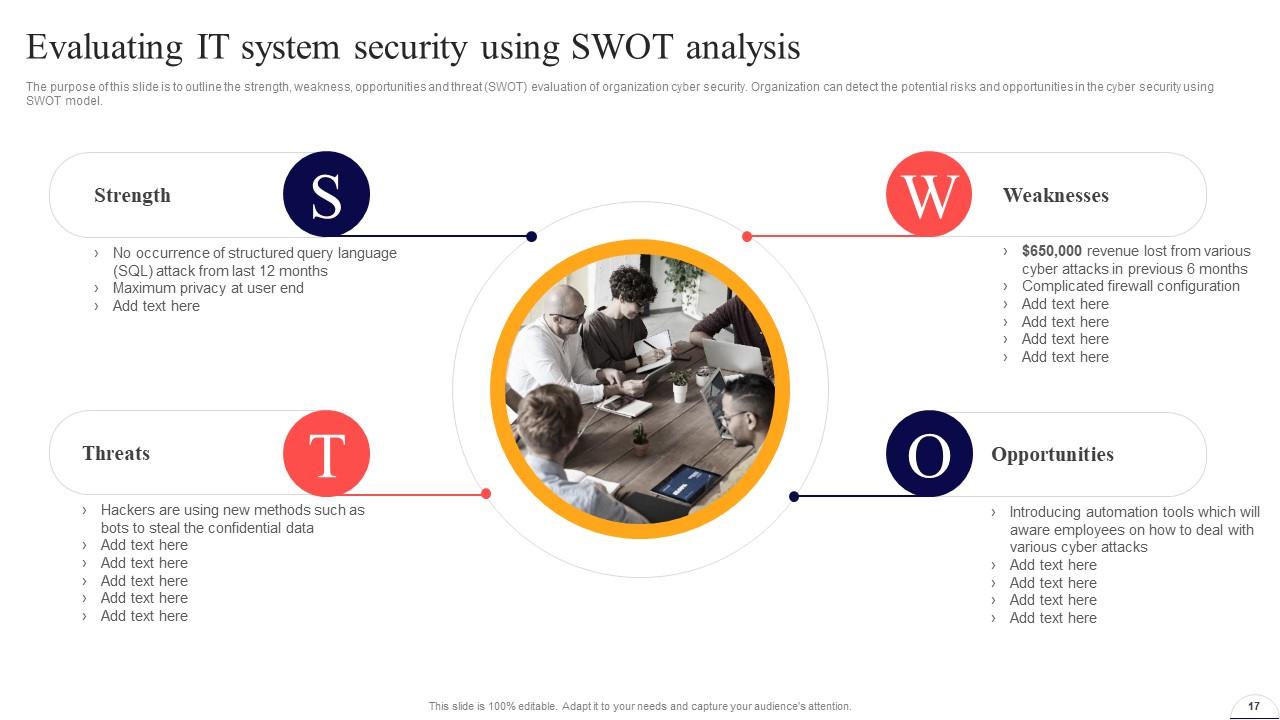
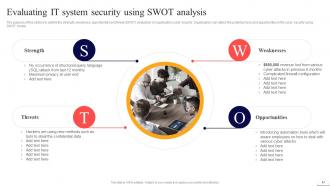
Slide 17: This slide provides information about Evaluating IT system security using SWOT analysis.
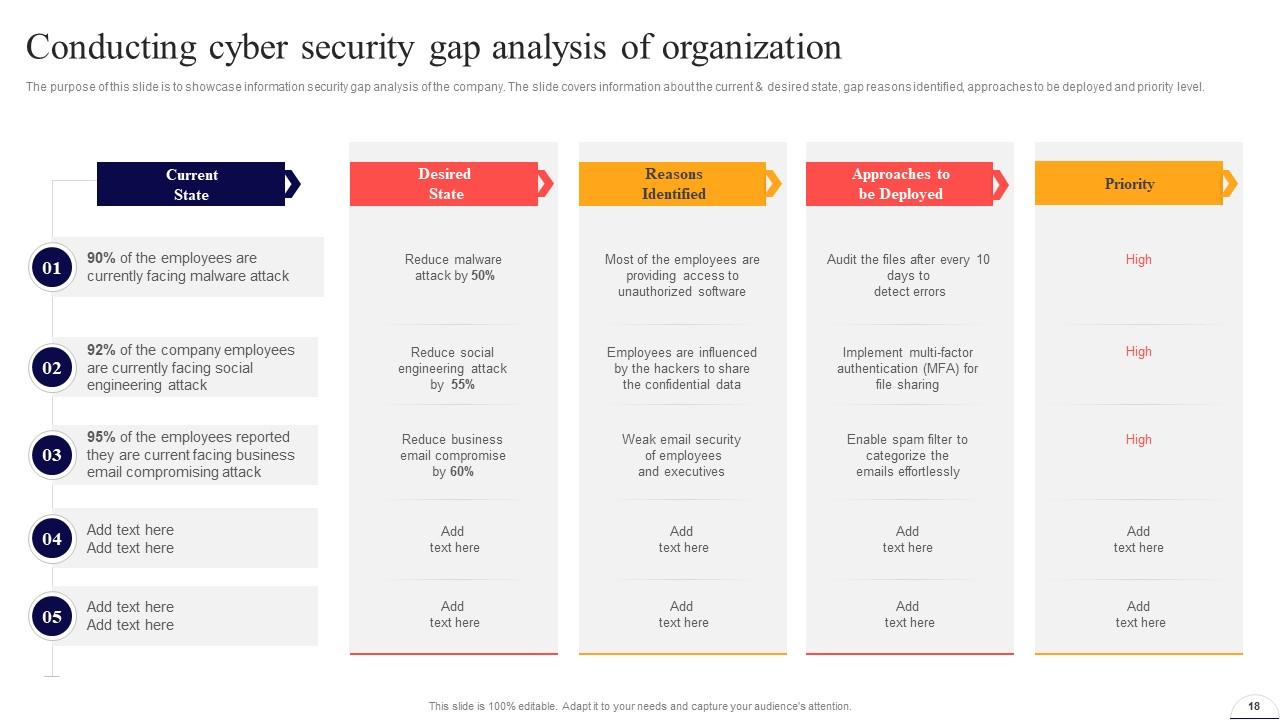
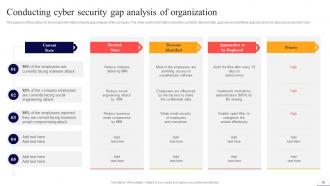
Slide 18: This slide highlights Conducting cyber security gap analysis of organization.
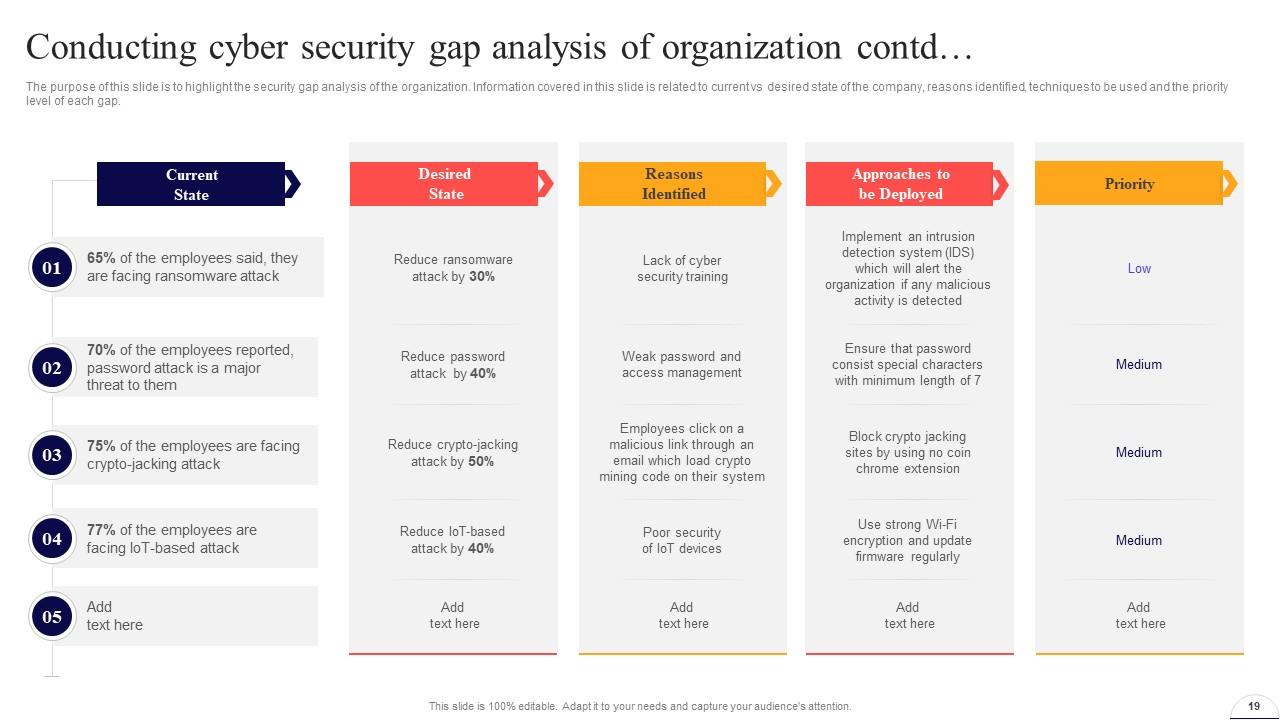
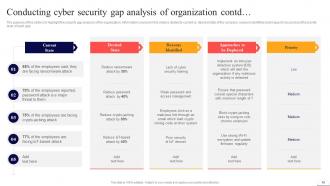
Slide 19: The purpose of this slide is to display the security gap analysis of the organization.
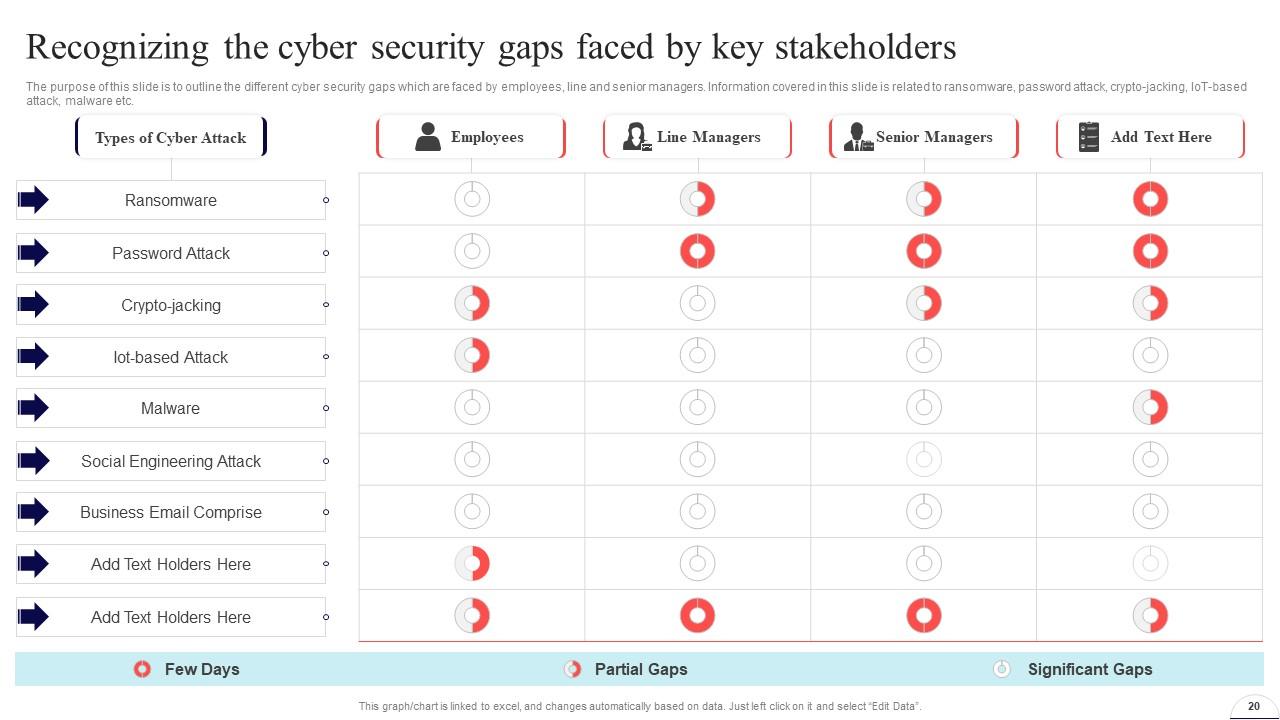
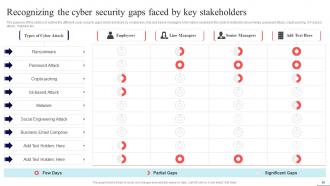
Slide 20: This slide deals with Recognizing the cyber security gaps faced by key stakeholders.
Slide 21: This slide presents the Heading for the Ideas to be covered in the upcoming template.
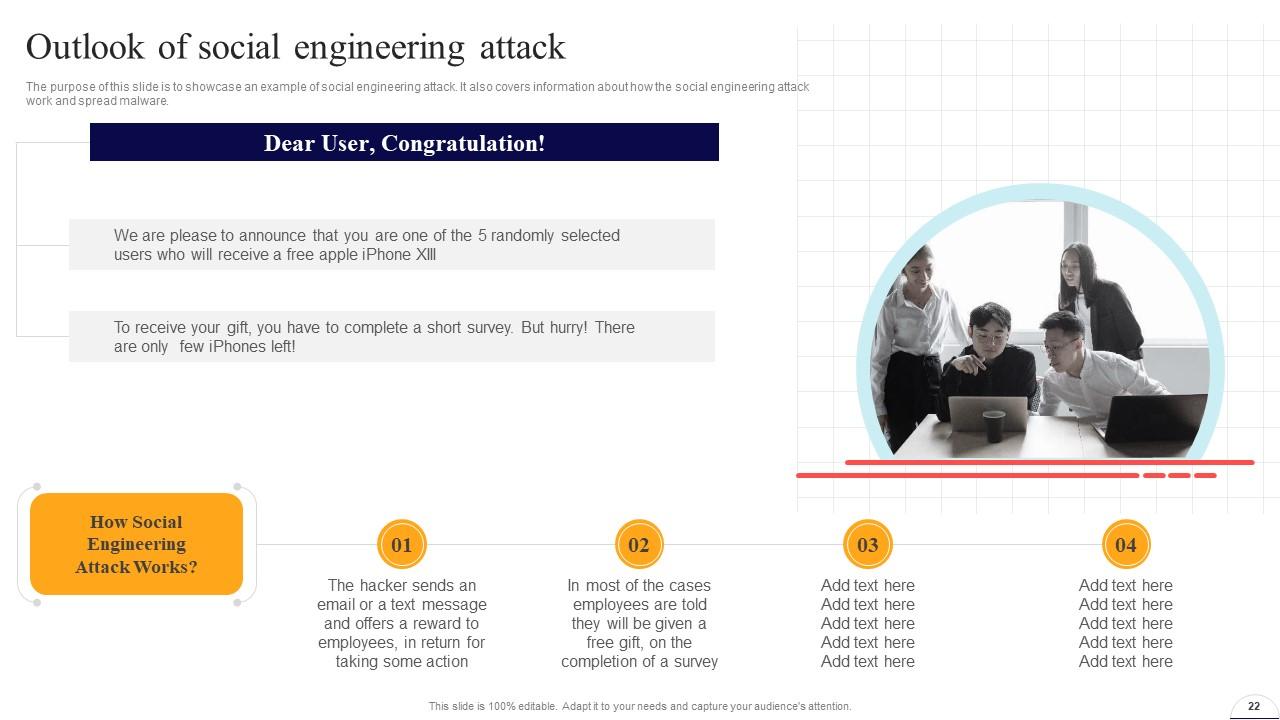
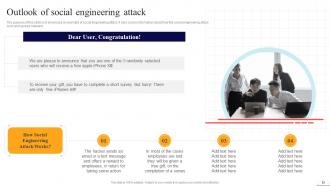
Slide 22: The purpose of this slide is to showcase an example of social engineering attack.
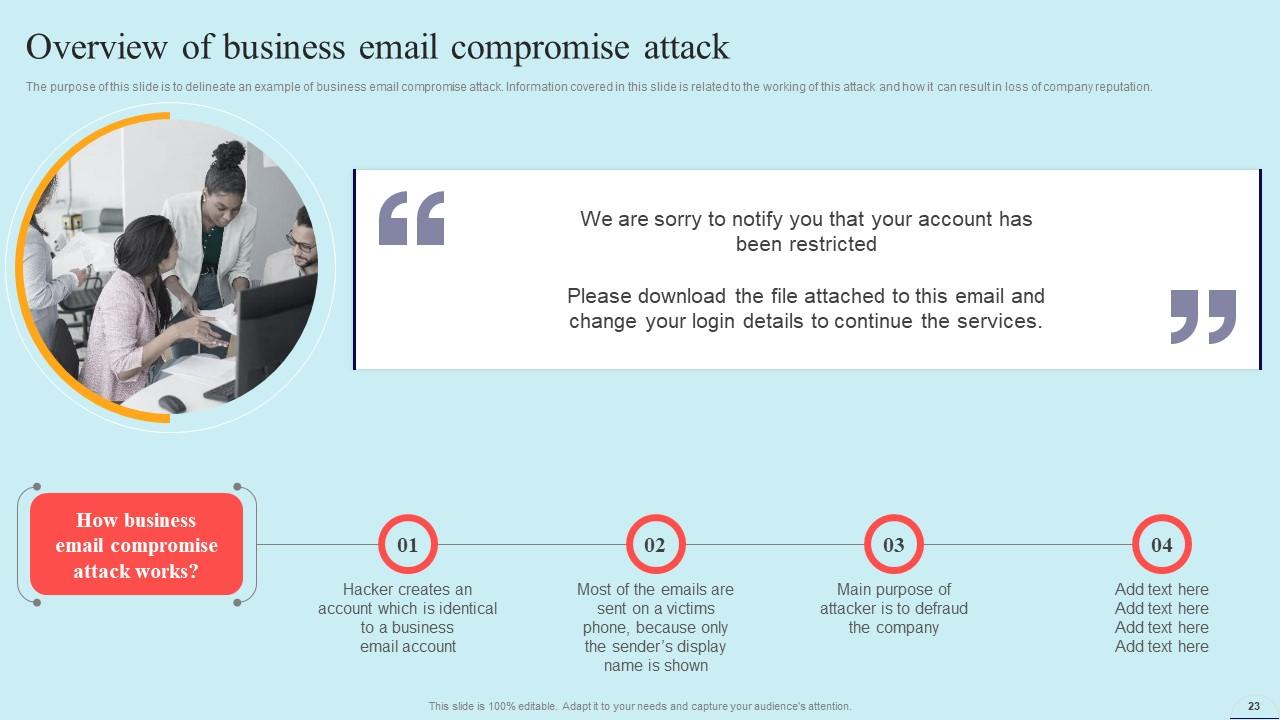
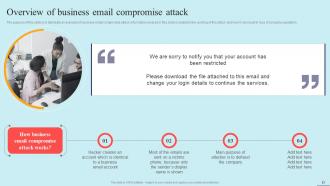
Slide 23: This slide represents the Overview of business email compromise attack.
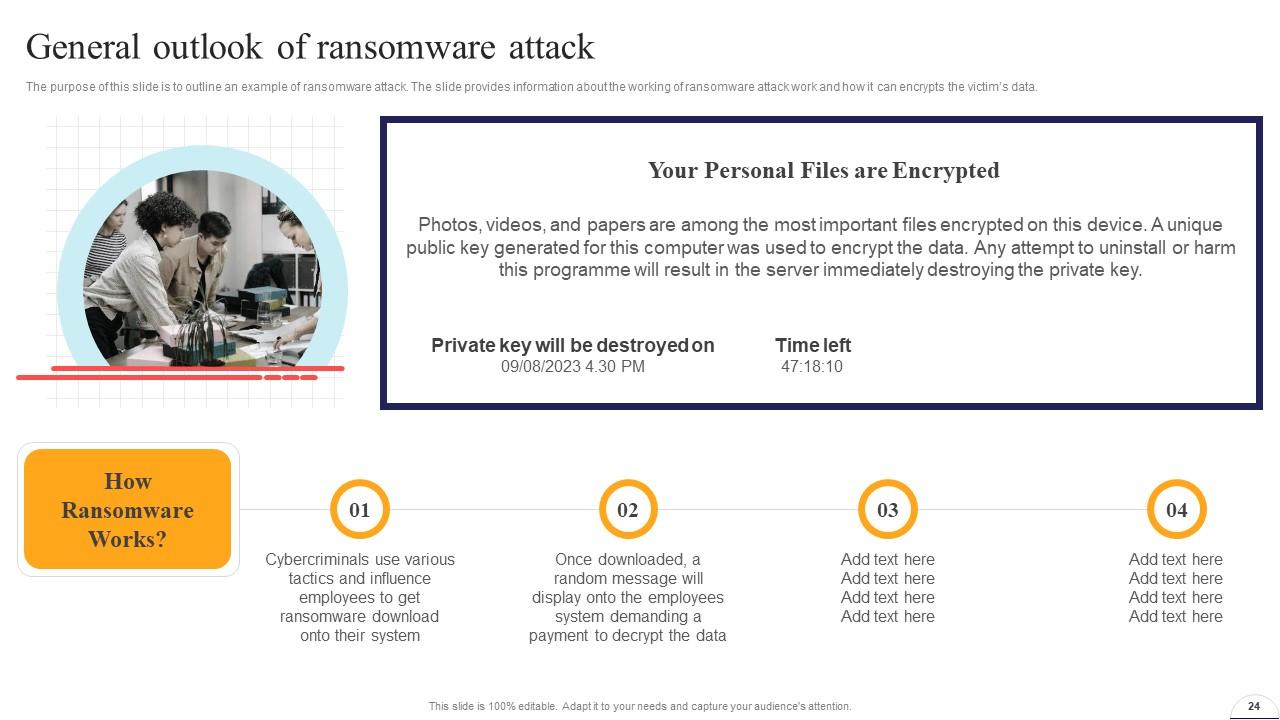
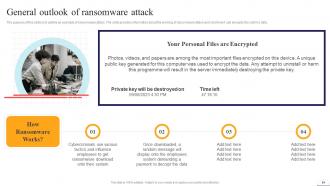
Slide 24: This slide outlines the General outlook of ransomware attack.
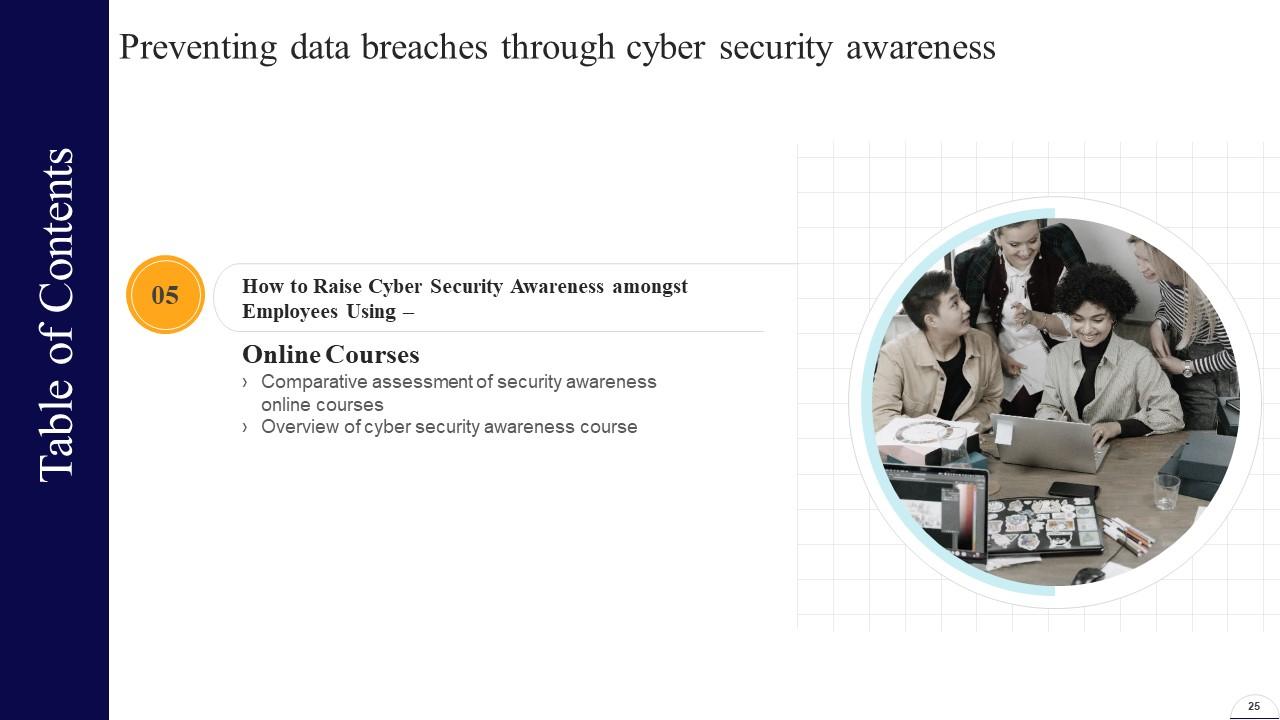
Slide 25: This slide incorporates the Title for the Components to be discussed further.
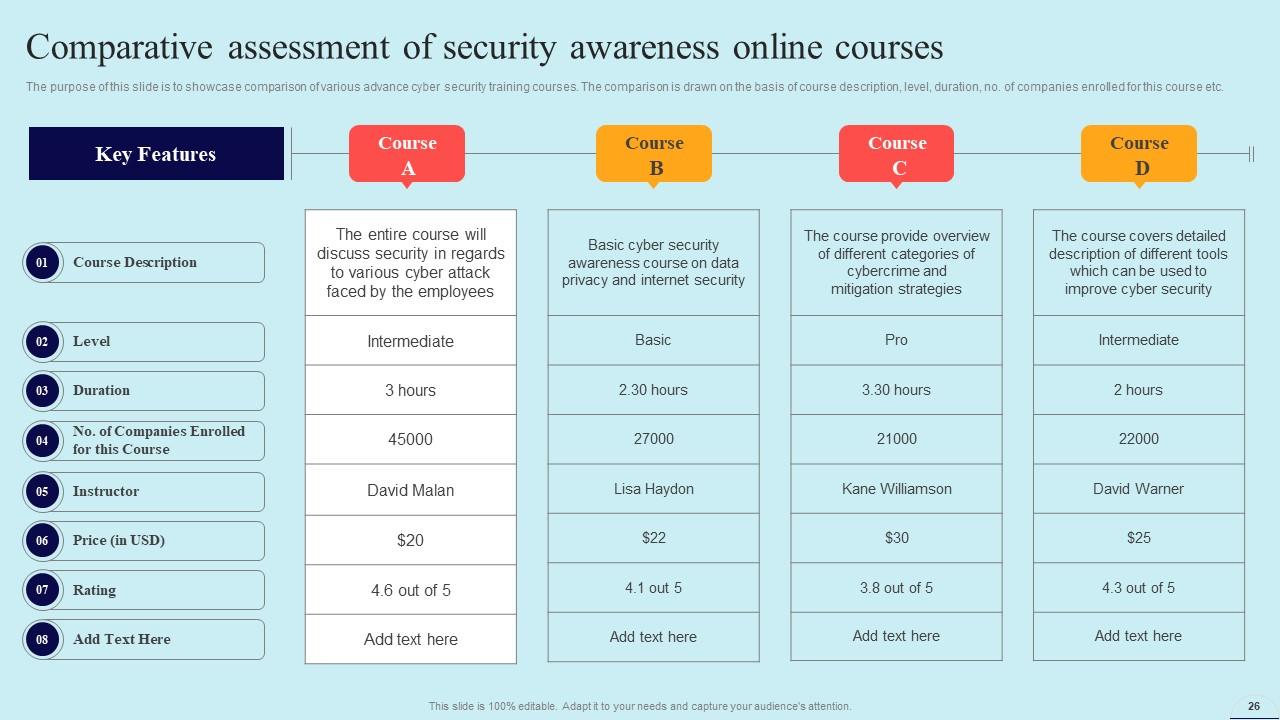
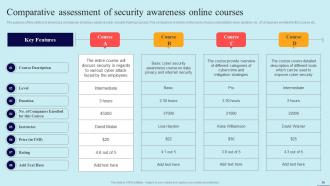
Slide 26: This slide exhibits the Comparative assessment of security awareness online courses.
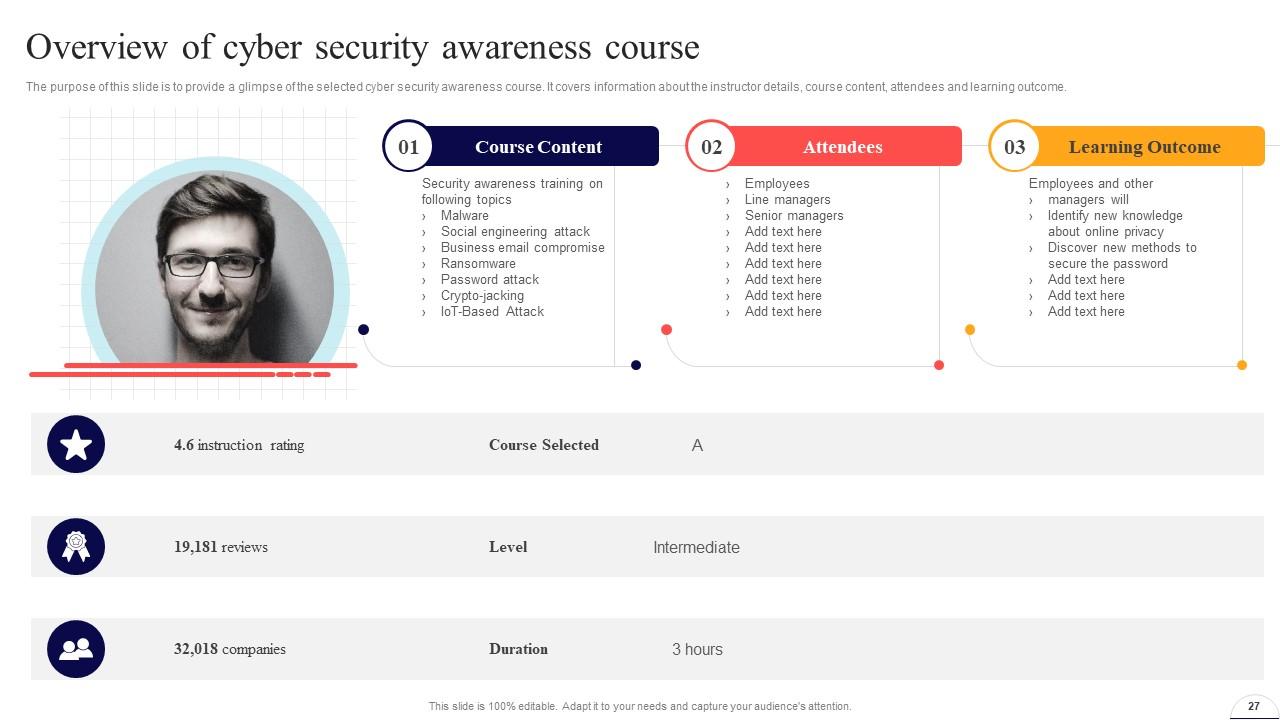
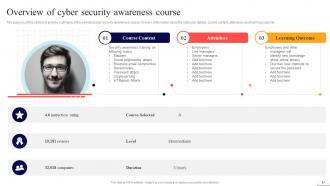
Slide 27: The purpose of this slide is to provide a glimpse of the selected cyber security awareness course.
Slide 28: This slide indicates the Heading for the Topics to be discussed further.
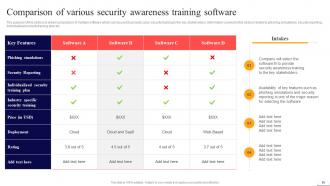
Slide 29: This slide shows the Comparison of various security awareness training software.
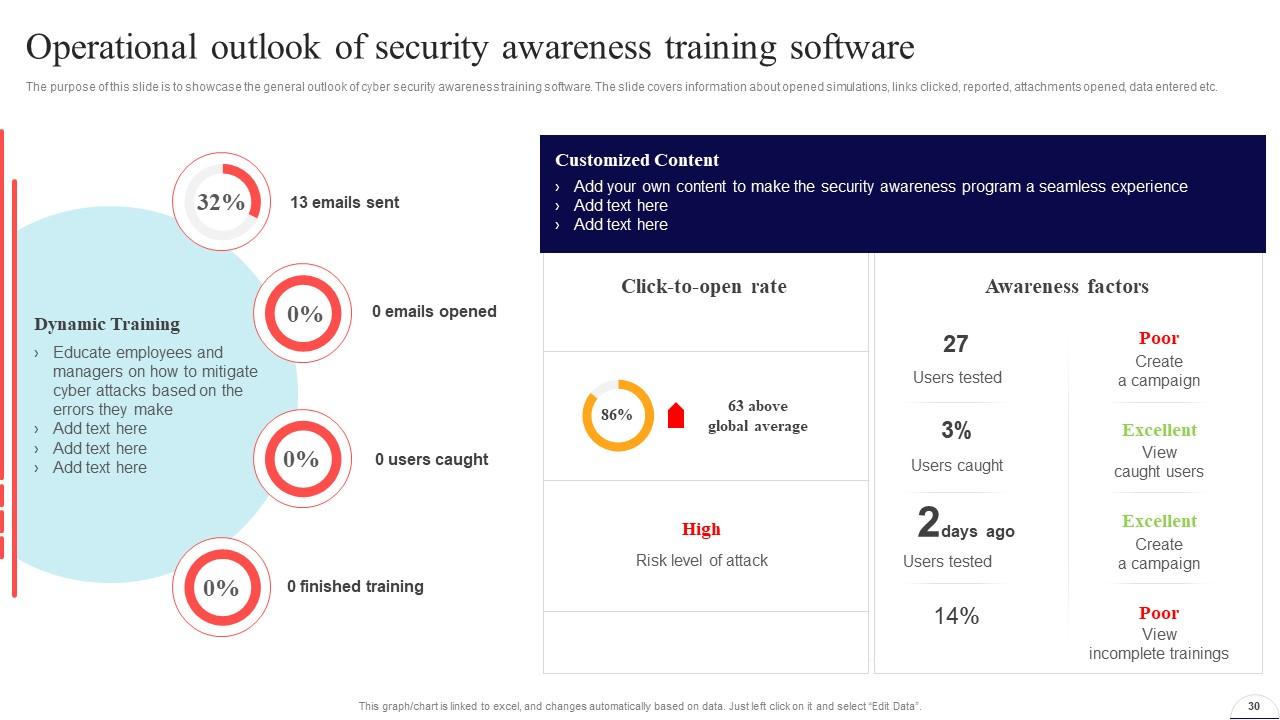
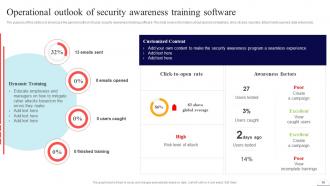
Slide 30: This slide portrays the Operational outlook of security awareness training software.
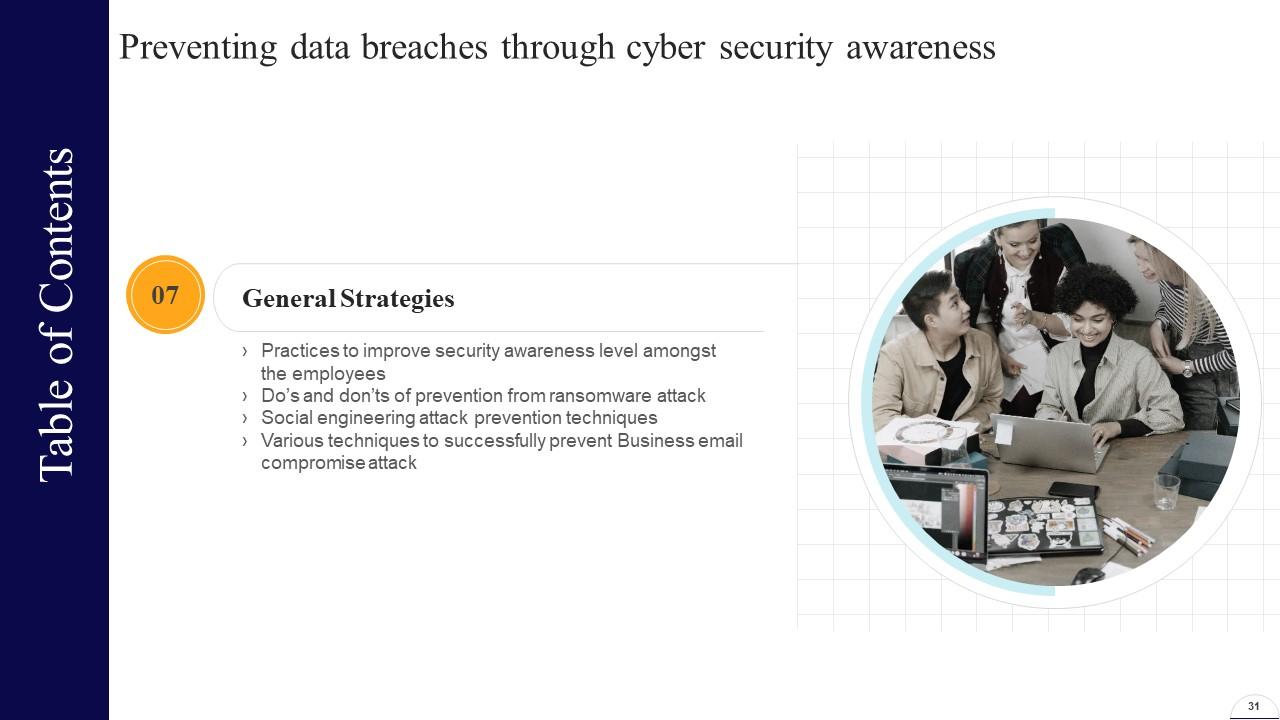
Slide 31: This slide mentions the Title for the Topics to be discussed in the forth-coming template.
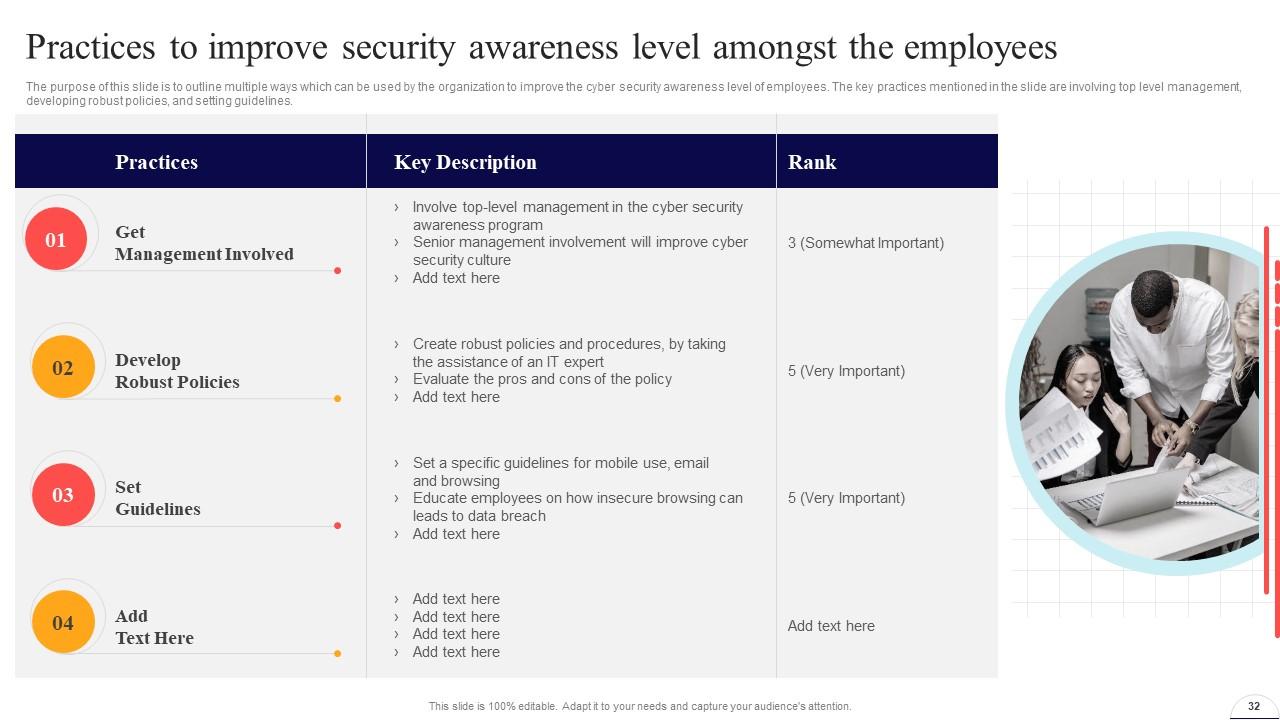
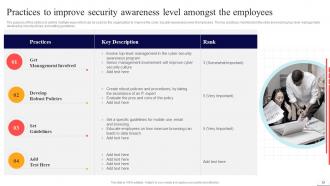
Slide 32: This slide reveals Practices to improve security awareness level amongst the employees.
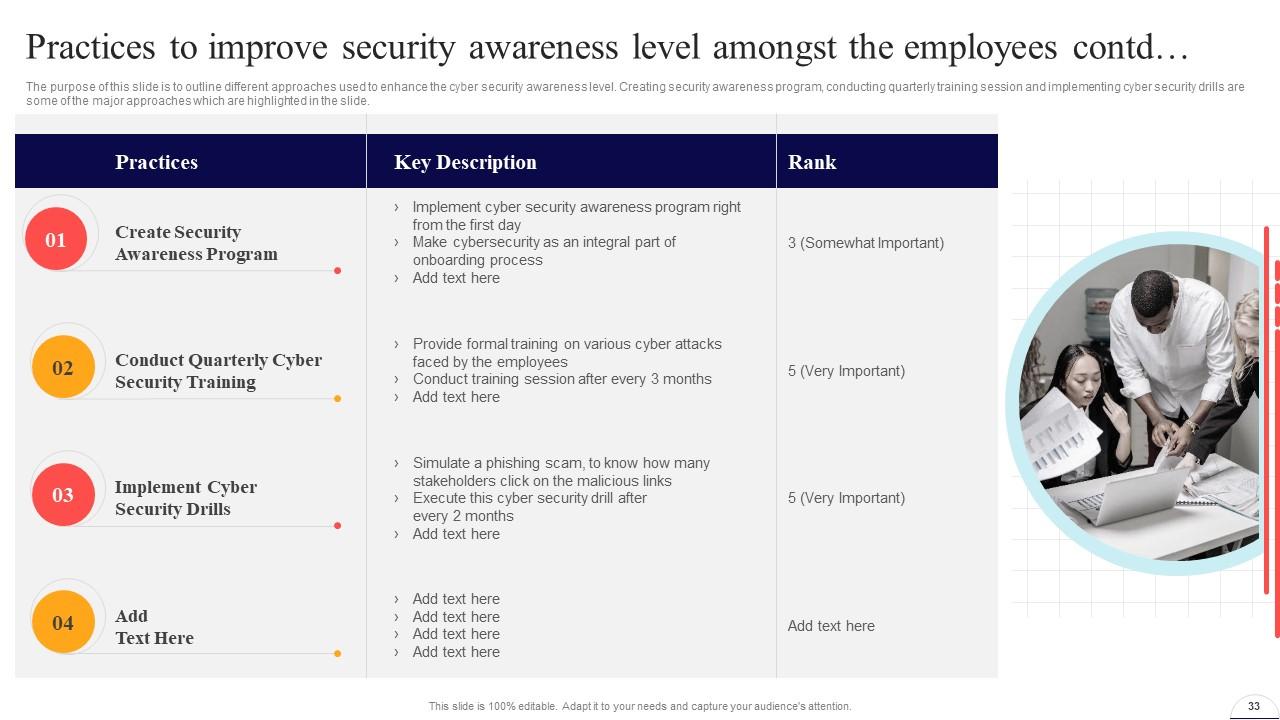
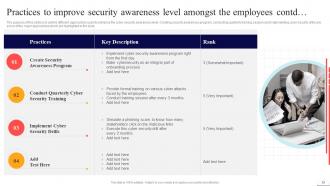
Slide 33: This is yet another slide continuing the Practices to improve security awareness level.
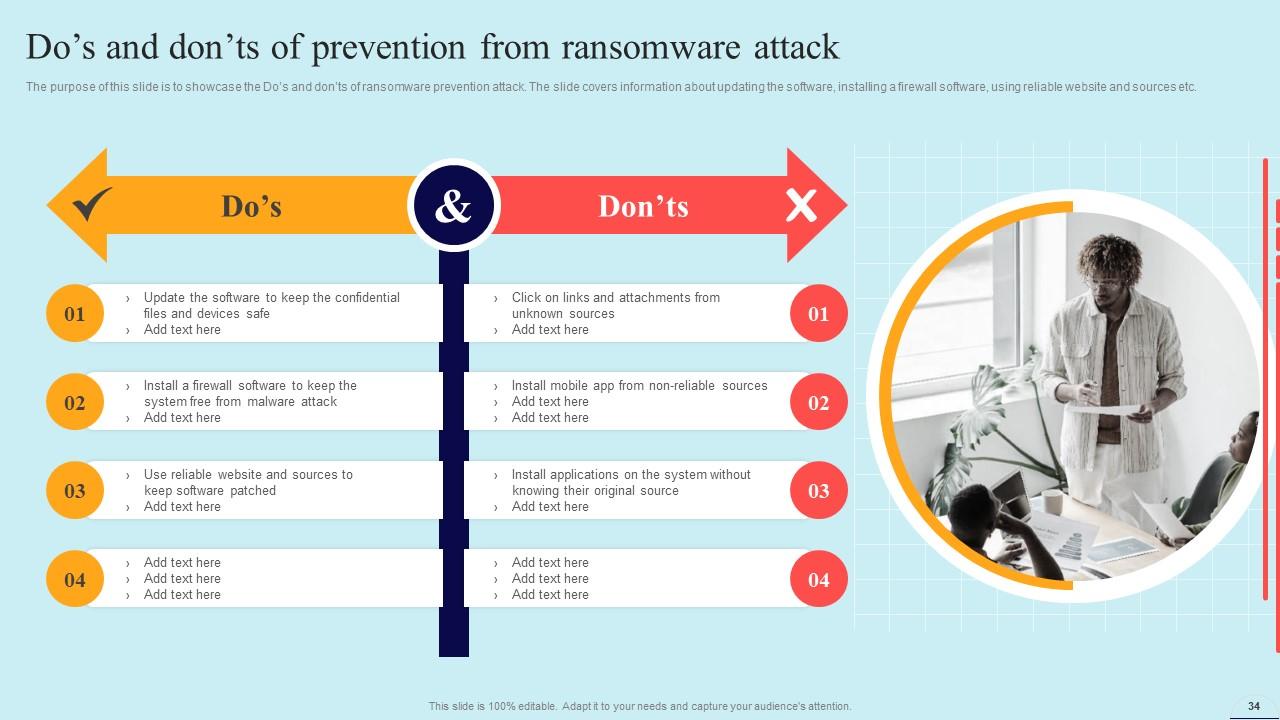
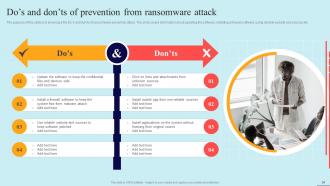
Slide 34: This slide presents the Do’s and don’ts of prevention from ransomware attack.
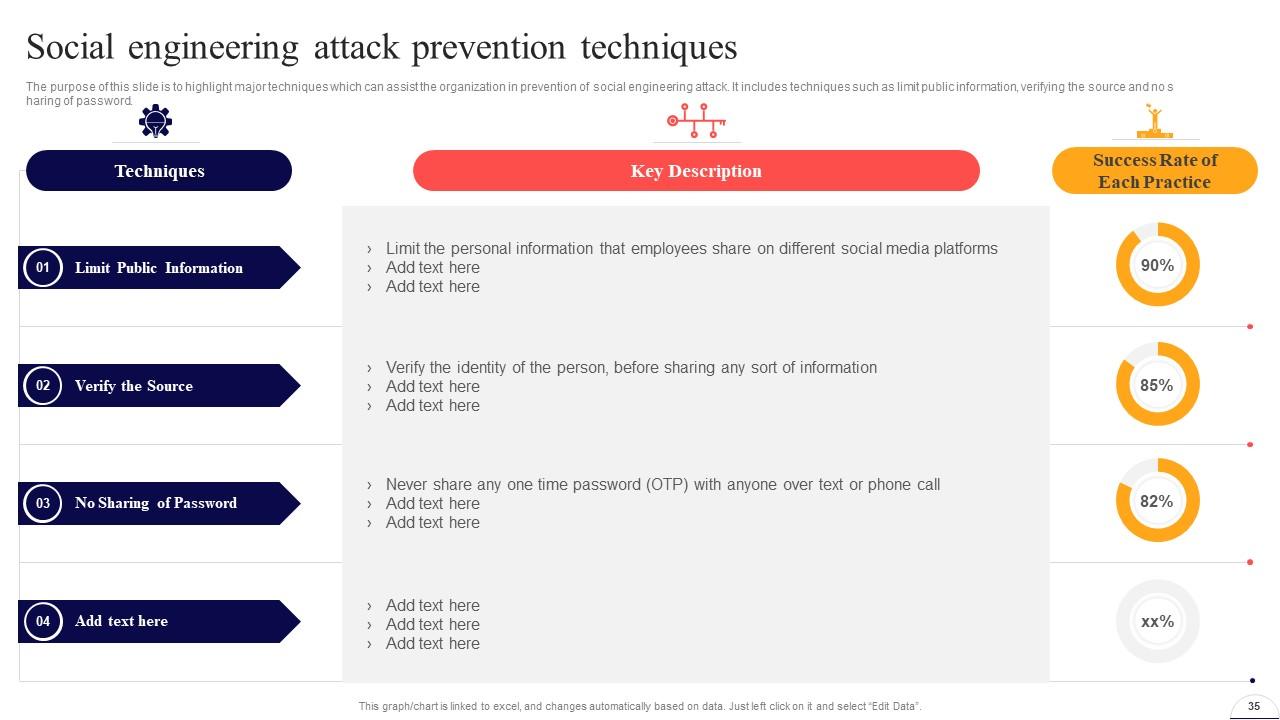
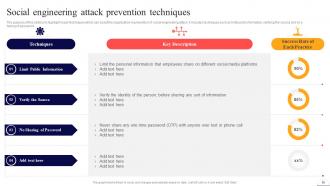
Slide 35: This slide elucidates the Social engineering attack prevention techniques.
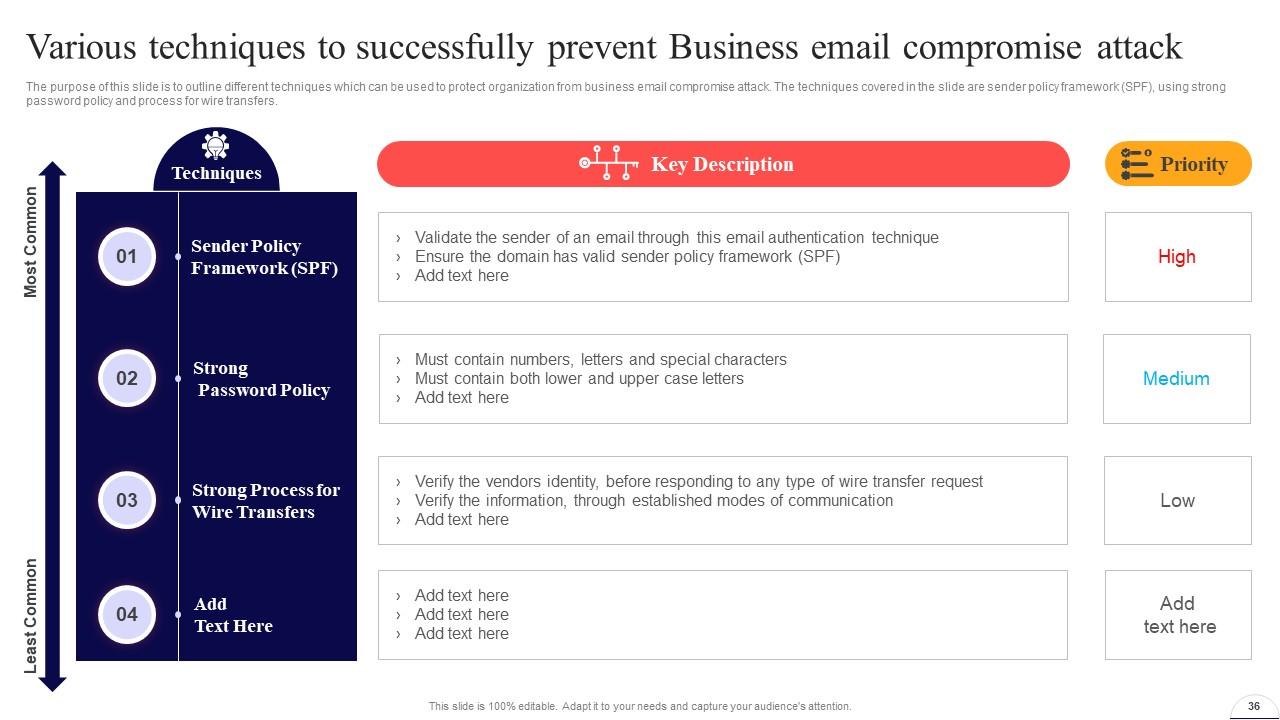
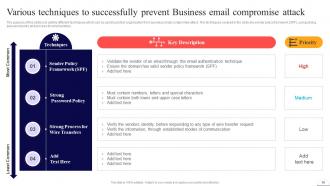
Slide 36: This slide outlines the Various techniques to successfully prevent Business email compromise attack.
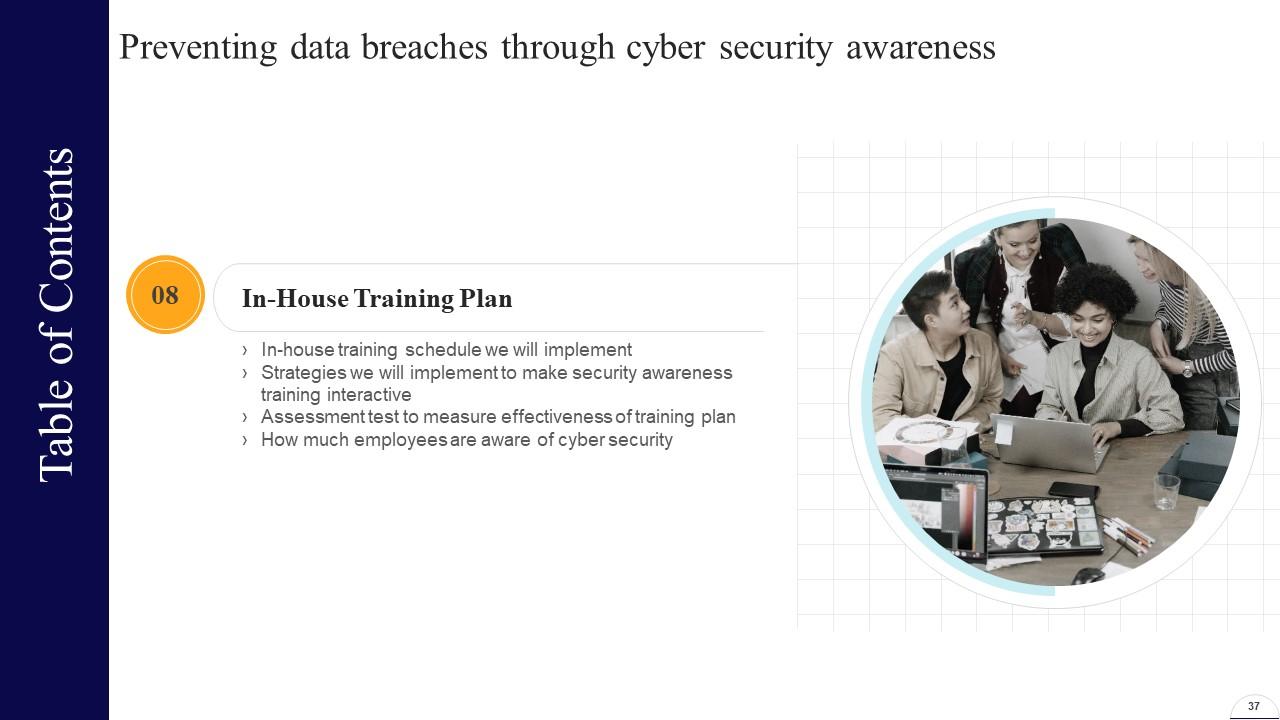
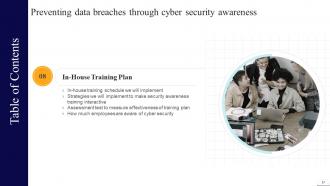
Slide 37: This slide contains the Heading for the Components to be covered in the upcoming slide.
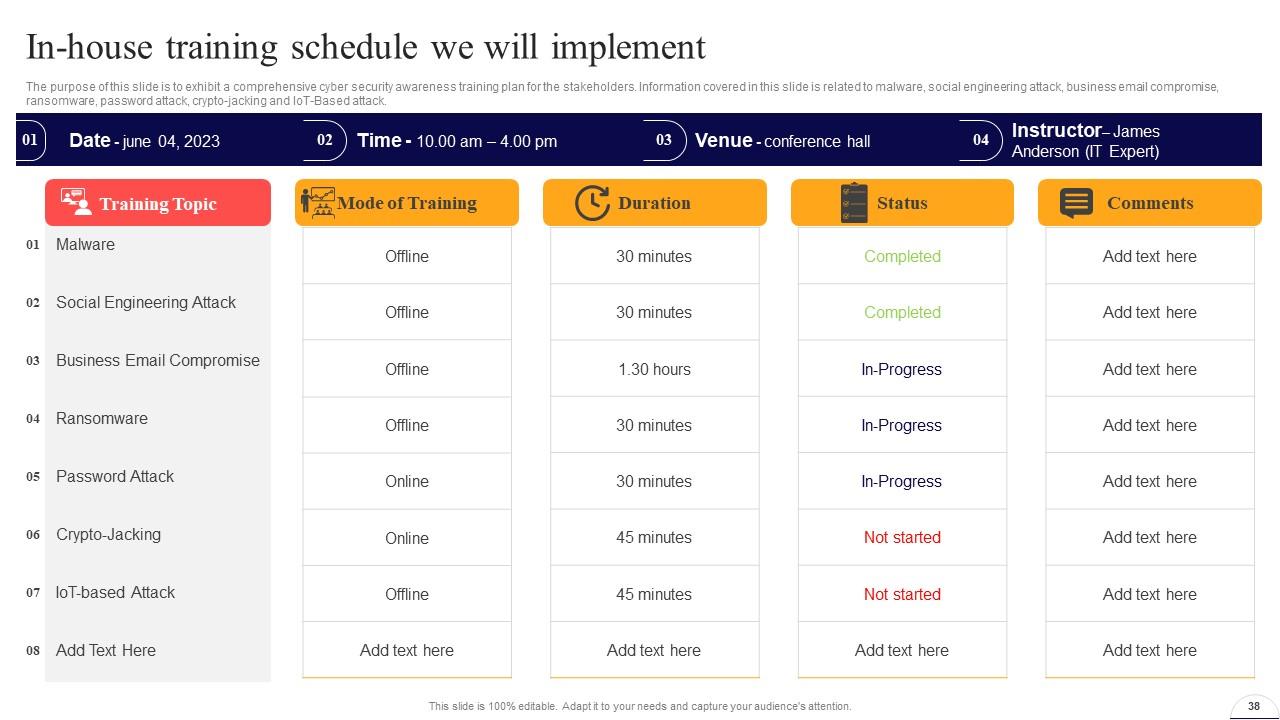
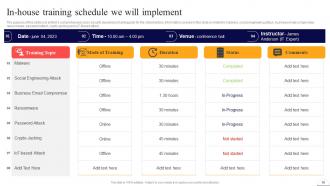
Slide 38: This slide reveals the In-house training schedule to be implemented.
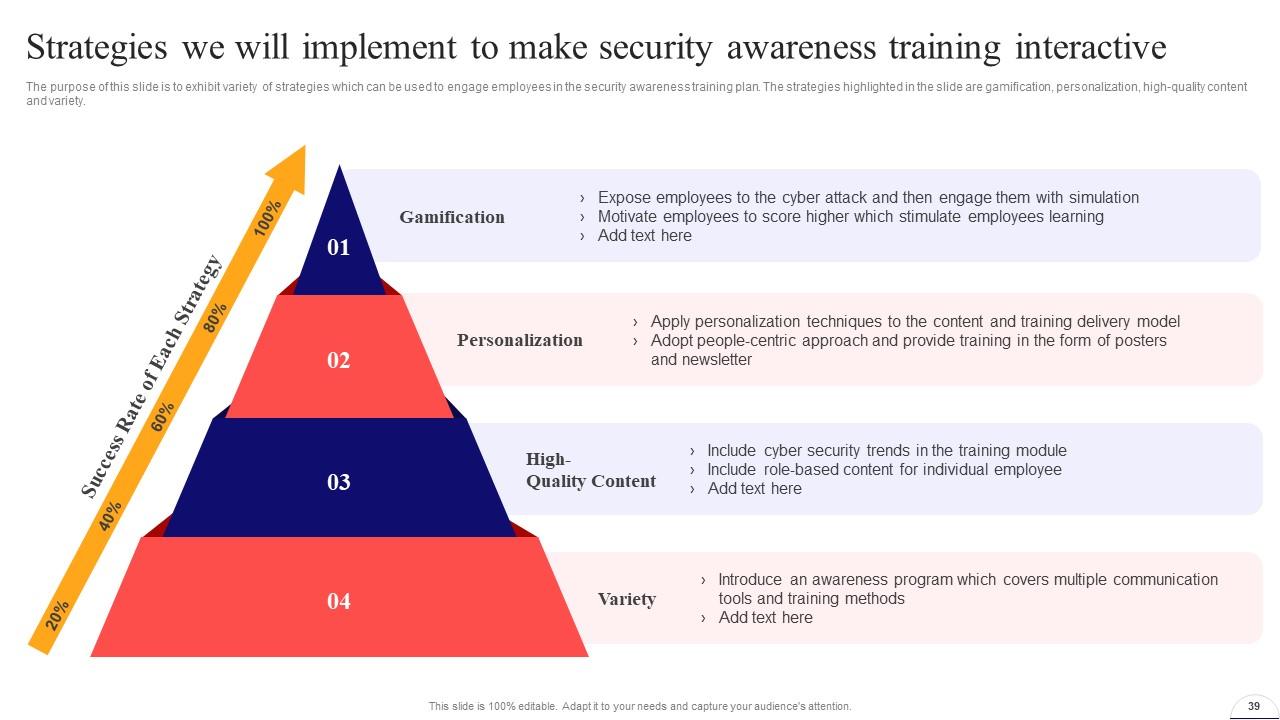
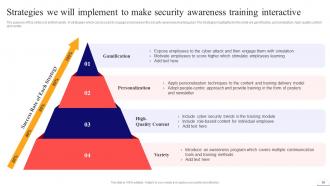
Slide 39: The purpose of this slide is to exhibit variety of strategies which can be used to engage employees in the security awareness training plan.
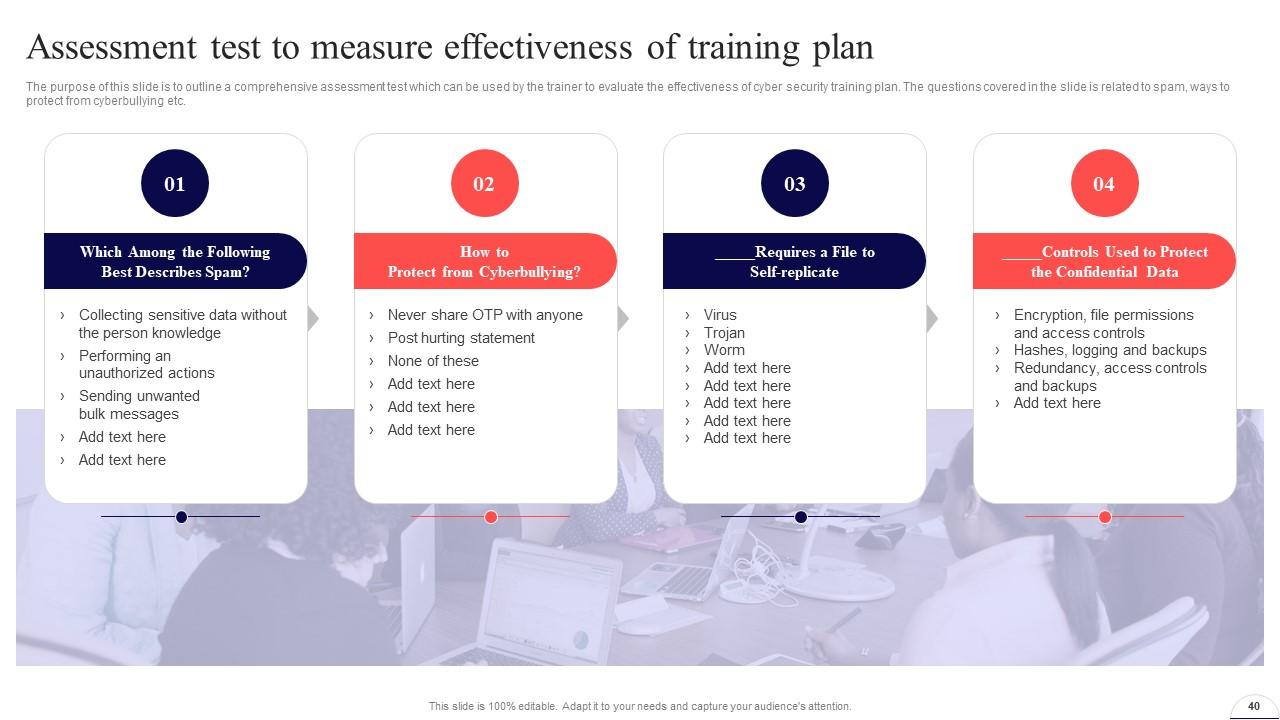
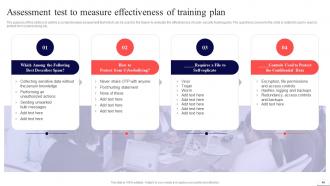
Slide 40: The purpose of this slide is to outline a comprehensive assessment test which can be used by the trainer to evaluate the effectiveness of cyber security training plan.
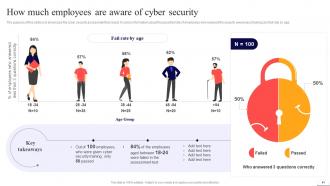
Slide 41: This slide highlights the cyber security assessment test result.
Slide 42: This slide presents the Title for the Ideas to be covered in the next template.
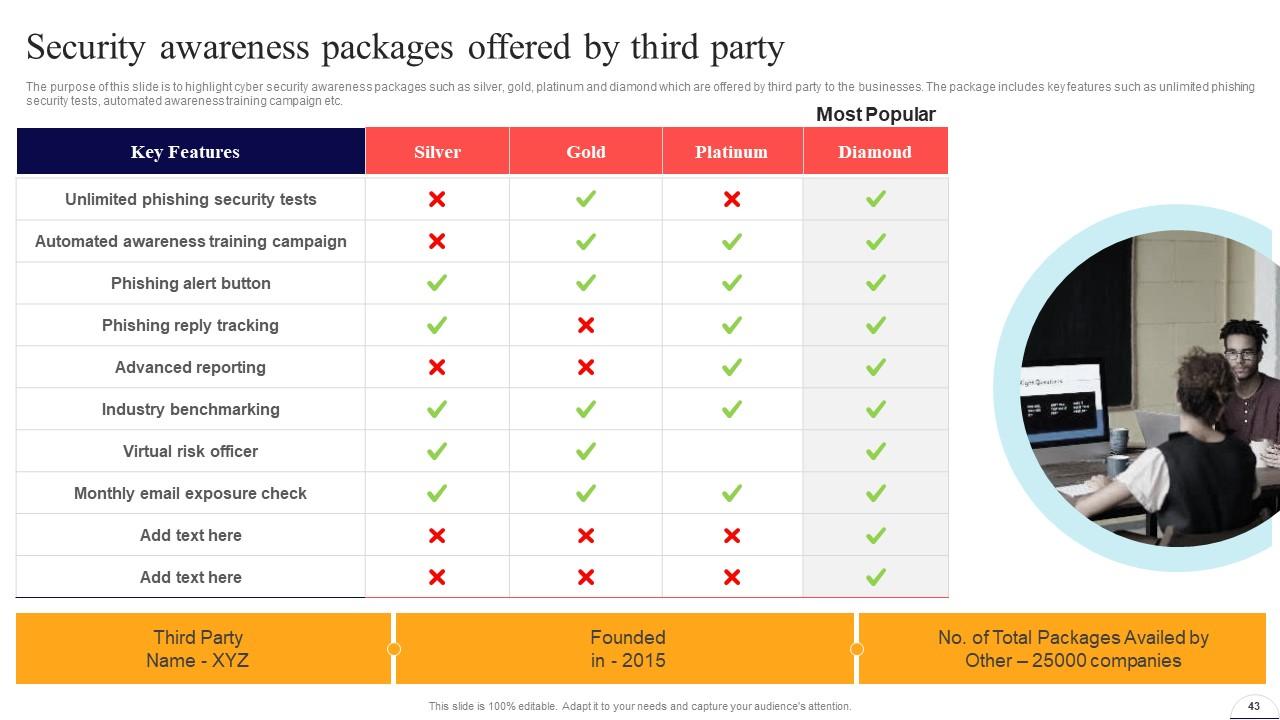
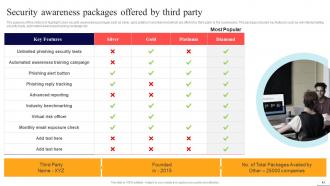
Slide 43: This slide focuses on the Security awareness packages offered by third party.
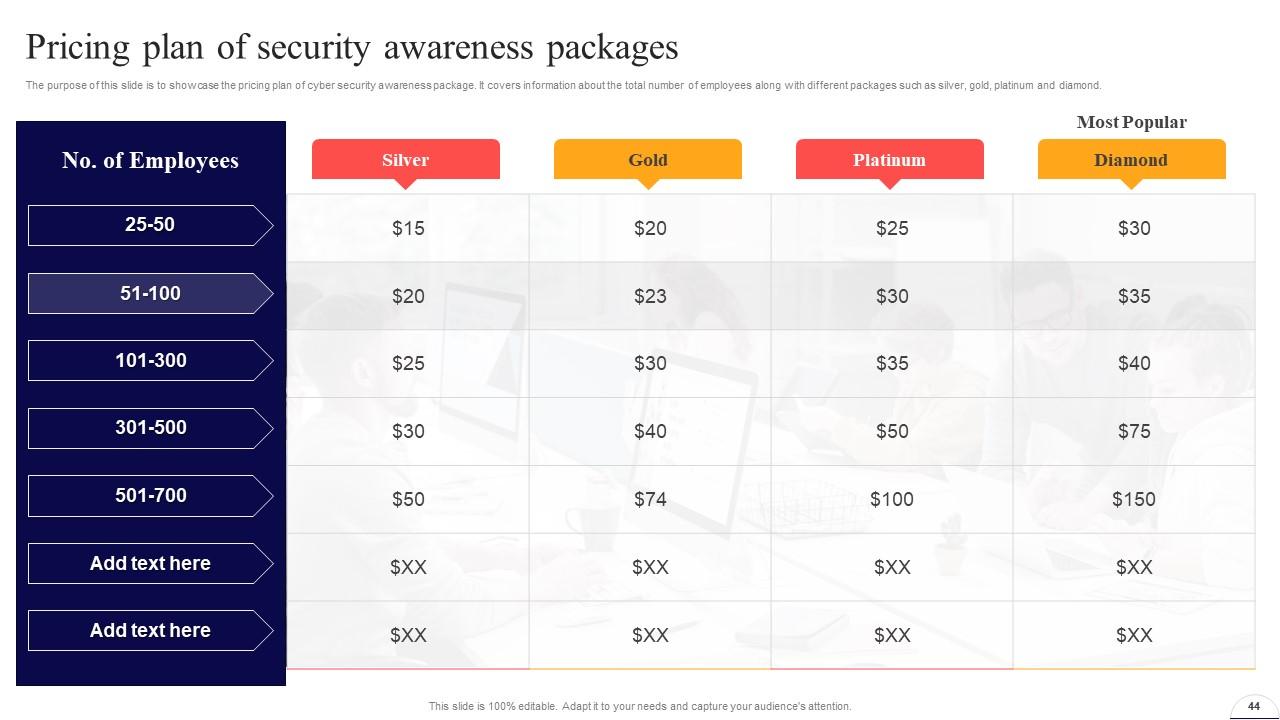
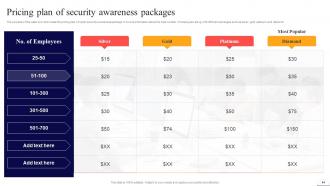
Slide 44: The purpose of this slide is to showcase the pricing plan of cyber security awareness package.
Slide 45: This slide contains the Heading for the Ideas to be discussed further.
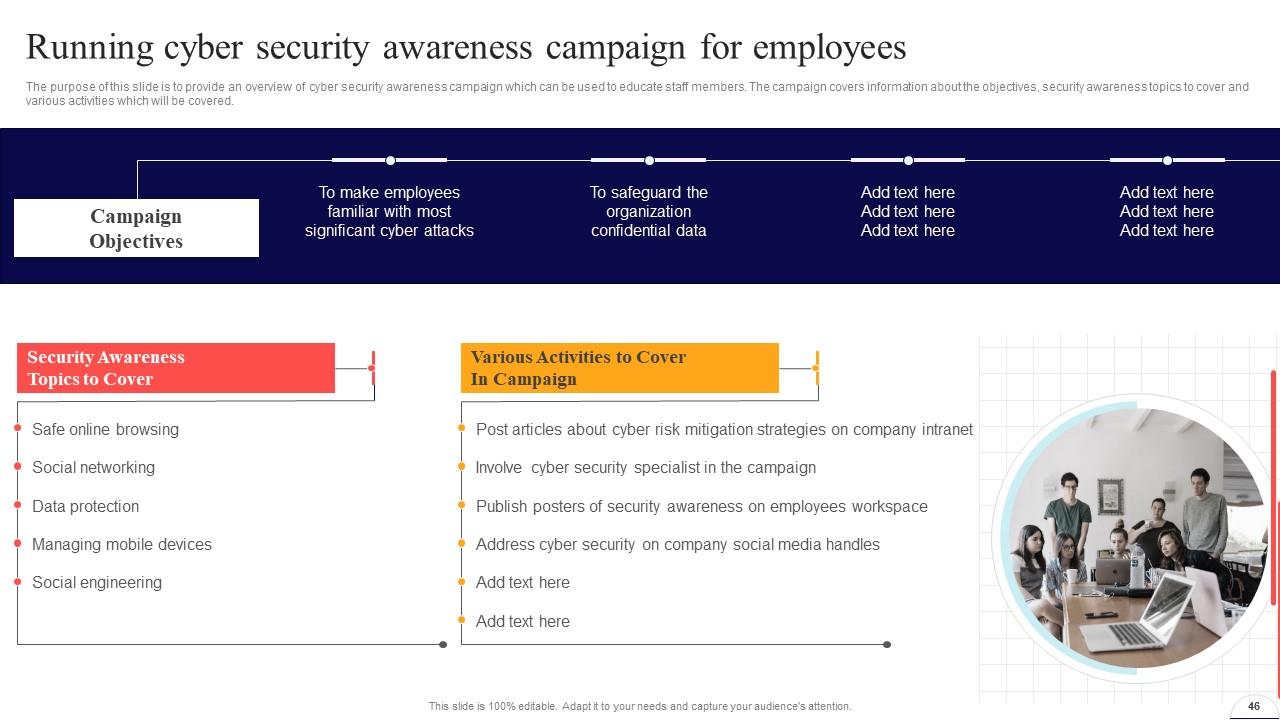
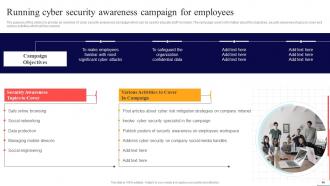
Slide 46: The purpose of this slide is to provide an overview of cyber security awareness campaign which can be used to educate staff members.
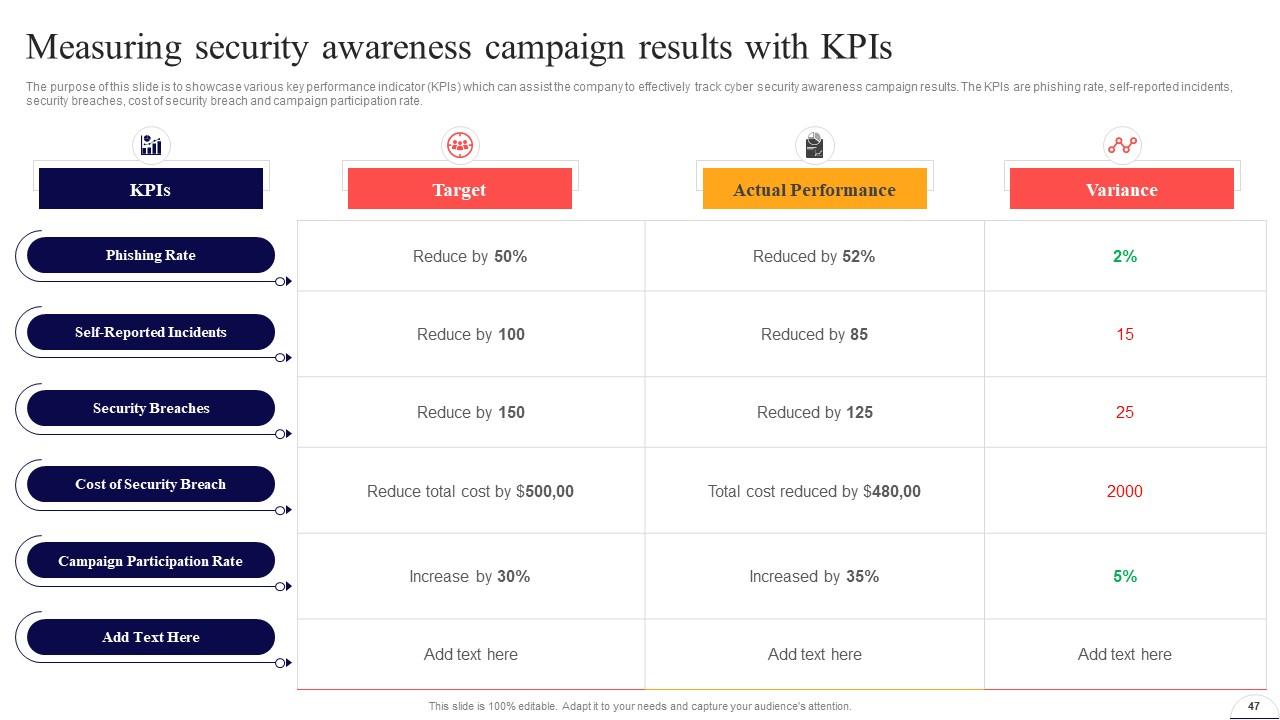
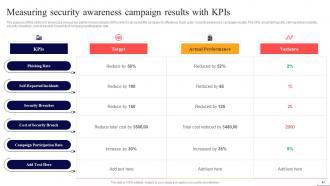
Slide 47: This slide deals with Measuring security awareness campaign results with KPIs.
Slide 48: This slide indicates the Title for the Components to be covered further.
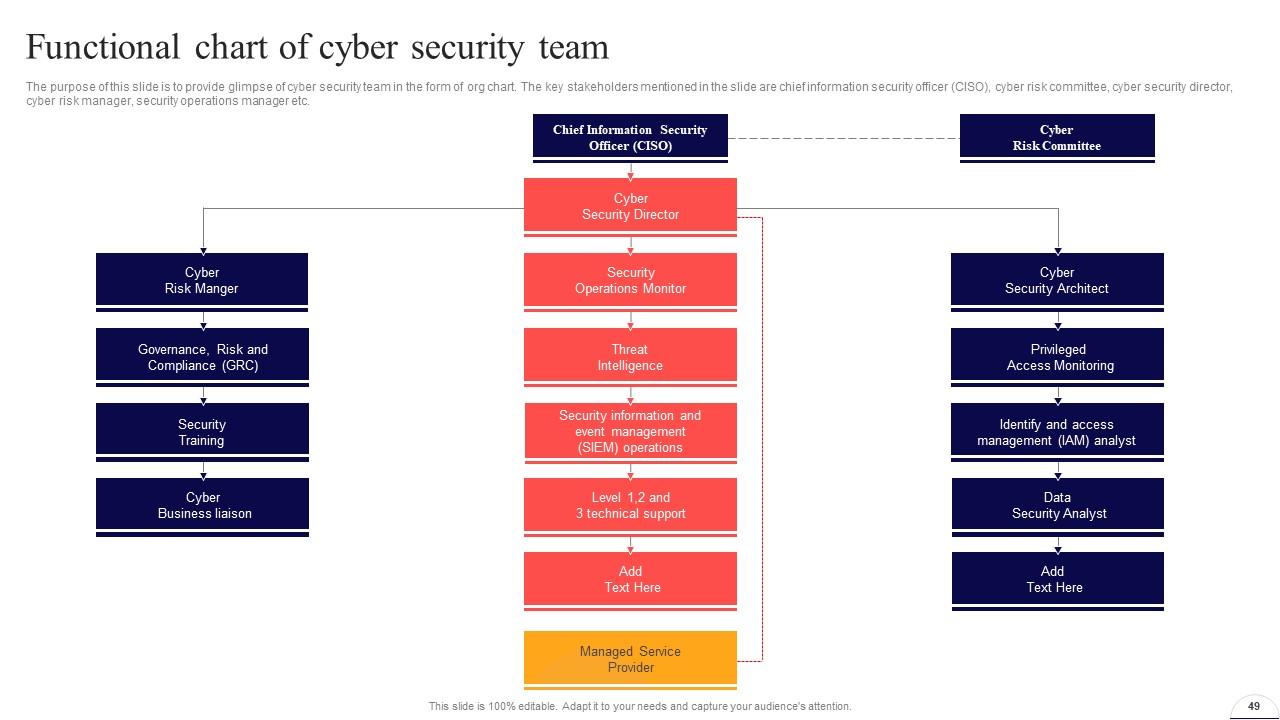
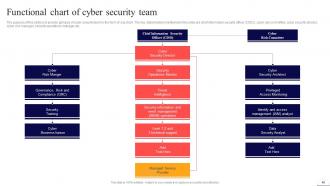
Slide 49: This slide illustrates the Functional chart of cyber security team.
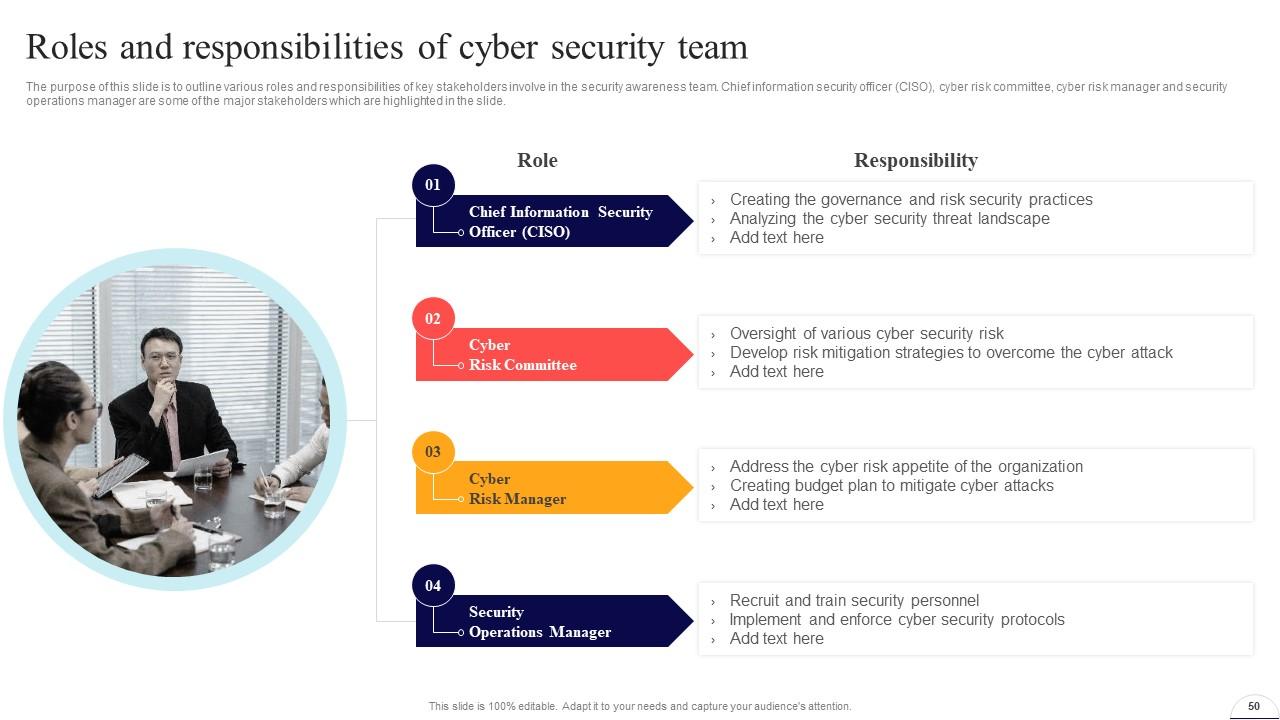
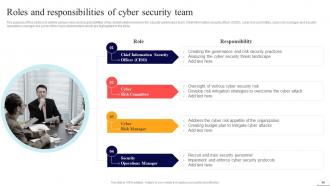
Slide 50: This slide mentions the Roles and responsibilities of cyber security team.
Slide 51: This slide exhibits the Title for the Topics to be discussed further.
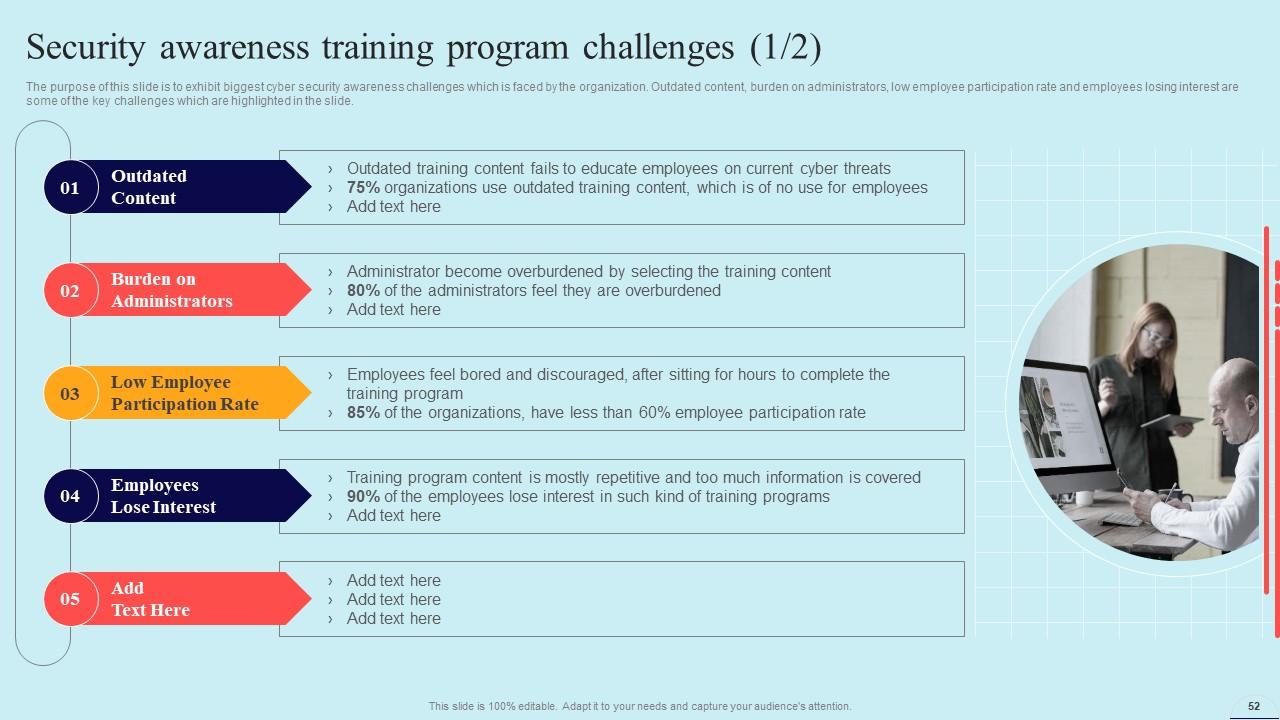
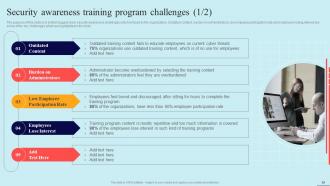
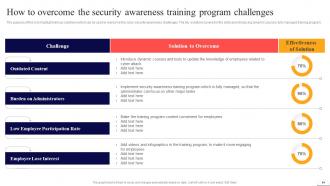
Slide 52: The purpose of this slide is to show biggest cyber security awareness challenges which is faced by the organization.
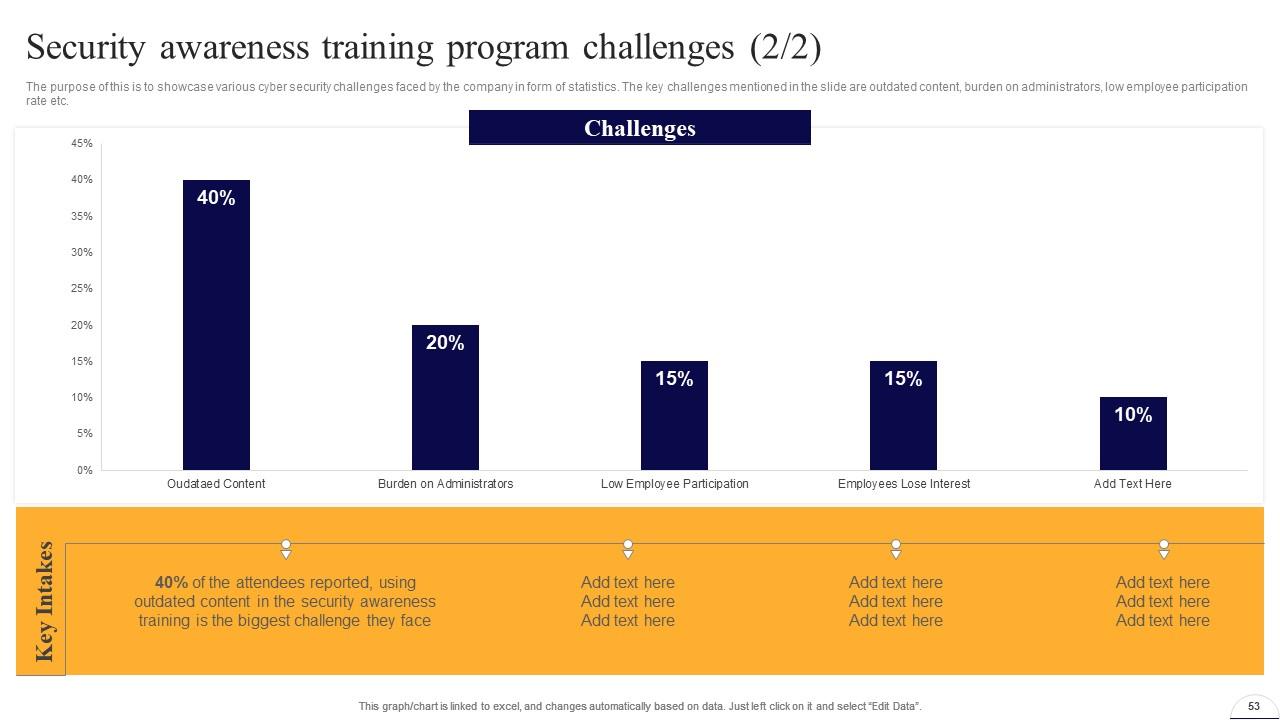
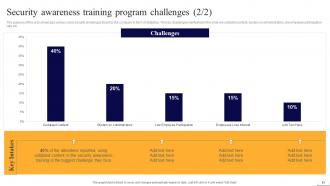
Slide 53: This slide is an extension of the Security awareness training program challenges.
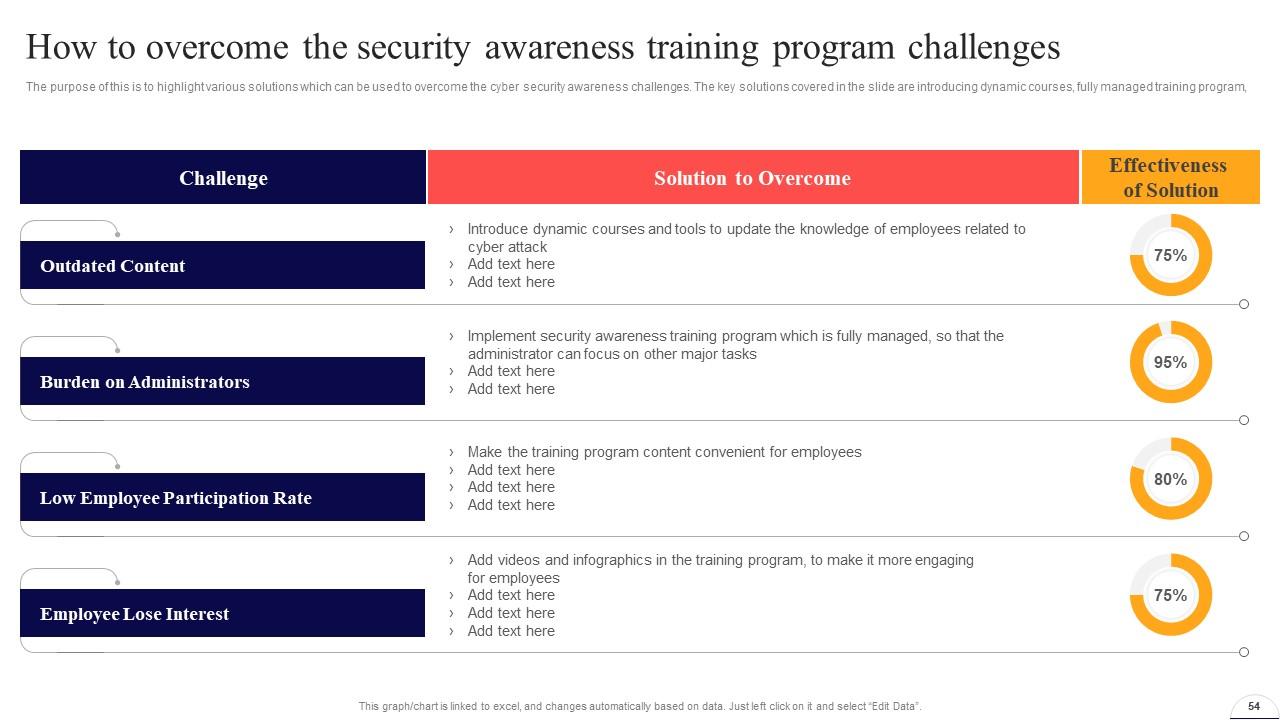
Slide 54: The purpose of this is to highlight various solutions which can be used to overcome the cyber security awareness challenges.
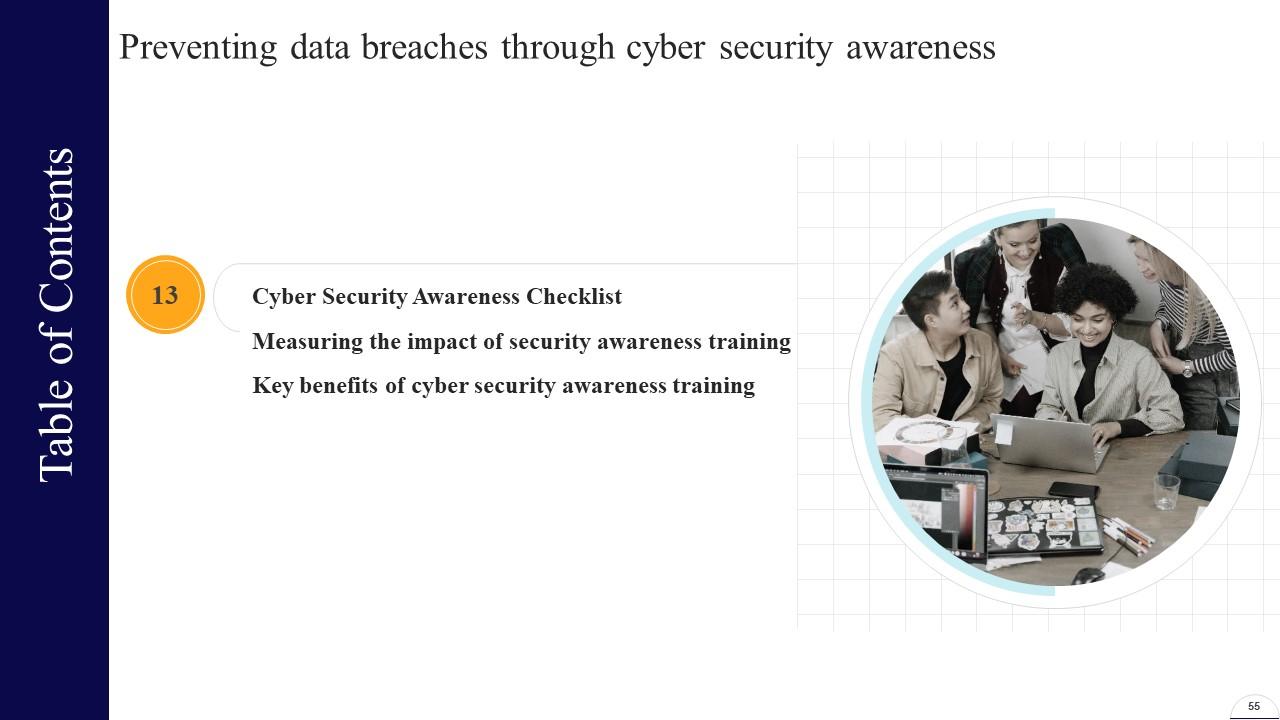
Slide 55: This slide depicts the Title for the Topics to be covered further.
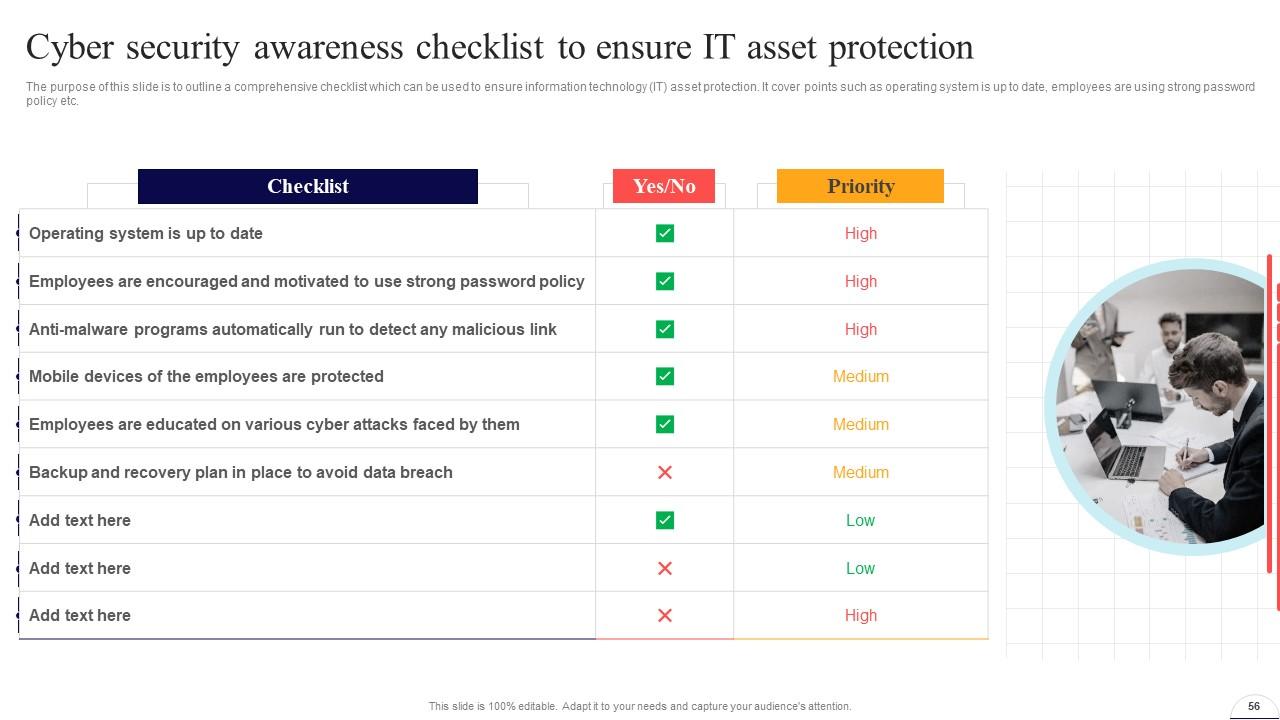
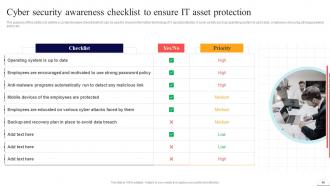
Slide 56: The purpose of this slide is to outline a comprehensive checklist which can be used to ensure information technology (IT) asset protection.
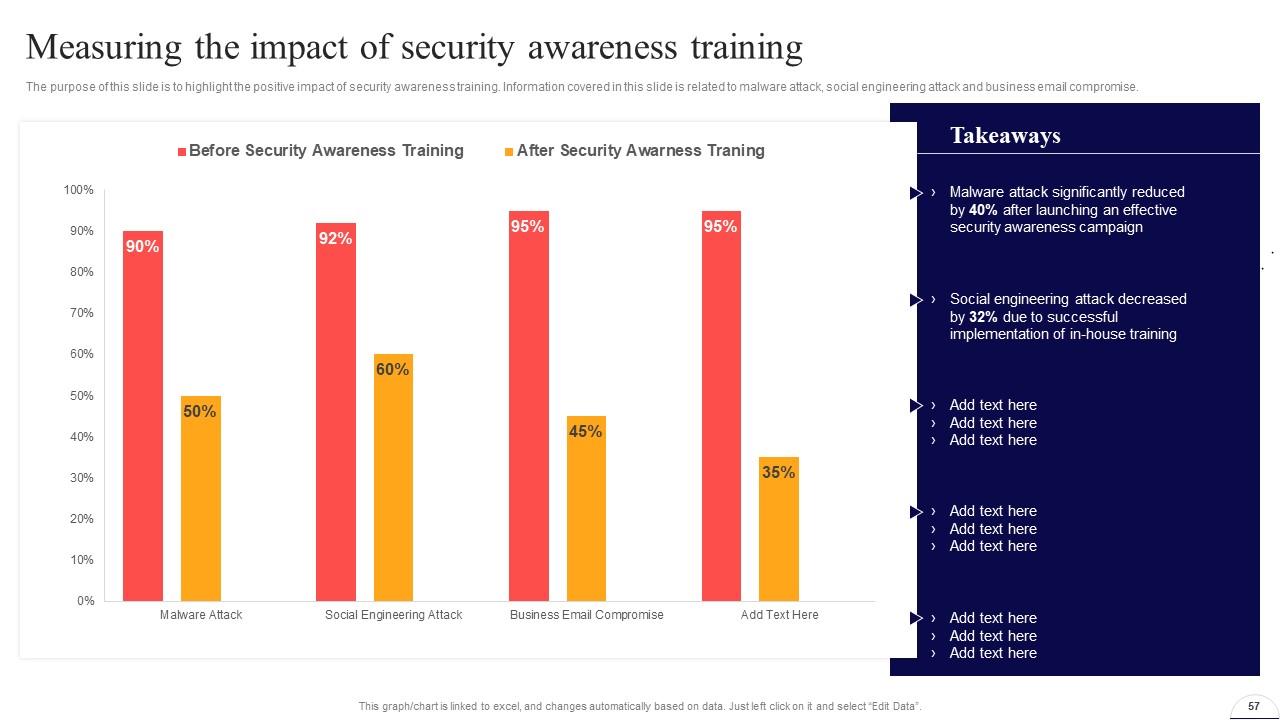
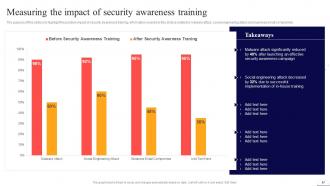
Slide 57: This slide illustrates Measuring the impact of security awareness training.
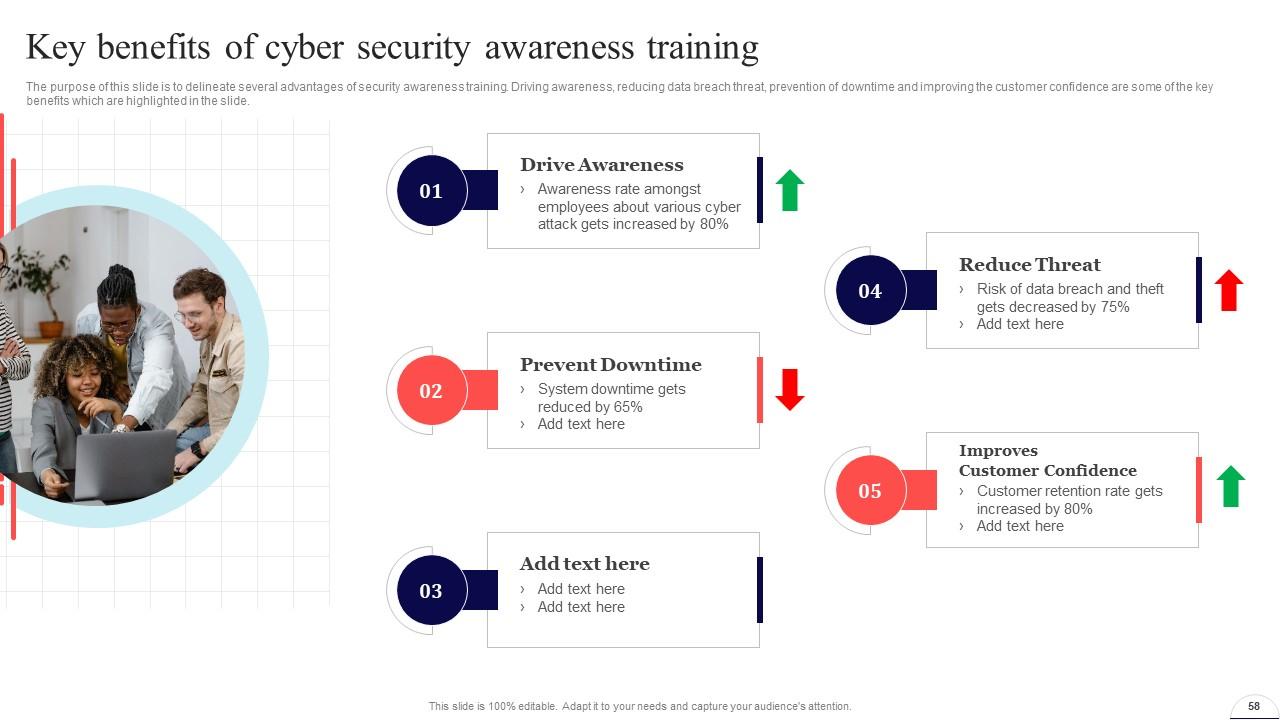
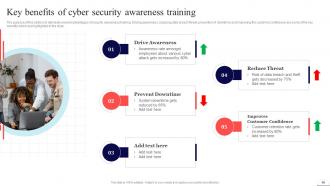
Slide 58: This sldie elucidates the Key benefits of cyber security awareness training.
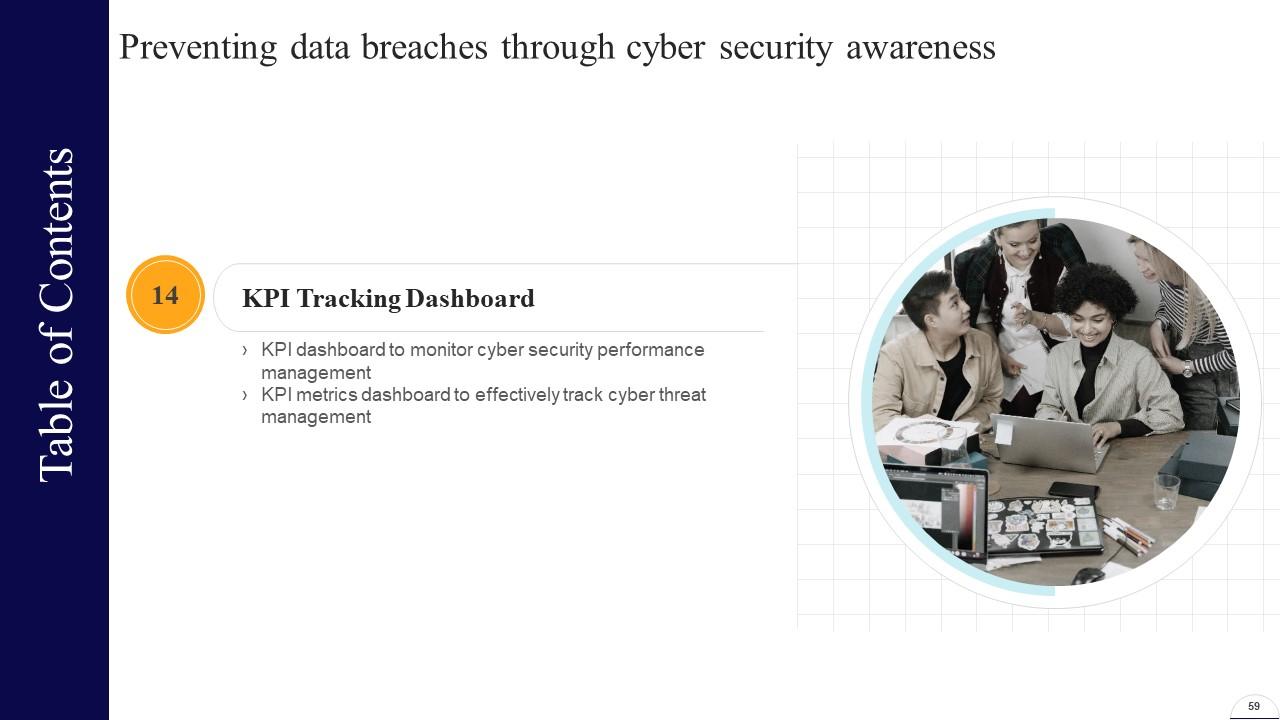
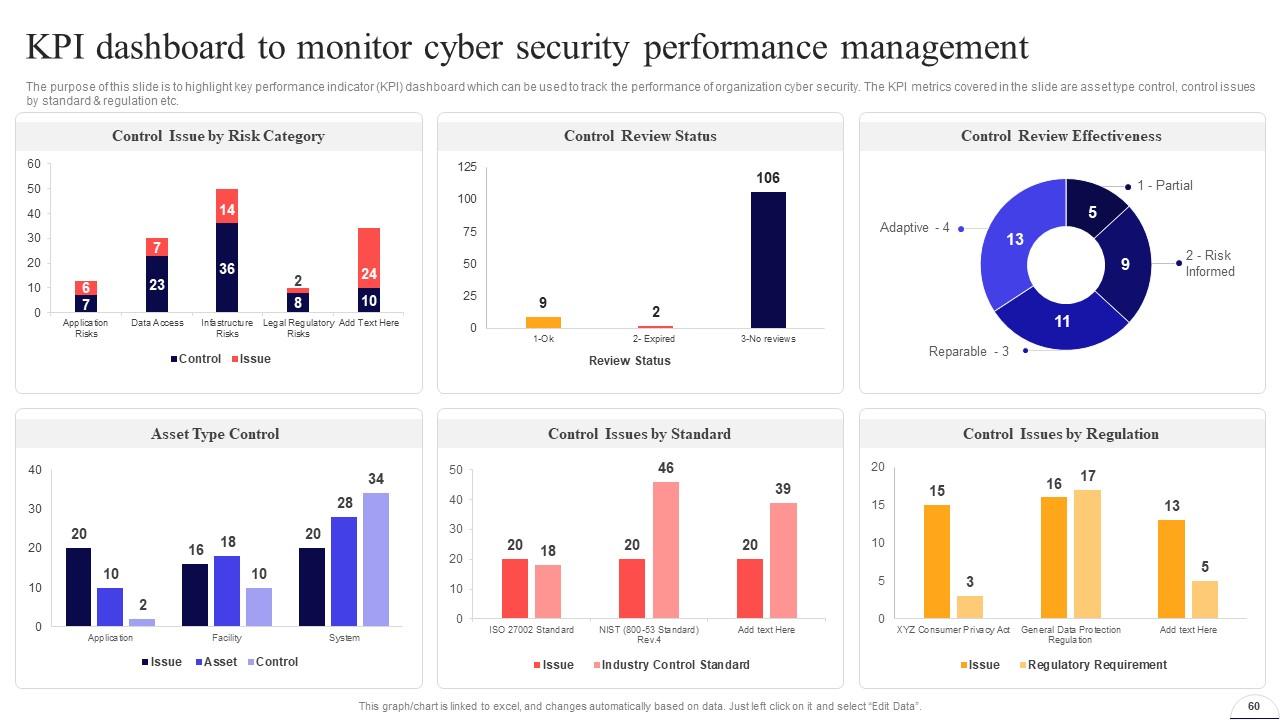
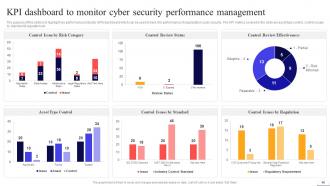
Slide 60: The purpose of this slide is to highlight key performance indicator (KPI) dashboard which can be used to track the performance of organization cyber security.
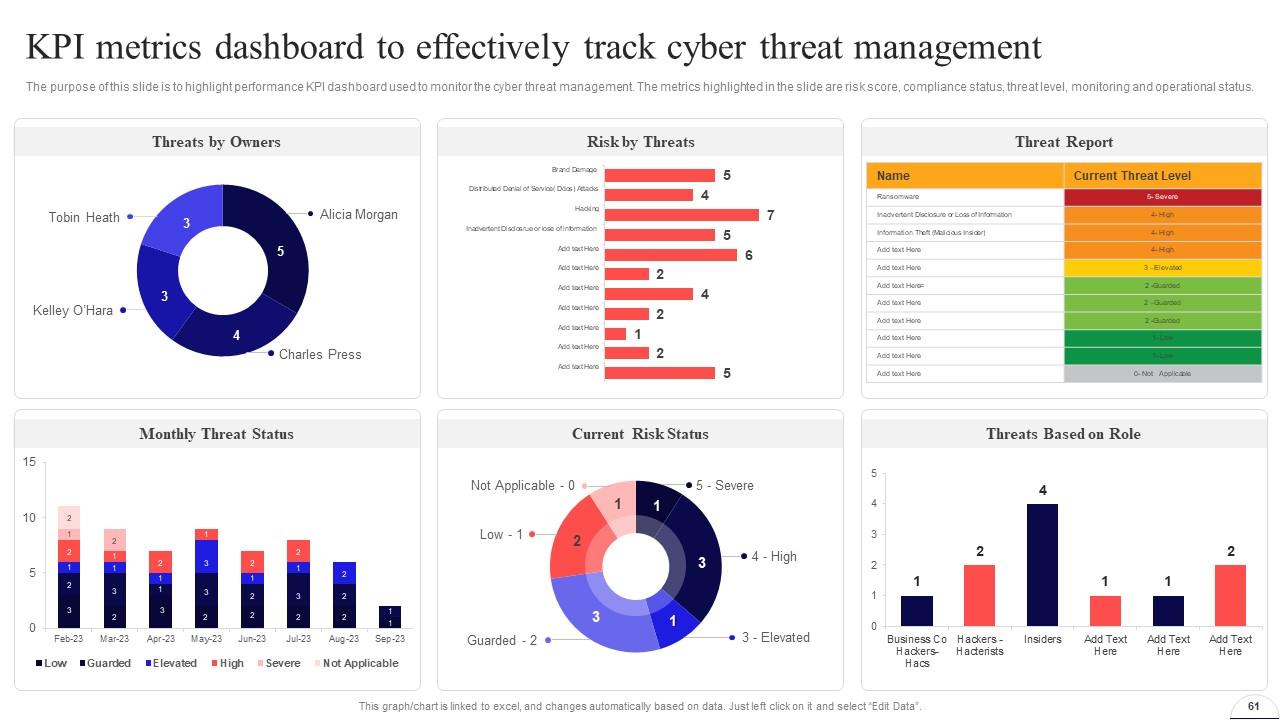
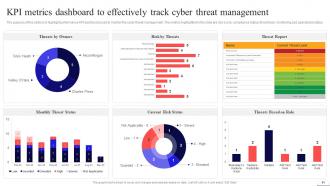
Slide 61: This slide presents the KPI metrics dashboard to effectively track cyber threat management.
Slide 62: This si the Icons slide containing all the Icons used in the plan.
Slide 63: This slide is used to display Additional information.
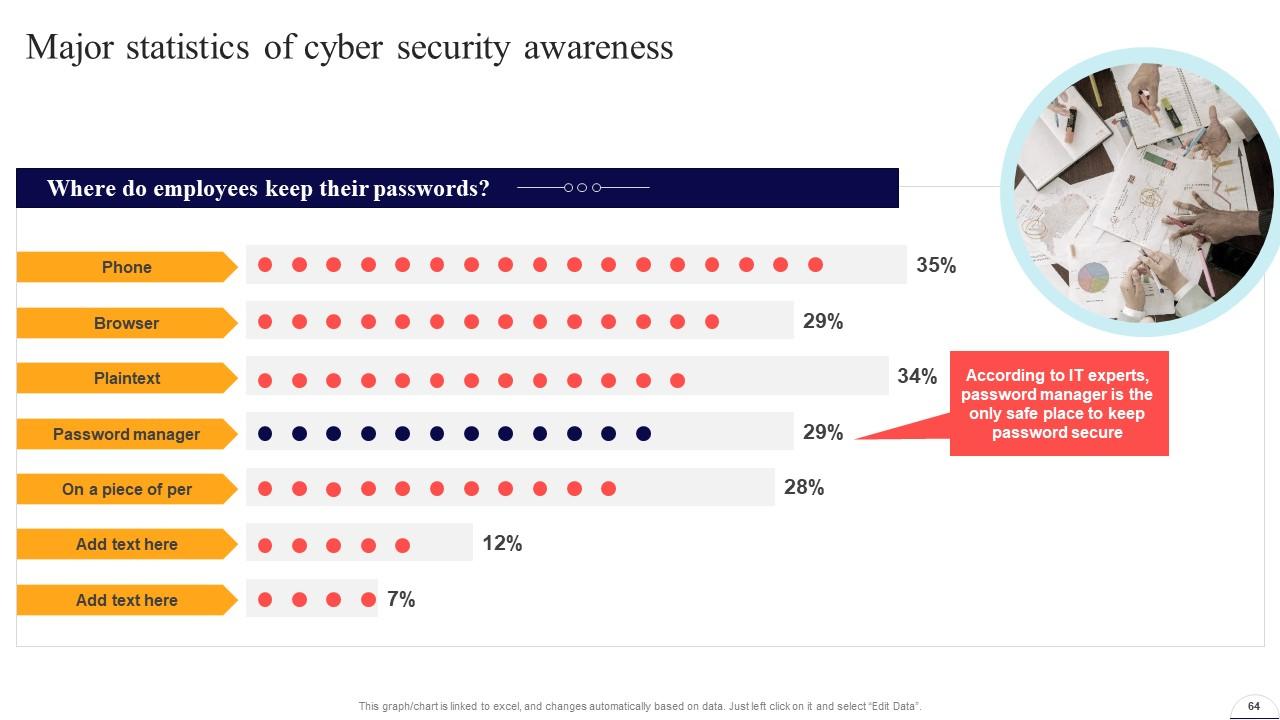
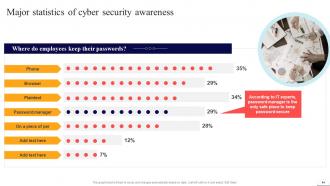
Slide 64: This slide showcases the Major statistics of cyber security awareness.
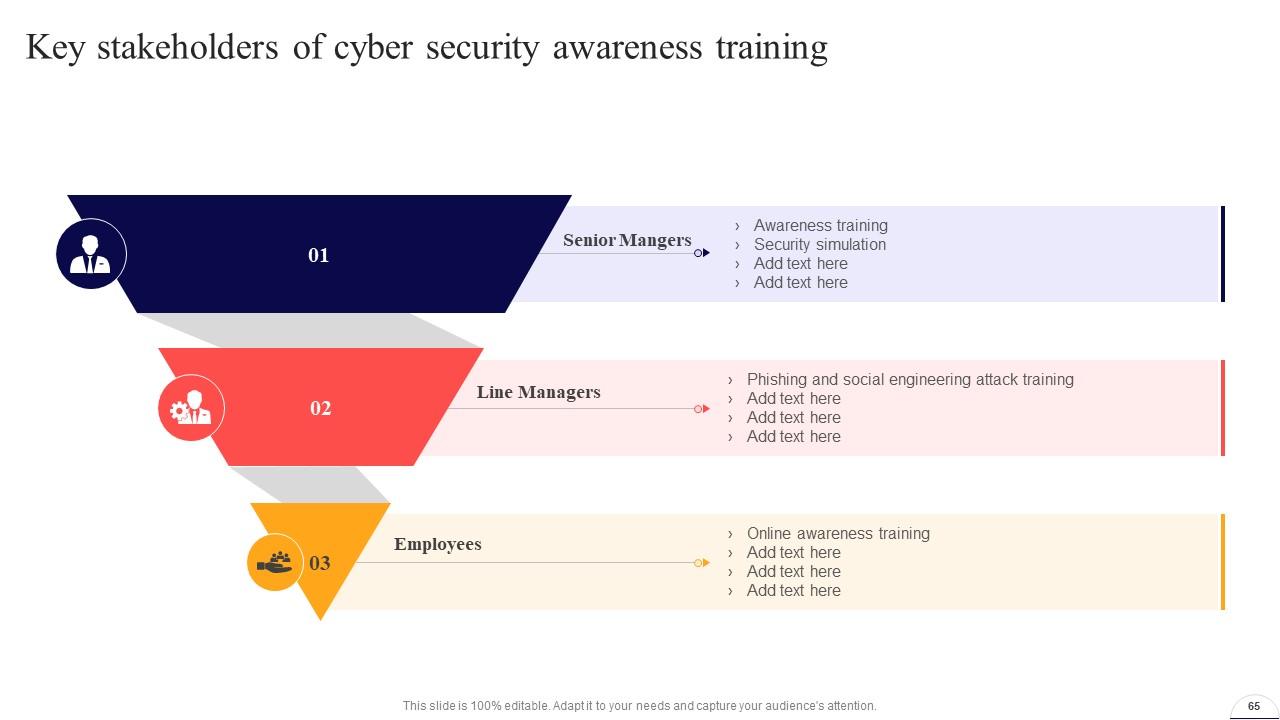
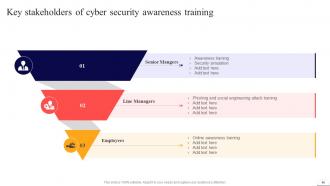
Slide 65: This slide indicates the Key stakeholders of cyber security awareness training.
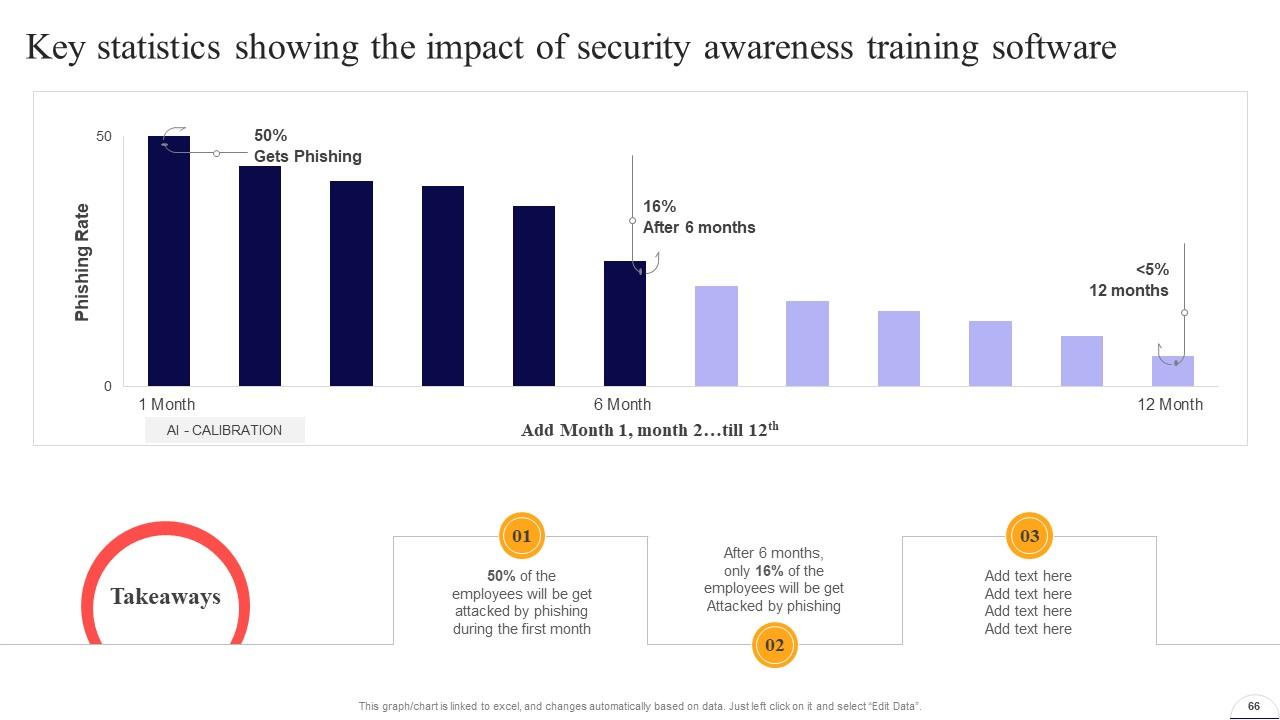
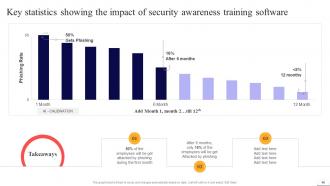
Slide 66: This slide shows the Key statistics showing the impact of security awareness training software.
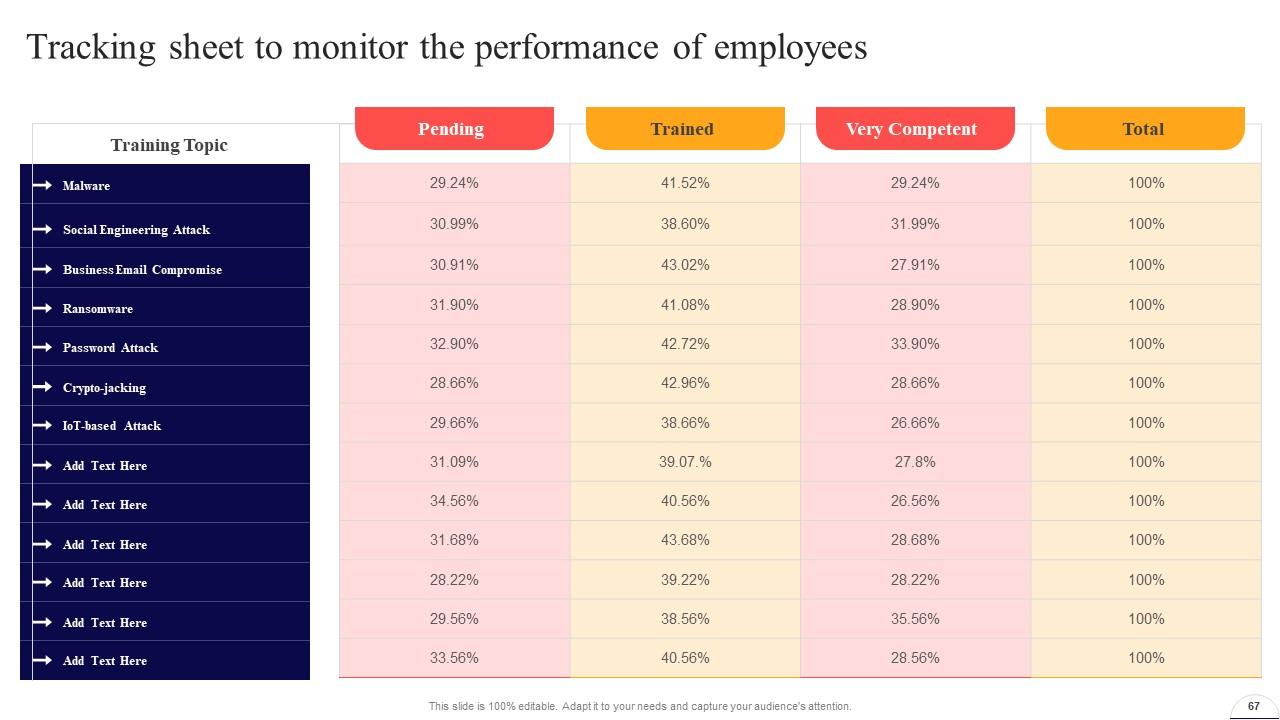
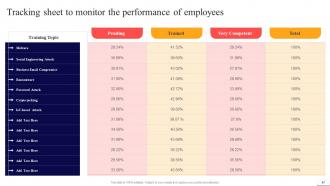
Slide 67: This slide mentions the Tracking sheet to monitor the performance of employees.
Slide 68: This is the Meet our team slide. State the information related to your team members here.
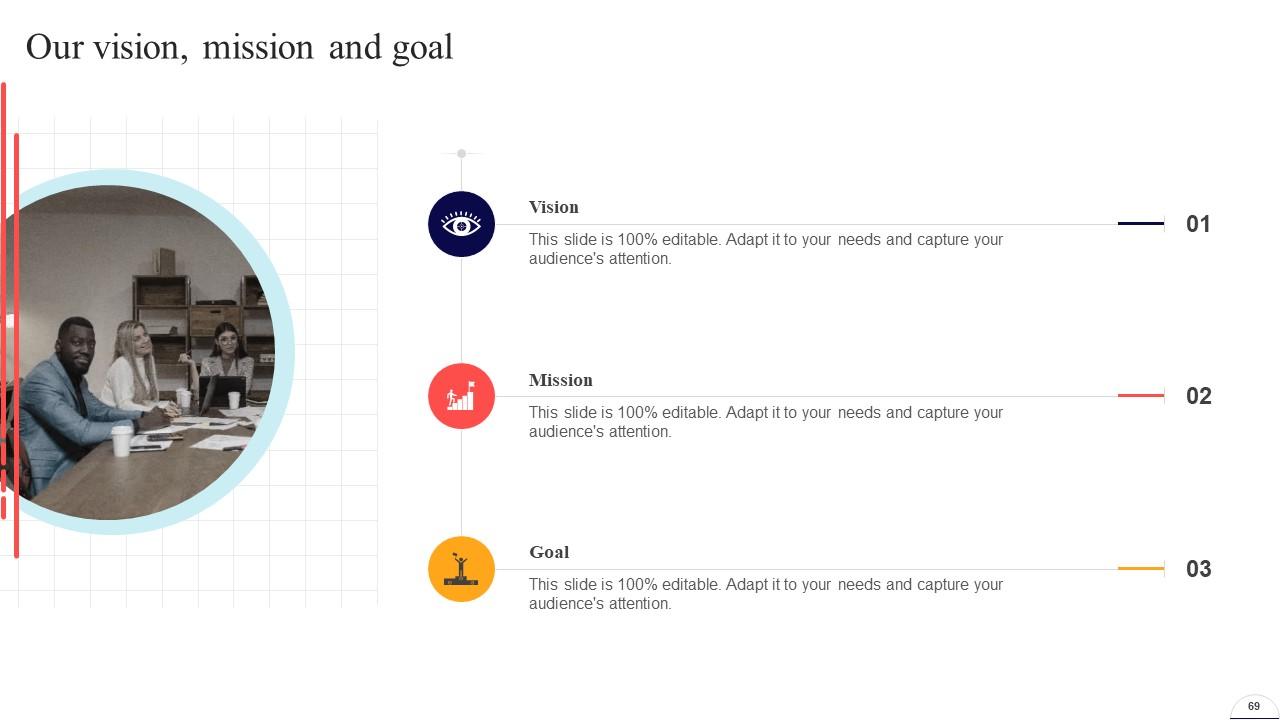
Slide 69: This slide is used for the purpose of depicting the organization's vision, mission and goal.
Slide 70: This is the About us slide for showcasing company related information.
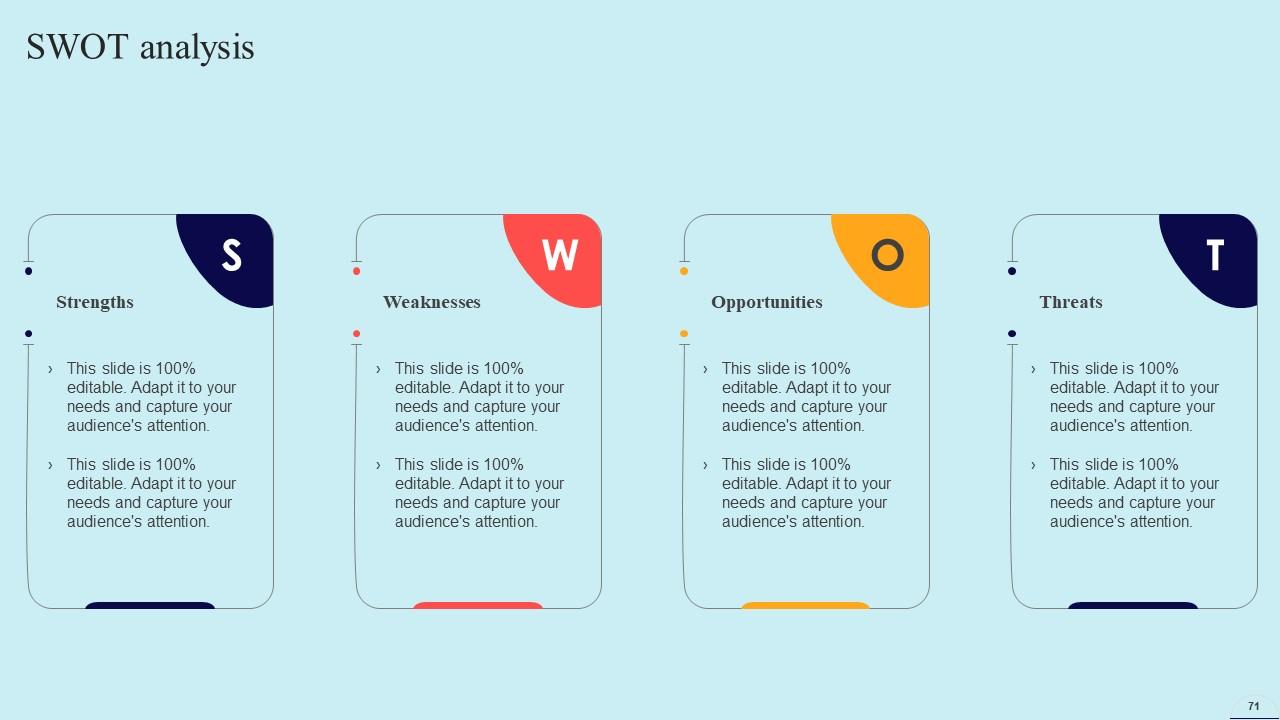
Slide 71: This slide represents the SWOT analysis.
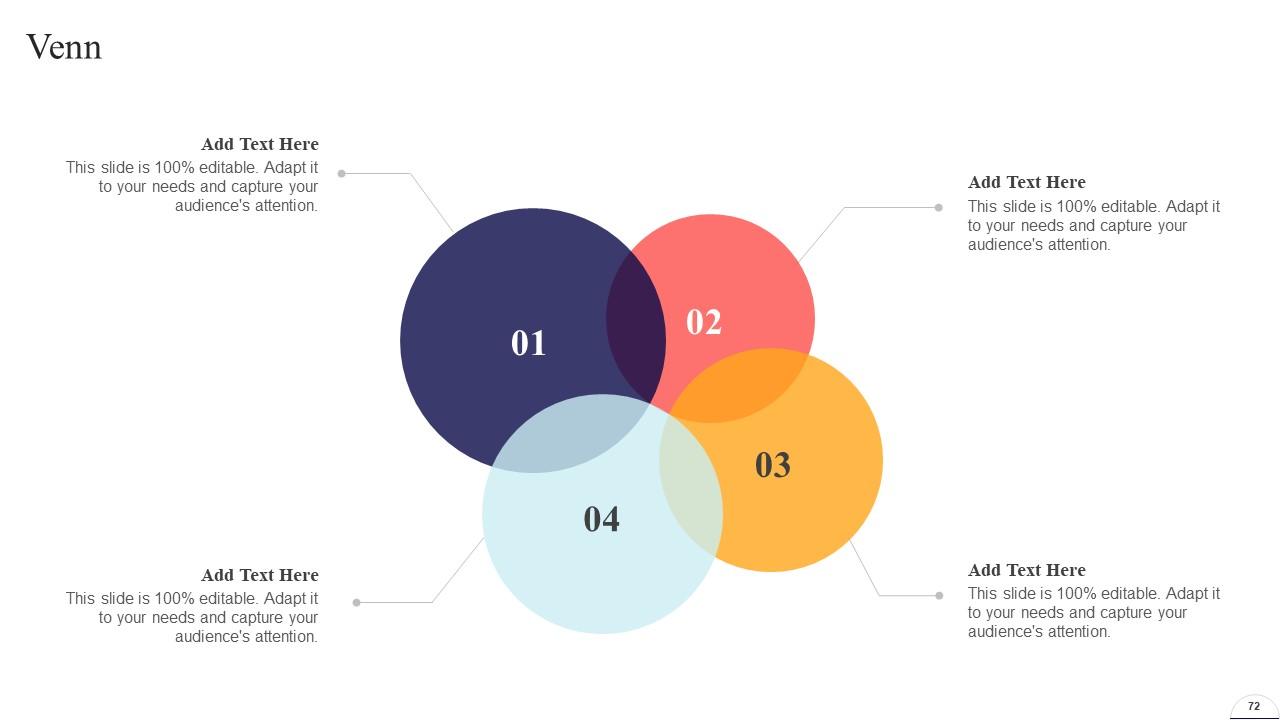
Slide 72: This is the Venn Diagram slide.
Slide 73: This slide reveals the Organziation's Mind map.
Slide 74: This slide contains the Post it notes for reminders and deadlines.
Slide 75: This is the Idea generation slide for encouraging innovative ideas.
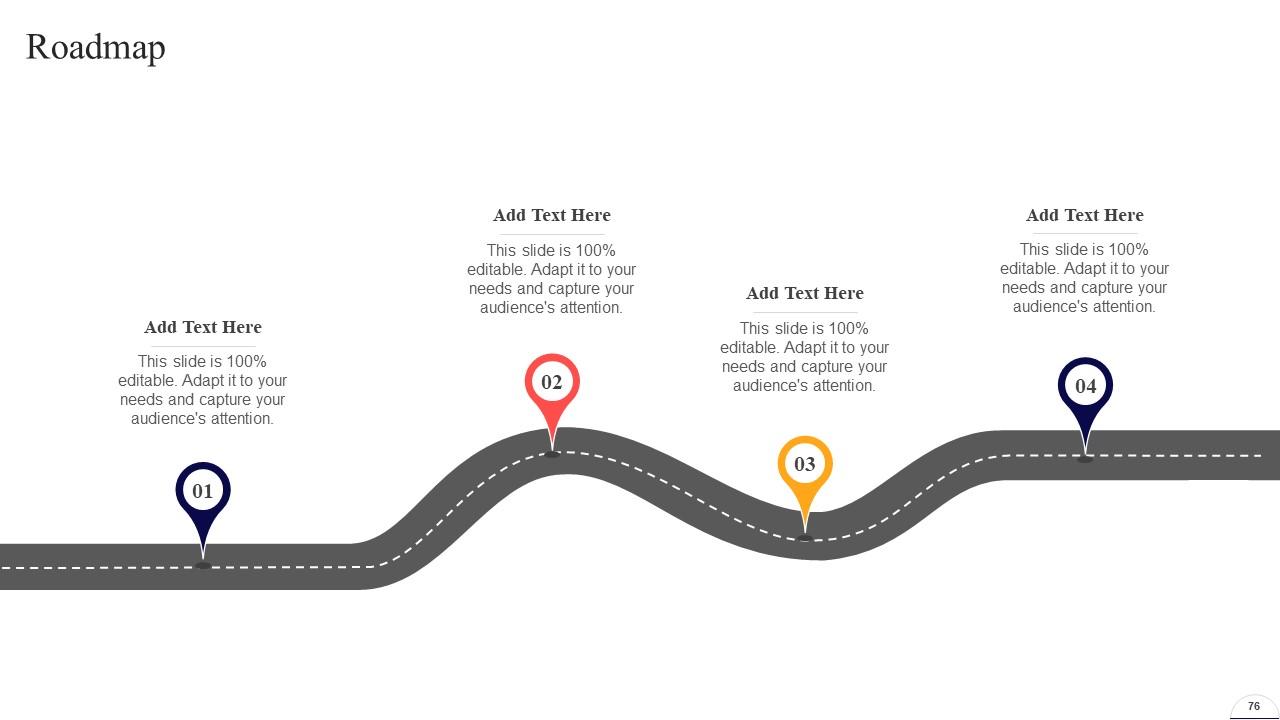
Slide 76: This slide elucidates the company Roadmap.
Slide 77: This is the Puzzle slide with related imagery.
Slide 78: This is the Thank you slide for acknowledgement.
Preventing Data Breaches Through Cyber Security Awareness Powerpoint Presentation Slides with all 83 slides:
Use our Preventing Data Breaches Through Cyber Security Awareness Powerpoint Presentation Slides to effectively help you save your valuable time. They are readymade to fit into any presentation structure.
-
SlideTeam just saved my project! Thank you so much. The variety of templates helped me showcase multiple perspectives easily.
-
Designs have enough space to add content.
