


Private Money Lending Proposal Powerpoint Presentation Slides





Try Before you Buy Download Free Sample Product
 Impress Your
 Audience
 100%
100% Editable
 Save Hours
 of Time


A private money lending proposal is a crucial document for the organization. Grab our professionally designed Private money lending proposal. It outlines the terms and conditions of a loan agreement between a borrower and a private lender. Our Loan Proposal typically includes information on the borrowers creditworthiness and the purpose of the loan. It also exhibits information about the amount borrowed, the interest rate, and the repayment schedule. Our Business Loan proposal further incorporates the mortgage loan process, loan plan, and investment property loans service. It details any collateral used to secure the loan. The borrower typically uses the proposal to explain their financial condition and borrowing requirements to the lender and persuade them that the loan is a wise investment. Get access to this powerful proposal now.
People who downloaded this PowerPoint presentation also viewed the following :
Content of this Powerpoint Presentation
Slide 1: This slide introduces Private Money Lending Proposal. Commence by stating Your Company Name.
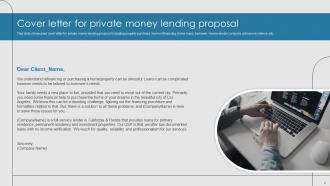
Slide 2: This slide showcases cover letter for private money lending proposal including property purchase, home refinancing, home loans, etc.
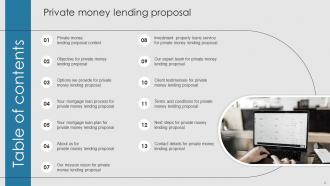
Slide 3: This slide incorporates the Table of contents.
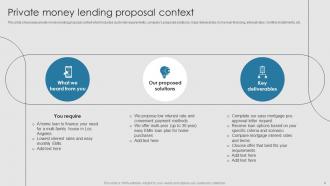
Slide 4: This slide showcases private money lending proposal context which includes customer requirements, company’s proposed solutions, major deliverables, etc.
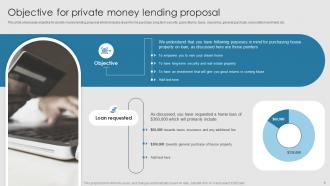
Slide 5: This slide reveals the objective for private money lending proposal which includes dream home purchase, long term security, good returns, taxes, etc.
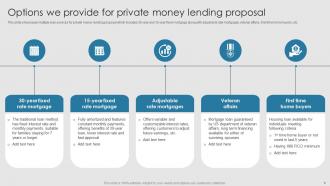
Slide 6: This slide highlights the multiple loan services for private money lending proposal which includes 30-year and 15-year fixed mortgage along with adjustable rate mortgages, veteran affairs, etc.
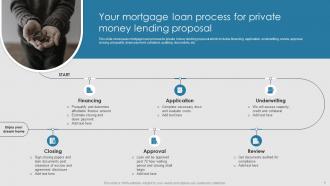
Slide 7: This slide displays the mortgage loan process for private money lending proposal which includes financing, application, underwriting, etc.
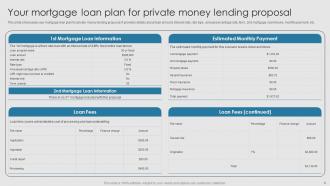
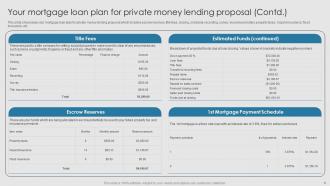
Slide 8: This slide presents the mortgage loan plan for private money lending proposal.
Slide 9: This is yet another slide continuing the mortgage loan plan.
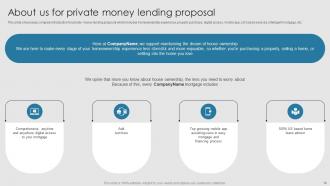
Slide 10: This is the About us slide for elucidating the Company related information.
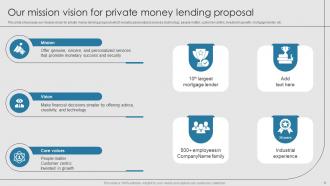
Slide 11: This slide exhibits the organization's mission and vision.
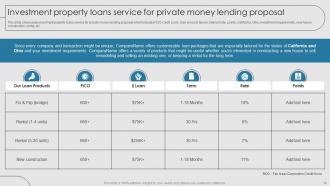
Slide 12: This slide portrays the investment property loans service for private money lending proposal which includes FICO credit score, loan amount, tenure, etc.
Slide 13: This slide represents the Company's team of experts.
Slide 14: This slide continues the information related to the team members.
Slide 15: This slide reveals the client testimonials for private money lending proposal including customer details, feedback, etc.
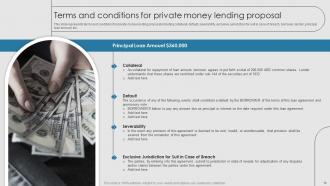
Slide 16: This slide highlights the Terms and conditions for private money lending proposal.
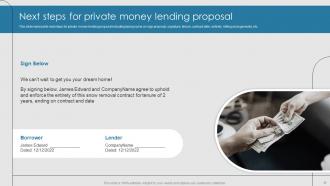
Slide 17: This slide presents the next steps for private money lending proposal including typing name on sign proposal, signature, etc.
Slide 18: This slide displays the Organization's Contact details.
Slide 19: This is the Icons slide containing all the Icons used in the plan.
Slide 20: The purpose of this slide is to depict some Additional information.
Slide 21: Thiks is the About us slide showcasing the Organization related information.
Slide 22: This slide portrays the mission, vision, and goals of the Company.
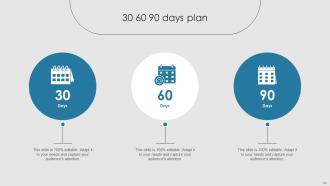
Slide 23: This slide elucidates the 30 60 90 days plan for effective planning.
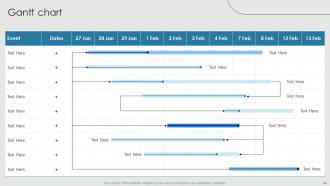
Slide 24: This is the Gantt chart with related imagery.
Private Money Lending Proposal Powerpoint Presentation Slides with all 29 slides:
Use our Private Money Lending Proposal Powerpoint Presentation Slides to effectively help you save your valuable time. They are readymade to fit into any presentation structure.











FAQs for Private Money Lending Proposal
Honestly, the speed is insane - we're talking days or weeks vs months with traditional banks. Private lenders don't really care about your credit score or debt ratios like banks do. They focus on the actual deal and what you're putting up as collateral. Way less paperwork too, which is refreshing after dealing with banks and their endless document requests. Sure, you'll pay more in interest, but that's usually worth it when you need to move fast. The terms are negotiable since you're dealing with actual people instead of some computer system. For flipping or time-sensitive stuff, it's honestly a no-brainer.
Here's what I'd focus on: borrower's credit history and track record first. Then dig into the property value - get comps, a real appraisal, know your loan-to-value ratio cold. Real estate can bite you hard if you're sloppy with research. Have an exit plan ready because sometimes deals go sideways. Oh, and foreclosure laws vary by state, so factor in those costs and timelines too. Honestly, I'd start small to learn the ropes. Local market conditions matter way more than people think - that's where you can really get burned or find gold.
Fix-and-flip deals are your sweet spot - short timeline, there's actual property backing the loan, and flippers usually know their exit plan. Construction projects work too, plus commercial buys and bridge loans when investors need to move fast before they get regular bank financing. Speed matters more than rock-bottom rates in these situations, you know? Most borrowers have skin in the game and a solid 6-24 month plan to either sell or refi. Oh, and focus on deals where your quick turnaround actually solves their timing problem - that's where you add real value.
Yeah so private money loans are gonna hit you with way higher rates - like 8-15% or more. Terms are short too, maybe 6 months to 3 years max. They'll want real estate as collateral and you're looking at bigger down payments than normal banks. The upside? Paperwork flies through super quick. But honestly, they can get creative with their terms - personal guarantees, weird clauses that could screw you if another loan goes bad. They usually cap you around 70-80% loan-to-value. Just read everything twice because these guys aren't as regulated as banks.
Yeah so private lenders charge way more - like 8-15% vs the 3-7% you'd get from a bank. But here's the thing, they're fast as hell. Banks will drag you through months of paperwork and ridiculous requirements. Private guys? They can fund you in days sometimes. Look, you're paying extra for speed and flexibility when banks won't touch your deal. Just make sure whatever you're investing in will actually make enough to cover those higher rates. Otherwise you're just bleeding money for no reason.
Definitely get everything in writing first - interest rates, payment schedule, the whole deal. Check your state's usury laws because some places are super strict about interest caps. If there's property involved, both of you need to understand foreclosure stuff. Some states require lenders to have licenses too, which is annoying but whatever. Honestly, private loans can turn into total disasters without proper paperwork. For big amounts, I'd probably get a lawyer to look it over. Way better to spend a few hundred upfront than deal with a mess later.
Hit up your local REIA meetings first - that's where the real connections happen. BiggerPockets is solid for online networking, and LinkedIn actually works better than you'd think for finding private lenders nearby. Just search "private lender" plus your city. Always ask for references and proof they've done deals before, because I've seen way too many wannabes talking big with zero cash. Word-of-mouth is honestly the best way to find good people. Oh, and don't rush into anything - go to a couple meetups to figure out who's actually legit vs. just full of hot air.
So private lenders are like the fast cash option when banks drag their feet or won't touch your deal. Perfect for house flips or when you need to close quickly. Yeah, they're pricey - way higher interest than banks and you're looking at 6-24 month terms usually. But honestly? Sometimes paying extra is worth it when you can get funded in days instead of waiting months for bank approval. I've seen people miss great deals because they couldn't move fast enough. Just don't get stuck holding their money longer than planned - that's where it gets really expensive.
Have your business plan locked down and know your exit strategy before you walk in. Shop around first so you know what rates look like elsewhere. Credit matters, but honestly these lenders care way more about the actual deal and property value than your personal stuff. Bigger down payment helps a ton - reduces their risk and gives you room to negotiate. Oh, and definitely ask about lowering points or better terms. I mean, worst case they say no, right? Most would rather work with you than watch you walk to their competition.
Speed is the biggest thing - private lenders can move in days instead of weeks. They mostly care about the property value and your exit plan, not your credit score or employment history. Way less paperwork too. Banks want everything documented to death, but private guys? They're betting on the deal itself. You'll still need some docs obviously, but nothing crazy. The downside is higher rates, but honestly if you need to close fast on a good property, it's worth it. Regular loans take forever - like 30-45 days minimum.
Honestly, market volatility can work in your favor as a private lender. Banks get scared and pull back - that's when borrowers start knocking on your door instead. You can bump up your rates since there's way less competition out there. But here's the catch: your borrowers might have a harder time paying you back if their deals go south or property values drop. I'd probably get pickier about which loans you take on and maybe do shorter terms. Oh, and keep extra cash sitting around so you can jump on the really good opportunities when they come up.
Honestly, the worst thing you can do is show up with messy financials. Like, get your bank statements and income docs sorted before you even make calls. Lenders want to see you're not a disaster waiting to happen. Also - and I learned this the hard way - definitely shop around because rates are all over the place. Some guy quoted me 12% while another was at 8% for the same deal. Don't wait until you're panicking either. Oh, and budget more than you think for repairs because something always goes wrong. Trust me on that one.
Honestly, tech makes the whole thing way smoother. Automated underwriting gets you faster decisions on borrowers. Digital platforms open up more deal flow. E-signatures cut closing time from weeks to just days - which is huge. Document management saves you from digging through endless email chains (been there, it sucks). Borrowers can upload stuff instantly and see where their application stands in real-time. I'd start small though - maybe just digitize how you collect docs or communicate with borrowers first. Then expand from there once you get the hang of it.
Look, don't be that scummy lender who preys on desperate people - it'll bite you later anyway. Keep your rates fair for the actual risk you're taking. Be totally upfront about fees and what happens if they can't pay. Actually check that they can realistically handle the payments too. I've seen investors get way too greedy and it always backfires. Document everything properly. Oh, and if someone hits real trouble? Maybe work with them first instead of jumping straight to taking their house. That's just basic decency.
Dude, private lending is solid for diversification - you're literally the bank instead of just holding regular investments. Spread your money across different borrowers and property deals, plus the returns are usually fixed and backed by real estate. Way more control than watching the stock market have a mental breakdown every week. It moves separately from traditional stuff too, which is nice. Just don't be lazy with vetting people - I learned that one the hard way. Oh and start small with those established platforms first. You'll get the hang of it pretty quick.
-
I didn’t expect such a good service for the money I am paying. But, they exceed my expectations. Great work SlideTeam.
-
SlideTeam is my one-stop solution for all the presentation needs. Their templates have beautiful designs that are worth every penny!