


Process Flow For Conducting Referral Programs Implementing Viral Marketing Strategies To Influence




Try Before you Buy Download Free Sample Product
 Impress Your
 Audience
 100%
100% Editable
 Save Hours
 of Time


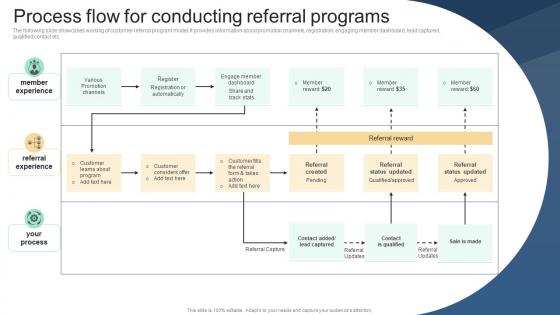
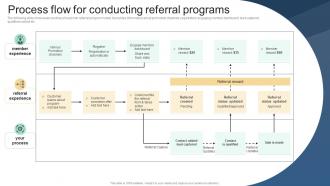
The following slide showcases working of customer referral program model. It provides information about promotion channels, registration, engaging member dashboard, lead captured, qualified contact etc.
People who downloaded this PowerPoint presentation also viewed the following :
Process Flow For Conducting Referral Programs Implementing Viral Marketing Strategies To Influence with all 6 slides:
Use our Process Flow For Conducting Referral Programs Implementing Viral Marketing Strategies To Influence to effectively help you save your valuable time. They are readymade to fit into any presentation structure.





FAQs for Process Flow For Conducting Referral Programs Implementing Viral Marketing
Effective referral program elements in presentation templates include clear incentive structures, simplified sharing mechanisms, branded referral cards, tracking dashboards, and automated reward systems. These components streamline program management by providing visual frameworks for incentive tiers, referral workflows, and performance metrics, with many organizations finding that well-designed templates enhance participant engagement and ultimately deliver higher conversion rates.
Businesses can measure referral program success through conversion rates, customer acquisition costs, lifetime value of referred customers, and referral participation rates. Through tracking dashboards and analytics tools, companies monitor revenue attribution, program ROI, and referrer engagement levels, with many finding that referred customers demonstrate higher retention rates and increased purchase frequency, ultimately delivering sustainable growth.
Effective referral incentives include account credits, free premium templates, exclusive collections, commission percentages, and tiered reward systems. These programs work best when offering immediate value alongside long-term benefits, with many design businesses finding that combining monetary rewards with exclusive access creates sustained referral activity, ultimately driving customer acquisition while enhancing loyalty.
Referral program integration involves embedding referral widgets on key website pages, adding referral CTAs to email campaigns, incorporating referral messaging into social media content, and creating dedicated landing pages for program promotion. Through seamless design integration, businesses streamline user experience, enhance program visibility across touchpoints, and significantly increase participation rates, with many companies finding that consistent visual branding ultimately delivers higher conversion rates and sustained referral growth.
**INPUT**: What types of customer behaviors should you analyze to improve your referral program for presentation templates? **OUTPUT**: Analyze download patterns, template customization frequency, sharing behaviors, repeat purchase cycles, and engagement with design categories to optimize referral programs. These behavioral insights enable targeted referral triggers, personalized incentive structures, and strategic timing for referral requests, with many template platforms finding that customers who frequently customize and share templates become highly effective brand advocates, ultimately delivering increased conversions and organic growth. [Word count: 60 words]
Customer testimonials and success stories enhance referral programs by building credibility, demonstrating tangible value, and providing social proof that motivates participation. These authentic narratives showcase real outcomes across industries like SaaS and e-commerce, ultimately increasing referral rates, improving conversion quality, and delivering stronger program ROI through trust-driven advocacy.
Social media amplifies referral programs for presentation templates through viral sharing, targeted advertising, visual showcases, and community engagement. These platforms enable businesses to leverage user-generated content, facilitate seamless template sharing across professional networks like LinkedIn, and create interactive campaigns that showcase template quality, with many companies finding that social proof and peer recommendations significantly increase conversion rates and program participation.
Referral programs should be reviewed quarterly and updated annually, with continuous monitoring of participation rates, reward effectiveness, customer feedback, and competitive landscape changes. Many successful companies conduct mid-year assessments to refresh rewards, simplify processes, and introduce seasonal campaigns, ultimately maintaining program momentum while adapting to evolving customer preferences and market conditions.
Businesses should avoid overly complex referral structures, inadequate tracking systems, insufficient reward values, and poor communication about program benefits and processes. These pitfalls often result in low participation rates and confused customers, with many companies finding that streamlined interfaces, transparent tracking, competitive incentives, and clear promotional materials ultimately deliver higher engagement and sustainable growth.
Gamification elements like point systems, achievement badges, leaderboards, progress tracking, and tiered rewards can significantly enhance referral program engagement by tapping into competitive instincts and recognition desires. These mechanics create sustained motivation through milestone celebrations and social recognition, with many companies finding that gamified referral programs generate 30-50% higher participation rates while building stronger customer loyalty and community engagement.
Legal considerations for digital referral programs include compliance with FTC disclosure requirements, data privacy regulations like GDPR and CCPA, anti-spam laws, tax reporting obligations, and terms of service clarity. These frameworks help organizations navigate regulatory landscapes by ensuring transparent reward structures, proper consent mechanisms, and clear participant agreements, ultimately delivering compliant growth strategies while minimizing legal risks across jurisdictions.
Customer segments respond differently to referral incentives based on their motivations, demographics, and purchasing behaviors, with younger consumers preferring experiential rewards like exclusive access or early releases, while older segments favor direct monetary benefits. Price-sensitive customers gravitate toward cash rewards and discounts, whereas premium customers respond better to recognition-based incentives and exclusive perks, ultimately enabling businesses to maximize program effectiveness through targeted incentive strategies.
Email marketing, social media platforms, in-app notifications, website banners, and content marketing prove most effective for promoting referral programs in presentation template sales. These channels work synergistically by reaching existing customers through personalized emails, leveraging social proof on platforms like LinkedIn, and creating seamless user experiences, with many SaaS companies finding that multi-channel approaches increase participation rates significantly.
Influencer partnerships amplify referral programs by expanding reach, building credibility, and driving authentic recommendations through trusted voices. These collaborations work by providing influencers with unique referral codes, creating co-branded content that showcases program benefits, and leveraging their engaged audiences for higher conversion rates, ultimately delivering expanded customer acquisition and enhanced program visibility across multiple demographics.
Best practices for communicating referral program details include using clear, simple language, highlighting specific rewards upfront, providing visual program guides, utilizing multiple communication channels, and creating personalized messaging based on participant segments. These approaches streamline understanding by eliminating confusion, showcasing tangible benefits, and delivering consistent information across touchpoints, with many organizations finding that transparent, multi-channel communication significantly increases participation rates and program success.
-
Really like the color and design of the presentation.
-
Appreciate the research and its presentable format.