Process To Build A Minimum Viable Product MVP Plan

Rating:
100%
Process To Build A Minimum Viable Product MVP Plan
Slide 1 of 6
Favourites Favourites

Try Before you Buy Download Free Sample Product

Audience Impress Your
Audience
Editable 100%
Editable
Time Save Hours
of Time
The Biggest Sale is ending soon in
0
0
:
0
0
:
0
0
Rating:
100%
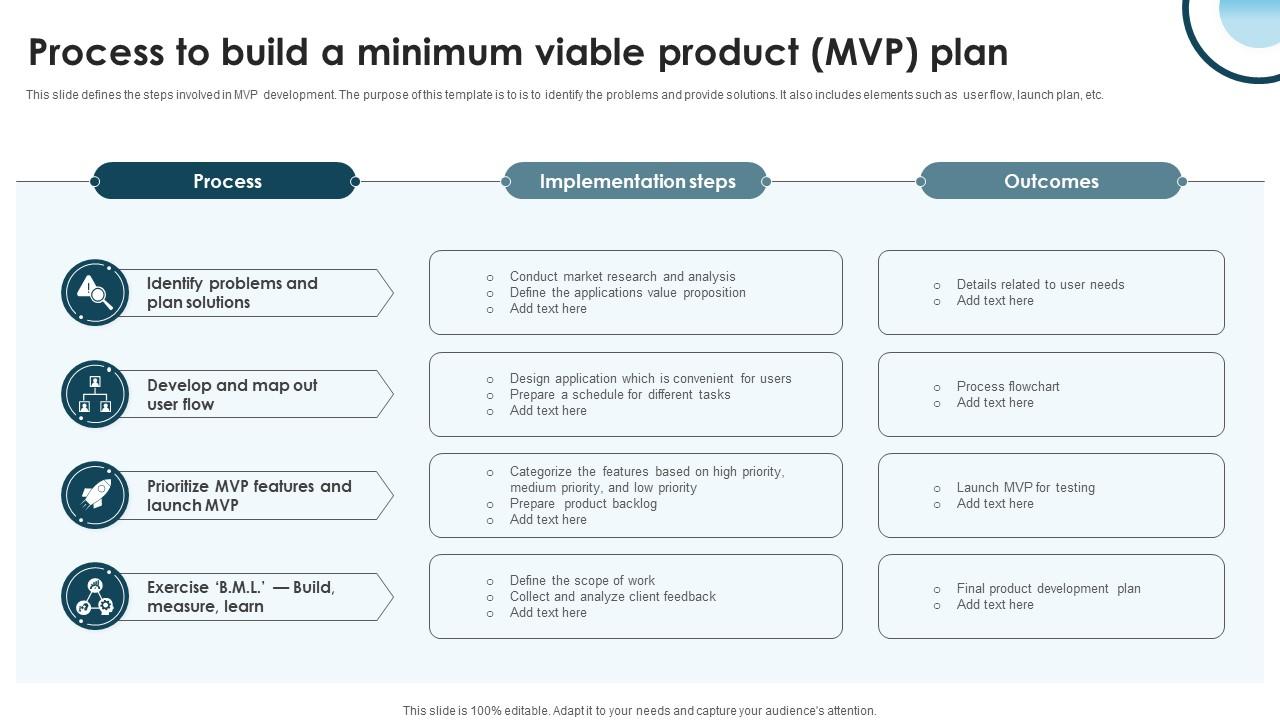
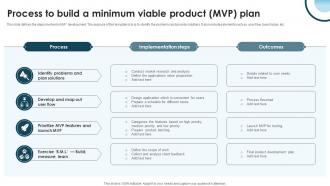
This slide defines the steps involved in MVP development. The purpose of this template is to is to identify the problems and provide solutions. It also includes elements such as user flow, launch plan, etc. Presenting our set of slides with name Process To Build A Minimum Viable Product MVP Plan. This exhibits information on four stages of the process. This is an easy to edit and innovatively designed PowerPoint template. So download immediately and highlight information on Problems, Plan Solutions, Develop And Map.

FAQs for Process To Build A Minimum Viable

Okay so for your MVP, start with three things: what problem you're actually solving, who specifically you're solving it for, and the bare minimum features to test if people care. Seriously, resist the urge to add bells and whistles - I've seen too many people get caught up in "just one more feature." Strip it down ruthlessly. Figure out your riskiest assumptions first, then build just enough to test those. Set clear metrics so you know if it's bombing or working. The whole game is learning quickly without burning through cash before you go big.

Just solve one problem really well - that's it. List out everything users could possibly want, then cut like 80% of it. I always do the impact vs effort thing too, but honestly? The brutal part is killing your favorite features that aren't actually needed. Talk to real users constantly. They'll humble you quick about what matters vs what you think is clever. Your MVP should almost feel too simple - like embarrassingly basic. But whatever that one thing is, it better work flawlessly. I've seen too many products try to do everything and nail nothing.

Honestly, customer feedback is what makes or breaks your MVP. The whole point is launching something basic to see if people actually want what you're building. I've seen too many founders skip this step and just keep adding features nobody asked for. Collect feedback constantly, but here's the thing - you actually have to DO something with it. Look for patterns in what users are telling you. Sometimes that means ditching your original idea entirely, which sucks but is way better than building something nobody uses. Don't just gather feedback and let it sit there.

Talk to your actual customers first - don't touch any code yet. I learned this the hard way lol. Build some basic mockups or throw up a simple landing page to test interest. Customer interviews work great too, or just run surveys to see if the problem you're solving is real. Honestly, most teams I know skipped this and totally regretted it later. Wire up some basic prototypes to test how people would actually use it. Get 10-15 real conversations going and you'll start seeing patterns pretty quick. Trust me, it beats spending months building something nobody wants.

Focus on 3-5 metrics that actually matter for your MVP goals. Daily/weekly active users and conversion rates are solid starting points. Customer feedback scores too - people will tell you if something sucks. Revenue's cool if you're charging, but don't stress about profits yet. I'd also track which features people use most (might surprise you) and churn rate for retention insights. Honestly, the hardest part is not drowning in data. Start tracking from day one and do quick weekly check-ins to catch trends before they bite you.

Figure out what "quality" means for your MVP first - basically just your core stuff working, not making it pretty. Cut everything that's not essential but keep the main user experience solid. Honestly, I've watched so many teams get obsessed with perfecting random details way too early! Pick maybe 2-3 critical actions that can't break, build those right, keep the rest super simple. Better to have something functional but ugly than gorgeous and broken. Test those main flows like crazy. Don't stress about edge cases yet. List your must-haves and ask "what's the bare minimum that actually solves this?"

Dude, the biggest trap is feature creep - you'll want to add "just one more thing" but DON'T. It kills your timeline every time. Figure out your success metrics before you start building, not after you launch when you're scrambling to make sense of data. Skip user research at your own peril. Test with actual potential customers, not your friends who'll just tell you it's great. Oh and have a plan for collecting feedback ready to go. Most crucial thing though? Make sure people will actually pay for what you're solving. Set clear win/lose criteria upfront so you know when to pivot.

Honestly, just break your MVP into tiny 1-2 week chunks and ship something after each one. I know it'll feel way too basic at first, but that's actually the point - better than disappearing for months building stuff nobody wants. Focus your first sprint on literally ONE core feature, then get it in front of real users ASAP. Their feedback tells you what to build next way better than your gut does. Oh and do quick daily check-ins to catch problems early. After each sprint, take like 30 minutes to figure out what went wrong and what didn't. Rinse and repeat from there.

Honestly, it comes down to how much cash you've got left and whether competitors are already eating your lunch. Technical stuff always takes longer than you think - I've learned this the hard way. Team size matters too, especially if you're missing key skills. Seasonal timing can make or break you depending on your industry. Look, I'd rather see you ship something people actually want to use than rush out a half-broken mess just to hit some arbitrary date. But don't perfectionism yourself into irrelevance either.

You've gotta be brutal with your MVP data analysis and ready to switch gears fast. Watch what users actually DO, not what they say - actions beat words every time. Low engagement or people bailing on key steps? That's your cue to pivot. Honestly, I've watched so many teams fall in love with their first idea and totally miss the red flags. Set your success metrics before you launch so you'll know when it's time to pivot vs. just tweak things. Oh, and start by figuring out which big assumption got crushed, then work backwards from there.

Honestly, start with people you already know - friends, family, coworkers who'll give you real feedback. LinkedIn's solid for B2B stuff, Instagram/TikTok if you're doing consumer. I've watched people blow up just from posting in the right Facebook groups or subreddits (just don't be that annoying sales guy). Cold emails can actually work if you're fixing something people genuinely hate dealing with. Here's the thing though - go where your users are already spending time instead of trying to build from zero. Pick maybe 2-3 spots and really focus there.

Dude, just talk to people first - like 10-15 potential users before you even think about coding. You'll figure out what actually bugs them vs what you assume they need. Most founders (myself included when I started) build features nobody gives a shit about. The research helps you cut through the fluff and focus on stuff people will actually pay for. You'll see what crappy solutions they're currently using and why those don't work. Saves you months of building the wrong thing, trust me.

Start with the actual problem you're trying to solve, then walk through your solution. Let people play with the prototype themselves - don't just click around while they watch. Honestly, I've sat through way too many demos where someone just talks over the thing instead of letting people explore it. Be honest about what's actually working vs what's still broken or fake. You'll get those "but what if..." questions, so have a place to park feedback for later. Oh, and definitely end with next steps and timeline so people don't just walk out wondering what happens now.

Look, start with cloud services that auto-scale and keep your code modular from the beginning. I know it's super tempting to just slap everything together fast, but you'll hate yourself later. Design your database and APIs so they can actually grow with you. Focus on your main user flows first, obviously. Don't over-engineer the hell out of it, but also don't code yourself into a tiny corner. The whole thing is about finding that sweet spot between moving quickly and not making terrible technical choices that'll come back to haunt you.

MVP is basically just proving your idea works - it'll be rough but functional. MLP goes further and actually makes users happy from the start. Like early Dropbox was pure MVP - just file syncing that worked. An MLP version would've had that plus decent design and some nice touches. Honestly though? The definitions get pretty muddy sometimes. I'd say start with MVP to see if people even want what you're building. Then once you know there's demand, you can make it lovable. No point polishing something nobody actually needs, right?

Ratings and Reviews

100% of 100
Review Form
Write a review
Most Relevant Reviews
  1. 100%

    by Miller Rogers

    Happy to found you SlideTeam. You guys are value for money. Amazing slides.
  2. 100%

    by Clair Gray

    I was mind-blown by the services that SlideTeam provided me. Thanks a ton!

2 Item(s)

per page: