Business Model To Develop MVP Plan
Try Before you Buy Download Free Sample Product
Audience
Editable
of Time
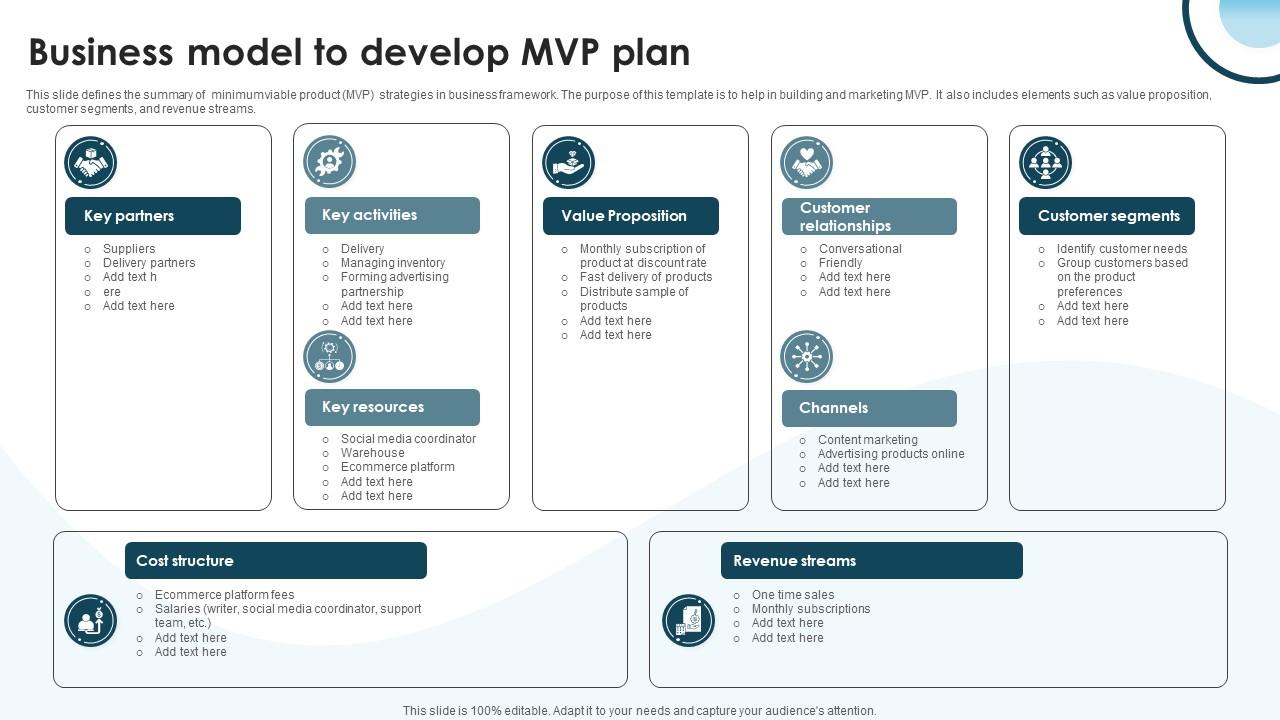
This slide defines the summary of minimum viable product MVP strategies in business framework. The purpose of this template is to help in building and marketing MVP. It also includes elements such as value proposition, customer segments, and revenue streams.
People who downloaded this PowerPoint presentation also viewed the following :
Business Model To Develop MVP Plan with all 6 slides:
Use our Business Model To Develop MVP Plan to effectively help you save your valuable time. They are readymade to fit into any presentation structure.
FAQs for Business Model To
Dude, you'll save SO much money getting feedback early instead of building stuff people don't want. Test your idea with real users first - way better than just guessing what they need. Takes months off development time too. Investors actually pay attention when you've got users already using your thing (even if it's basic). Oh and you'll probably beat competitors to market while they're still tweaking everything. Just focus on solving one main problem really well. You can always add more features later once you see what people actually care about.
Start with your main value prop and work backwards from there. What's the bare minimum someone needs to actually get value? I like to map the whole user journey first, then cut everything that's not critical - honestly this is way harder than you'd think because you'll want to keep everything. Better to nail one problem than half-ass three different ones. Talk to real users early (like, embarrassingly early) to see what they actually give a shit about. Oh and get comfortable shipping something that feels unfinished but still works. That's basically the whole game.
Honestly, I'd go with Agile mixed with Lean Startup stuff - they're perfect for MVPs. Short sprints work best, like 1-2 weeks max. That way you can test your ideas fast and change direction if needed. Scrum's solid if you've got a team, but even flying solo it helps keep you organized. The magic happens when you combine Agile's quick iterations with Lean's build-measure-learn thing. Keeps you from building random features nobody cares about. Oh, and do weekly sprints with daily check-ins - sounds weird talking to yourself but it actually works.
Honestly, MVP feedback is like getting cheat codes for your product roadmap. Users will tell you exactly what they want - and it's probably not what you expected. I've seen so many founders obsess over their "game-changing" feature only to find users couldn't care less about it. Meanwhile, some tiny thing you threw in last minute becomes everyone's favorite part. Look for patterns in what people complain about or keep asking for. That's your next sprint right there. Way better than guessing what might work and building stuff nobody wants.
Dude, UX can make or break your MVP. I've watched so many solid ideas crash because the first experience sucked. Users won't sit there trying to figure out your confusing interface - they'll just leave. Your core user flow needs to work smoothly, even if you're missing features. That's what matters most. Honestly? Skip the fancy stuff for now. Test with actual people before you launch - like, way before. They'll spot problems you'd never notice. Make it intuitive enough that someone can accomplish the main thing without wanting to throw their phone.
So you'll want to track user behavior stuff - signups, how often people come back, which features they actually use. Daily active users seem important but honestly, weekly retention is way more telling for product-market fit. Don't just stare at numbers though - do user interviews and read support tickets to figure out *why* people do what they do. Oh and conversion funnels, those matter too. Pick like 3-5 metrics that actually test your main idea and check them weekly. Otherwise you'll get caught up tracking random stuff that doesn't mean anything.
Ugh, the classic mistake is building way too much upfront without talking to actual users. I wasted like 3 months once perfecting features nobody gave a shit about. Don't do that lol. Also? Your MVP should honestly make you cringe a little when you launch it - if it doesn't, you waited too long. Trying to solve everyone's problems instead of focusing on one specific group will kill you. Pick ONE clear pain point, build the bare minimum to test it, then get feedback fast. Better to launch something ugly and learn quick than spend forever polishing a turd.
Look, MVP development is honestly a game-changer because you're not blowing your budget on stuff nobody wants. You build just the core features first and see what people actually use. Way better than spending months perfecting every little thing, right? Real feedback comes in early, so you avoid that nightmare of building features that flop. I mean, I've seen too many people go down that rabbit hole. Start with your absolute must-haves, ship it, then iterate. You'll save yourself so much headache and money this way.
Dude, just pick whatever gets you moving fastest. Bubble's great for web stuff without coding, or Webflow if you want more control. Figma for mocking things up obviously. Firebase handles all the backend headaches pretty well. If your team already knows React or WordPress, honestly just stick with that. I've watched so many people get stuck choosing the "perfect" stack instead of actually building something. My buddy spent like 3 weeks debating frameworks - total waste of time. The whole point is getting users to try your thing ASAP. You can always rebuild later when you're making money and have real problems to solve.
Yeah dude, MVPs are clutch for pivoting because you get actual user behavior instead of just guessing. Once you launch, you'll spot patterns super quick - like users might obsess over some random feature while totally ignoring your main thing. Honestly that's the best case scenario! Better to learn this stuff early when you haven't blown your whole budget yet. I'd watch your metrics like a hawk those first couple weeks, then just go with whatever the data's screaming at you. Don't overthink it.
Honestly, talking to users during MVP development is a game changer. They'll straight up tell you what sucks before you spend months building features nobody wants. I'd focus on maybe 5-10 really engaged users instead of trying to make everyone happy - that never works anyway. Set up weekly calls and actually listen when they complain about stuff. The feedback you get beats any survey by miles, plus you'll catch usability problems early. Best part? These people usually become your biggest fans later and will tell everyone about your product. It's like having a crystal ball for what actually matters.
So basically, a prototype is just for you and your team to mess around with ideas and see what works. It can look terrible - doesn't matter. You're just testing stuff out before you commit to building anything real. An MVP though? That's what actual users get their hands on. It's bare-bones but it actually functions and solves a real problem people have. I always think of prototypes like rough sketches you'd never show anyone, while MVPs are more like... your debut album, you know? Still simple, but ready for the world. Start with prototyping first, then ship your MVP once you've figured out the basics.
Here's the thing - set up analytics first to see what users actually do, not just what they tell you. Run some quick usability tests and mix surveys with real interviews. But honestly? Don't try to fix everything people complain about or you'll lose your mind. Look for the patterns instead - where are most people getting stuck? Focus on those big pain points first. I'd ship small fixes every week, see how they land, then figure out what's next. The data versus feedback thing is key though - people say one thing but their behavior tells a different story.
Tech startups are the obvious choice, but don't sleep on healthcare and fintech - they're constantly testing ideas before dumping money into development. E-commerce and SaaS companies do this all the time too. Even old-school industries like manufacturing are jumping on MVPs when they launch digital stuff, which is kinda wild if you think about it. The real sweet spot? Any industry where you can actually use customer feedback to shape your final product. If you're dealing with rapid changes or uncertainty, an MVP will save you tons of headaches down the road.
Honestly, your MVP is what separates you from all the other wannabes pitching pipe dreams. Investors are tired of fancy slides with zero proof – they want to see you've actually built something people use. Show real traction, even if it's tiny. User feedback, metrics, whatever you've got. The whole point is proving there's actual demand for what you're solving. I'd focus on the problem first, then how your MVP validates it. Oh and definitely have your funding ask nailed down – like exactly what you need the money for. A working product beats a perfect pitch deck every single time.
-
They had the topic I was looking for in a readymade presentation…helped me meet my deadline.Â
-
Great designs, really helpful.