


Production Plant Maintenance Management For Higher Operational Efficiency Powerpoint Presentation Slides
Plant maintenance management is the repair activities performed to keep machinery and plant buildings in good operating conditions to avoid losses due to production stoppage. This professionally designed Production Plant Maintenance Management for Higher Operational Efficiency deck assists plant supervisors in devising an action plan to implement a preventive plant maintenance strategy at the manufacturing unit. Our Machine Repair and Servicing module include slides to showcase the existing low operational efficiency of the production plant and the reasons behind it, along with the selection of the best preventive maintenance. The Production Plant Repair PowerPoint deck, has an inspection checklist to identify building and machine issues at the production plant. It also has a budget plan, work schedule plan, and communication plan to ensure the smooth conduct of repair activities. Further, the Machine Repair and Servicing PPT module also covers its positive impact on plant operational efficiency in terms of early detection of malfunctions, reduced downtime, and increased equipment lifespan. Lastly, our template also includes dashboards to monitor shift efficiency, machine efficiency, and equipment malfunctions at the manufacturing plant. Get access now.






















-

- Google Slides is a new FREE Presentation software from Google.
- All our content is 100% compatible with Google Slides.
- Just download our designs, and upload them to Google Slides and they will work automatically.
- Amaze your audience with SlideTeam and Google Slides.
-

Want Changes to This PPT Slide? Check out our Presentation Design Services
-

- WideScreen Aspect ratio is becoming a very popular format. When you download this product, the downloaded ZIP will contain this product in both standard and widescreen format.
-

- Some older products that we have may only be in standard format, but they can easily be converted to widescreen.
- To do this, please open the SlideTeam product in Powerpoint, and go to
- Design ( On the top bar) -> Page Setup -> and select "On-screen Show (16:9)” in the drop down for "Slides Sized for".
- The slide or theme will change to widescreen, and all graphics will adjust automatically. You can similarly convert our content to any other desired screen aspect ratio.
Compatible With Google Slides

Get This In WideScreen
You must be logged in to download this presentation.


Do you want to remove this product from your favourites?
PowerPoint presentation slides
This complete presentation has PPT slides on wide range of topics highlighting the core areas of your business needs. It has professionally designed templates with relevant visuals and subject driven content. This presentation deck has total of fifty one slides. Get access to the customizable templates. Our designers have created editable templates for your convenience. You can edit the color, text and font size as per your need. You can add or delete the content if required. You are just a click to away to have this ready-made presentation. Click the download button now.

People who downloaded this PowerPoint presentation also viewed the following :
Content of this Powerpoint Presentation
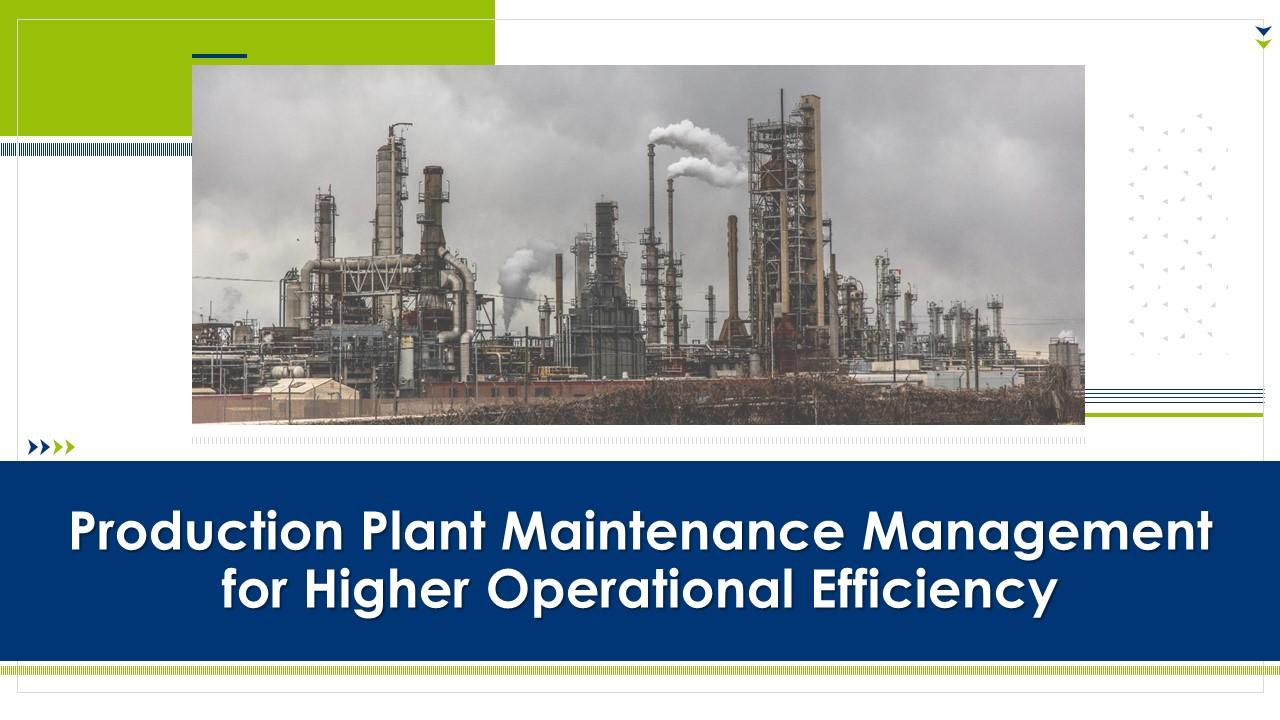
Slide 1: This slide introduces the Production Plant Maintenance Management for Higher Operational Efficiency.
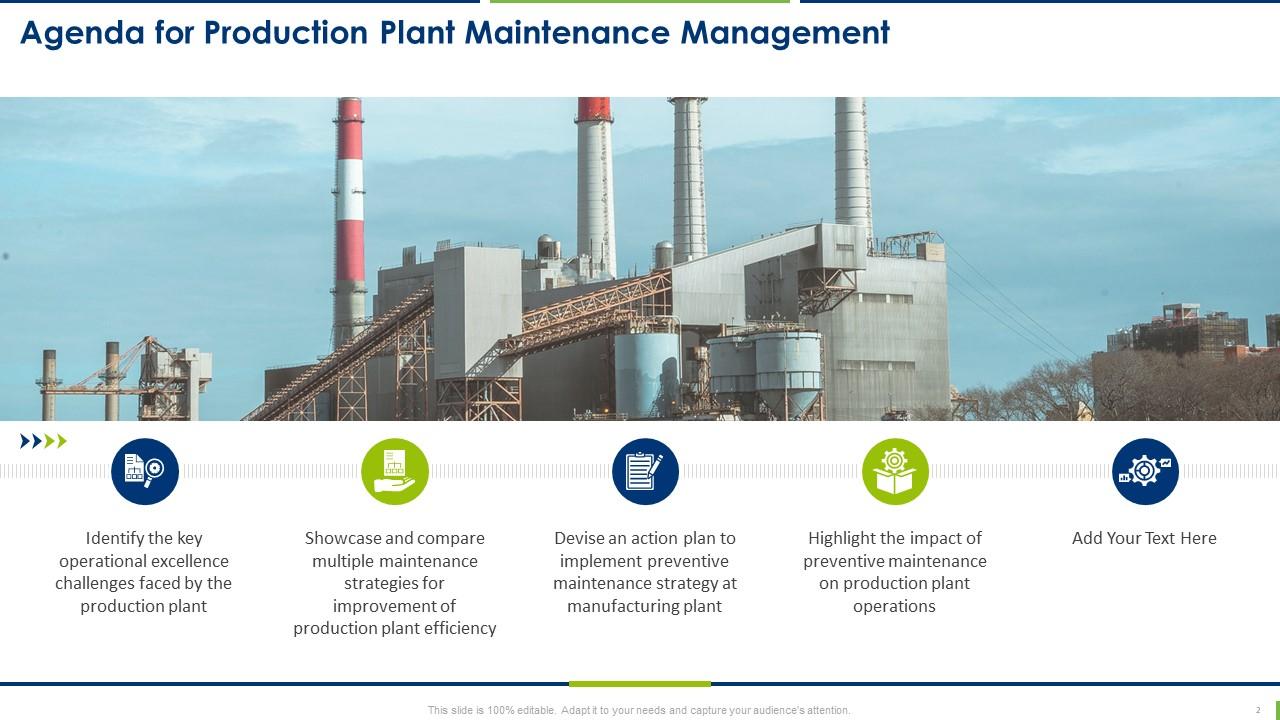
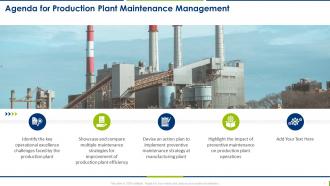
Slide 2: This slide depicts the Agenda of the presentation.
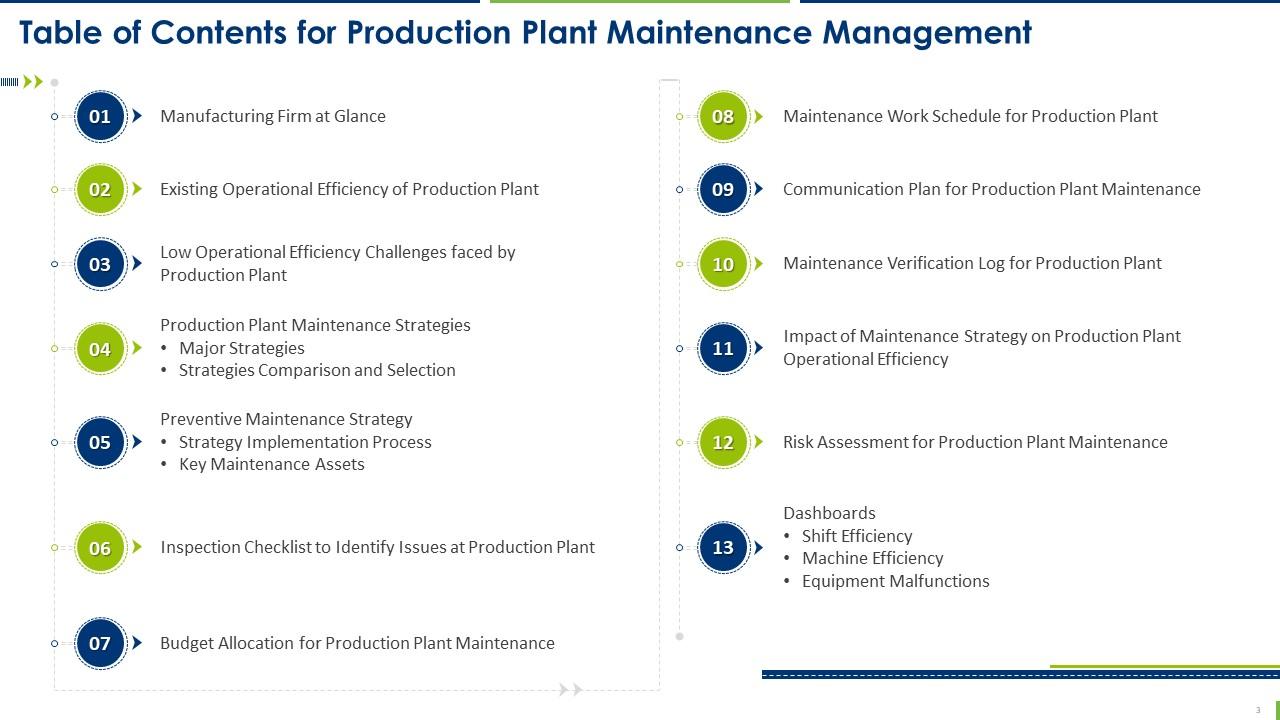
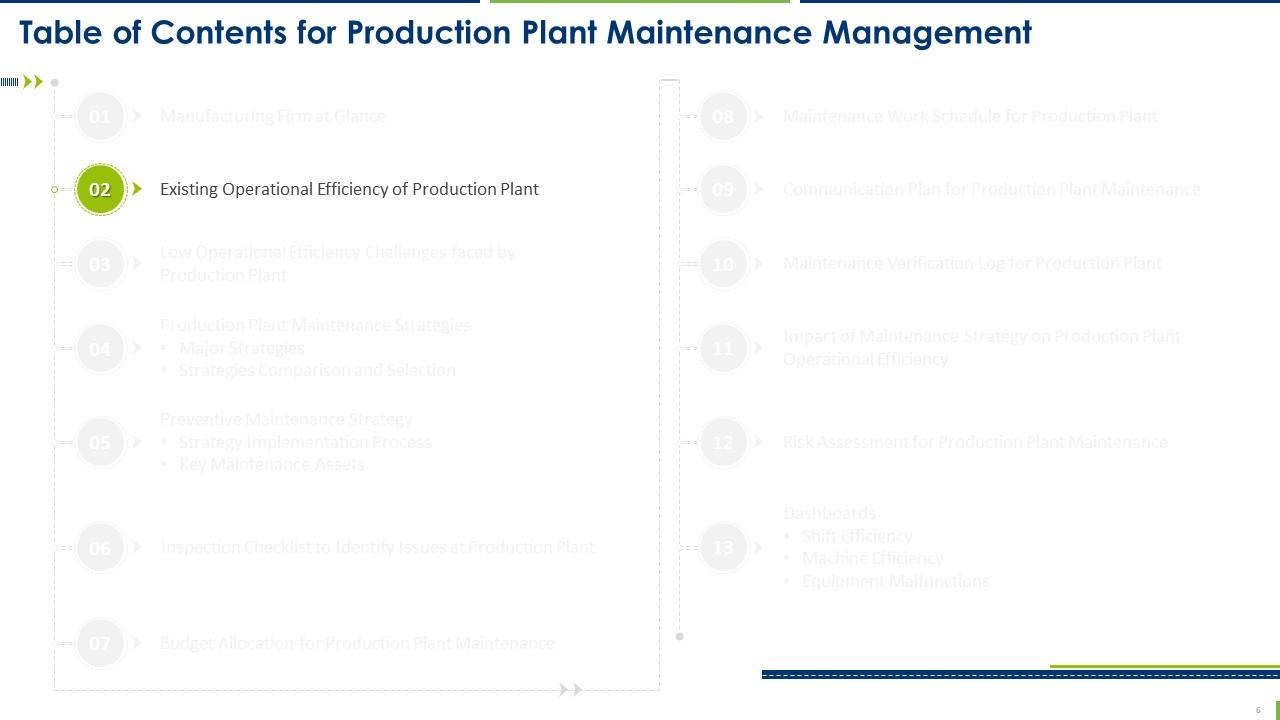
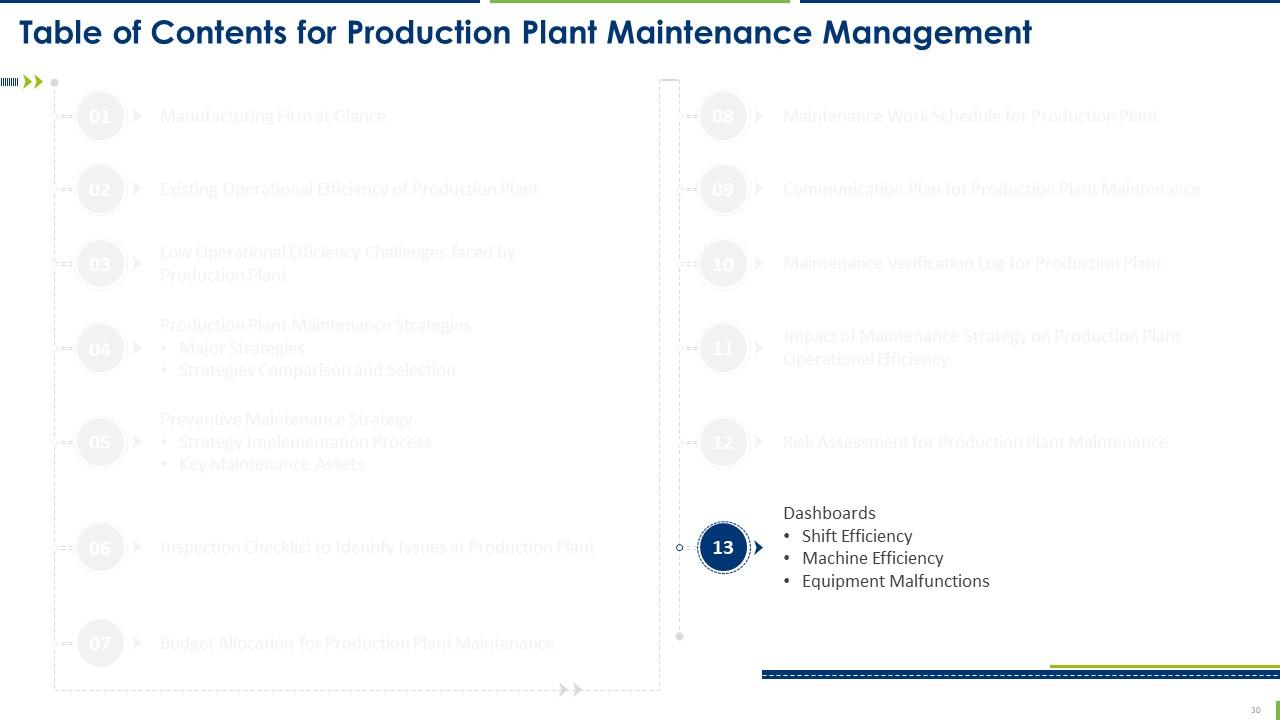
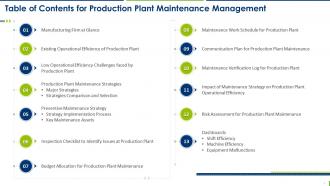
Slide 3: This slide includes the Table of Contents.
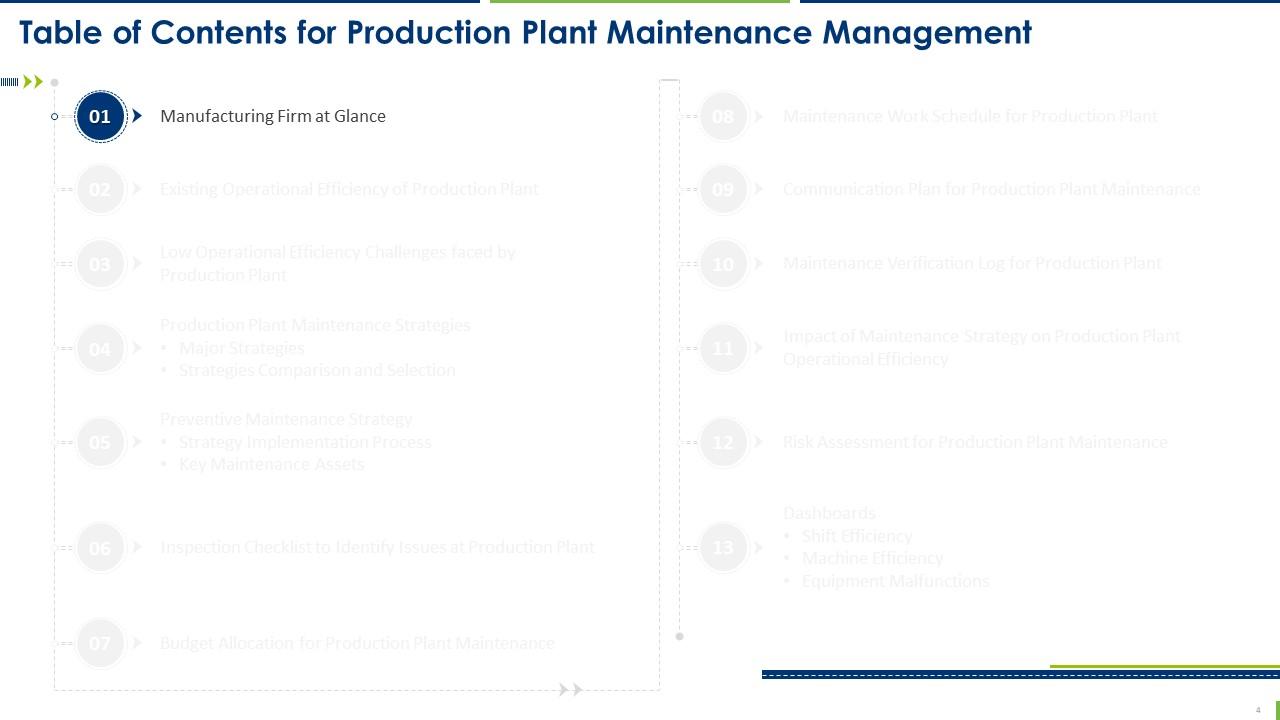
Slide 4: This slide incorporates the Title for the Topics to be covered in the next template.
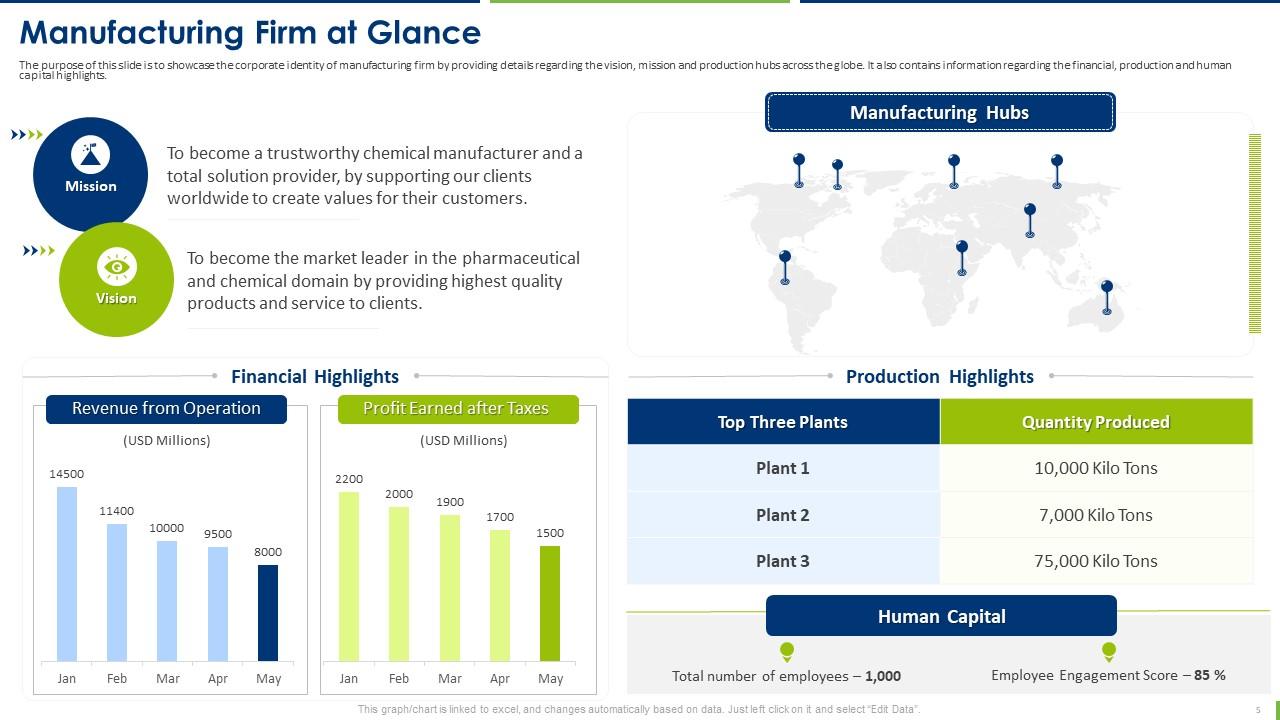
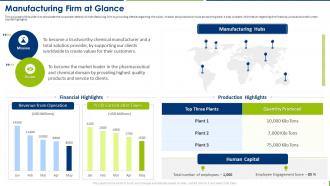
Slide 5: This slide gives a glimpse of Manufacturing Firm.
Slide 6: This slide elucidates the Heading for the Contents to be covered further.
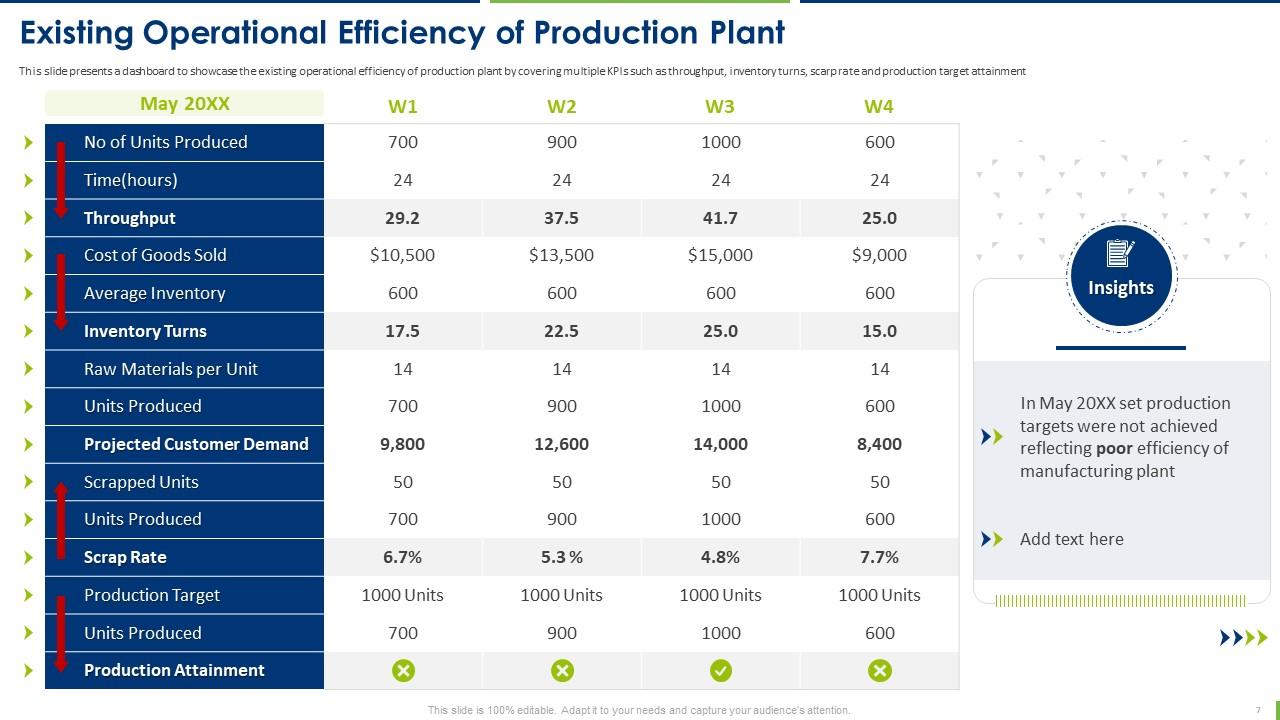
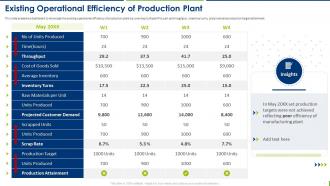
Slide 7: This slide presents the Existing Operational Efficiency of Production Plant.
Slide 8: This slide depicts the Subject for the Ideas to be discussed in the upcoming template.
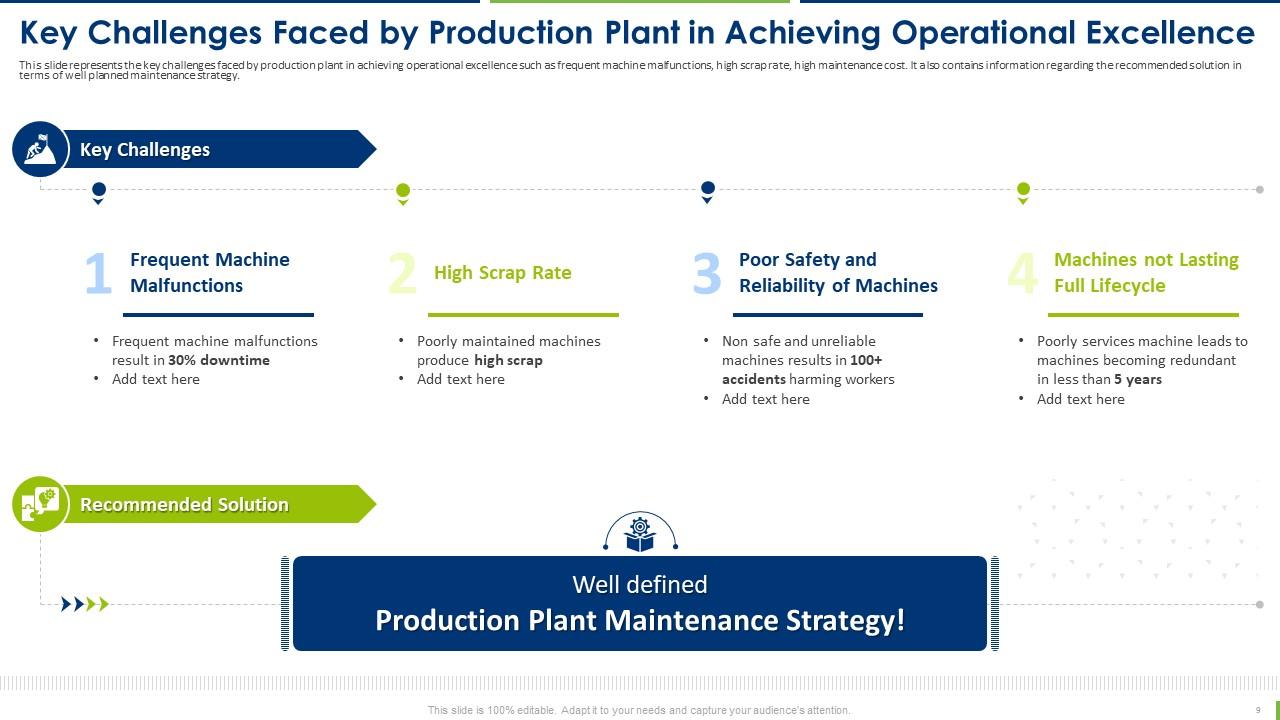
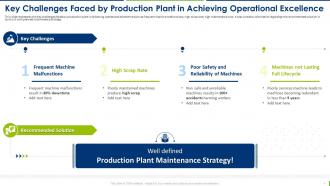
Slide 9: This slide highlights the Key Challenges Faced by Production Plant in Achieving Operational Excellence.
Slide 10: This slide states the Headline for the Contents to be covered further.
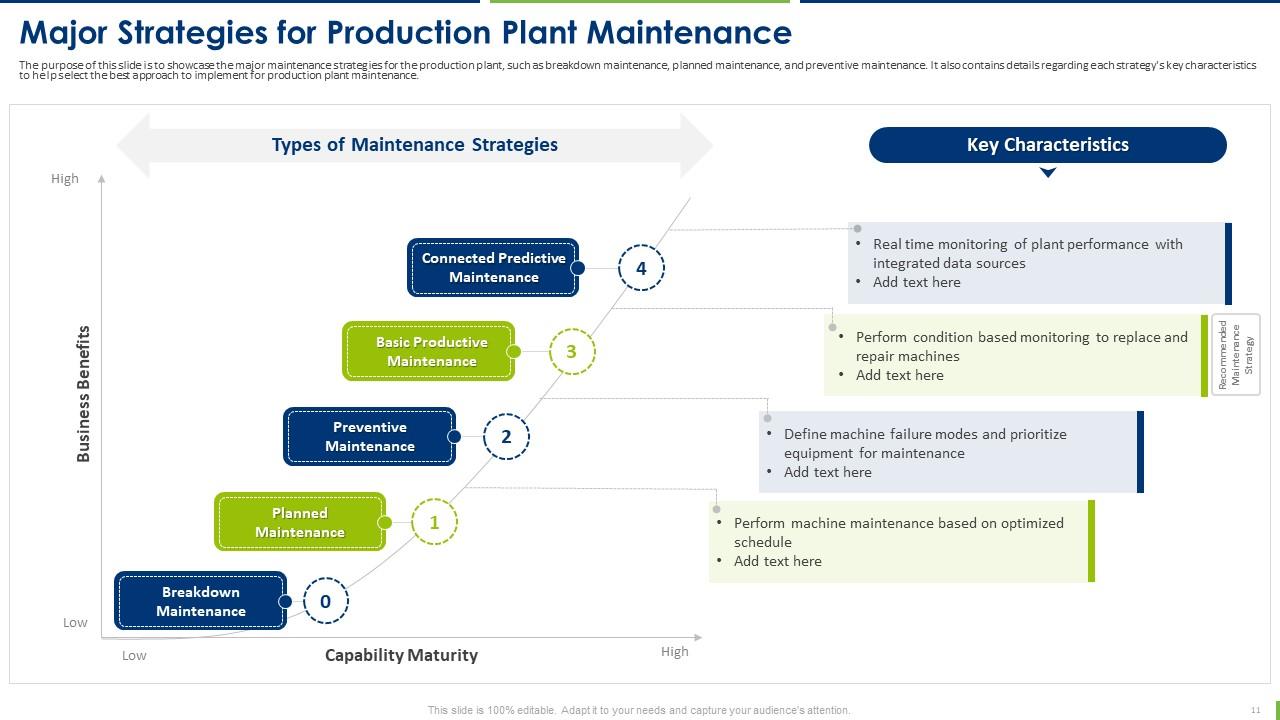
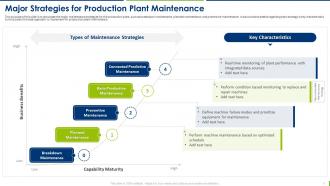
Slide 11: This slide incorporates the Major Strategies for Production Plant Maintenance.
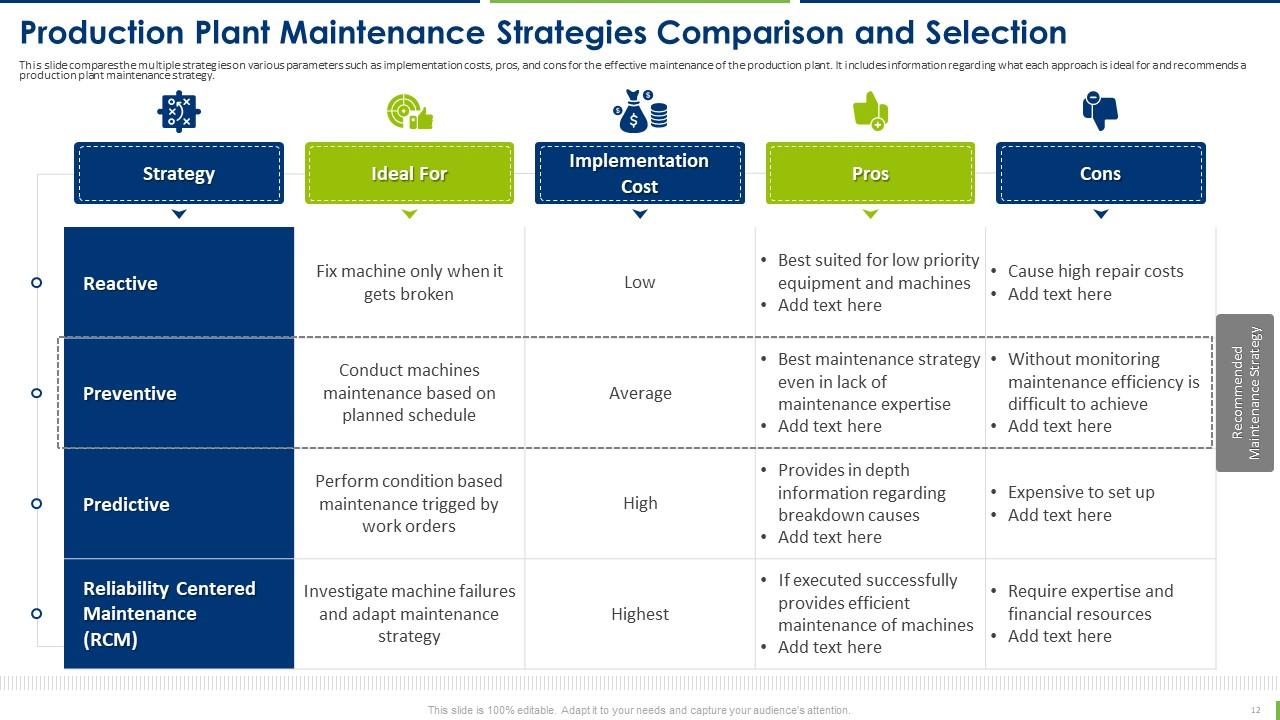
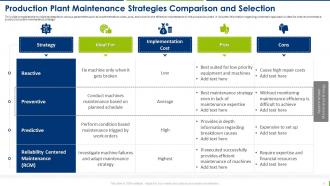
Slide 12: This slide illustrates the Production Plant Maintenance Strategies Comparison and Selection.
Slide 13: This slide highlights the Title for the Topics to be covered further.
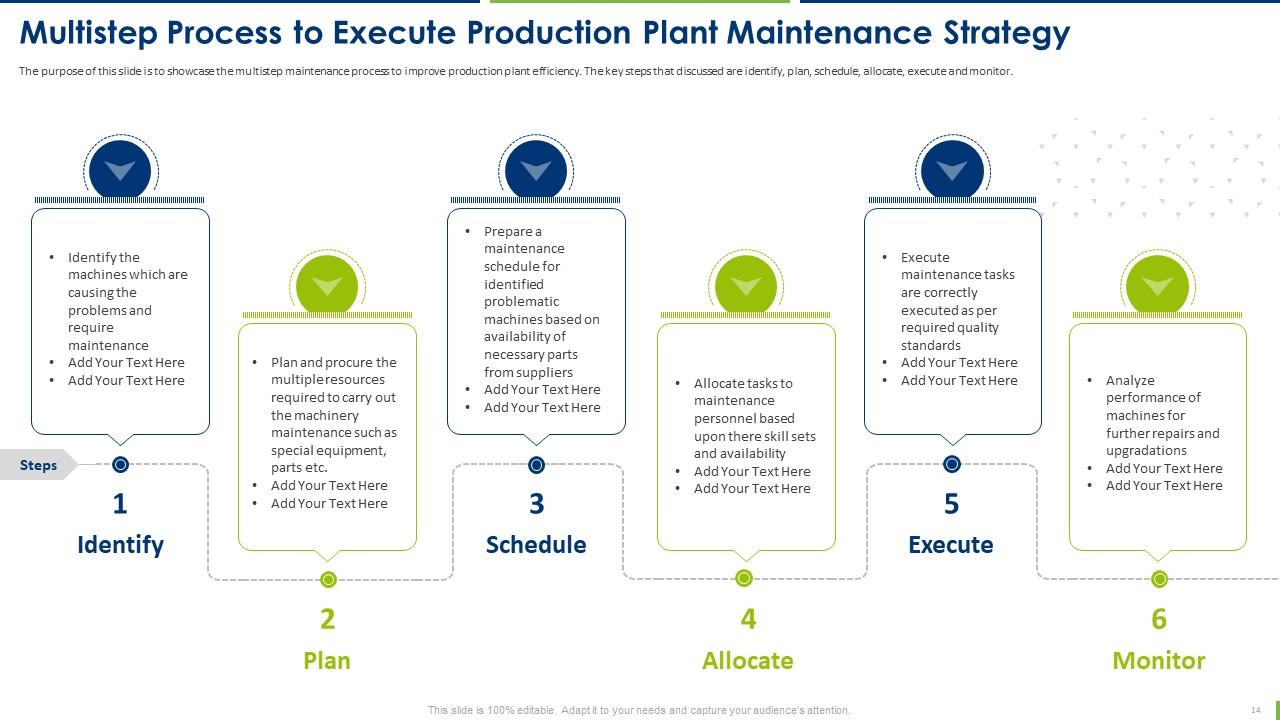
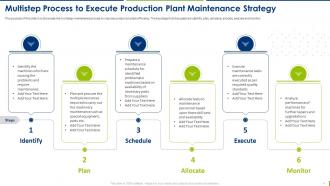
Slide 14: This slide displays the Multistep Process to Execute Production Plant Maintenance Strategy.
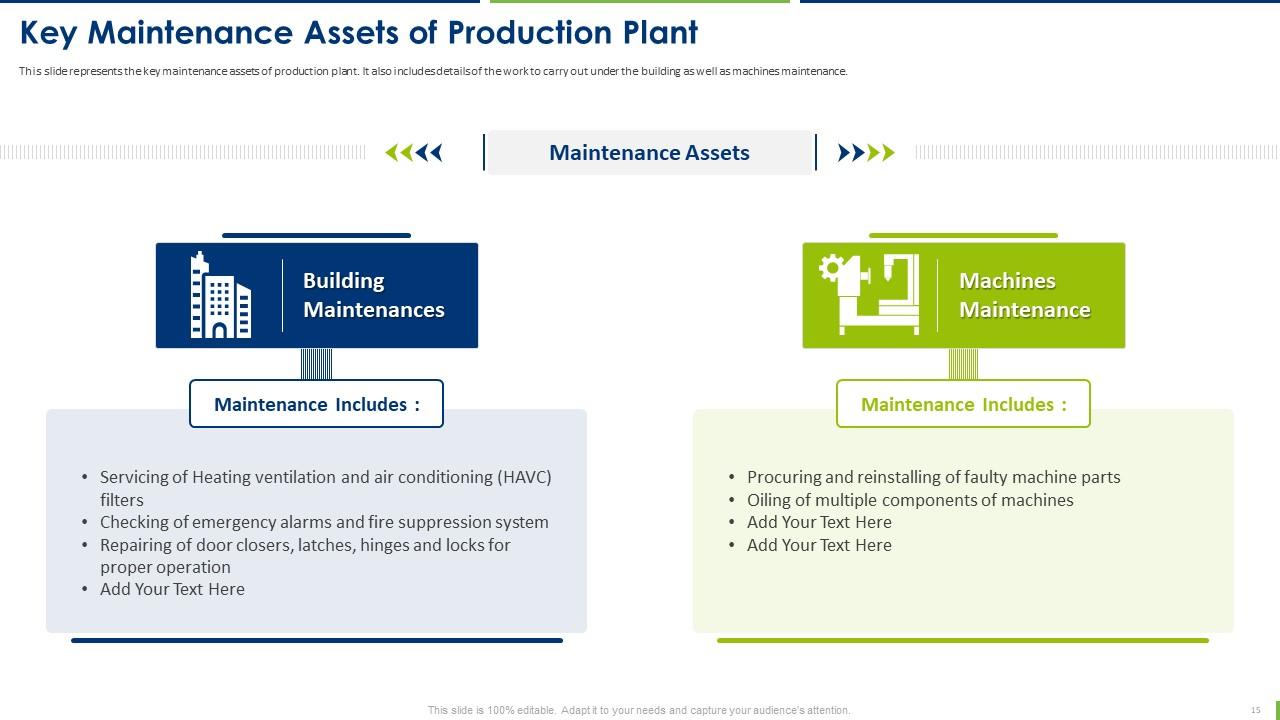
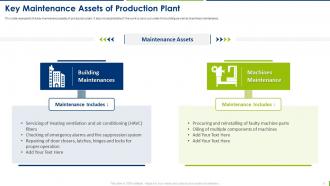
Slide 15: This slide showcases the Key Maintenance Assets of Production Plant.
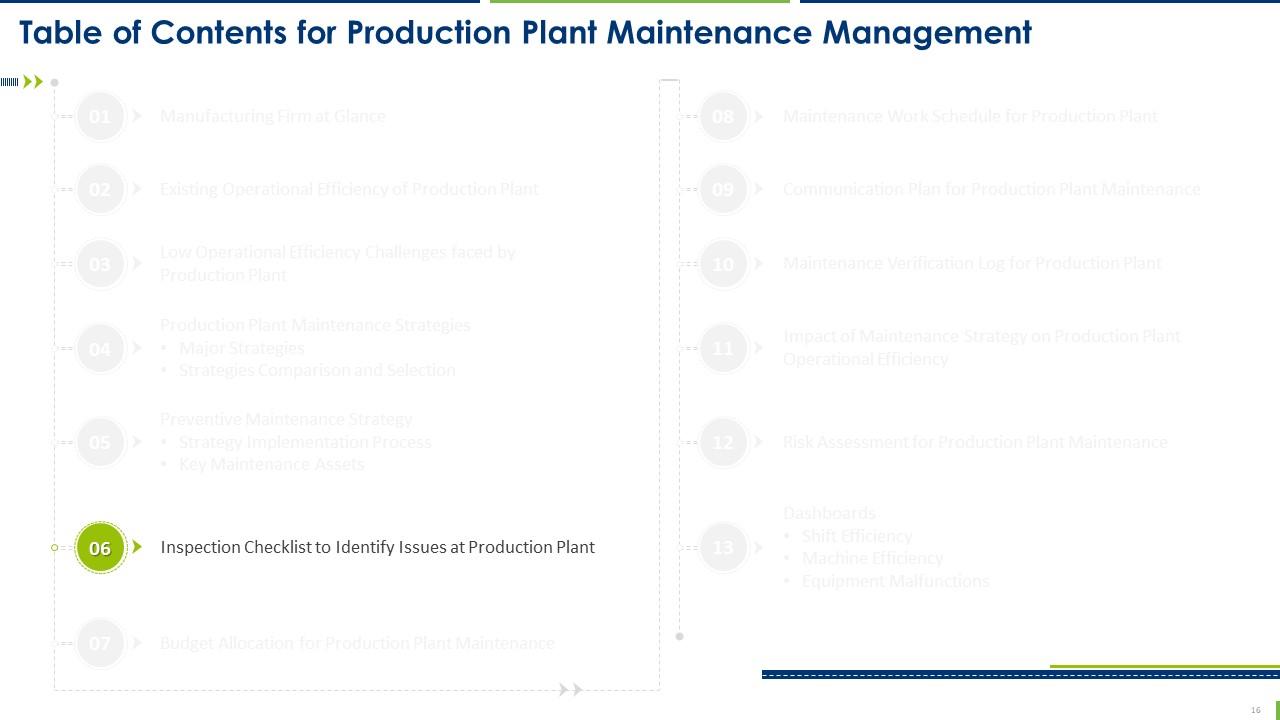
Slide 16: This slide contains the Heading for the Ideas to be covered in the upcoming template.
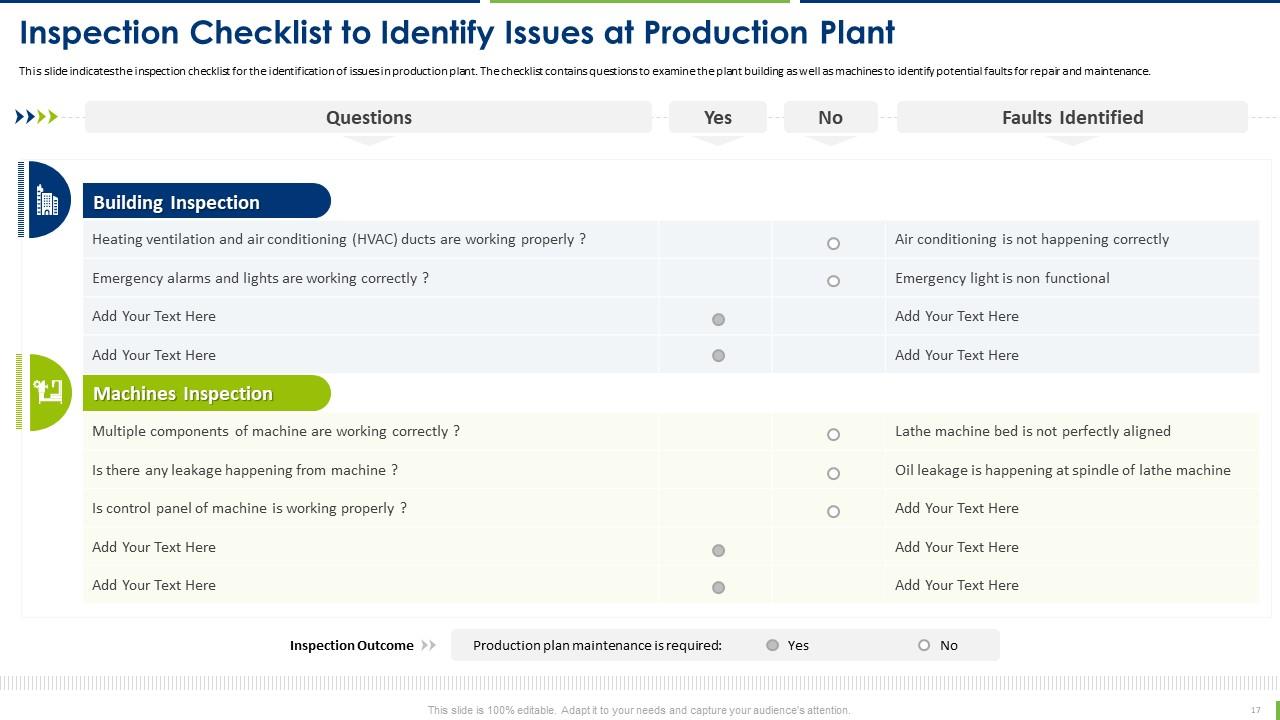
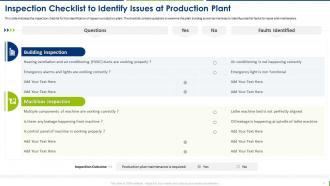
Slide 17: This slide lists the Inspection Checklist to Identify Issues at Production Plant.
Slide 18: This slide incorporates the Title for the Topics to be discussed further.
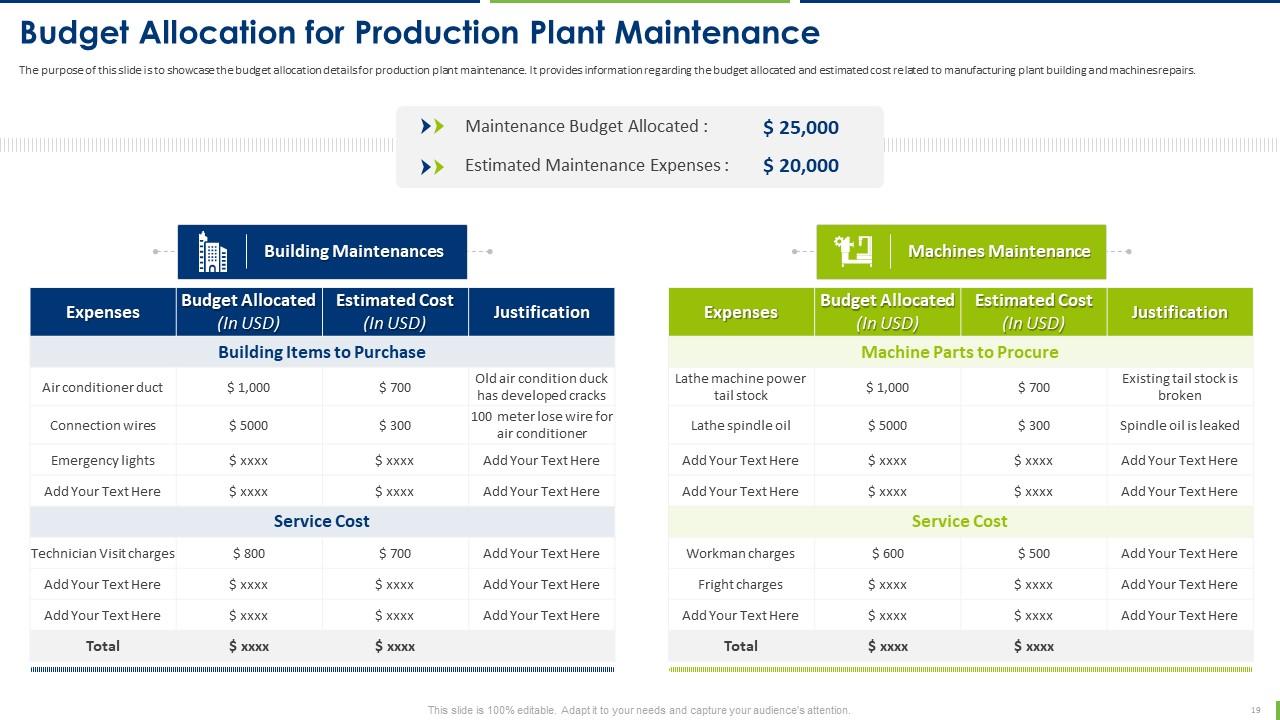
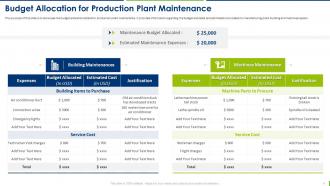
Slide 19: This slide represents the Budget Allocation for Production Plant Maintenance.
Slide 20: This slide includes the Headline for the Contents to be covered in the forth-coming template.
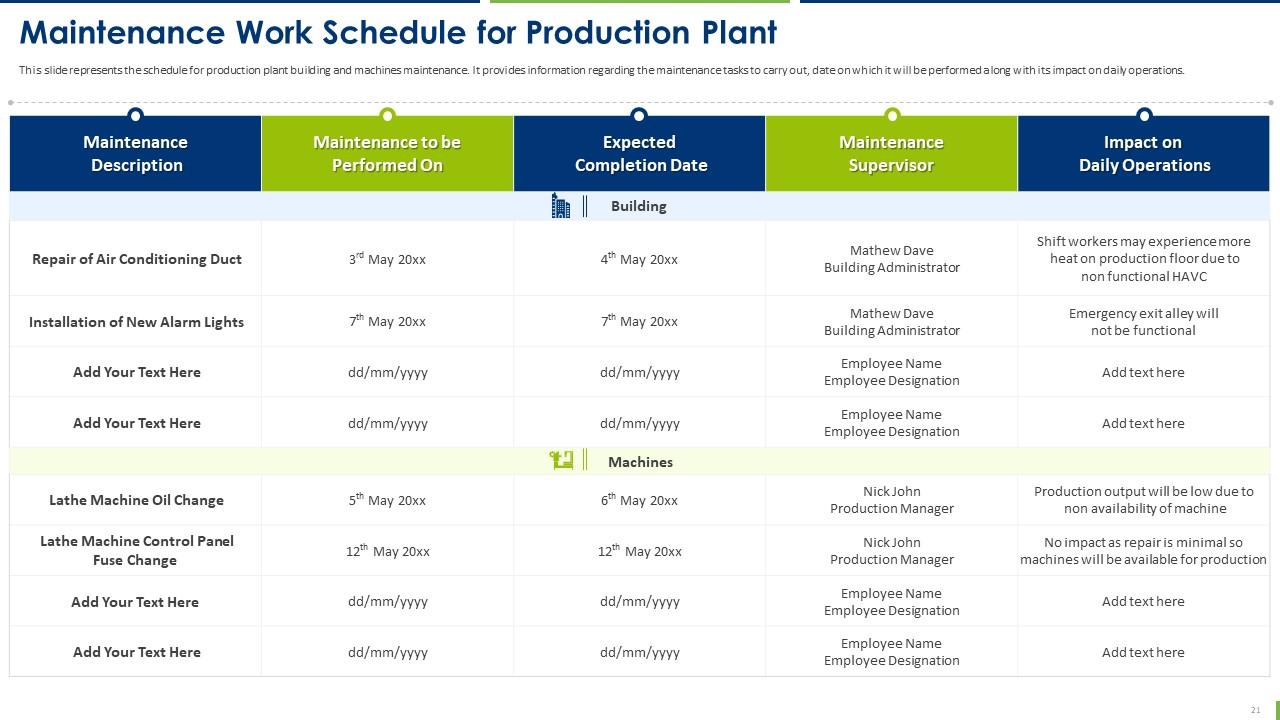
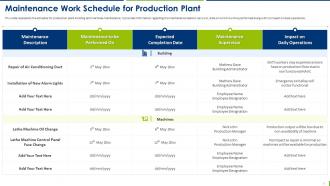
Slide 21: This slide deals with the Maintenance Work Schedule for Production Plant.
Slide 22: This slide contains the Title for the Topics to be discussed further.
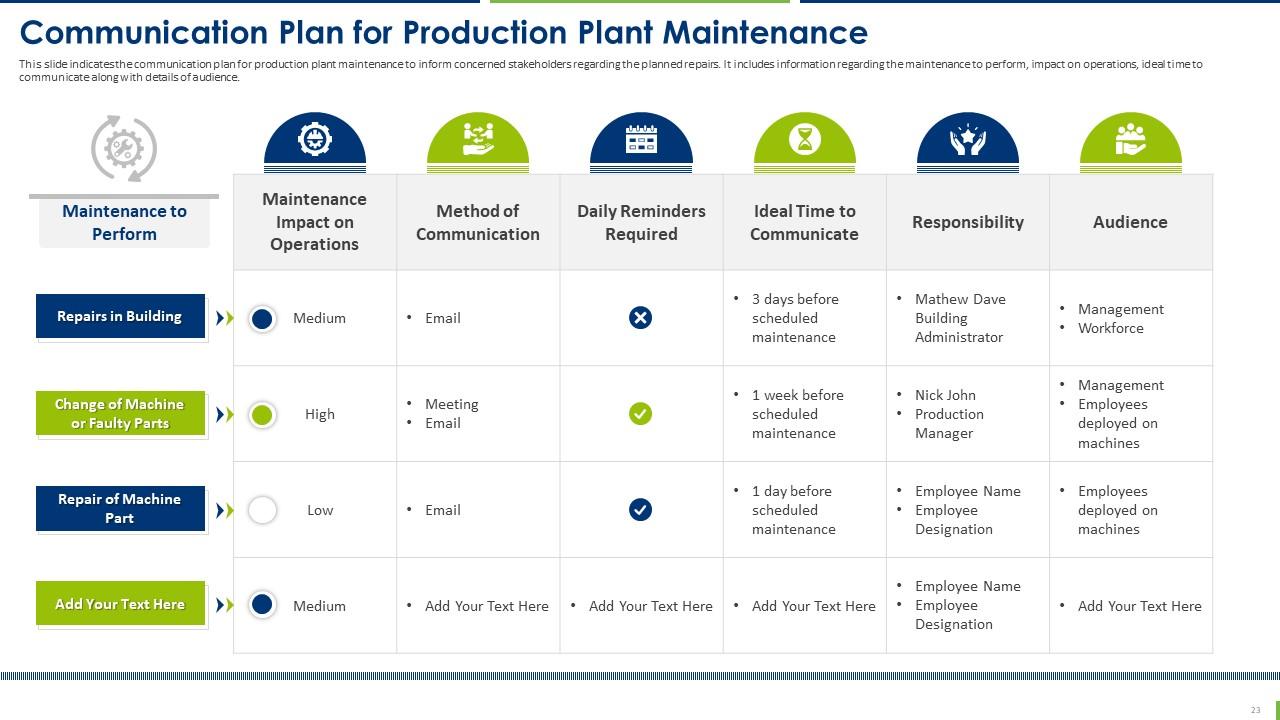
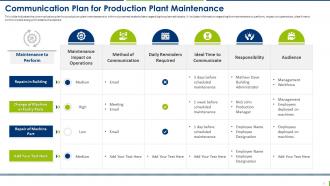
Slide 23: This slide focuses on the Communication Plan for Production Plant Maintenance.
Slide 24: This slide contains the Heading for the Contents to be covered further.
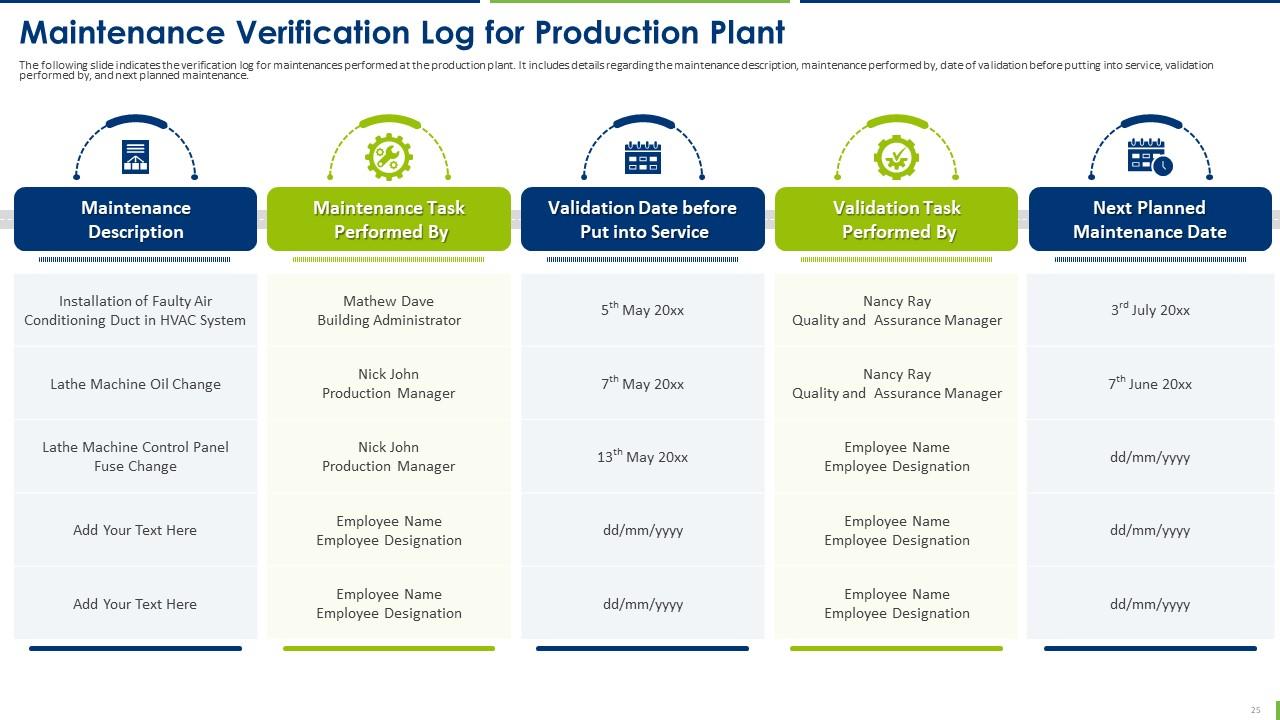
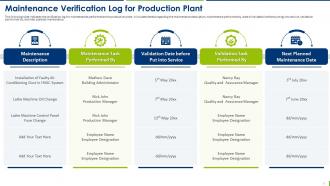
Slide 25: This slide presents the Maintenance Verification Log for Production Plant.
Slide 26: This template elucidates the Title for the Ideas to be covered in the upcoming slide.
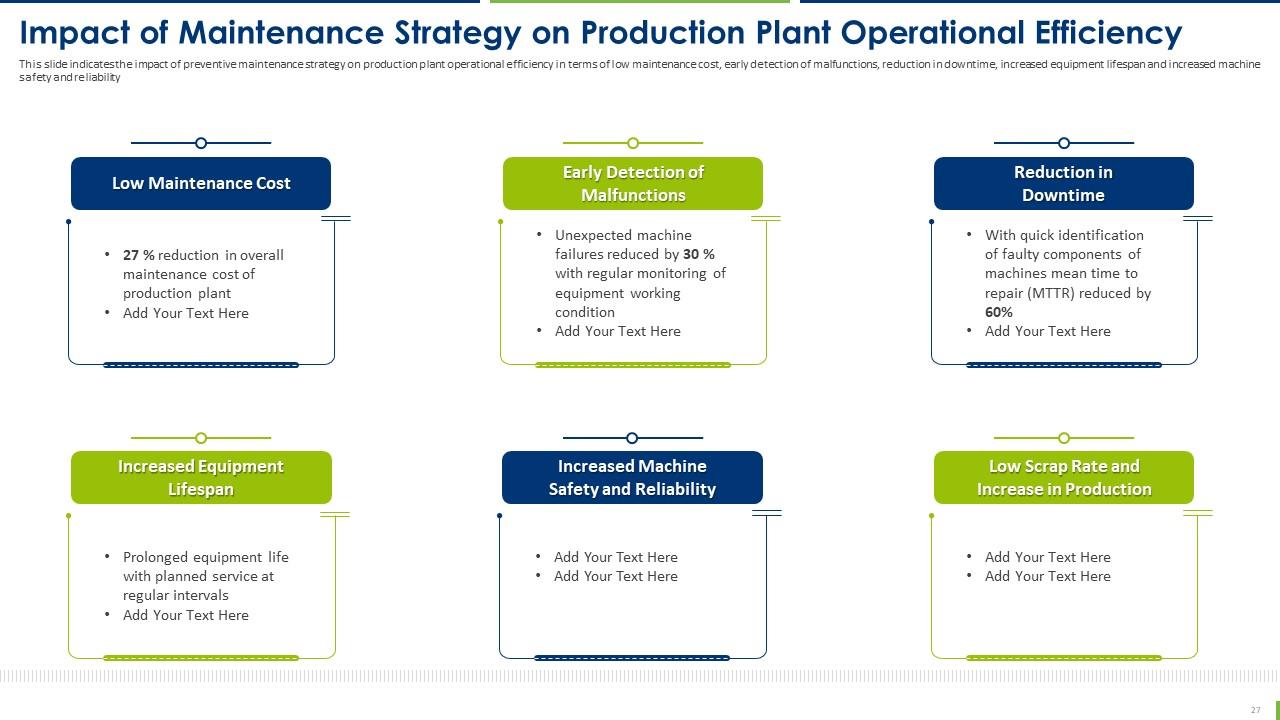
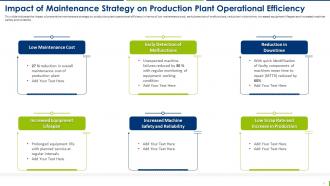
Slide 27: This slide showcases the Impact of Maintenance Strategy on Production Plant Operational Efficiency.
Slide 28: This slide includes the Caption for the Topics to be discussed further.
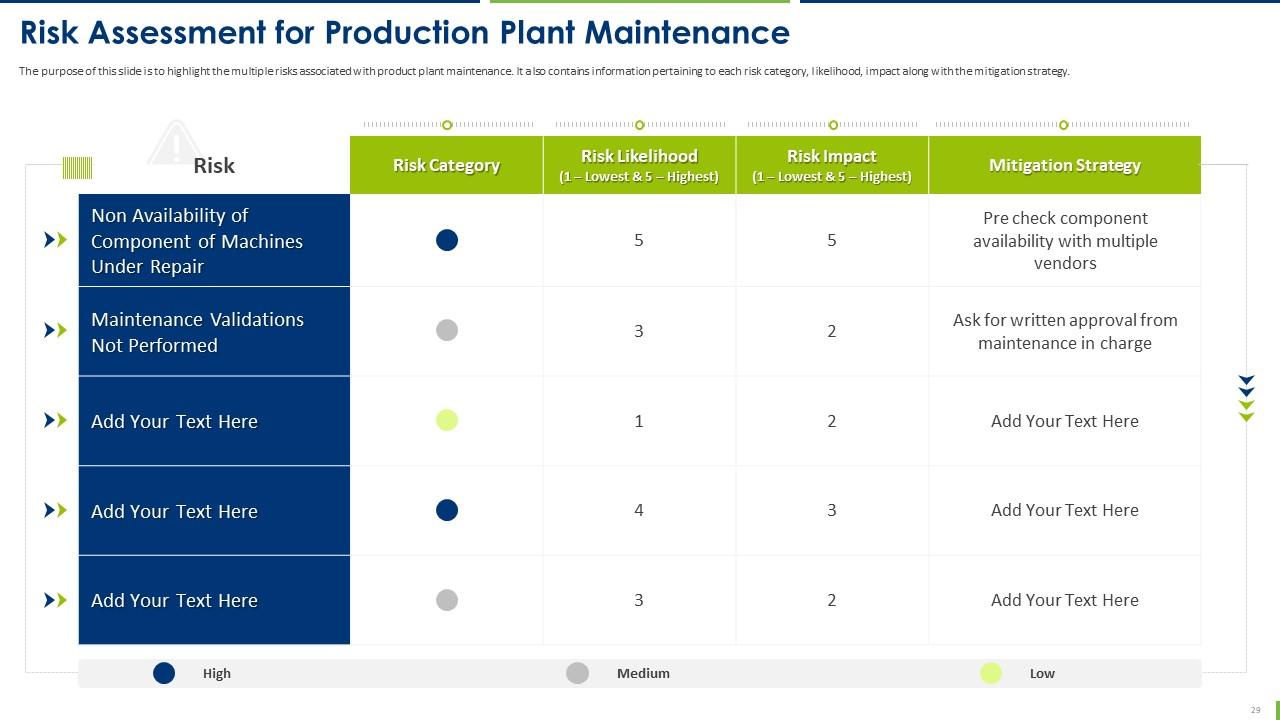
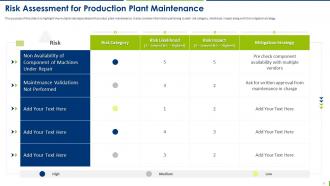
Slide 29: This slide displays the Risk Assessment for Production Plant Maintenance.
Slide 30: This slide reveals the Heading for the Ideas to be covered in the next template.
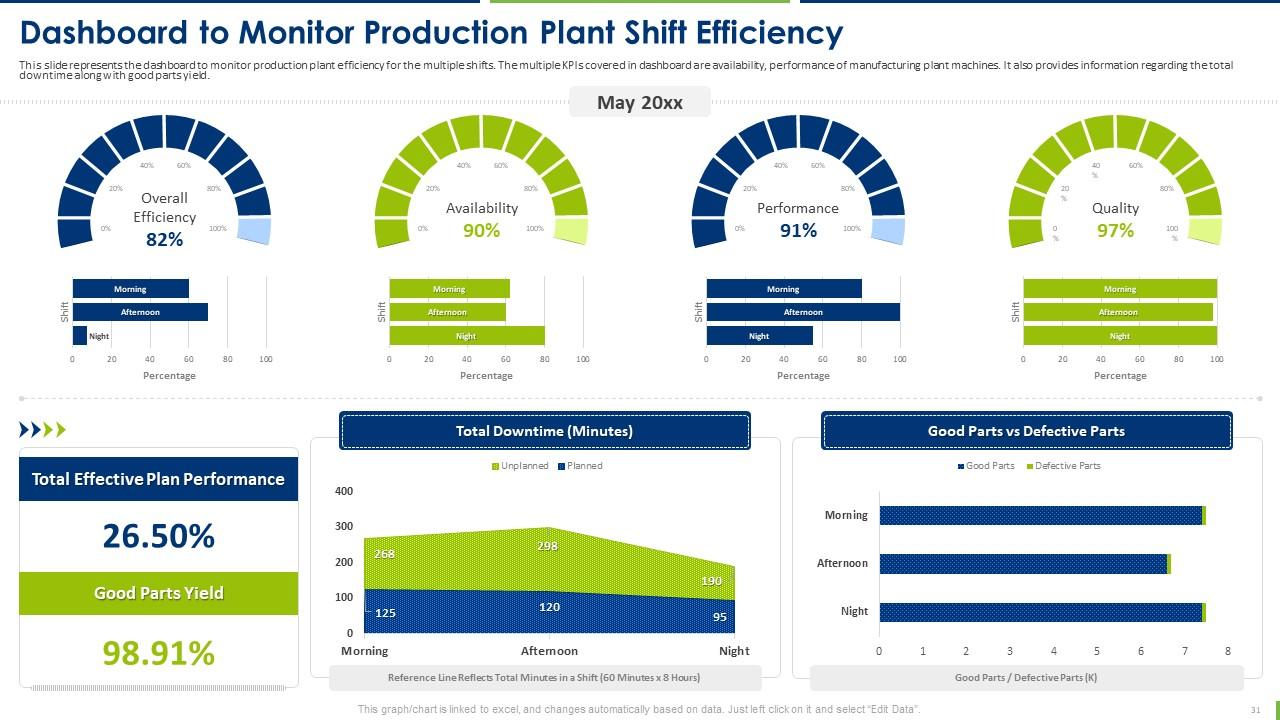
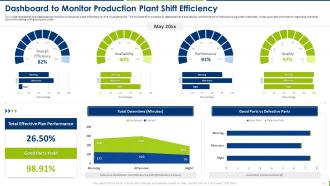
Slide 31: This slide illustrates the Dashboard to Monitor Production Plant Shift Efficiency.
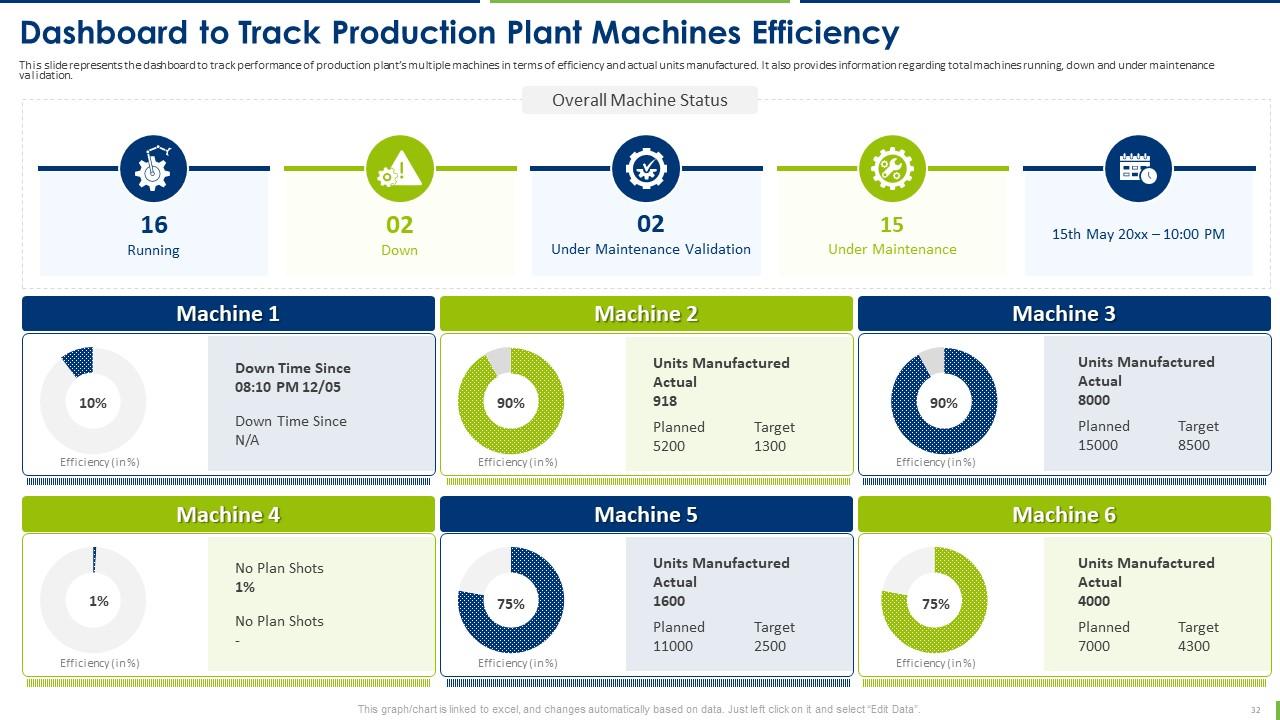
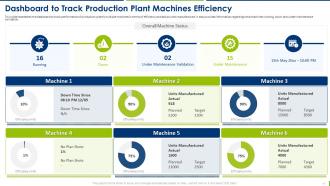
Slide 32: This slide represents the Dashboard to Track Production Plant Machines Efficiency.
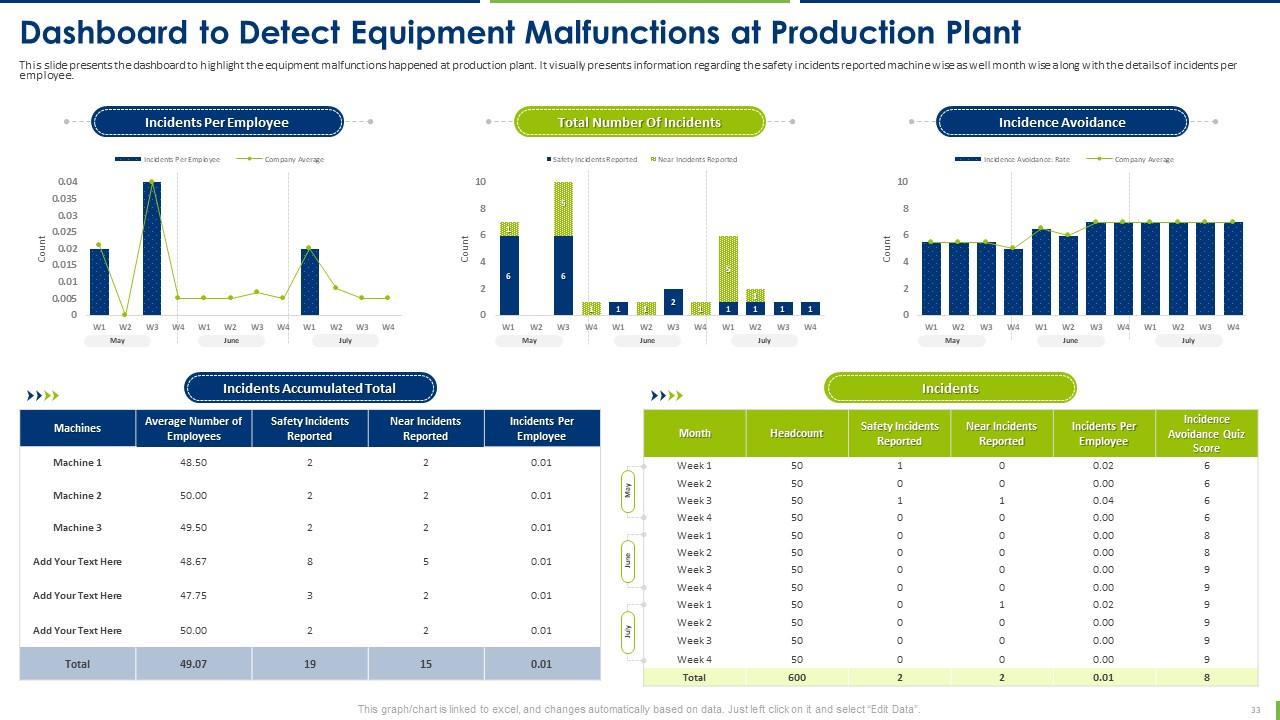
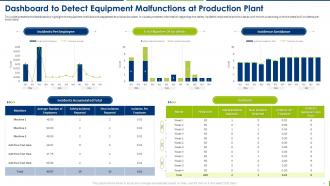
Slide 33: This slide depicts the Dashboard to Detect Equipment Malfunctions at Production Plant.
Slide 34: This is the Icons Slide showing all the Icons used in the plan.
Slide 35: This slide is titled as Additional Slides for extra information.
Slide 36: This slide presents the Mind Map of the Company.
Slide 37: This is Our Goal slide. State your Organization's Goals here.
Slide 38: This is the Idea Generation slide for encouraging innovative ideas.
Slide 39: This slide displays Bulb and Idea for Idea generation.
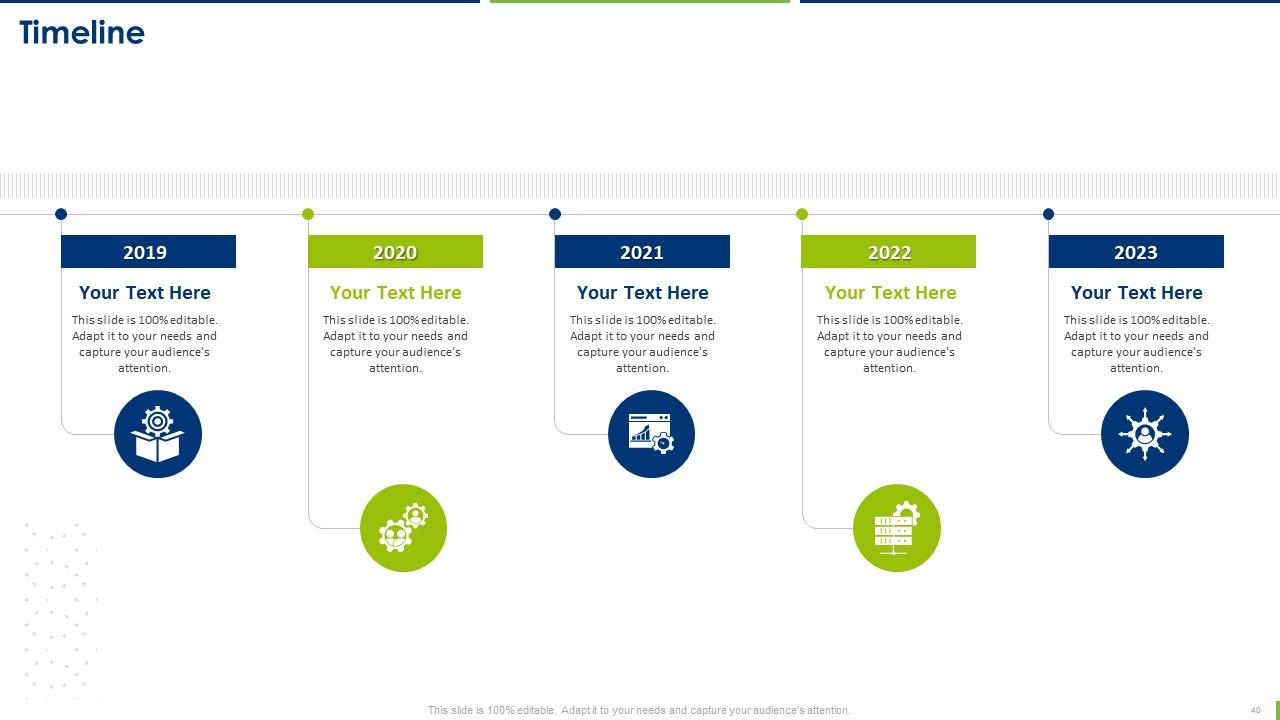
Slide 40: This slide elucidates the Company's Timeline.
Slide 41: This slide includes Post It Notes for reminders and deadlines.
Slide 42: This is the Stacked slide.
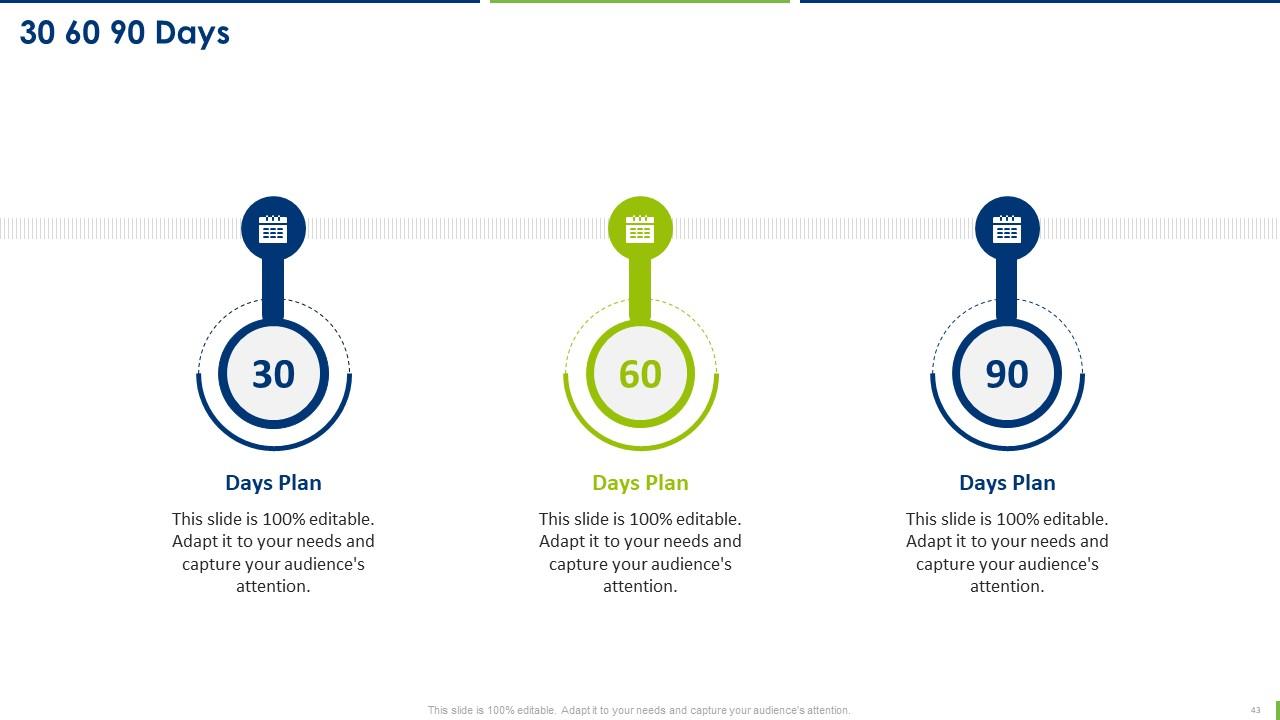
Slide 43: This slide showcases 30 60 90 Days plan for effective planning.
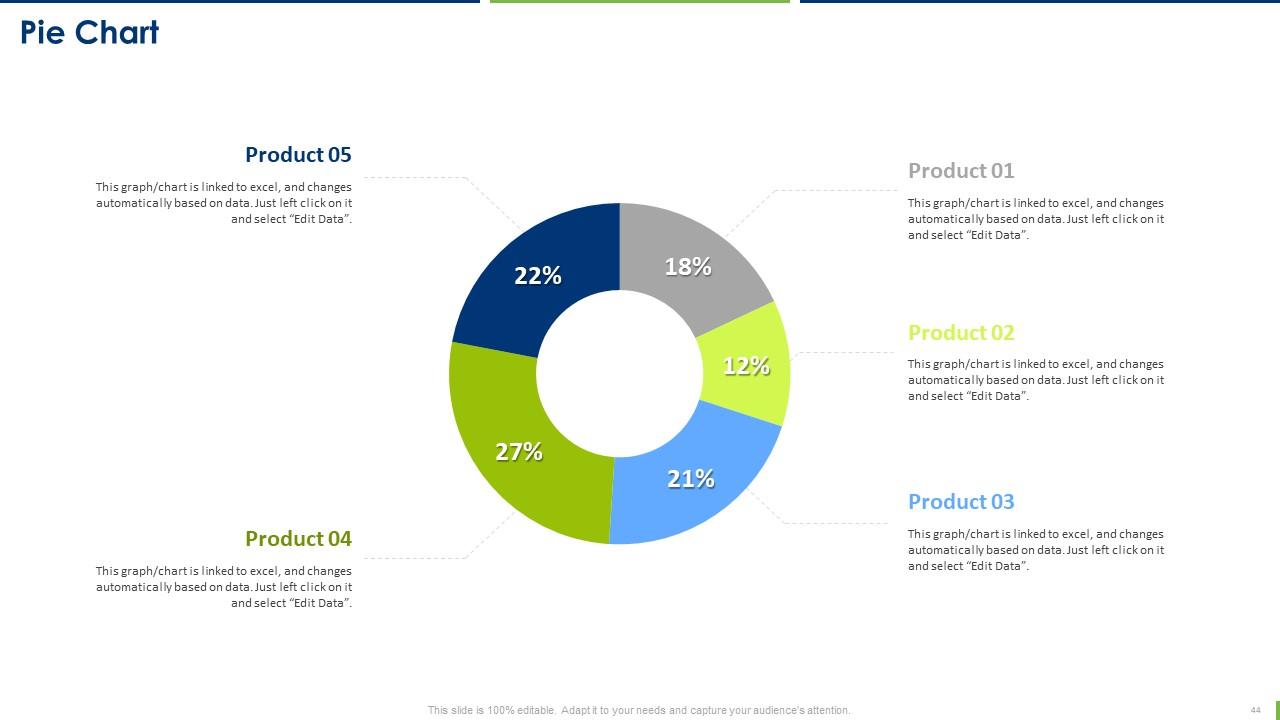
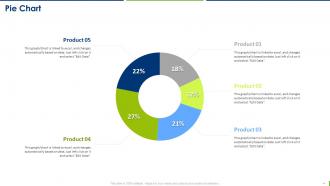
Slide 44: This slide illustrates the Pie Chart for revealing some vital Company information.
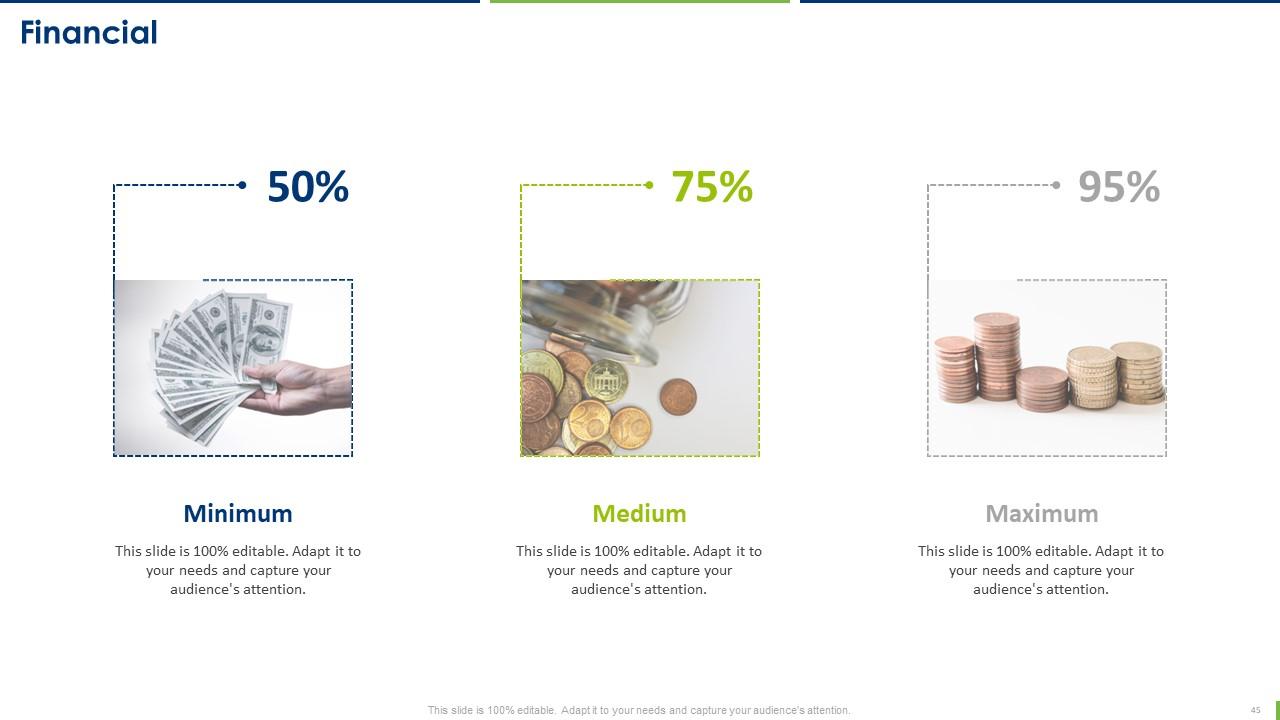
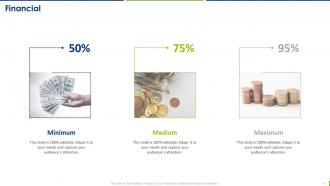
Slide 45: This slide exhibits information about the Financial topic.
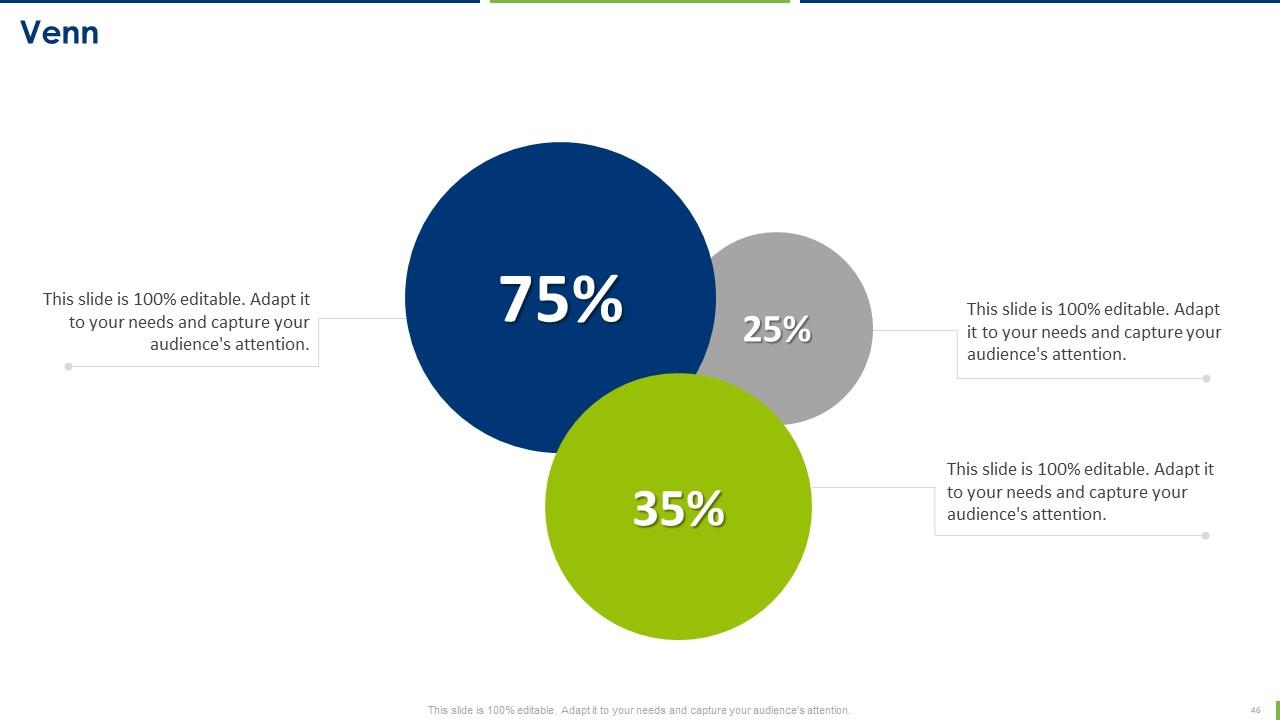
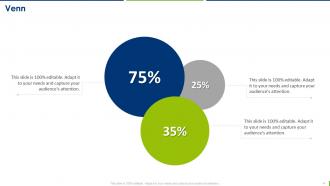
Slide 46: This slide elucidates the Venn Diagram for some relevant Company information.
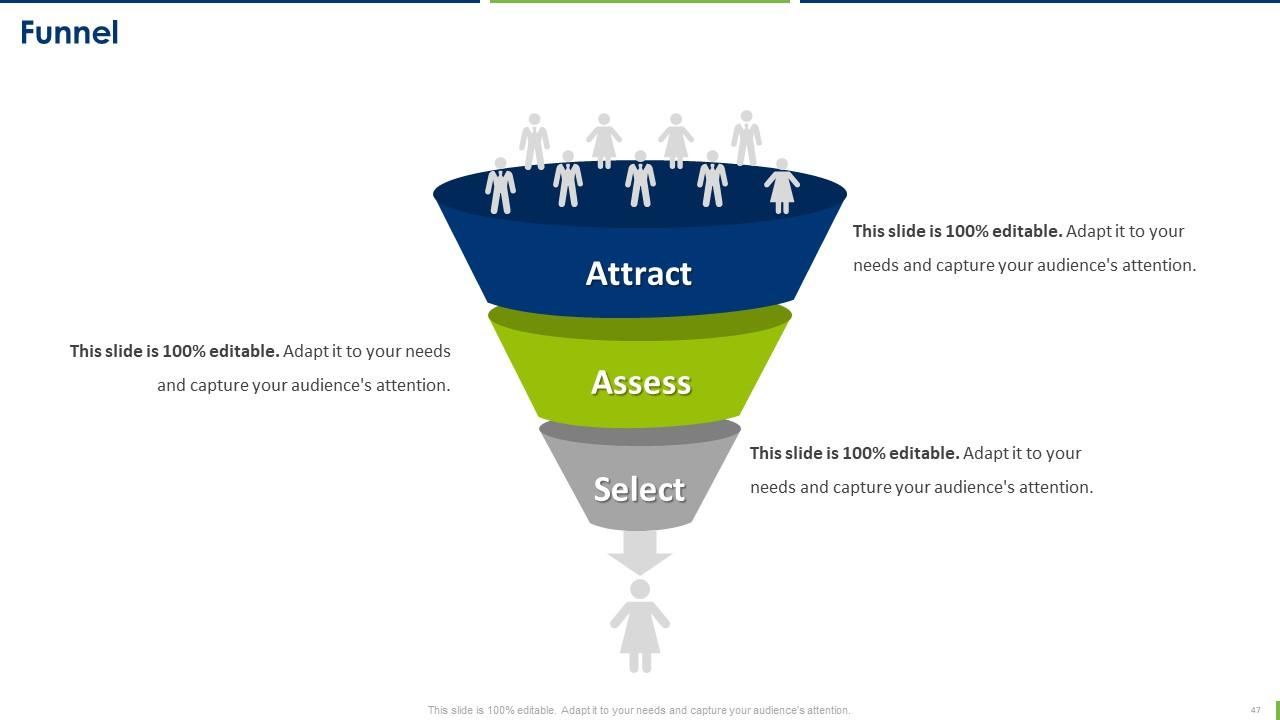
Slide 47: This slide represents a Funnel.
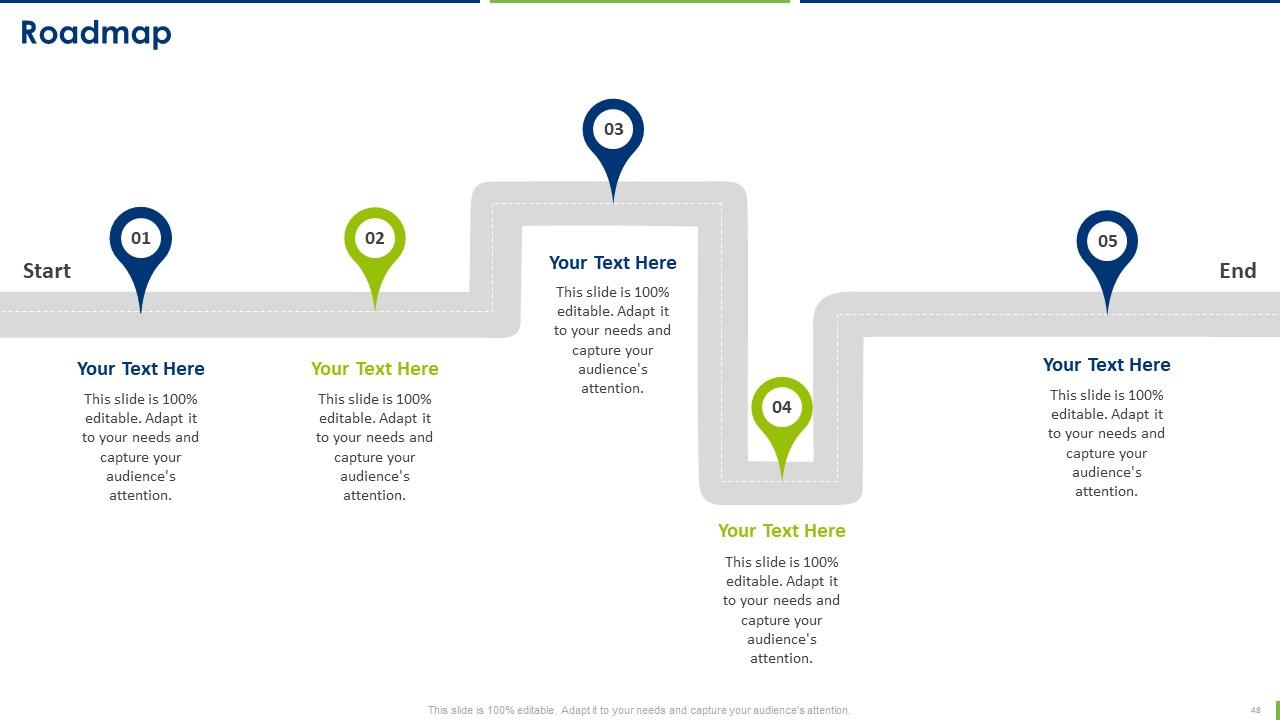
Slide 48: This is the Roadmap slide depicting the Organization's journey.
Slide 49: This is the Puzzle slide.
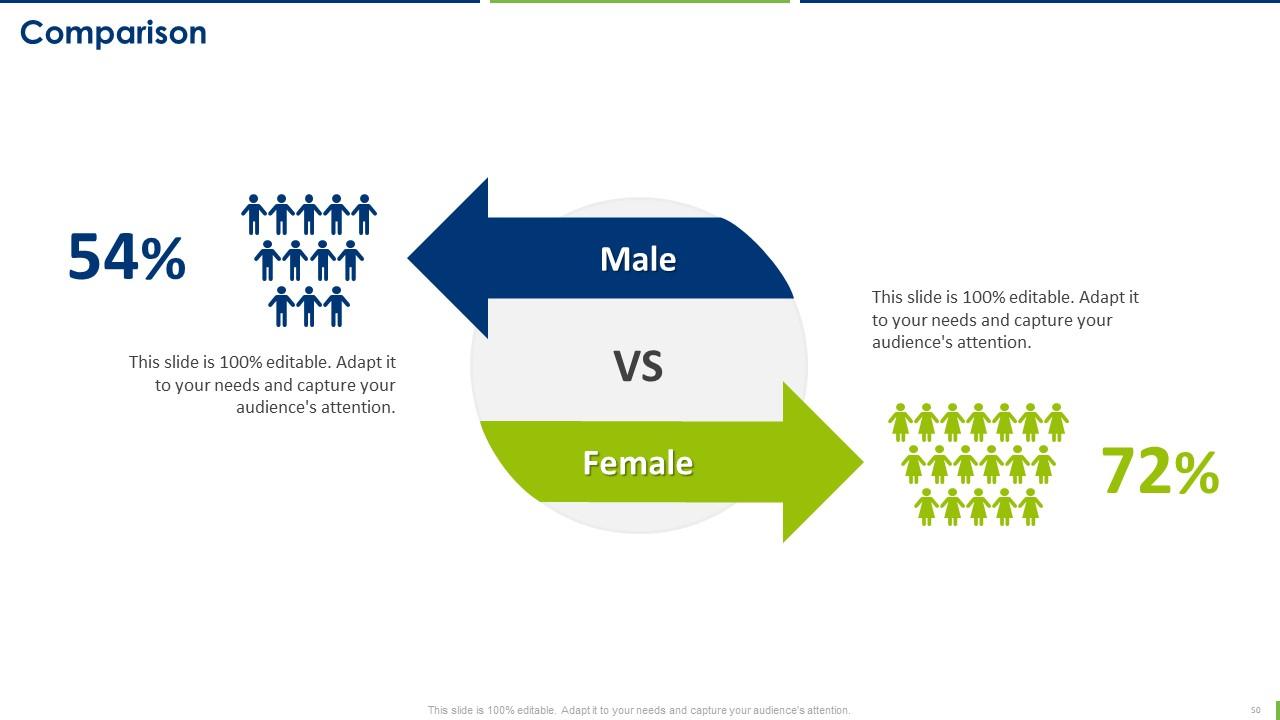
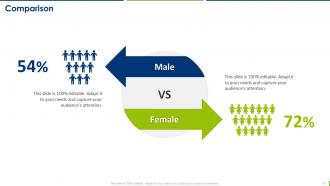
Slide 50: This is the slide used for Comparison.
Slide 51: This is the Thank You slide for acknowledgement.
Production Plant Maintenance Management For Higher Operational Efficiency Powerpoint Presentation Slides with all 56 slides:
Use our Production Plant Maintenance Management For Higher Operational Efficiency Powerpoint Presentation Slides to effectively help you save your valuable time. They are readymade to fit into any presentation structure.
-
SlideTeam has helped me take my presentation to the next level. Everyone at the office is impressed! I’ll be using their designs for a long-long time.
-
“Superb. What a great finding. Thankful for SlideTeam. We were paying people to make slides which went all in vain. We are so happy to have found you.”
