

Production Plant Maintenance Strategy Powerpoint Presentation Slides




Try Before you Buy Download Free Sample Product
 Impress Your
 Audience
 100%
100% Editable
 Save Hours
 of Time


A maintenance strategy helps plants avoid unplanned downtime and ensures production stays on schedule. Grab our effectively designed Production Plant Maintenance Strategy template. It allows plant managers to create an implementation strategy for preventive plant repair at the manufacturing facility. Our Plant Maintenance deck includes slides demonstrating the production plants current poor operational efficiency, causes, and the best preventive maintenance practices. An inspection checklist to find structure and equipment problems at the production plant is included in our Production Plant Repair PPT. It also has plans for the budget, the job schedule, and communications to ensure that repair activities are carried out without a hitch. Additionally, our Preventive Maintenance module discusses how early fault discovery, decreased downtime, and longer equipment lifespan can improve plant working efficiency. Lastly, it incorporates dashboards for measuring the manufacturing plants shift efficiency, machine efficiency, and equipment malfunctions. Get access now.
People who downloaded this PowerPoint presentation also viewed the following :
Content of this Powerpoint Presentation
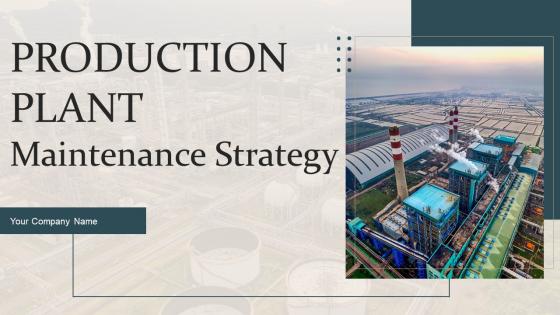
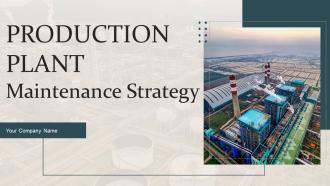
Slide 1: This slide introduces Production Plant Maintenance Strategy. Commence by stating Your Company Name.
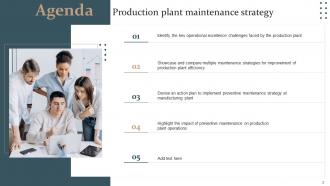
Slide 2: This slide depicts the Agenda of the presentation.
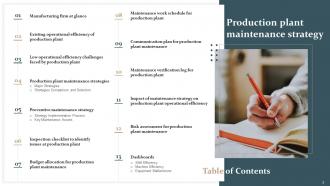
Slide 3: This slide incorporates the Table of Contents.
Slide 4: This slide highlights the Title for the Topics to be discussed further.
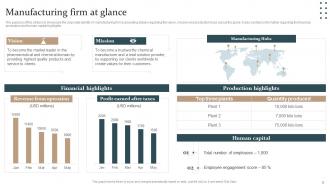
Slide 5: This slide gives a glimpse of the Manufacturing firm.
Slide 6: This slide presents the Heading for the Components to be covered in the following template.
Slide 7: This slide showcases the Existing operational efficiency of production plant.
Slide 8: This slide elucidates the Title for the Ideas to be further discussed.
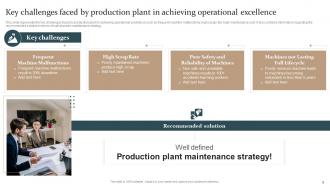
Slide 9: This slide states the Key challenges faced by production plant in achieving operational excellence.
Slide 10: This slide portrays the Heading for the Ideas to be covered in the next template.
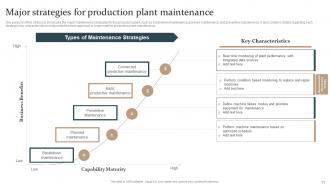
Slide 11: This slide exhibits the Major strategies for production plant maintenance.
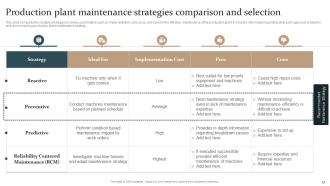
Slide 12: This slide compares the multiple strategies on various parameters.
Slide 13: This slide indicates the Title for the Components to be discussed in the upcoming template.
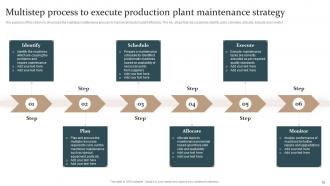
Slide 14: This slide shows the Multistep process to execute production plant maintenance strategy.
Slide 15: This slide talks about the Key maintenance assets of production plant.
Slide 16: This slide reveals the Heading for the Topics to be covered further.
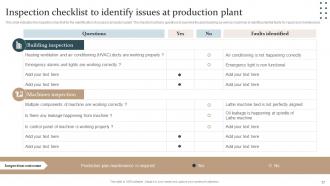
Slide 17: This slide indicates the inspection checklist for the identification of issues in production plant.
Slide 18: This slide mentions the Title for the Ideas to be discussed in the next template.
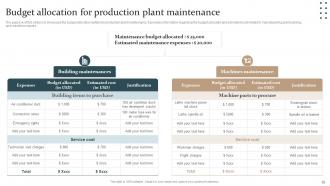
Slide 19: The purpose of this slide is to showcase the budget allocation details for production plant maintenance.
Slide 20: This slide depicts the Heading for the Ideas to be covered in the following template.
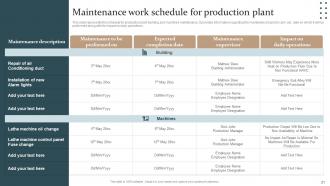
Slide 21: This slide represents the schedule for production plant building and machines maintenance.
Slide 22: This slide portrays the Title for the Topics to be discussed further.
Slide 23: This slide indicates the Communication plan for production plant maintenance.
Slide 24: This slide displays the Heading for the Components to be covered in the upcoming template.
Slide 25: This slide elucidates the verification log for maintenances performed at the production plant.
Slide 26: This slide incorporates the Title for the Ideas to be discussed in the following template.
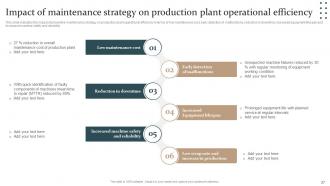
Slide 27: This slide showcases the impact of preventive maintenance strategy on production plant operational efficiency.
Slide 28: This slide reveals the Heading for the Ideas to be covered next.
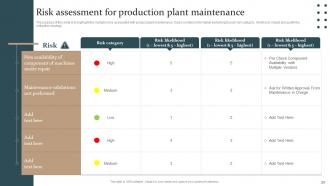
Slide 29: This slide exhibits the Risk assessment for production plant maintenance.
Slide 30: This slide includes the Title for the Components to be discussed further.
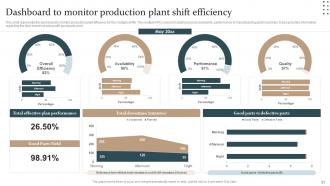
Slide 31: This slide represents the dashboard to monitor production plant efficiency for the multiple shifts.
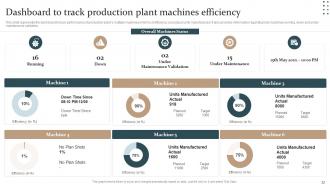
Slide 32: This slide illustrates the Dashboard to track production plant machines efficiency.
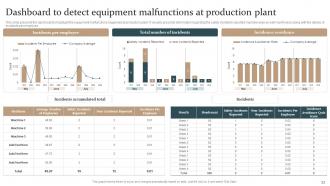
Slide 33: This slide presents the dashboard to highlight the equipment malfunctions happened at production plant.
Slide 34: This is the Icons slide containing all the Icons used in the plan.
Slide 35: This slide is used for depicting Additional information.
Slide 36: This is the 30 60 90 day plan slide for efficient planning.
Slide 37: This slide contains the Post it notes for reminders and deadlines.
Slide 38: This is the Puzzle slide with related imagery.
Slide 39: This is Our goal slide. State your organizational goals here.
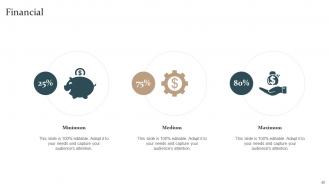
Slide 40: This slide depicts information related to the Financial topic.
Slide 41: This slide displays the firm's Timeline.
Slide 42: This slide shows the comapny Roadmap.
Slide 43: This is the Thank You slide for acknowledgement.
Production Plant Maintenance Strategy Powerpoint Presentation Slides with all 48 slides:
Use our Production Plant Maintenance Strategy Powerpoint Presentation Slides to effectively help you save your valuable time. They are readymade to fit into any presentation structure.














FAQs for Production Plant Maintenance Strategy
Start with preventive maintenance scheduling and predictive analytics - sensors are your friend here. You'll need solid spare parts inventory management plus trained techs who actually know what they're doing. Work order systems help, but honestly? Equipment criticality rankings are where most places totally screw up. They think every machine is equally important, which is just dumb. Set up planned downtime windows and root cause analysis processes. Track your OEE and MTBF numbers too. Oh, and audit your current maintenance backlog first - see what equipment failed most last year. That's your starting point.
You know how equipment always seems to break at the worst possible time? Predictive maintenance flips that whole mess around. Instead of waiting for disaster, you stick sensors on your machines to track things like vibration and heat patterns. When something looks sketchy, you catch it early. Honestly, it beats the hell out of those 2am emergency calls. Your production keeps humming along, emergency repair costs drop big time, and maintenance actually becomes plannable. I'd say start with just one critical machine - throw some basic sensors on it and see what happens. You'll probably be surprised how much data tells you.
Honestly, training your team is everything. I've watched places where poorly trained staff broke more stuff than they fixed - total nightmare. Your people need to know how to actually inspect equipment and catch problems early. That beats any expensive software hands down. When they're trained right, they become like your early warning system for equipment failures. Figure out where your current team's skills are lacking first, then build training around those gaps. It saves you so much headache later. Trust me on this one.
Look at your OEM recommendations first, but honestly those are usually way too conservative for real conditions. Pull your maintenance logs from the past 2-3 years - that's where the gold is. Check your MTBF data for each equipment type and adjust from there. Your main production line stuff obviously needs tighter schedules than backup equipment. I'd also track usage patterns since that matters more than just time intervals sometimes. Look for breakdown patterns in your data - you'll probably spot some trends that'll help you nail down better timing. Way more reliable than just following the manual blindly.
Honestly, money's always the first problem - budgets are tight everywhere. Your maintenance crew will probably hate any changes, which makes sense since they're already drowning in work. Getting good data on your equipment is surprisingly hard too. Plus coordinating shutdowns with production? That's like herding cats. Training gets messy because everything's more complex now - I swear machines get smarter every year but somehow harder to fix. Best bet is testing stuff on equipment that won't kill you if it breaks. Once you show management it actually saves money, they'll usually let you expand from there.
Honestly, data analytics is a game changer for maintenance stuff. You can actually predict when equipment's gonna fail by tracking vibration patterns, temps, and performance metrics. Way better than just doing maintenance because the calendar says so, you know? Your team will know exactly which machines need attention and when. Plus you won't be stuck with too much inventory sitting around or dealing with surprise breakdowns. The prediction accuracy is kinda crazy once you get it dialed in. I'd start with just one important machine though - don't try to do everything at once.
Ugh, machine downtime is the worst - it basically tanks your whole production line. You're losing output, missing deadlines, and then everything else gets backed up too. The really annoying part? Your team has to work overtime later trying to catch up, which just stresses everyone out and leads to more mistakes. Customers hate waiting around, so you might lose them entirely. Honestly, I'd start tracking which machines break down most often - that way you can figure out where to focus your maintenance efforts. Rush orders are expensive and nobody wants to deal with that chaos if you can avoid it.
So safety regs are basically your foundation - everything else builds on top. OSHA sets the minimum inspection schedules for pressure vessels, electrical gear, safety systems. Some need weekly checks, others quarterly. Honestly it gets messy to track without a decent CMMS system. What I'd do first is figure out which specific regulations hit your equipment - there's usually more overlap than you think. Then build those mandatory intervals into your PM calendar before adding any reliability stuff. The regulatory timeline isn't negotiable, but you can be smart about bundling tasks together.
Honestly, start with IoT sensors on your most critical stuff - they'll give you real-time monitoring data to play with. AI predictive analytics is where things get interesting though, spotting failures way before they actually happen. Digital twins are pretty wild too, basically virtual copies of your equipment. Oh, and AR for repairs is actually useful now - technicians get instructions right on the machinery itself. The ML algorithms analyzing vibration and temperature patterns? They're getting ridiculously accurate at predicting component failures. I'd definitely begin small with basic sensors first, see what kind of data you're getting, then expand from there once you know what you're dealing with.
Honestly, just focus on three things: OEE, MTBF, and what you're spending on maintenance vs. asset replacement value. OEE is clutch - shows availability, performance, quality all in one. I literally check it every Monday. MTBF tells you if your preventive stuff is actually working or if you're just wasting time. The cost percentage keeps you from going nuts with spending (learned that one the hard way). Check these monthly and you'll catch problems before they get expensive. Start with OEE if you can only track one metric.
Honestly, RCA saves you so much headache in the long run. You stop slapping temporary fixes on the same broken equipment every month. Instead, you're actually figuring out why things keep failing. Like, maybe it's not the motor that's bad - maybe the vibration from poor mounting is killing it. Once you know the real culprit, you can build maintenance around preventing that specific problem. Shifts everything from "oh crap, it broke again" to actually planning ahead. I'd start tracking when stuff fails and look for patterns. Way better than constantly firefighting.
Honestly, it's all about what industry you're in. Automotive plants are crazy expensive when they shut down - we're talking thousands per minute lost, so they go all-in on predictive maintenance. Food processing though? Totally different game. They're obsessed with hygiene and FDA compliance, doing constant washdowns and preventing contamination. Speed vs. cleanliness, basically. I'd start by figuring out what'll actually hurt your business most - downtime, safety issues, whatever - then build around that. Don't just copy someone else's playbook because it worked for them.
Honestly, go preventive over reactive - you'll save a fortune. Basic scheduling software works fine, or even spreadsheets if you're starting small. Train your operators to handle minor fixes and spot problems early. Most small plants think they need expensive specialists for everything, which is just wrong. Daily visual checks are huge - catch stuff before it becomes a nightmare breakdown. Oh, and team up with other local manufacturers to bulk buy spare parts. Way cheaper that way. Only outsource the really specialized stuff when you absolutely have to.
Smart maintenance is honestly a game-changer for going green. Your machines run way more efficiently when they're properly maintained, which cuts energy use big time. Equipment lasts longer too - so you're not constantly replacing stuff and driving up manufacturing demand. The predictive stuff is where it gets really cool though. You catch problems before they turn into huge breakdowns that create tons of waste and emissions. I mean, it's basically free money since being more sustainable actually saves you cash. Track your energy patterns with your maintenance schedule - you'll be shocked at which busted equipment is bleeding you dry.
So basically it's like mission control for all your maintenance stuff. Tracks when equipment needs work, manages your parts inventory, schedules everything. The real game-changer? You get data showing when things might break before they actually do - no more getting woken up at 3am because something died. Way better than just doing maintenance every X months regardless of how the equipment's actually running. Oh, and it keeps all your paperwork sorted for inspections and compliance stuff. I'd start with your most important equipment first, then expand from there.
-
Slideteam offers pocket-friendly products. As a college student this is a really necessary thing to look at while paying for something.
-
Wide collection of templates available. SlideTeam has made it easier to create presentations in just a few minutes.