


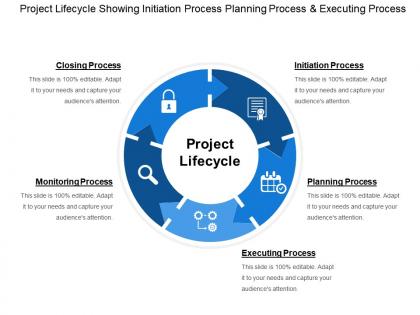
Project lifecycle showing initiation process planning process and executing process





Try Before you Buy Download Free Sample Product
 Impress Your
 Audience
 100%
100% Editable
 Save Hours
 of Time


Absorb any battering with our Project Lifecycle Showing Initiation Process Planning Process And Executing Process. Critics will appreciate your hardy display.
People who downloaded this PowerPoint presentation also viewed the following :
Project lifecycle showing initiation process planning process and executing process with all 5 slides:
Eliminate the desire for intoxication with our Project Lifecycle Showing Initiation Process Planning Process And Executing Process. Be able to cure alcoholism.


FAQs for Project lifecycle showing initiation process planning process
Hey! So project lifecycles basically have 5 stages - initiation, planning, execution, monitoring, and closure. You can't really skip around (learned that the hard way once). Initiation is figuring out what you're actually building. Planning maps everything out. Then execution is where the real work happens - but honestly, this is where most things go sideways if your planning sucked. You'll be monitoring the whole time anyway, and sometimes you gotta circle back to planning when things change. Just document the handoffs between stages or stuff will definitely slip through cracks.
Honestly, once you map out the project lifecycle, everything clicks into place. You'll spot bottlenecks before they hit and actually set timelines that make sense. Each phase has clear goals and exit criteria, so scope creep becomes way less of a nightmare. Stakeholders stop asking "where are we?" every five minutes because everyone can see the roadmap. Resource allocation gets easier too - you know what's coming next instead of scrambling last minute. I'd start by looking at your current project and figuring out which standard phases you're missing. Makes such a difference.
Honestly, stakeholder engagement can make or break your project. You need these people from day one through the final wrap-up. They're the ones defining what you're actually building during planning, then giving you feedback as you go. I've watched projects completely tank because someone ignored a key stakeholder for weeks - it's brutal. Map out who you need at each phase first. Then figure out how they actually want updates (some hate emails, others live in Slack). They're also your go-to for approvals and spotting risks you might miss. Don't wing the communication part.
So basically, risk management totally changes as you move through your project. Starting out, you're looking at the big scary stuff that could derail everything. Then during planning you get into the weeds - building those detailed risk registers and figuring out your backup plans. Execution is where things get real though, because you're constantly putting out fires (honestly, there's always something). By the end you're just documenting what went wrong so the next poor soul doesn't repeat your mistakes. It goes from "what might bite us" to "okay, we're definitely getting bitten."
Honestly, gate reviews are a lifesaver - set up checkpoints where you actually verify everything's done before moving on. Get everyone together for transition meetings to go over what's finished and what needs handed off. I know documentation sounds tedious, but you'll thank yourself later when you have those phase closure reports. Always pad some extra time between phases because stuff inevitably takes longer than you think. The trick is making these transitions feel intentional instead of just "welp, guess we're done here." Oh, and schedule your next kickoff before you close out the current phase - future you will appreciate it.
So basically, old-school project management is like following a recipe step by step - you do planning, then design, then development, testing, deployment. Can't skip ahead. Agile throws that out the window and breaks everything into these mini cycles called sprints, usually 1-4 weeks each. You're constantly doing a bit of planning, building, testing all at once. Way better honestly because your stakeholders actually see stuff happening instead of waiting around for months wondering what you're up to. Traditional methods assume you can predict everything from day one (spoiler: you can't), but agile just rolls with changes as they come.
Look, project lifecycle management is basically your GPS for connecting day-to-day work to the big picture stuff your company cares about. It helps you pick the right projects and not waste money on random things that don't matter. Each phase becomes a checkpoint - are we still heading toward those main goals or did we get sidetracked? Honestly, most companies are terrible at this part. You'll catch issues early instead of scrambling later when everything's on fire. Quick tip: grab your company's top 3 priorities and see which current projects actually support them. You might be surprised how many don't.
Honestly, you don't need to track everything - that'll drive you crazy. Start with the basics: schedule and budget. Then add maybe 2 quality metrics that actually matter for your specific project. Early on, watch for stakeholder alignment issues and whether you have the resources you need. Planning phase is where things usually go wrong, so keep an eye on scope creep and how accurate your estimates are. Once you're executing, track schedule variance, budget burn rate, and defect rates. At the end, measure if people actually accept your deliverables and if they're happy with the results. Pick 3-4 metrics per phase max.
Look, your budget basically follows the project phases. Planning and design? Light staffing, smaller costs. But execution phase hits different - that's where you're burning through most of your money with full teams working. I always tell people to set aside extra cash upfront because projects never go as planned (learned that one the hard way). Resources wind down again as you wrap things up. Don't just split your budget evenly across months. Match your spending to what each phase actually needs. Way smarter approach.
Get yourself a solid project management tool first - Asana or Monday.com are both great. Slack keeps everyone talking without the email chaos (seriously, game changer). You'll need somewhere to dump files too, so Google Drive works fine. Oh, and if you're tracking billable hours, grab a time tracker. Here's the thing though - don't go crazy with tools. Pick maybe 3-4 max and stick with them. I see teams constantly switching platforms every few months and it's such a waste of time. Better to master a few decent tools than juggle ten mediocre ones.
Look, just start tracking what actually happens on your projects - the good, bad, and ugly. Make it searchable so you're not digging through random notes later. Those timeline estimates that seemed reasonable? Write down why they were completely off. Honestly, having real data from past projects is way better than just making educated guesses every time. Focus on the last three projects you wrapped up and see what patterns jump out. Maybe testing always takes 30% longer, or maybe that one developer consistently underestimates their work. The whole point is building something your team will actually use when planning the next disaster... I mean, project.
Honestly, don't sleep on the closing phase - I've seen so many people just abandon ship once the main work's done. Get your final sign-offs from stakeholders and officially release your team. Archive everything properly too. Here's the thing though: the post-mortem is where the real gold is. Document what bombed, what killed it, and how you'd do things differently. Your future self will thank you, trust me. Oh and actually celebrate with your team! Start wrapping up like two weeks early so you're not scrambling at the end.
Don't treat change management like some boring checkbox at the end - weave it into everything from day one. Figure out who's affected and what they're worried about early on. Communication is huge here, and I mean constant updates, not just one kickoff meeting that everyone forgets about. Most projects crash because people get blindsided by changes they never saw coming. Create ways for teams to give you feedback so you can spot pushback before it becomes a real problem. Document what's changing AND why it matters to each group specifically. Oh, and always have a backup plan ready just in case things go sideways.
Oh man, the biggest mistakes I see? People dive in without nailing down what they're actually building first. Huge mistake. Also, teams forget to loop stakeholders in properly and set these crazy deadlines that make no sense. Risk planning? Yeah, most people skip that entirely then panic when stuff inevitably goes sideways. What works better: spend real time upfront getting requirements solid and getting everyone on board. Always pad your timeline - trust me on this. Set up regular check-ins so nothing surprises you later. Document as you go instead of scrambling at the end. After each project, do a quick debrief on what sucked so you don't repeat it.
Honestly, map out your project goals against company values right from the start - like literally put them side by side on paper. Build in regular check-ins during your milestone reviews to see if you're still on track. I've watched so many projects go sideways because nobody bothered monitoring this stuff. When scope creep happens (it always does), just ask yourself: "does this change still fit our values?" Makes those tough calls way less stressful. Your stakeholders will actually appreciate that you're thinking bigger picture instead of just checking boxes.
-
Top Quality presentations that are easily editable.
-
Unique research projects to present in meeting.