

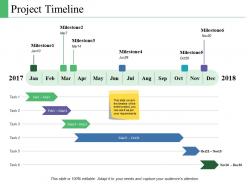
Project timeline management ppt powerpoint presentation file templates





Try Before you Buy Download Free Sample Product
 Impress Your
 Audience
 100%
100% Editable
 Save Hours
 of Time


Our Project Timeline Management Ppt Powerpoint Presentation File Templates enable impressive coverage. Create an example that inspires journalists.
People who downloaded this PowerPoint presentation also viewed the following :
Project timeline management ppt powerpoint presentation file templates with all 5 slides:
Create an example that inspires journalists with our Project Timeline Management Ppt Powerpoint Presentation File Templates. It enables impressive coverage.

FAQs for Project timeline management ppt powerpoint
Honestly, you just need five things sorted. First - clear milestones so everyone knows what they're actually working toward. Map out your dependencies early because that's where projects usually die (I swear, nobody thinks about this stuff until it's too late). Lock down your resources before you start, and realistic task durations are key. Oh, and buffer time - something always takes longer than you think. I'd start by listing your big deliverables first, then work backwards from there. Trust me on the buffer thing though - it'll save your sanity.
Honestly, Gantt charts are game-changers for project timelines. You'll see everything laid out - tasks, how long they take, what depends on what. Makes spotting bottlenecks so much easier. I was skeptical at first too, but after trying to juggle a big project without one? Total disaster. The cool part is watching how moving one deadline ripples through everything else. Don't overthink the tools - Asana works great, or even Excel if you're feeling old school. Once you start using them visually like this, you won't go back to messy spreadsheets and sticky notes everywhere.
Honestly, Microsoft Project is still king if you need heavy-duty Gantt charts and resource tracking. But it's overkill for most teams. Asana and Monday.com hit that sweet spot - good features without being overwhelming. You'd be shocked how many successful projects I've seen run entirely on Google Sheets though. Trello's solid for visual stuff too. The real trick? Pick whatever your team will actually stick with. I've watched fancy tools gather dust while simple spreadsheets got the job done. Match your tool to your project's complexity, not the other way around.
Dude, you HAVE to stay on top of stakeholder communication if you want your timeline to survive. I learned this the hard way on my last project - nobody likes surprises when deadlines are looming. Keep them updated on progress and potential roadblocks so they can actually help you solve problems before they explode. It's way easier to get buy-in for timeline changes when people see delays coming. Also catches scope creep early, which honestly saves your sanity. Set up regular check-ins from the start and flag issues immediately. Being proactive beats scrambling later every single time.
Ugh, scope changes are the worst but here's what actually works. Map out what's being added/removed first, then figure out how long the new stuff will take - don't forget about dependencies though. I've watched so many PMs just randomly add days without thinking it through and it always backfires. Look at your existing tasks too - what can you bump or cut completely? The hard part is explaining to stakeholders that more features = longer timeline or something's gotta give. Document everything before you start or they'll conveniently "forget" what they agreed to later.
First thing - map out what could go wrong before you even start. Dependencies, resources, bottlenecks, all that stuff. I keep a basic risk tracker with probability/impact scores (nothing fancy). Always pad your timeline because honestly, Murphy's Law is real. Set up clear escalation paths so when things hit the fan, people know who to call. Watch your critical path like a hawk and have backup plans ready. Oh, and do weekly check-ins with your team - you'll catch issues way earlier than waiting for monthly reviews. Being ahead of problems beats scrambling to fix them later.
Honestly, put your milestones where stuff actually gets decided or finished - like when you deliver something big or get client sign-off. I used to just throw them everywhere randomly and it was completely pointless. Make each one super specific so everyone knows what "finished" means. They're perfect for catching problems early and figuring out if your timeline's still realistic. Oh and definitely explain WHY each milestone matters to your team - people work way better when they get the bigger picture. The key is picking moments that genuinely move things forward, not just arbitrary calendar dates.
Dude, this stuff will absolutely make or break your project. I learned this the hard way when I assumed our best dev would be free in March - turns out he was swamped with three other things. You've gotta map out who's actually available first, not the other way around. Factor in people's vacations, other projects, all that real-world stuff. Then build your timeline around what you've got. Honestly, most project disasters I've seen come from skipping this step. Do a quick audit of where everyone stands before you even think about setting dates.
Oh man, this is so real. Different cultures view deadlines completely differently - some see them as rough suggestions while others are like "this is set in stone." Relationship-focused cultures often want everyone on board before moving forward, which honestly drives me crazy sometimes but the results are usually solid. Watch out for communication styles too. Direct people will straight up tell you if timelines are off, but others drop subtle hints you might miss. I'd say chat with each person about how they work best and what they expect, then definitely pad your timelines because something always comes up.
Focus on the big three: schedule variance, budget variance, and milestone completion rates. SPI is clutch for seeing if you're on track without digging into spreadsheets. Also track resource utilization and team velocity - trust me on this one, especially with multiple projects running. But here's the thing: don't go crazy with metrics or you'll drown in data instead of actually managing. Pick 3-4 that your stakeholders actually care about and stick with those. A simple dashboard works wonders for catching problems before they blow up. Keep it straightforward.
Your team knows way better than you how long stuff actually takes. When people give their own estimates upfront, you dodge those awful last-minute surprises that tank everything. Check in weekly so problems come up fast instead of hiding until crunch time - trust me, this saves so much stress. The trick is making everyone feel safe about being honest when things go sideways. Nobody wants to admit they're behind, but if they can't, your timeline's basically fiction. Try those regular review meetings where people can tweak their estimates based on what's really happening.
Honestly, most people just suck at estimating how long stuff takes. I used to do this too - you think something will take 2 hours and suddenly it's been a whole day. Murphy's law is real, dude. Always add like 20-30% buffer time to whatever you initially think. Dependencies between tasks will screw you over if you don't map them out first. Scope creep is another killer - communicate changes right when they happen, not later. Do weekly check-ins to catch problems early. Track where you're consistently wrong so you'll actually get better at this.
Don't just dump a timeline on people - bring them into the process from the start. Walk through your thinking on each milestone and be real about trade-offs. Want it faster? Here's what we'd have to cut or rush. I've had timelines completely shot down because stakeholders felt ambushed (not fun). Get their input on what matters most upfront. Make your assumptions crystal clear and nail down scope boundaries together. The whole thing works way better when they feel like they helped build the plan instead of just receiving marching orders.
Honestly, I swear by the MoSCoW method - just sort everything into Must have, Should have, Could have, or Won't have. Super simple. The Eisenhower Matrix is another game-changer where you plot tasks by urgency vs importance. I'm weirdly obsessed with that one because it stops me from wasting time on urgent-but-useless crap. Also think about dependencies since some stuff just has to happen in order, you know? Oh and definitely get your team involved - they'll catch things you totally missed. Way better than trying to figure it all out solo.
So agile basically ditches the whole "plan everything upfront" approach. Instead you work in these short 1-4 week sprints - honestly took me forever to get used to this rhythm but now I love it. Each sprint you reassess and pivot if needed, which beats the hell out of sticking to some rigid timeline from six months ago. The cool part? You're actually shipping working stuff throughout the project, not waiting until the very end to see if anything works. My advice - just try planning your next two weeks in detail and wing it from there.
No Reviews