


Rice Farming Business Projected Cash Flow Statement For Agriculture Business BP SS




Try Before you Buy Download Free Sample Product
 Impress Your
 Audience
 100%
100% Editable
 Save Hours
 of Time


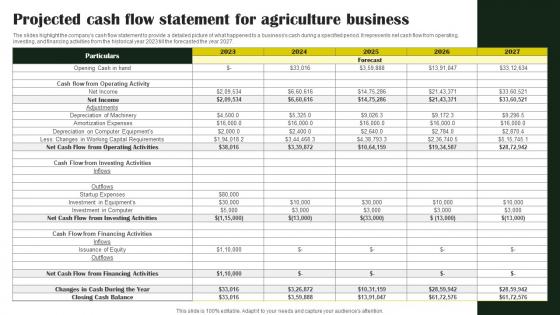
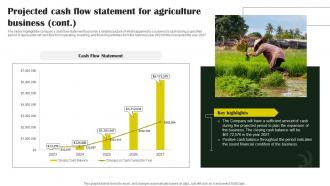
The slides highlight the companys cash flow statement to provide a detailed picture of what happened to a businesss cash during a specified period. It represents net cash flow from operating, investing, and financing activities from the historical year 2023 till the forecasted the year 2027.
People who downloaded this PowerPoint presentation also viewed the following :
Rice Farming Business Projected Cash Flow Statement For Agriculture Business BP SS with all 10 slides:
Use our Rice Farming Business Projected Cash Flow Statement For Agriculture Business BP SS to effectively help you save your valuable time. They are readymade to fit into any presentation structure.








FAQs for Rice Farming Business Projected Cash Flow Statement For Agriculture
Okay so for your rice farm cash flow - you need three buckets. Operating stuff is your bread and butter: seeds, fertilizer, labor, equipment costs plus your rice sales. Then investing activities like buying land or new machinery. Financing covers loans and payments. The tricky part? Timing is everything with rice. You'll be bleeding cash during planting season, then hopefully see that big harvest payday. I'd track it monthly because running out of money mid-season would suck. Most of the real action happens in that first operating section anyway - that's where you'll spot problems coming.
Dude, rice farming is basically a financial rollercoaster. You dump tons of money upfront - seeds, fertilizer, equipment, workers - then sit there bleeding cash for like 4-6 months with zero coming in. It's honestly brutal. Picture funding a business that makes nothing until harvest hits, then BAM - massive payday all at once when you sell. My uncle always said the trick is stashing away profits during good seasons. Most farmers need credit lines just to survive those dead months between planting and actually getting paid.
So basically you've got your fixed stuff - land payments, insurance, equipment wear and tear. Then there's all the variable costs that'll eat your budget alive: seeds, fertilizer, pesticides, fuel, irrigation, hiring seasonal workers. Storage and transport costs hit you at the end too. Honestly, fertilizer prices these days are brutal. I'd throw in at least 10-15% extra for random stuff that breaks or goes wrong. Trust me, something always does during growing season. Your tractor will pick the worst possible moment to need repairs.
Track everything weekly, not just when you harvest. Rice is brutal - you're bleeding money for 4-6 months before seeing a dime back. Get a basic spreadsheet going for seeds, fertilizer, labor costs as they hit. Build up some cash reserves because those mid-season expenses will sneak up on you. Forward contract part of your crop if you can stomach locking in prices early. Find a lender who actually gets farming cycles (most don't, honestly). Oh, and start budgeting next season while this one's still in the ground. Sounds backwards but trust me on that.
Prices are gonna make or break your cash flow projections, no joke. Check both current spot prices and futures to get a realistic idea of what you'll earn at harvest. Rice markets can be pretty volatile - honestly, worse than I expected when I first started looking into this stuff. Build in some scenarios: best case, worst case, and somewhere in the middle. That way you'll see how different price swings hit your cash position. Regional trends and export demand really drive local pricing, so keep an eye on those. Update your assumptions monthly. Sounds tedious, but your projections will actually mean something instead of just being wishful thinking.
Honestly, mixing in other crops is a game-changer for evening out your income. Rice gives you that one big payday, but then what? Try rotating with soybeans or corn. Fast-growing veggies work too. Each crop hits the market at different times, so you're not sitting around broke waiting for rice season. Plus you won't get totally screwed if rice prices tank or weather wipes out your main crop. My cousin started with just a small bean plot - worked great. Really depends on your soil though. Start small and see how it meshes with your current setup.
Look at your last 3-5 years of yield data first - that's gonna be your best starting point. Weather patterns matter too, plus whatever seed varieties you're going with this year. Markets are all over the place right now, so honestly I'd lowball your price estimates just to be safe. You can always run a couple different scenarios if you want. Oh and don't forget about subsidies or crop insurance - that stuff adds up. I've seen too many guys get burned by being too optimistic with their projections. Better to have extra money sitting around than scrambling come planting time, you know?
Ugh, input costs are brutal for cash flow. You're dropping money on seeds, fertilizer, and pesticides months before harvest brings in any revenue. Basically funding a huge project with zero income - total nightmare if you don't plan ahead. Planting season is the worst because everything hits at once when your account's already hurting from the last cycle. My buddy learned this the hard way last year. Best bet is saving up during harvest or getting a seasonal credit line to cover those big upfront expenses.
Honestly, focus on operating cash flow per acre first - that shows if you're actually profitable, not just what your books say. Your cash conversion cycle matters too since it tracks how long money's tied up from planting to payment. Rice farming's brutal with timing - huge outflows during planting and harvest, then hopefully big money coming in after. I'd definitely watch your working capital changes and debt service coverage ratio. Oh, and create a monthly cash flow forecast so you can see problems coming instead of getting blindsided.
Your old cash flow records are gold for spotting what's coming. Check when you're usually tight versus flush - that's your roadmap for timing big purchases or locking in credit before you're desperate. Those brutal months before harvest hit different when you can see them coming, you know? Plan around when expenses stack up but the money's still in the ground. Honestly, most guys wing it, but your past numbers don't lie. Use that data to get ahead of the cycle instead of scrambling every season.
Honestly, the biggest thing that trips up rice farmers is cash flow timing. Your bills come every month but paychecks? Just at harvest. Super annoying. Equipment always breaks when you're already stretched thin - Murphy's law or whatever. Input costs are brutal too - seed, fertilizer, fuel prices jump around like crazy. Irrigation bills can absolutely wreck you during dry spells. My advice? Track your monthly cash flow religiously. Once you see the patterns, you can actually plan for those rough months between harvests instead of just hoping things work out.
Honestly, I'd just grab something like FarmLogs or AgriWebb - they'll sync with your bank and track planting costs, irrigation, all that stuff automatically. Way better than trying to remember everything later. The mobile apps are clutch too, you can log expenses right in the field instead of dealing with a pile of receipts at home (which I'm terrible at). Some even pull grain prices directly from elevators which is pretty cool. Just pick one and actually use it consistently - I made the mistake of bouncing between different apps and spreadsheets for way too long.
USDA's got Marketing Assistance Loans - basically use your rice crop as collateral for quick cash. Pretty handy actually. There's also the Conservation Reserve Program if you want to park some land for steady payments. Your state might have extras too (Louisiana and Arkansas are decent for this stuff). FSA does operating loans for seasonal stuff like what you're dealing with. Yeah, the paperwork's annoying but honestly beats stressing about cash flow. I'd just call your local FSA office first - they'll tell you what you can actually get.
Honestly, I'd do it monthly minimum but bump it to weekly during planting and harvest. Rice farming cash flow is brutal - you're bleeding money for months during prep, then boom, harvest hits and hopefully you see some green. Weekly tracking during busy season helps catch problems before they wreck you. The slow months? Monthly is totally fine. Set a phone reminder though, seriously. When you're exhausted from being in the fields all day, updating spreadsheets is the last thing you'll want to do. But that's exactly when you need to stay on top of it most.
Dude, climate change is absolutely wrecking rice farming cash flows. Weather's all over the place now - one year you're dealing with droughts, next year it's floods wiping out your fields. Makes revenue forecasting basically impossible. Your input costs are jumping around too since irrigation gets expensive during dry spells and insurance premiums keep climbing. I swear, my cousin deals with this stuff and it's brutal. You've gotta plan for way bigger swings in your numbers now. Build in massive variance ranges and keep more cash on hand than before. Oh, and definitely run some worst-case weather scenarios - better to be prepared than blindsided.
-
Great experience, I would definitely use your services further.
-
Easy to edit slides with easy to understand instructions.
-
“Slides are formally built and the color theme is also very exciting. This went perfectly with my needs and saved a good amount of time.”
-
They guys always go the extra mile to meet the expectations of their customers. Almost a year has been associated with them.